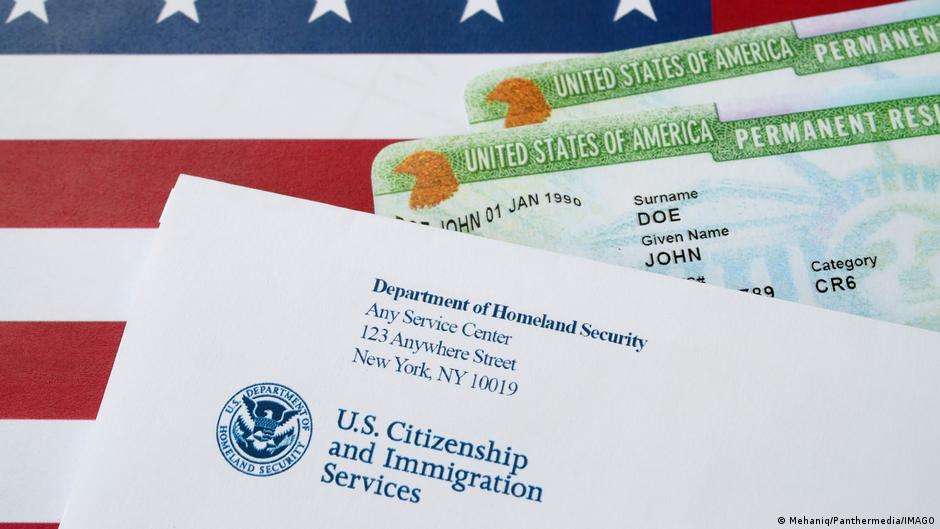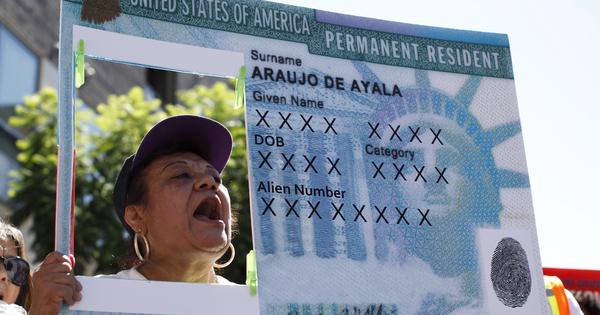
More than half a million people rely every year on the ability to apply from within the United States for a green card, the government-issued ID that allows an immigrant to legally live and work in the country long term.But in May, the federal government issued a policy memorandum – essentially, a draft change to current policy – that could upend this process and deny immigrants the ability to apply for a green card while in the US. Instead, they would have to return to their home country to do it.To see why this matters, picture a British woman, let’s call her Lucy, who comes to the US on a student visa to earn her PhD at Ohio State University. During her studies, she falls in love with Mike, an American engineer, and they marry. Under long-standing practice, Lucy could apply for her green card right in Ohio without uprooting her life.The new policy memorandum, however, could force families like hers to make wrenching choices, sending one member of a couple out of the country with no guarantee they would be allowed back in.As law professors who study the legal procedures relating to citizenship and immigration, we see this shift as a significant departure from how the system has worked for decades.Congress built what’s called “adjustment of status” – the shift from one immigration status to another – into the immigration legal framework as a pathway to permanent residency. A policy memo cannot cut off that avenue.Instead, what is being proposed by the Trump administration would require congressional action or agency rule-making that follows the proper procedural steps. The hundreds of thousands of people every year who have been clearing the legal requirements of adjustment of status cannot have their rights cut off arbitrarily.Separation, disruptionApproximately 54%, or 608,260, of the 1.17 million new lawful permanent residents in fiscal year 2023 received a green card from within the United States.But now, the draft policy emphasises that those who entered the United States as nonimmigrants – such as people on student visas, who stated that they would be leaving the country once their education was finished – “are generally expected to pursue an immigrant visa and admission from outside the United States if they wish to reside permanently in this country”.Applying from within the US, as Lucy sought to do in the hypothetical example above, would be seen by officials as a negative element – a strike against granting the green card – that would need to be balanced out by what officials deem extraordinary counterevidence, such as sufficient family ties, hardship or length of residence in the United States, for the applicant to succeed.The memo deems application from within the US a red flag, calling such an application an “attempt to avoid the ordinary consular immigrant visa process”, implying that the immigrant hid their intention to immigrate when they obtained the nonimmigrant visa.If the memo becomes implemented as official policy, individuals like Lucy would be expected to return to their country – in her case, the UK – to apply for a green card.An alien who is in the U.S. temporarily and wants a Green Card must return to their home country to apply.This policy allows our immigration system to function as the law intended instead of incentivizing loopholes.The era of abusing our nation’s immigration system is over. https://t.co/ofyEYGPDLC— Homeland Security (@DHSgov) May 22, 2026
Proposed US policy for green card applications assumes legal immigrants are cheating the system
A memo suggests prohibiting immigrants from applying for green cards while in the US. Instead, they would have to return to their home country to do it.
1,317 words~6 min read