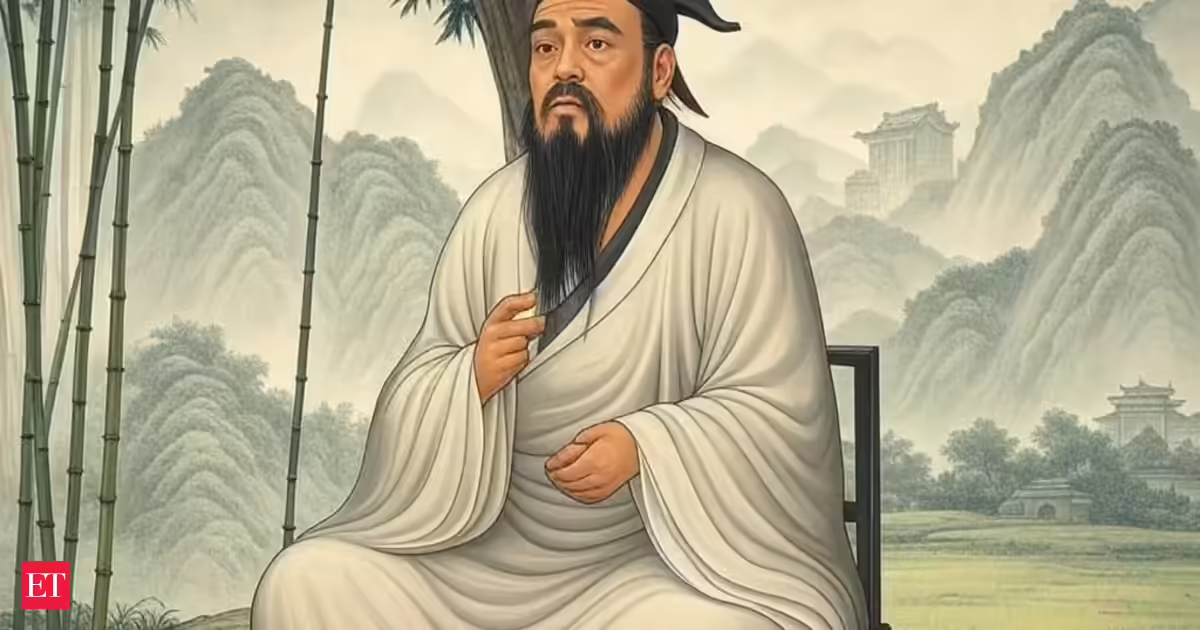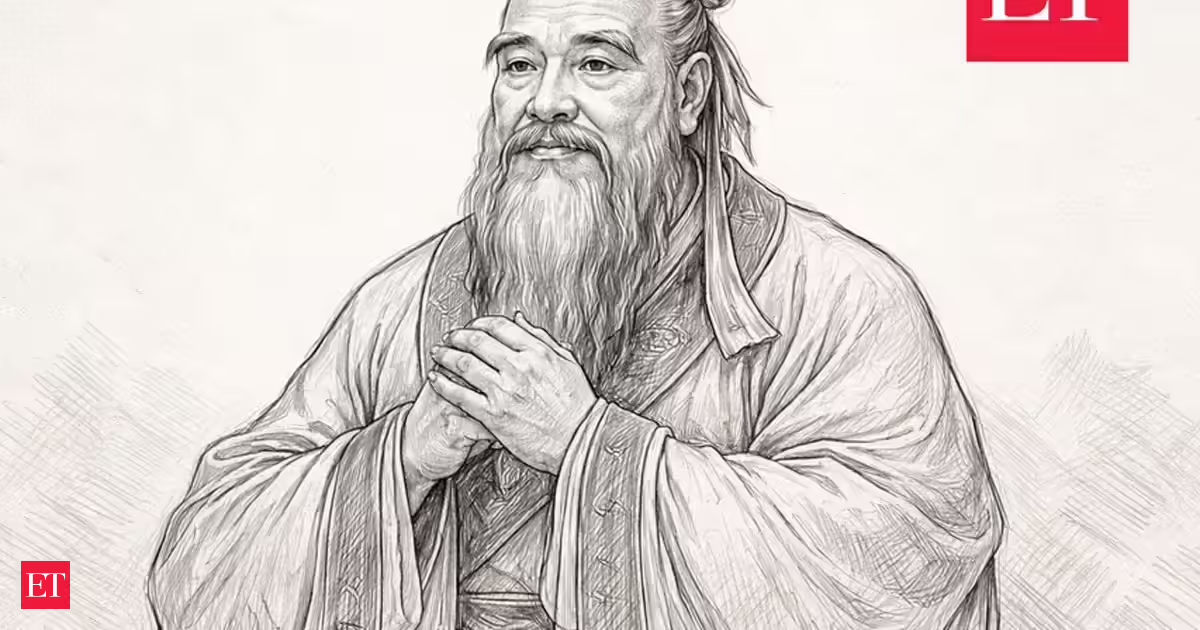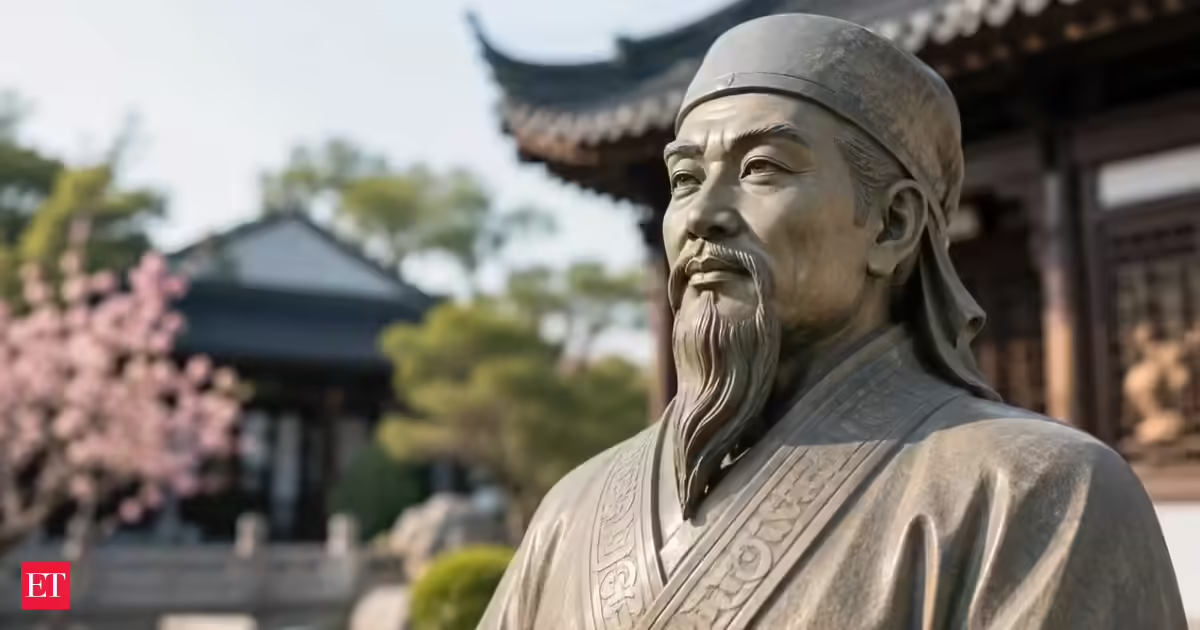
Quote of the day: For centuries, philosophers have tried to explain why some people seem able to see possibilities that others miss. Among the most influential thinkers of ancient China was Xunzi, a Confucian philosopher whose ideas challenged assumptions about human nature, discipline and wisdom. Unlike many idealistic thinkers of his era, Xunzi believed growth did not happen automatically. It required effort, learning and the willingness to rise above limitations. His teachings emphasized education, structure and perspective, themes that continue to resonate in modern workplaces, classrooms and personal relationships. One of his most enduring reflections captures the importance of stepping beyond narrow thinking in order to truly understand the world.“I once tried standing up on my toes to see far out in the distance, but I found that I could see much farther by climbing to a high place.”The quote by Xunzi may sound simple at first, but its message cuts deeply into the modern struggle for success and clarity. Instead of straining harder while remaining in the same position, Xunzi suggests that people often need a broader perspective, stronger foundation or wiser strategy to move forward.In today’s world, the lesson feels especially relevant. Many people exhaust themselves trying to achieve goals through sheer effort alone. Xunzi’s words remind readers that progress sometimes depends less on pushing harder and more on changing where and how, one is standing.You Might Also Like:Who was Xunzi?Born around 300 BCE in the Zhao kingdom of ancient China, Xunzi became one of the three major philosophers of classical Confucianism alongside Confucius and Mencius. His original name was Xun Kuang, though history remembers him as Xunzi, meaning “Master Xun.”While much of his life remains uncertain, historians believe he studied and taught among scholars at the famous Zhixia academy in the state of Qi before later moving to Chu, where he served briefly as a magistrate.Xunzi emerged during a period of political instability and intellectual debate in China. Competing schools of philosophy were attempting to answer questions about morality, society and governance. Unlike philosophers who believed people were naturally good, Xunzi argued that human beings were born with selfish impulses and required discipline, ritual and education to become virtuous.Though controversial, his ideas gave Confucian thought a more structured and practical foundation. His writings later influenced generations of political leaders, scholars and educators across East Asia.You Might Also Like:Quote of the day meaningThe meaning behind Xunzi’s quote centers on perspective, preparation and wisdom.Standing on tiptoe represents effort without meaningful change. A person may strain, struggle and push themselves endlessly, yet still fail to gain a clearer understanding. Climbing to a high place, however, symbolizes changing one’s position entirely, seeking knowledge, guidance or a broader viewpoint.The quote also reflects Xunzi’s wider philosophy that improvement comes through intentional learning rather than instinct alone. He believed wisdom was acquired through discipline, culture and education.In modern terms, the quote can apply to almost every area of life:You Might Also Like:A student may study harder but still struggle until they change their learning method.An employee may work longer hours without advancing because they lack mentorship or strategy.A person facing emotional challenges may only find clarity after stepping back and seeing the bigger picture.Xunzi’s insight suggests that effort matters, but direction matters even more.Why Xunzi’s philosophy still matters todayAlthough Xunzi lived more than 2,000 years ago, many of his ideas feel surprisingly modern. He believed society shapes individuals and that growth depends on training, habit and structure.That philosophy mirrors modern conversations around education, discipline and self-improvement. Psychologists today often discuss the importance of environment, routine and learned behavior in shaping success. Xunzi argued centuries ago that humans become better through guidance and social order.His writings also stood out because of their clarity and organization. Earlier Chinese philosophical works often relied on brief sayings or dialogues. Xunzi instead wrote detailed essays filled with sustained reasoning and analysis. This made his work influential not only philosophically but also stylistically.At the center of his thinking was the belief that wisdom requires effort. Human beings do not automatically become enlightened or moral, he argued. They must deliberately cultivate those qualities.That same idea explains why his quote about climbing higher continues to resonate with readers today.The deeper lesson behind the quoteThere is another layer to Xunzi’s words that feels especially important in the age of social media and constant comparison.People often believe success comes from doing more, working more hours, multitasking more aggressively or pushing themselves to exhaustion. But Xunzi’s metaphor suggests that transformation sometimes comes from changing perspective rather than increasing pressure.A higher place may represent education, self-awareness, experience or emotional maturity. It may even mean slowing down long enough to think clearly.The quote ultimately encourages readers to stop confusing struggle with progress. Sometimes the smartest move is not to stretch farther from the same position, but to rise to a place where vision naturally becomes clearer.More than two millennia later, Xunzi’s ancient wisdom still offers a modern reminder: clarity often comes not from force, but from perspective.You Might Also Like:
Quote of the day by Confucian philosopher Xunzi: ‘I once tried standing up on my toes to see far out in the distance, but…’ powerful life lesson by Chinese scholar on self-improvement, wisdom and escaping the trap of limited thinking
Quote of the day: Xunzis words feel especially relevant in the age of social media and constant comparison. Many people assume success comes from doing more, working longer hours, multitasking harder or pushing themselves toward exhaustion. But Xunzis metaphor suggests that real transformation sometimes comes not from increasing pressure, but from changing perspective.
833 words~4 min read