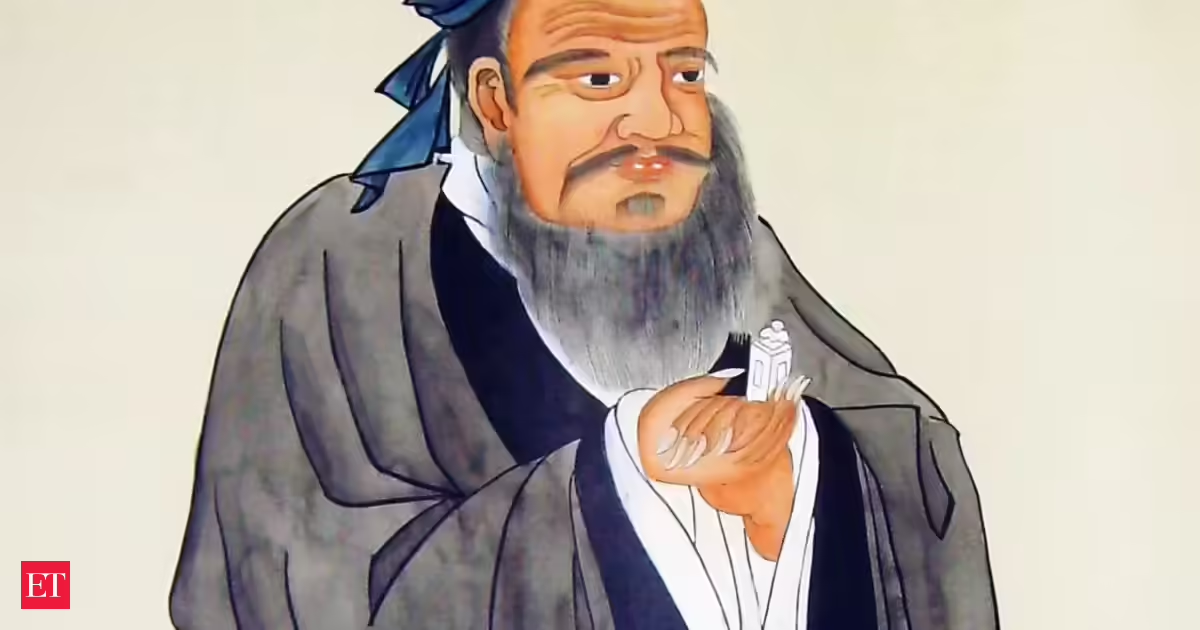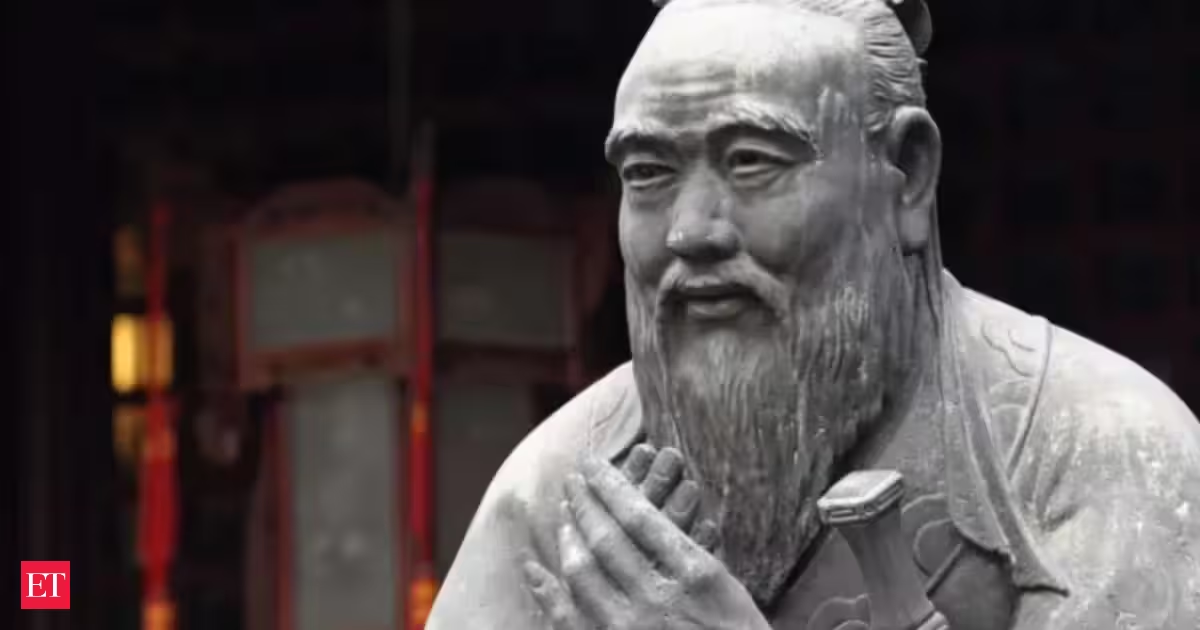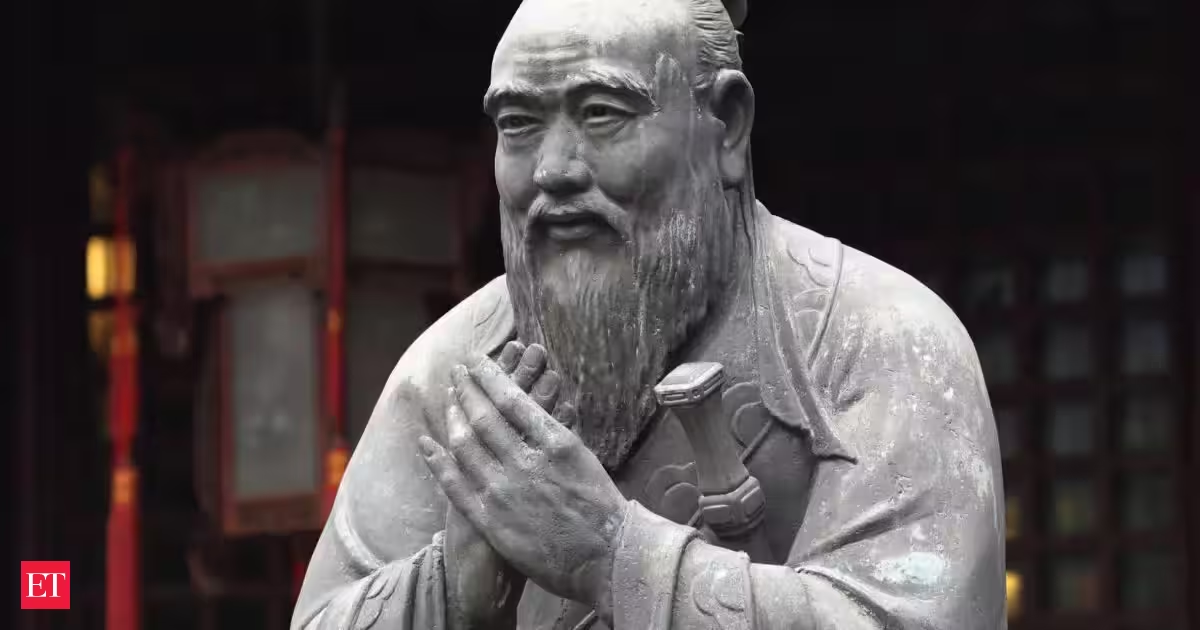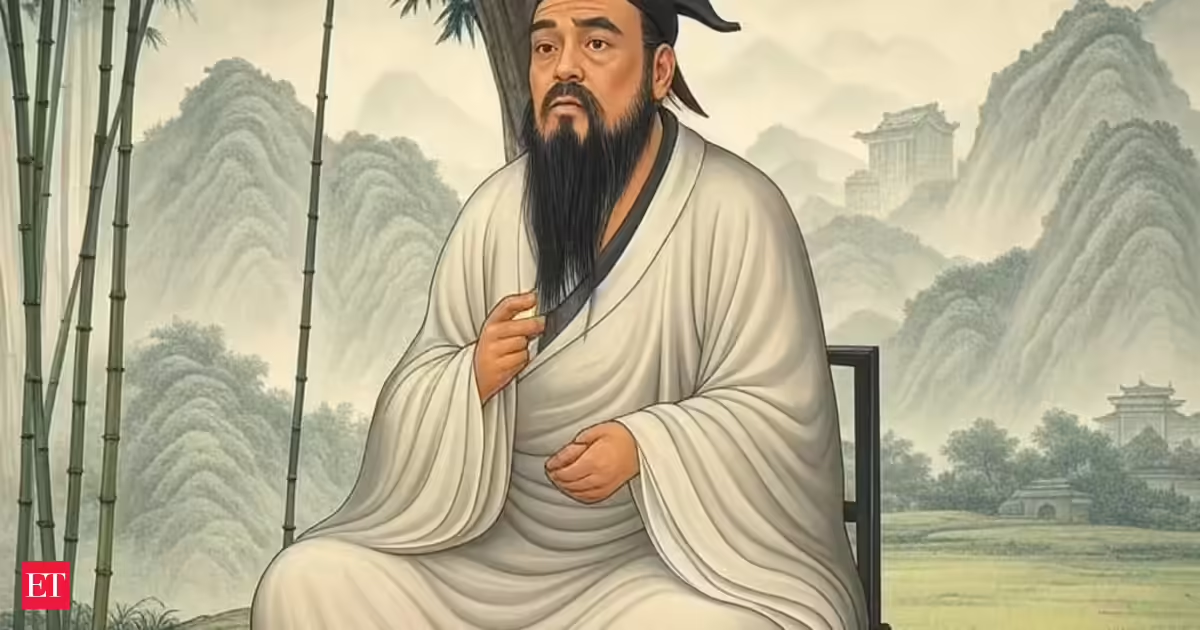
Quote of the day by Confucius continues to inspire people across the world because it speaks about responsibility and personal conduct. The Chinese philosopher believed that people become stronger when they examine their own mistakes instead of attacking others. His statement, “A great man is hard on himself; a small man is hard on others,” reflects his larger philosophy about virtue, government, morality, learning, and discipline. Confucius spent his life teaching students, advising rulers, and promoting ethical conduct. His ideas later became part of Chinese political, social, and educational traditions. The quote also connects with modern ideas about leadership, emotional control, teamwork, and personal development.Confucius said: “A great man is hard on himself; a small man is hard on others.”The quote explains the difference between a person who accepts responsibility and a person who blames others. According to Confucius, strong individuals examine their own weaknesses and improve themselves. Weak individuals spend more time criticizing other people.The statement also connects with ideas of discipline and accountability. A person who reflects on mistakes can grow in knowledge and character. A person who constantly blames others may fail to improve.You Might Also Like:Meaning of the quote and why it remains relevantThe quote teaches that success begins with self-awareness. Confucius believed that people should focus on correcting themselves before judging others. This idea remains relevant in workplaces, politics, schools, and homes.For example, a leader who accepts mistakes can gain trust from others. A student who studies weaknesses can improve performance. A parent who reflects on behavior can create better relationships with children.The quote also reflects human nature. Many people find it easier to criticize others than to admit their own faults. Confucius believed that true wisdom comes from self-control and reflection.In modern society, social media and public debates often involve blame and criticism. The quote reminds people to think about personal responsibility before attacking others. This lesson is still discussed in leadership programs, self-help discussions, and educational teachings.You Might Also Like:Life lessons from the quoteSelf-improvement is more important than criticismConfucius believed growth begins when people evaluate themselves honestly. Instead of searching for faults in others, people should examine their own conduct. This can help in careers, education, and relationships.Discipline builds characterThe quote highlights the importance of discipline. People who demand honesty and responsibility from themselves often gain respect from others. Self-discipline can improve decision-making and long-term success.Accountability creates trustA person who accepts responsibility for mistakes appears trustworthy. Confucius believed moral conduct was necessary for leadership and governance. Leaders who blame others may lose confidence and support.You Might Also Like:Emotional control mattersThe quote also teaches emotional balance. People who constantly criticize others may act from anger or insecurity. Reflection and patience can help avoid unnecessary conflict.Success requires learningConfucius connected learning with moral development. He believed education was not only about knowledge but also about improving behavior and judgment. The quote supports the idea that learning starts with humility.Life and background of ConfuciusConfucius, also known as Kong Qiu or Kongfuzi, was born in 551 BCE in Qufu in the state of Lu, located in present-day Shandong province in China. He died in 479 BCE.He lived during the Spring and Autumn Period, a time of political instability and conflict among regional states in China. Society was changing, and many rulers struggled to maintain order and trust.Confucius came from a family that had once held aristocratic status. However, by the time of his birth, the family had lost much of its wealth and influence. His father, Shu-liang He, served as a warrior and district steward but died when Confucius was young.Because of his family’s condition, Confucius had to work in modest positions early in life. He served as a keeper of granaries, livestock manager, and district officer before entering government service.Confucius as teacher and political thinkerConfucius later became known as a teacher and philosopher. He believed that rulers should govern through moral example instead of fear and punishment.He also believed education should be available to people from different social backgrounds. Many students followed him to learn about government, ethics, ritual practices, music, poetry, and conduct.Some of his well-known disciples included Zigong, Zilu, and Yan Hui. Each student had different strengths and personalities. Confucius adapted his teachings according to the needs of the learner.He spent years traveling across different Chinese states searching for rulers who would support his ideas about virtuous government. Although many rulers respected him, few fully adopted his political vision.The Analects and Confucian teachingsThe main source of Confucius’s teachings is the Analects. The text contains conversations, teachings, and reflections collected by his disciples.Confucius taught about ritual, morality, music, poetry, governance, and human relationships. He believed society could become stable if people behaved with honesty, respect, and responsibility.One important idea in his philosophy was “ren,” often translated as humaneness or humanity. He also emphasized “li,” meaning ritual and proper conduct.Another famous teaching associated with Confucius is: “Do not impose on others what you do not want others to impose on you.” This idea influenced later moral and ethical traditions.Confucius on government and leadershipConfucius argued that rulers should gain trust through conduct instead of relying only on punishment or strict laws. He believed leaders should set moral examples for society. According to his teachings, people are more likely to follow good conduct when they see honesty and integrity in authority figures.This connects closely with the quote about being hard on oneself. Leaders who examine their own faults can govern more effectively than leaders who constantly blame others. His ideas later influenced Chinese administration, education systems, and civil service traditions for centuries.Influence of Confucius across historyConfucius became one of China’s most influential thinkers. His philosophy shaped Chinese civilization and influenced countries across East Asia. Later philosophers such as Mencius and Xunzi expanded and debated his teachings.During later dynasties, Confucian texts became important parts of state examinations and government education. His ideas remained connected with morality, politics, learning, and family conduct.Archaeological discoveries in modern times have also uncovered ancient bamboo texts related to Confucian thought, showing the long historical importance of his teachings.Why the quote still matters today?The quote remains important because it speaks about personal responsibility. In professional life, relationships, politics, and education, people often face situations involving blame and criticism. Confucius’s message encourages individuals to improve themselves first. The quote also promotes humility, patience, and self-awareness.Modern discussions about leadership, emotional intelligence, and personal growth often reflect ideas similar to Confucian philosophy. The statement reminds people that lasting success depends on self-correction rather than criticism of others.You Might Also Like:
Quote of the day by Confucius: “A great man is hard on himself; a small man is...” Life lessons on success, human nature and achievements by China’s popular philosopher
Quote of the day by Confucius explains how people should focus on self-improvement instead of blaming others. The quote shares lessons on success, discipline, human nature, leadership, and achievements. Confucius believed that growth starts with self-examination. His teachings influenced China and many East Asian societies. The quote remains relevant in workplaces, families, politics, education, and personal life because it encourages accountability, learning, and moral conduct.
1,081 words~5 min read