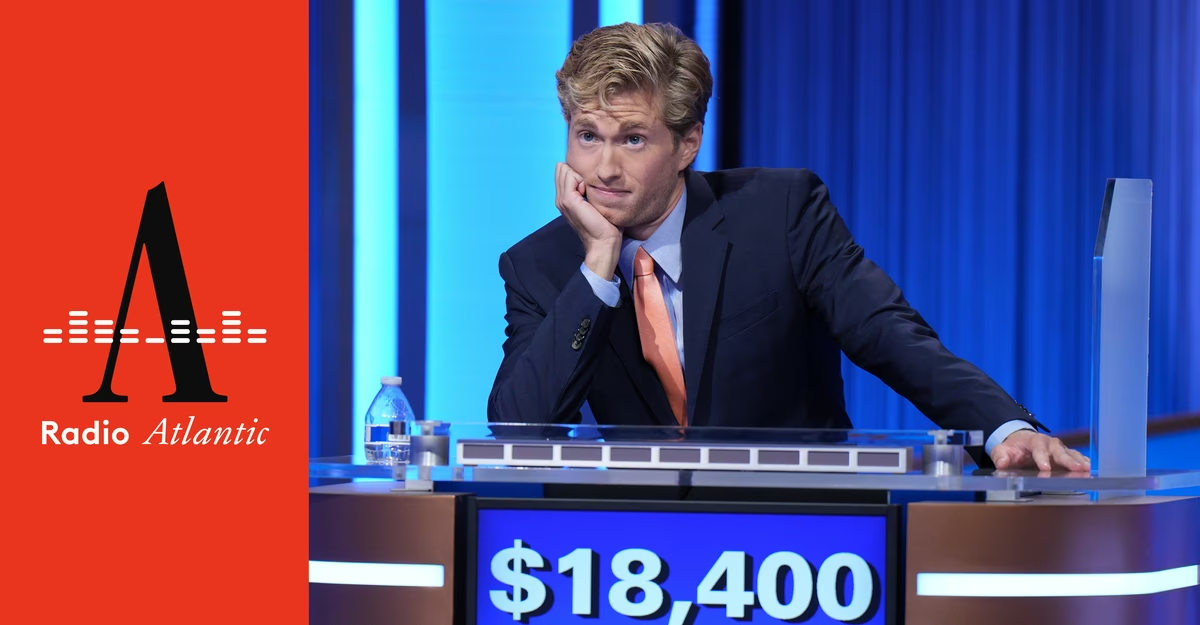
Facts are funny things. It was a fact, for instance, that in the spring of 2024 I won $132,000 playing trivia. That May, I’d flown from Oxford, where I was a graduate student, across the Atlantic to a soundstage in Los Angeles, and played for eight good days on Jeopardy!
It was also a fact—one I liked to tastefully overlook when asked at holidays or on trips home—that I was unemployed, that I’d gone to Oxford for a master’s degree in large part to escape further unemployment. But I had been decent on Jeopardy!, and I knew that decent trivia players were often invited back for a second chance at more money. Returning to the show, however—for something like the Tournament of Champions or the Jeopardy! Invitational—meant facing tougher questions against better players. And it was a fact that, to prepare for this possibility, I would need to throw myself into the world of competitive trivia, or quiz.
Quiz is many things to the disciple. It is not simply trivia. It is not simply a hobby. It verges, for the believer, on a way of life. Originating out of Depression-era American radio quiz shows and really taking root in the UK in the 1970s, quiz is a species of especially rigorous trivia, with regimented online competitions and questions that tilt toward the obscure. Elite quizzers are known to prep for, at minimum, two or three hours a day, thumbing through hundreds of thousands of flashcards at rapid-fire pace. They participate in four or five leagues a week. This can be all-consuming, but it can also vault the elite quizzer into a rarefied echelon of erudition. These players have spent decades in the ceaseless memorization of facts and are nearer, maybe than anyone else in history, to the sum total of human knowledge.