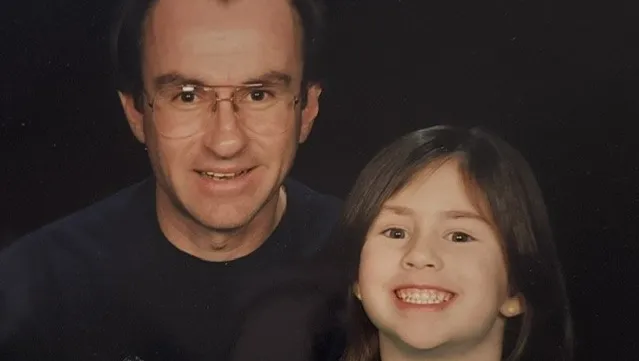
Show Caption
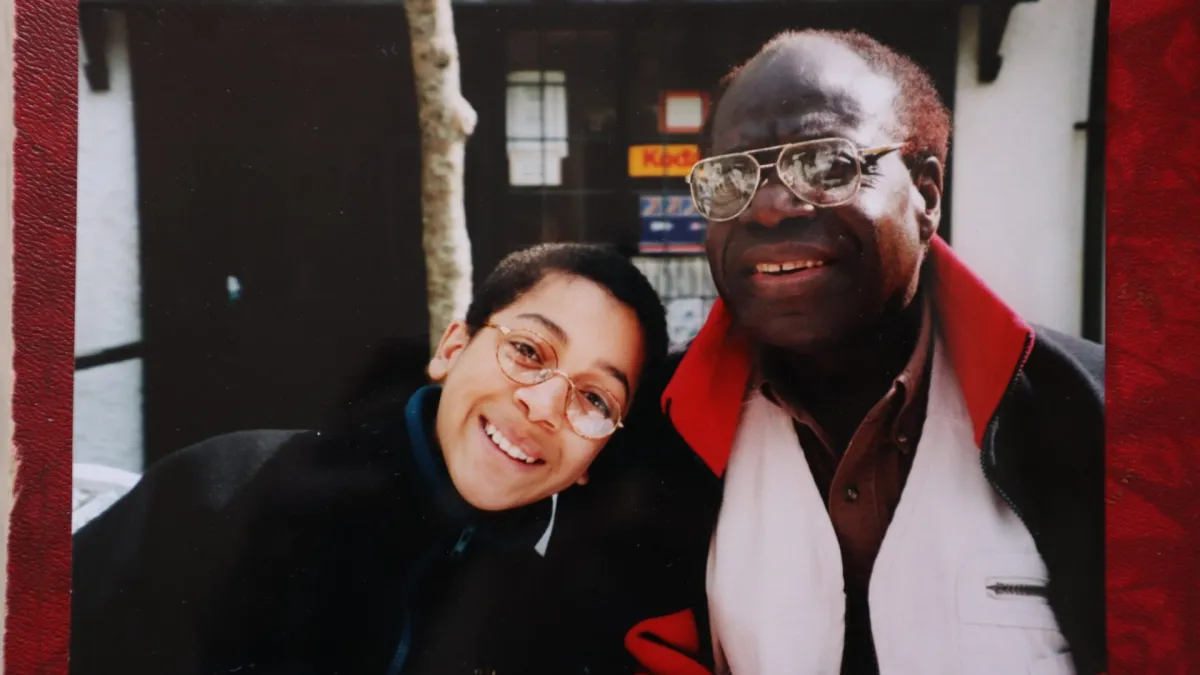
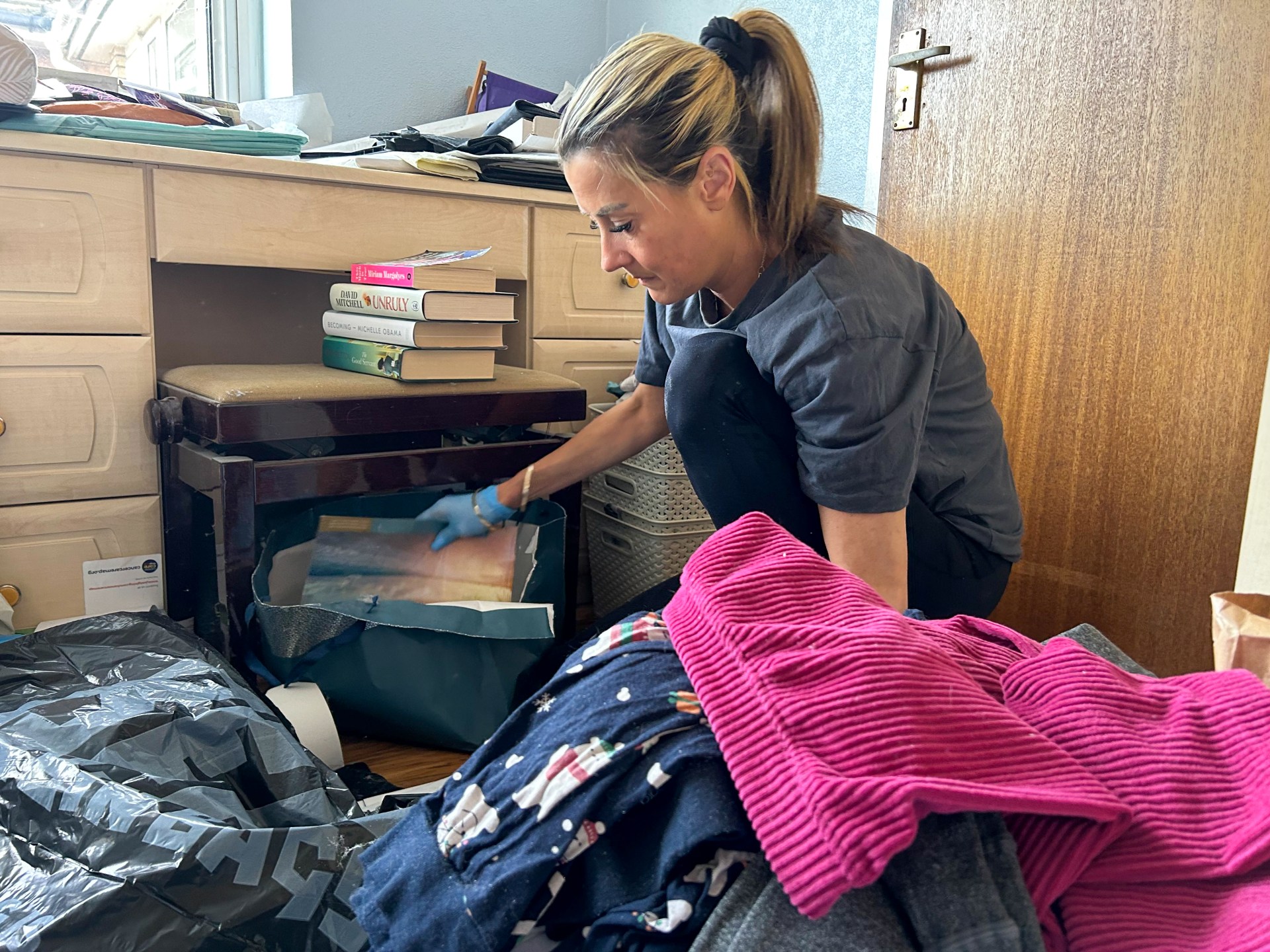
Wearing a hazmat suit and blue gloves, Madison Lovelle, 40, opened the doors and windows to her late father's Oklahoma condo, willing fresh air inside, and got to work.In the timelapse video, she walked her more than 860,000 Instagram followers through the day's tasks, which focused on one corner of her father's hoarded bedroom. She threw away countless envelopes, plastic bags and wire hangers among "piles on top of piles on top of what I'm pretty sure is a chair, or maybe a basket," she said. She was surprised to find a box of her parents' engagement photos, as they divorced when she was 2 years old."Here's the thing nobody really tells you," Lovelle said in the video. "Cleaning out a hoarded room is basically like making 10,000 tiny decisions, while also processing grief, and occasionally arguing with a broken lamp. Because why is it hard to throw away a broken lamp?"It's estimated that 2-6% of the population suffers from hoarding disorder, according to the International OCD Foundation, and symptoms are most common in adults 55 and older. Studies have found the severity increases with age. Because of the stigma that persists around hoarding, people with hoarding disorder and their families tend to hold guilt and shame that is only complicated further when the person who hoarded dies. While grieving, the caregivers left behind then also face the emotional, time-consuming and sometimes expensive or dangerous job of cleaning out their loved one's home.Lovelle's videos have drawn tens of thousands of comments, many from family members of people with hoarding disorder.Lovelle knew her dad had been collecting things since her parents' divorce. She told USA TODAY that as a kid, she wasn't allowed to get rid of anything, including dresses from when she was an infant. It's why she moved out early, opting to stay with friends in her high school years to avoid the clutter and shame she felt at home. She tried to get her dad help later on, but he was resistant, she said.He died in June 2024, after a stroke left him in need of constant care, which she provided. They were close, but when he had the stroke Lovelle said it was the first time she'd seen his home in 17 years. She'll never forget the call."He was upstairs, and he could not get downstairs," she said. He begged her not to call emergency responders because he didn't want strangers in his home. "And honestly, I don't know that they would have been able to get through there."Hoarding, mental health and why some people can't throw things awayHoarding disorder is more common than people think, said Anne Pagano, a clinical social worker and founder and executive director of the Hoarding Disorder Resource and Training Group in Westchester, New York. People with hoarding disorder are often "very astute at keeping people from actually coming in" to their homes, Pagano said, hiding health and fire hazards and making it difficult for their loved ones to know the condition of their living space for years.Hoarding disorder is a mental health condition classified under obsessive-compulsive and related disorders, according to the Diagnostic and Statistical Manual of Mental Disorders. It affects people's executive functioning and organizational abilities, Pagano said, and often results in excessive acquisition of items and extreme distress at the thought of discarding anything.Lovelle, a self-described "daddy's girl," said she and her father only fought once, when she was in college. It was about the state of his condo, and he told her he'd call the police if she removed things from his home without his permission."You can't make sense out of it, but there was this connection to the stuff," Lovelle said. "He genuinely was worried about that stuff going in the trash. And it really did cause him a lot of anxiety."Some people with hoarding disorder have "clutter blindness," Pagano said, and "truly do not see what others see.""It's not laziness. It's not being a slob. It is a psychiatric issue," Pagano said.Hoarding disorder can start in childhood, or be triggered by a traumatic event. There are also genetic and generational components to hoarding, said Mary Dozier, an associate professor of psychology at Mississippi State University who studies hoarding. "Our parents teach us what to value, what to not value," she said. Sometimes, Dozier said, caregivers who inherit hoarded homes become so overwhelmed that they, too, can never dig out of their familial hoard.While cleaning out her father's home, Lovelle said she found boxes of property tax records that belonged to her great-grandmother, who she never met. She deduced her grandfather must have kept those papers and given them to her father, who also couldn't part with them."It was when I opened that metal box and saw my great-grandmother's property taxes from 1959 that I was like, 'You know, I do not want to do this to my son,'" she said. "I think it's OK that we start getting rid of a lot of this stuff."'It's so much more common than you realize'Pagano works with families like Lovelle's to clean out hoarded homes after their owners die. Sometimes, she said, families don't want to see the home at all and hire companies to purge everything. Other families wait years after their loved one has passed before entering a hoarded home, she said, citing overwhelm and trauma on top of other emotions like grief, shame and anger. She tries to help them find the best steps forward, including talking to real estate agents, hiring cleaners and uncovering the few items that do have familial or historical value to those still living.Lovelle worked with a mental health counselor who helped her confront the mess and her own grief and anxiety wrapped up in the house. The first time she went back there, she couldn't stop crying. She didn't feel any anger or resentment, she said. Just relief."You worry your whole life that your dad is in there. He was living like that, and it killed me. And all I wanted him to do was be safe and be OK," she said, through tears. "After he finally passed, I missed him terribly. But I was just so relieved to know that he wasn’t in pain, and he wasn’t trapped in that body that couldn’t keep up with him anymore, and he didn’t have to live in that condo."Now, Lovelle said she's about 75% done with the physical clean out of her father's home. Once that's done, she'll pivot to remediation.She considered hiring cleaners, but ultimately decided that she needed to clean his home herself. The process has been healing for her, she said, and also feels like the "last act of love" she can do for her dad. She's been overwhelmed by the kindness and support from strangers, thousands of whom have reached out since she started posting videos."On the really hard days, when I don't want to show up anymore, I have to because I have to make a video. Everybody's waiting for an update," she said. "What I've realized that's been the most surprising is how many people actually have experienced this. It's so much more common than you realize."Expert advice for those caring for loved ones with hoarding disorderThe worst thing a caregiver can do to "help" a loved one with hoarding disorder, Pagano said, is clean their home for them.She's seen adult children wait until their parents are away − or book them a trip to get them out of the house − and then go in with dumpsters, without asking, to get rid of their parents' things. That's not the way to go, she said. Instead, Pagano and Dozier suggest having gentle, boundary-setting conversations that might encourage a loved one to address their hoarding habits."Saying, 'You know, I'd love to visit you. I'd love to have your granddaughter come over, but I'm uncomfortable. I don't think it's safe for her here, she can trip on things,'" Pagano said.Ask what their goals are, Dozier said, especially when it comes to aging and retirement. Do they want to age in place? Do they want to find a retirement community? Both options probably involve downsizing and decluttering, Dozier said. Do they want to cook more? Then, they'll need clean countertops. It's important to ask about their sleeping, showering and eating habits, she said, to determine if hoarding has gotten in the way of their ability to use their bed, bathroom or kitchen. She suggests caregivers visit the International OCD Foundation website for other resources.If the person who is hoarding is open to receiving help, caregivers can try partnering with them and going very slowly through their piles of things, or hiring someone to work with them. Sometimes Pagano suggests therapy for her clients who need to talk through the emotional baggage that can come up when going through their belongings.She also reminds people that hoarding disorder has a very high relapse rate. Once a home is cleaned out, the person with hoarding disorder should have regular check-ins with friends, family or case workers to keep the clutter from re-accumulating."Having that oversight or that supervision really is mandatory, or else there's going to be a slippery slope and things are going to build up again," Pagano said. "It's not a quick fix."Madeline Mitchell's role covering women and the caregiving economy at USA TODAY is supported by a partnership with Pivotal and Journalism Funding Partners. Funders do not provide editorial input.Reach Madeline at memitchell@usatoday.com and @maddiemitch_ on X.