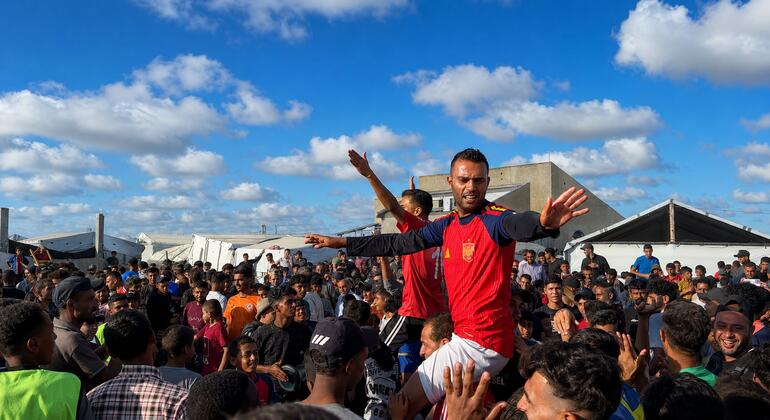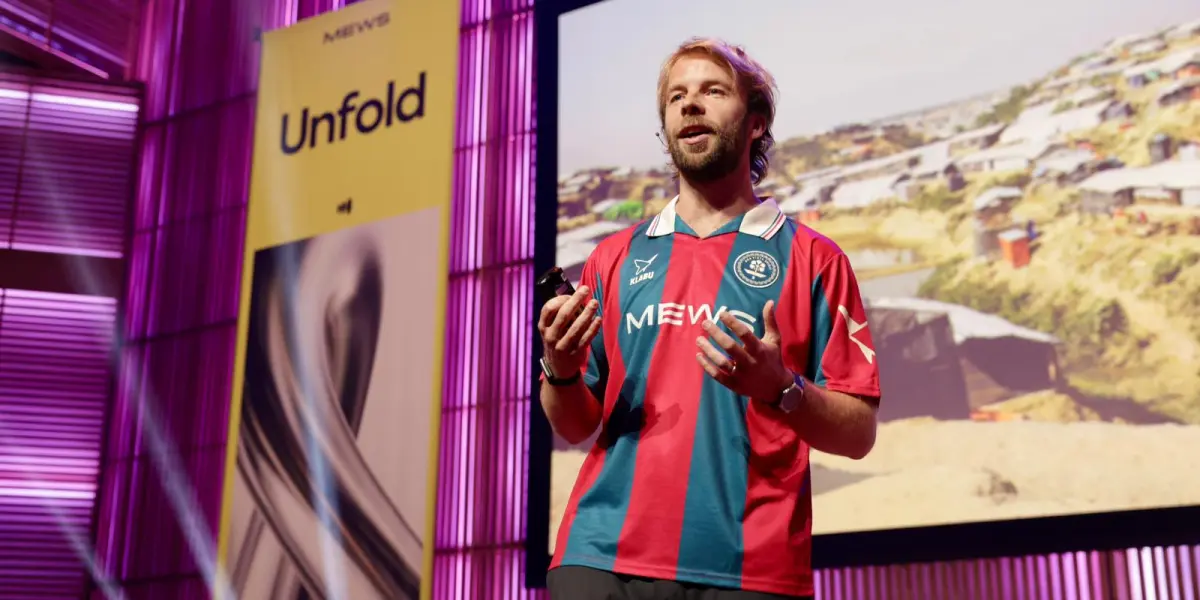
At 18, Jan van Hövell brought a soccer ball to the Buduburam refugee camp in Ghana during a 2004 internship with the UN Refugee Agency. He said it was a terrible system, just one ball from one intern, and thousands of kids with nothing to do.
“I was the one bringing my football, and we would play, and we would connect, and we would have good times,” he says. “But I was also the one bringing my football, and I thought this couldn’t be the solution.”
He studied law, then spent five years in mergers and acquisitions at a top Amsterdam firm—lucrative, prestigious, and completely wrong for him. In 2016, he quit and wrote to his contacts at UNHCR, asking: “Can you give me a chance to go to a refugee camp and work with the community to find a solution for the lack of sports opportunities in refugee camps?”
The UN said yes. To pay his bills during the startup phase, van Hövell moonlighted as a professional DJ at weddings and corporate events while building what would become KLABU, Swahili for “club,” and formally launched as a foundation in 2019. The social enterprise builds sports clubhouses inside refugee camps: each one is a repurposed shipping container outfitted with solar panels, wifi, a TV screen, and a music system. Attached to it is a sports “library” where residents borrow equipment, like soccer balls and volleyball nets, to chess sets and running shoes, and then return the items so thousands of others can share them.