US money market funds pulled in $120 billion this month, a wave of capital that speaks less to panic and more to a quiet rewiring of how America’s biggest financial institutions handle their cash.
US money market fund assets now sit at roughly $8.2 trillion. For context, that’s approaching the record of $8.31 trillion set in 2025. The current pile of cash parked in these vehicles is larger than the GDP of every country on Earth except the US and China.
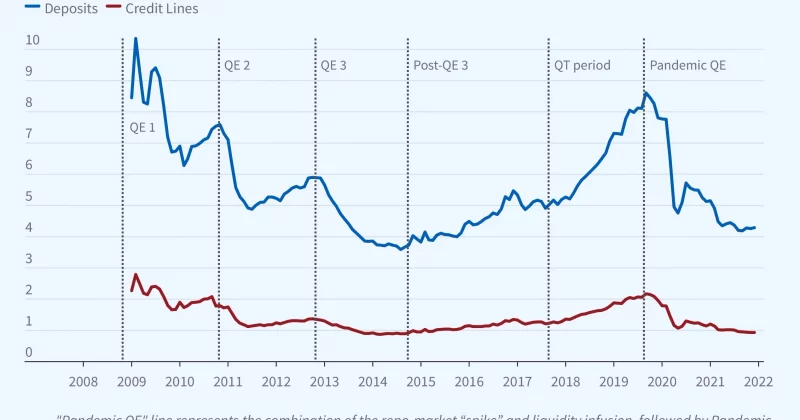
The $120 billion monthly influx isn’t just big depositors chasing slightly better yields. It reflects a more fundamental recalibration happening inside large banks. Banks have been adjusting how they manage reserves, partly in response to regulatory requirements and partly because the competitive landscape for deposits has shifted. Money that might have once sat comfortably in bank deposits now moves toward money market funds, which invest primarily in short-term government debt and high-quality commercial paper.
Large banks are rethinking deposit competition, not necessarily because they don’t want deposits, but because regulatory capital requirements make certain types of deposits more expensive to hold. Money market funds offer daily liquidity, competitive yields tied to short-term rates, and the kind of safety profile that institutional treasurers can explain to their boards without breaking a sweat.