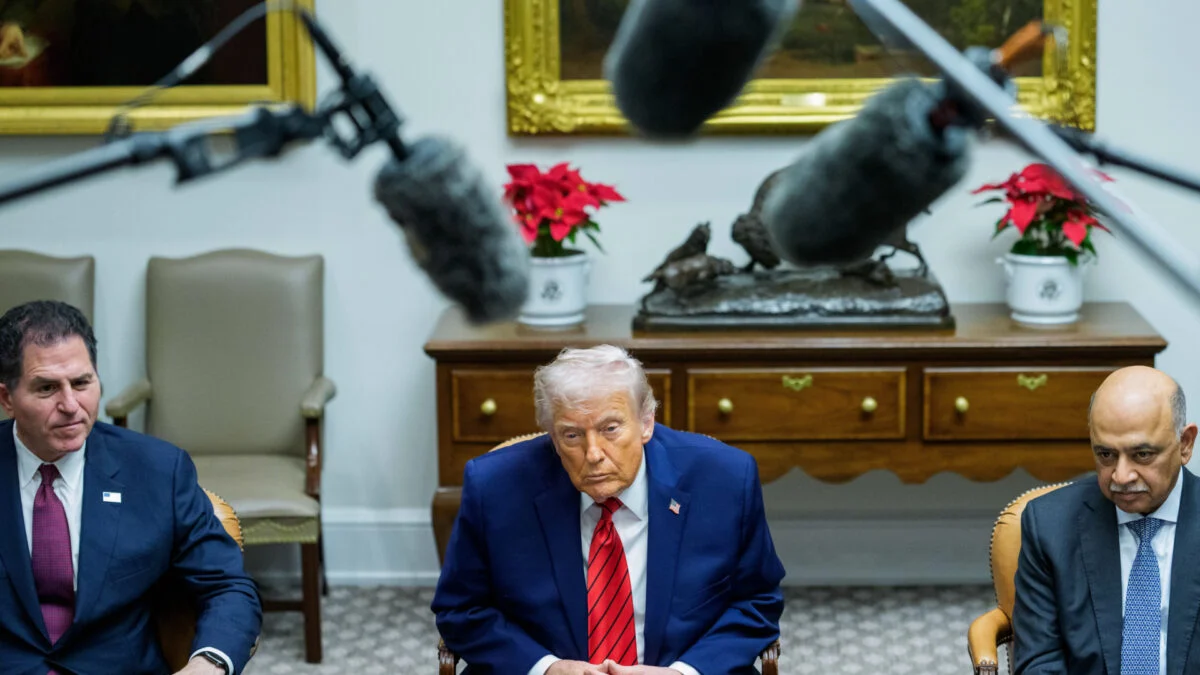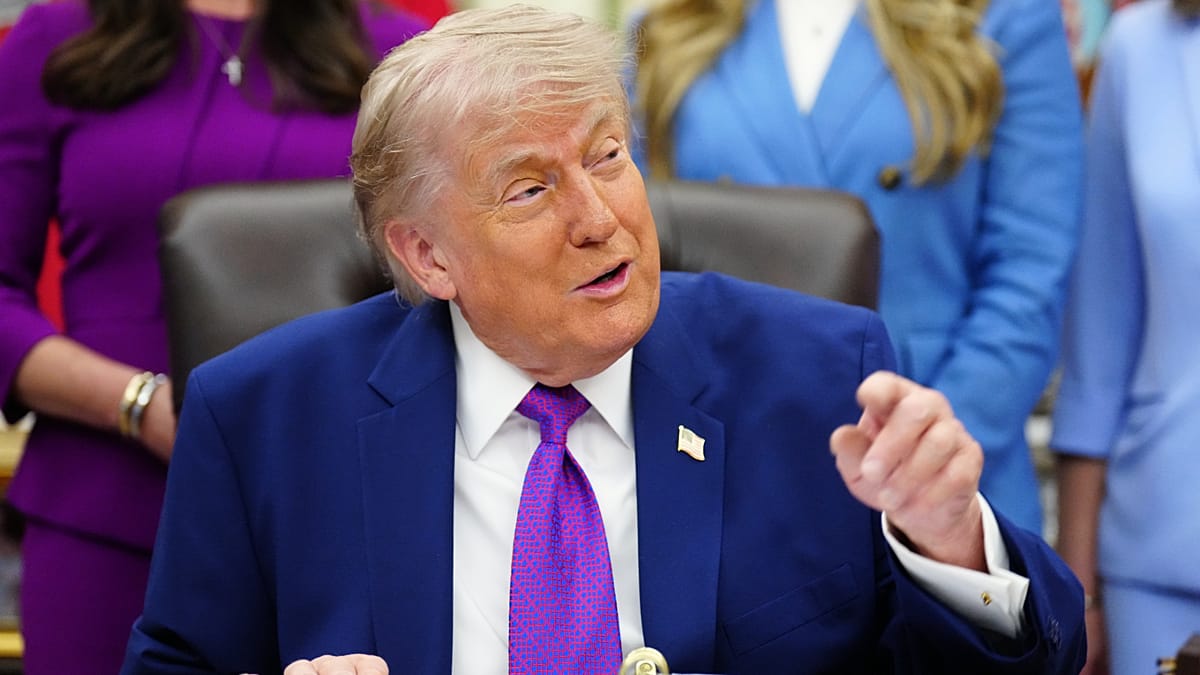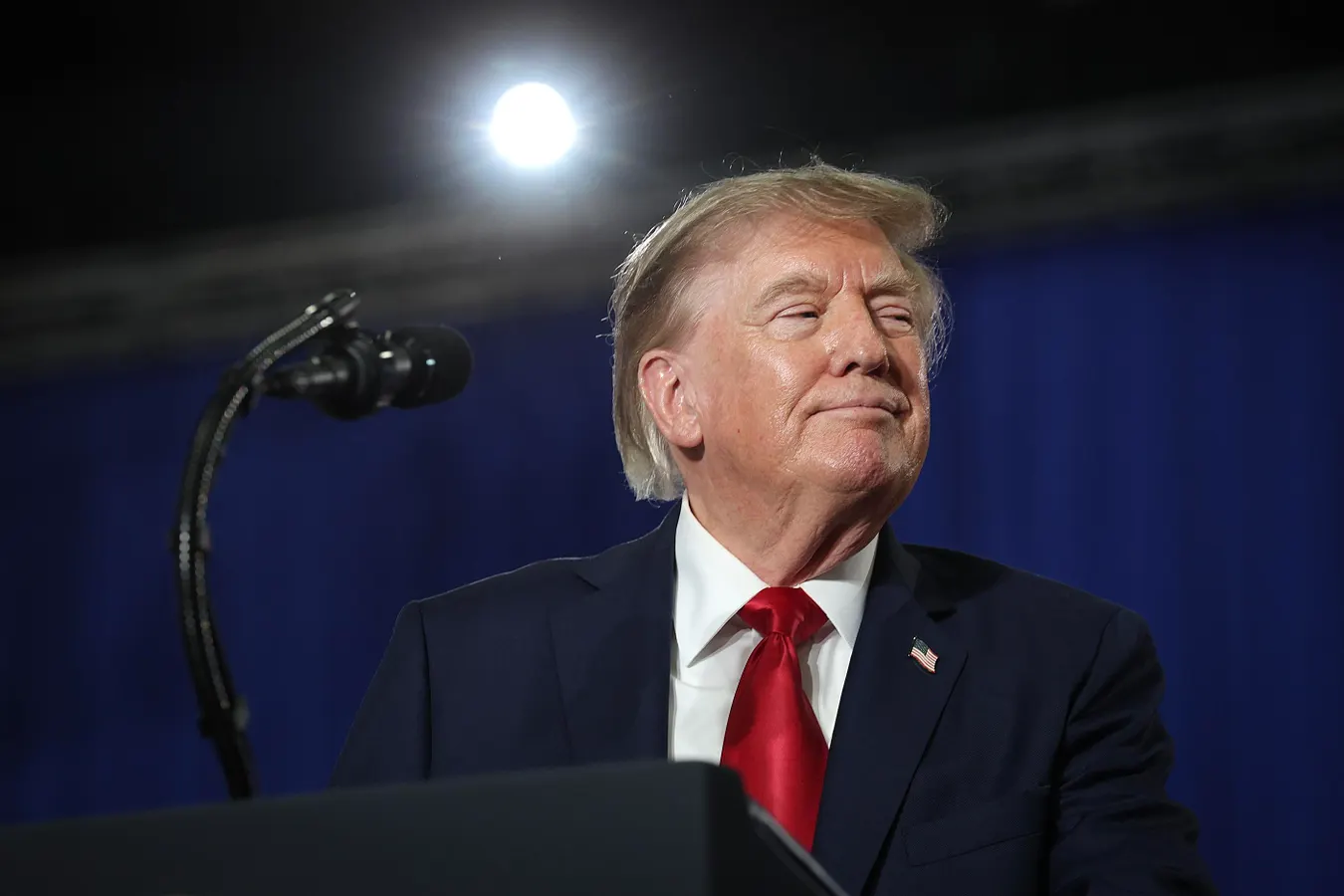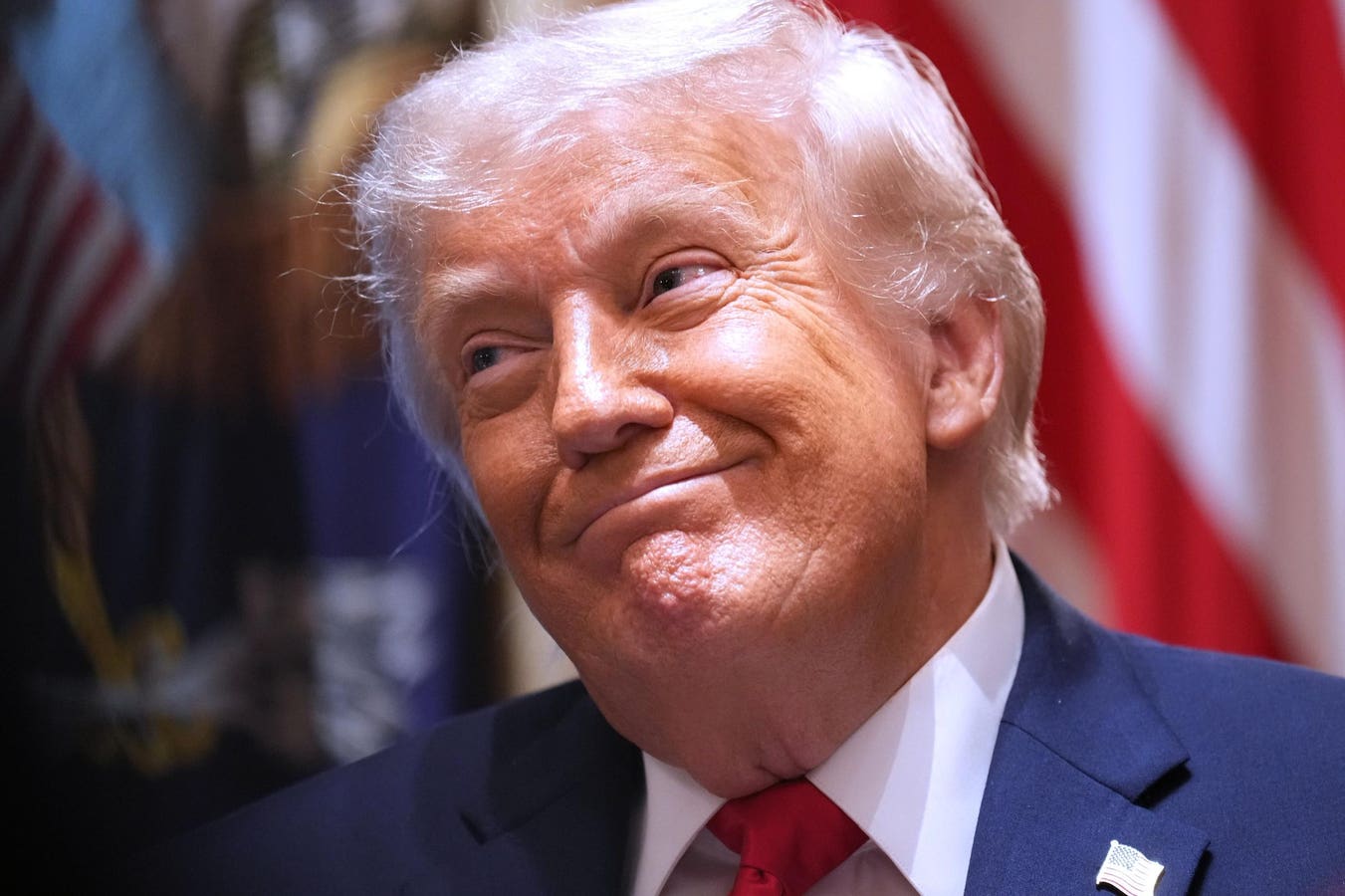
President Donald Trump listens to praise during a Cabinet meeting at the White House.AP Photo/Jacquelyn MartinEarly on in his second term in office, Donald Trump eased his way into a Tesla and delivered a delighted review to the car’s manufacturer, his biggest billionaire benefactor, Elon Musk. “Everything is computer!” Trump exclaimed.This year, the president has brought that philosophy to his investment portfolio. Trump revealed in a series of filings this month that he made nearly 4,000 trades between January and March. That’s 44 per day on average and almost three times more than all of 2025 combined. Total trading volume was between $200 million and $700 million. Unlike his recent Oval Office predecessors—including himself—Trump isn’t just buying and selling bonds, broad-based index funds and money markets. Scores of individual publicly traded companies are getting the presidential seal of approval or disapproval, making the commander-in-chief something like a one-man market signal.Every time one of those companies is added to or subtracted from his portfolio, the questions multiply. Does it do business with the government? Does it need regulatory consideration? Does it want export approvals, tax favors, federal contracts, antitrust restraint, White House praise or a seat at the table?Forbes analyzed the president’s largest stock trades, roughly 240 that were larger than $250,000. The pattern that emerged is clear: All of his 10 best buys were tech company stocks, boosted by the unregulated AI boom Trump has made a centerpiece of his economic policy. Everything is, indeed, computer.Tesla was not actually one of the companies that made up Trump's best stock bets at the beginning of the year.Andrew Harnik/Getty ImagesTrump’s best apparent bet was Dell. The President bought between $1 million and $5 million of Dell shares on February 10; the company’s stock, buoyed by AI data center deals, is up 142% since then. That means that if he bought $3 million of shares, the middle of his declared range, they’d be worth about $7.3 million today. And Trump did not stop there. He bought the company’s shares three more times, all smaller amounts, in March, then gave the company an unusually convenient bit of presidential pumping on May 8. “Go out and buy a Dell,” he declared from the White House after an event with CEO Michael Dell. The stock closed 11.5% higher that day and is up 31% since. That’s not the only plumbing-of-the-AI-economy company Trump has made a killing on. Semiconductor manufacturer AMD is up 136% since the president—who last year allowed the company to export advanced chips to China in exchange for a 15% cut for the U.S. government—bought between $500,000 and $1 million of its shares in February. He invested nine more times after that, but also sold between $15,000 and $50,000 in late March, which may have blunted some of his gains. On January 12, he bought between $1 million and $5 million of Texas Instruments, which sells components for AI chips and promised more $60 billion in investments last year in a press release that included a statement from commerce secretary Howard Lutnick. TI’s stock is up more than 60% since the president bought in. Then there’s Jabil, which makes AI server hardware and earned plaudits from an official White House account last June for its announcement of its own manufacturing investments in the U.S. It’s up 40% since the president invested in February. Democrats have called the trading what it looks like to them: greed and self-dealing. “The President’s corruption is a national security disaster,” Massachusetts Sen. Elizabeth Warren posted after Trump bought Nvidia stock, then brought Nvidia CEO Jensen Huang along with him to China. Trump’s allies deny that, of course. “All of our assets are invested in a blind trust by the largest financial institutions in broad market indexes,” Eric Trump replied to Warren on X. That clearly isn’t true. The president owns shares in companies, not just index funds. And the trust that contains his assets is not blind. Pushback continued nonetheless: “The President doesn’t sit at the Oval Office on his computer on a Robinhood account buying and selling stocks,” vice president J.D. Vance more plausibly told reporters on May 19. That same day, Eric posted a lawyerly passage claiming that his dad’s portfolio was contained in “fully discretionary accounts managed by independent third-party financial institutions” and that “neither President Trump, his family, nor The Trump Organization has any role in selecting, directing, approving, influencing or soliciting specific investments.”In response to a request for comment, White House spokesperson Anna Kelly said “there are no conflicts of interest” and called such questions a “tired narrative.” The Trump Organization sent Forbes a statement identical to Eric’s post, attributable to a spokesperson.Federal rules only require the president to declare a range of values on each trade—say, $500,000 to $1 million—so it’s unclear exactly how much the president made off each transaction. But assuming the median for each trade’s range, here are his 10 best stock purchases so far this year, which collectively made the president an estimated $12.7 million richer.Donald Trump’s Ten Best Stock Purchases Of 2026Values are as of the close of markets on Tuesday, May 26. Figures are rounded.1. Dell (ticker: DELL)Purchase: $1 million to $5 million on February 10Stock change since main purchase: +142%Median value gain: $4.3 millionTrump bought at least $31,000 in additional shares in March. Michael Dell and his wife Susan donated $6.25 billion to the U.S. Treasury in December 2025 to fund the creation of “Trump accounts,” a new savings vehicle created by Republicans in their tax cuts package, for additional kids under 10 who missed the cutoff for a government contribution. 2. Texas Instruments (TXN)Purchase: $1 million to $5 million on Jan. 12Stock change since main purchase: +72%Median value gain: $2.2 millionThe president bought smaller amounts of TI shares 12 additional times across three months, totaling at least an additional $220,000. 3. Jabil (JBL)Purchase: $1 million to $5 million on Feb. 10Stock change since purchase: +47%Median value gain: $1.4 millionBased in the president’s adopted home state, Jabil earned three additional purchases from the president in March totaling at least $115,000. 4. Advanced Micro Devices (AMD)Purchase: $500,000 to $1 million on Feb. 10Stock change since purchase: +136%Median value gain: $1 millionTrump already owned a small stake in this chipmaker when he took office. He reports selling some of it in January, then buying it all back and then some over the subsequent three months. AMD CEO Lisa Su visited the White House in September to take part in an AI in Education Task Force event, an initiative led by Melania Trump, and was appointed to an AI advisory panel in March. 5. Cadence (CDNS)Purchase: $1 million to $5 million on Mar. 17Stock change since purchase: +30%Median value gain: $900,000In July 2025, this chip software company pleaded guilty to selling software to a Chinese military university in violation of U.S. export controls, paying a fine of $140 million. Trump owned a small stake when he took office, sold it in January, then rapidly bought it back. 6. Oracle (ORCL)Purchase: $1 million to $5 million on Mar. 17Stock change since purchase: 25%Median value gain: $750,000Trump traded Oracle at least 17 times between January and March, buying and selling tranches ranging from $1,000 to at least $1 million in size. His big purchase came roughly a week before he appointed chairman Larry Ellison, one of the world’s richest men and a Trump benefactor, to an AI advisory panel on March 25. 7. Synopsys (SNPS)Purchase: $1 million to $5 million on Feb. 10Stock change since purchase: 22%Median value gain: $650,000The president made additional smaller purchases of its stock in January and March. Synopsys has also been caught up in U.S.-China trade tensions—the company’s merger with a Chinese engineering firm was reportedly only approved by Chinese regulators last year after the U.S. loosened restrictions on chip sales. 8. Datadog (DDOG)Purchase: $500,000 to $1 million on Mar. 17Stock change since purchase: 74%Median value gain: $550,000This cloud computing company saw nine additional transactions from the president between January and March. 9. Apple (AAPL)Purchase: $1 million to $5 million on Mar. 2Stock change since purchase: 16%Median value gain: $500,000Apple CEO Tim Cook has pursued a close relationship with the Trump administration, gifting the famously gold-loving president a gilded plaque before securing a tariff exemption for his company. He accompanied Trump to China in May after the president bought and sold millions in Apple stock over the course of three months. 10. Fortinet (FTNT)Purchase: $500,000 to $1 million on Mar. 17Stock change since purchase: 61%Median value gain: $450,000The president kicked off the year by selling a big tranche of shares in Fortinet, a cybersecurity company, but by March had bought his stake back and then some. Good move—the stock has soared.
Here Are Donald Trump’s 10 Best Stock Trades Of 2026
The president took millions from Big Tech to get re-elected, then bent AI regulation in their favor while reaping the proceeds personally.
1,455 words~7 min read