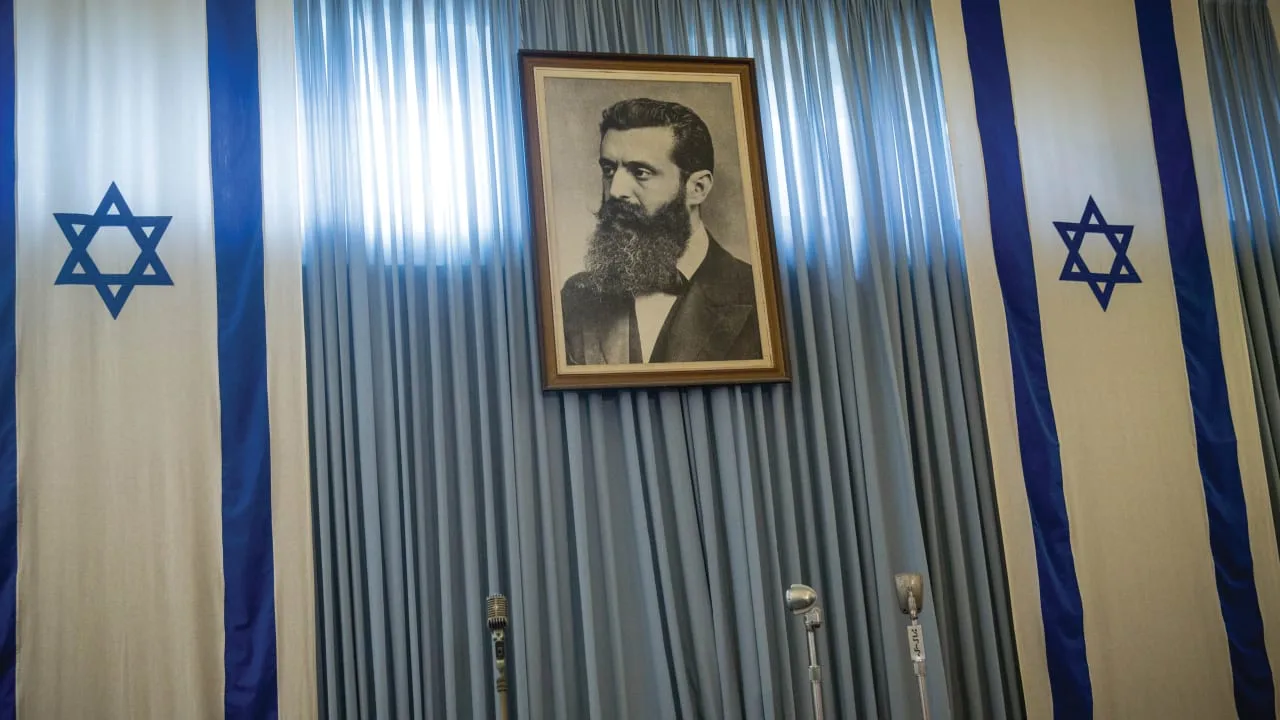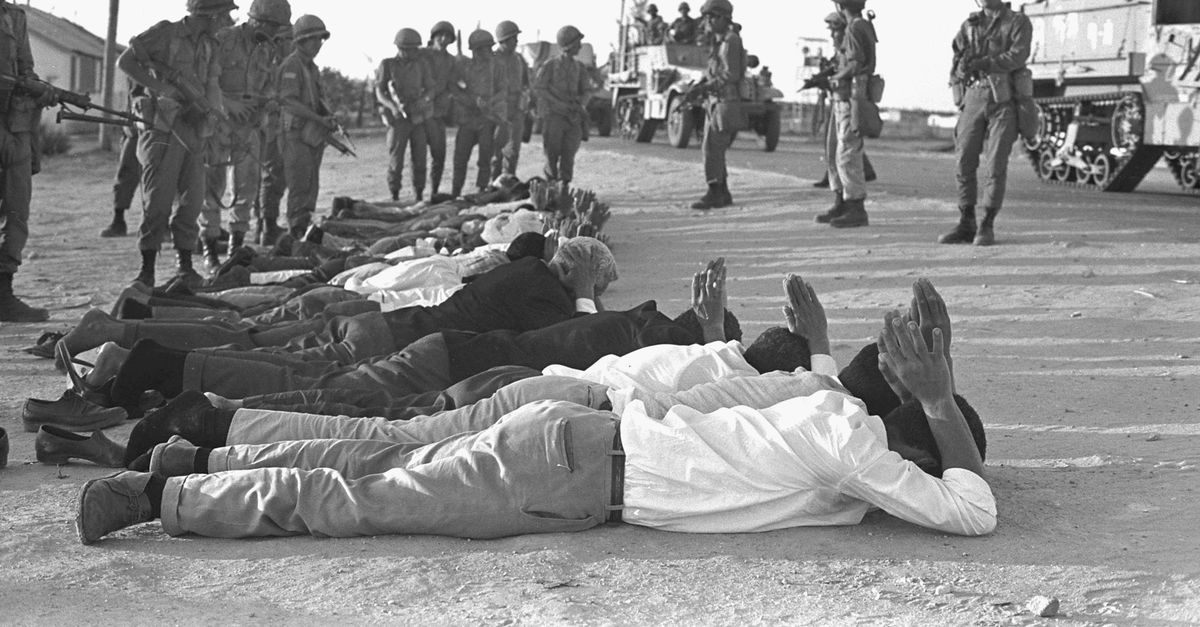
In asserting its historical and moral right to exist, the State of Israel declared itself into being in 1948 with a remarkable document, popularly referred to in the country as its “Independence Scroll,” promising equal rights and dignity to all its citizens, including those it called “the Arab inhabitants of the State of Israel.” Had a constitution in its spirit followed, it could have become the basis of a state formed on liberal and democratic principles. That, of course, never happened. No constitution was ever agreed on, and the legal standing of the Declaration is at best disputed. Even as different versions of it were being frantically drafted and then finalised by the first leader of the state, David Ben-Gurion, Jewish militias – and later the IDF – were engaged in turning the land’s Palestinian majority into a minority through intimidation and violent expulsion.Zionism instead became Israel’s guiding ideology, under the ambivalent definition provided by the Declaration of Independence. The new political entity, it announced, would be “a Jewish state in Eretz-Israel,” which would nonetheless “ensure complete equality of social and political rights to all its citizens irrespective of religion, race or sex” – a promise, as far as Palestinian citizens were concerned, largely honoured in the breach. Tellingly, the word “democracy” did not appear in the Declaration. Only in 1992 did the Basic Law: Human Dignity and Liberty define Israel as a Jewish and democratic state. This was part of an incremental, uncompleted, and beleaguered effort by some Israeli legal scholars, lawmakers, and Israeli Supreme Court justices to create a set of constitutional laws in lieu of a constitution, which might eventually serve as the basis for the complete written document. This process was arguably reversed by the 2018 Basic Law: Israel the NationState of the Jewish People, which established that “the realisation of the right to national self-determination in the State of Israel is exclusive to the Jewish people.” This was also the context of the ongoing judicial coup launched by Netanyahu’s minister of justice, Yariv Levin, in early 2023, whose goal is to entirely dismantle what Aharon Barak called the “constitutional revolution” of 1992.It remains to be asked: What specifically would have happened had the new state adopted a constitution in the spirit of the Declaration of Independence, including a full bill of rights, shortly after its establishment? And what was the price of not doing so at the time?There are two ways of addressing the question. I will call the first realistic and the second idealistic. In the realistic scenario, Israel would have adhered to its Zionist ideology but adapted it to the rigid legal constraints of a bill of rights written into its constitution. This would have meant that the ideal sketched out by Justice Barak of equal rights for the state’s Arab citizens would have actually been followed, and that any laws and instructions contravening these rights, in such areas as employment, allocation of state funds for education, housing, land development and planning, and exclusion from most decision-making organs on the national and regional level, let alone the recent adoption of racist positions and practices toward the Arab minority, would have been struck down by the courts. It would have also meant not only that the Supreme Court itself would have had more power over the executive and the legislature, but that its own deliberations would have been directed to a greater extent toward protecting human rights, both for the Arab minority and other disfavoured groups in Israeli society.The impact of such enforcement of true equality before the law could have been significant, allowing for greater, faster, and fuller integration of Palestinian citizens into the state. It could also have reduced the resentment and generational bitterness of the Mizrahi community (primarily made up of immigrants from North Africa and the Middle East) toward the Ashkenazi (European) elites, which is one of the main driving forces of Israeli politics to this day. Additionally, it would have greatly limited the ability of the orthodox community to control the lives of all Jewish citizens and to benefit so generously from the public purse. Finally, it might possibly have had an impact on the unequal housing and schooling that has also been a source of social and political polarisation.A bill of rights might have similarly affected Israel’s treatment of Palestinian displaced persons and refugees in the immediate aftermath of the 1948 war. It is hard to believe that laws depriving Palestinians of their properties because they were not present on these properties during the war would have been deemed constitutional – although “emergency” regulations might have at least temporarily bypassed constitutional protections – or that a 20-year system of military rule and land expropriation would not have been challenged in the courts. Excerpted with permission from Israel: What Went Wrong?, Omer Bartov, Fern Press.
In a new book, a genocide scholar examines the transformation of Zionism in Israel
An excerpt from ‘Israel: What Went Wrong?’, by Omer Bartov.
806 words~4 min read