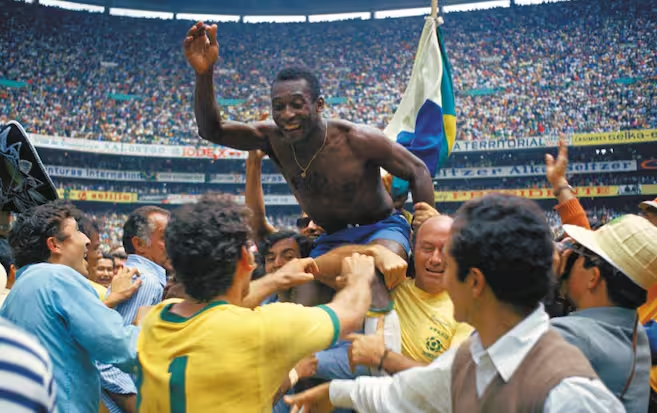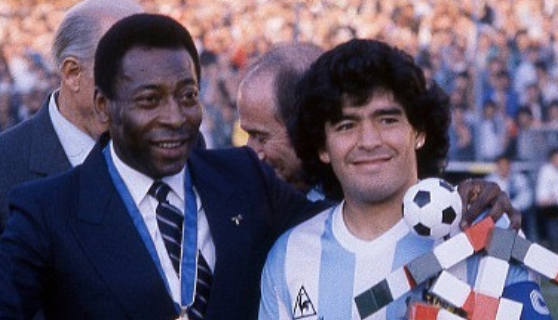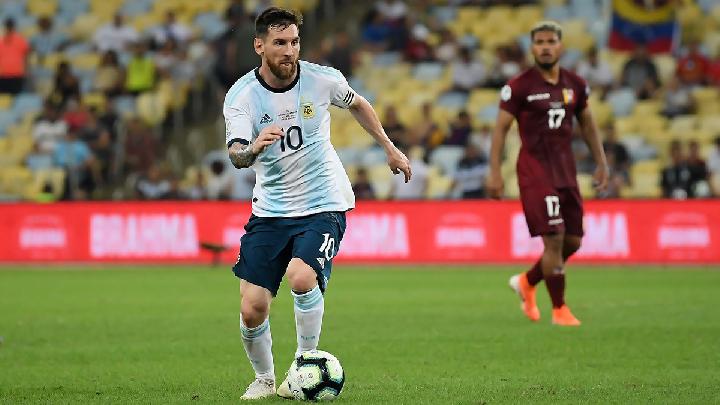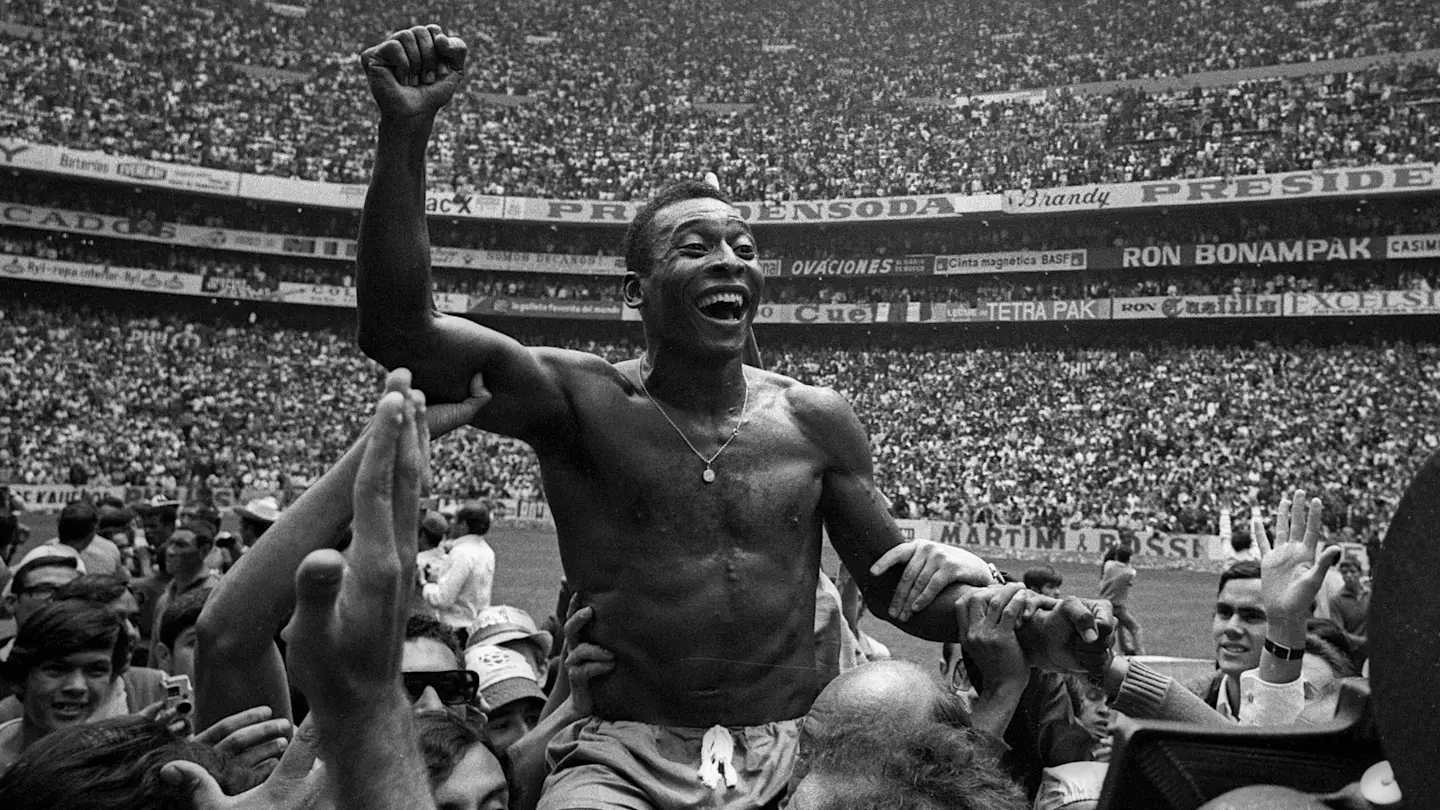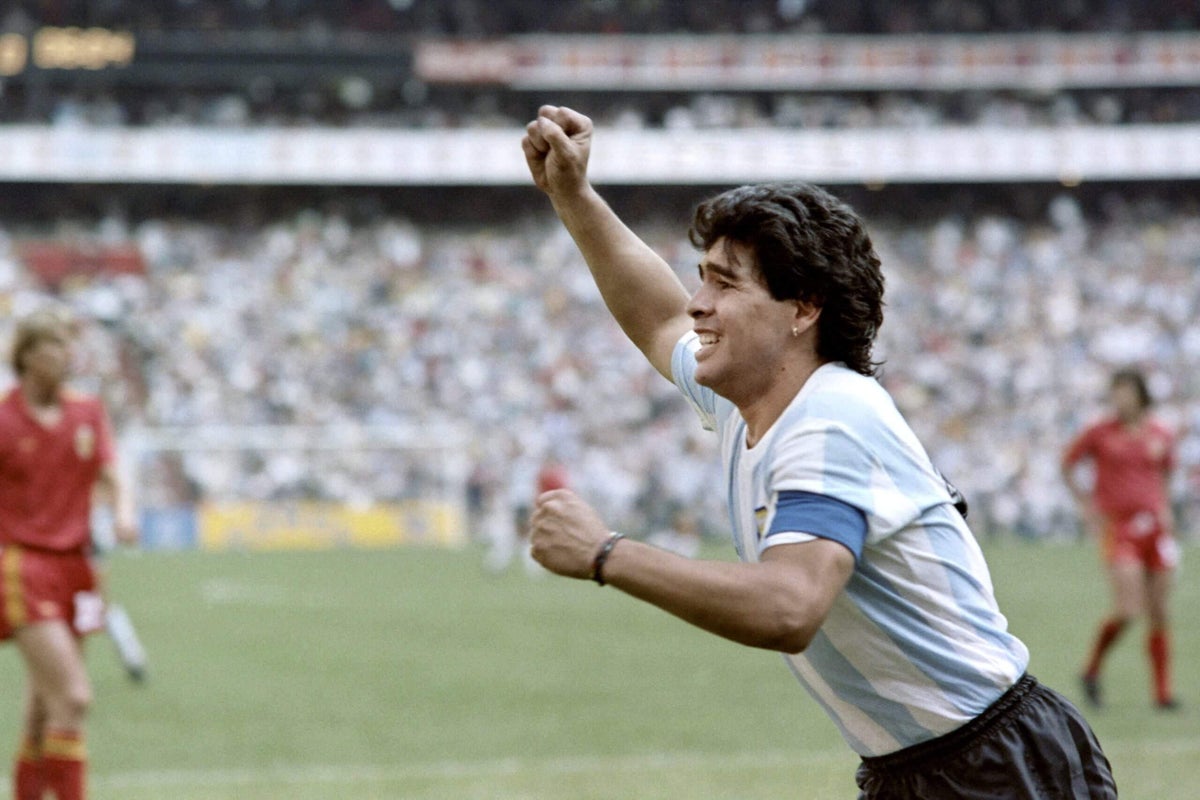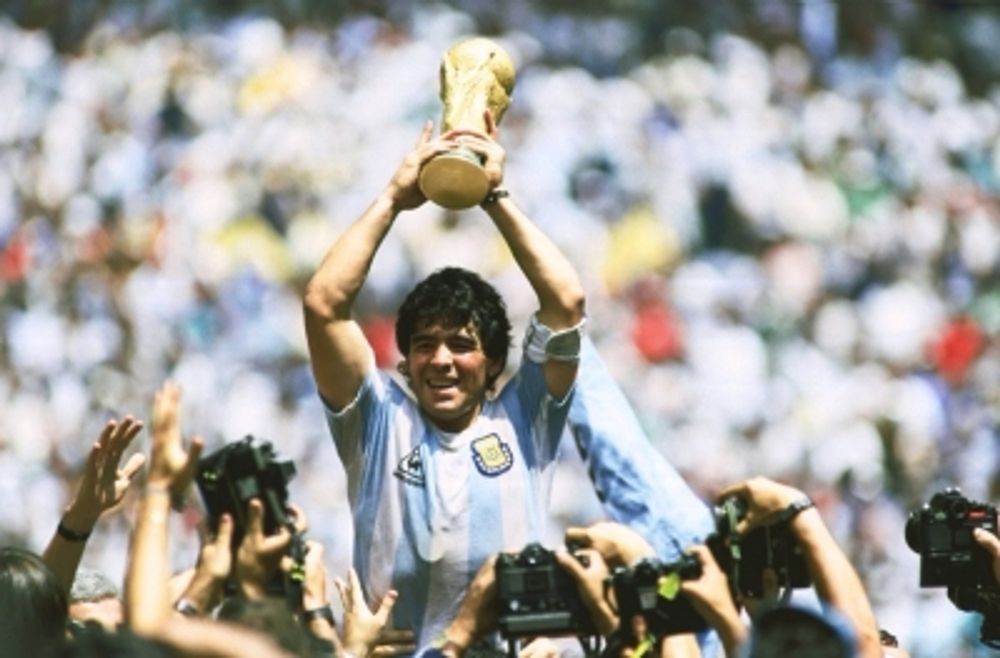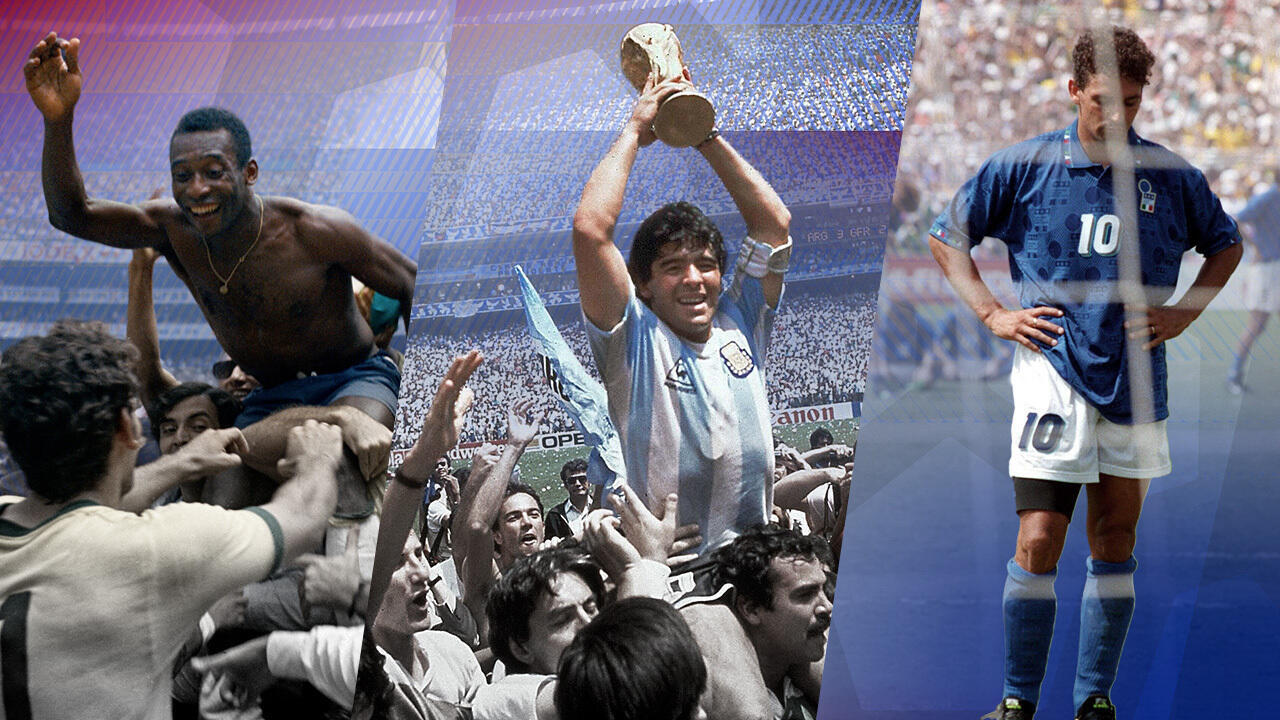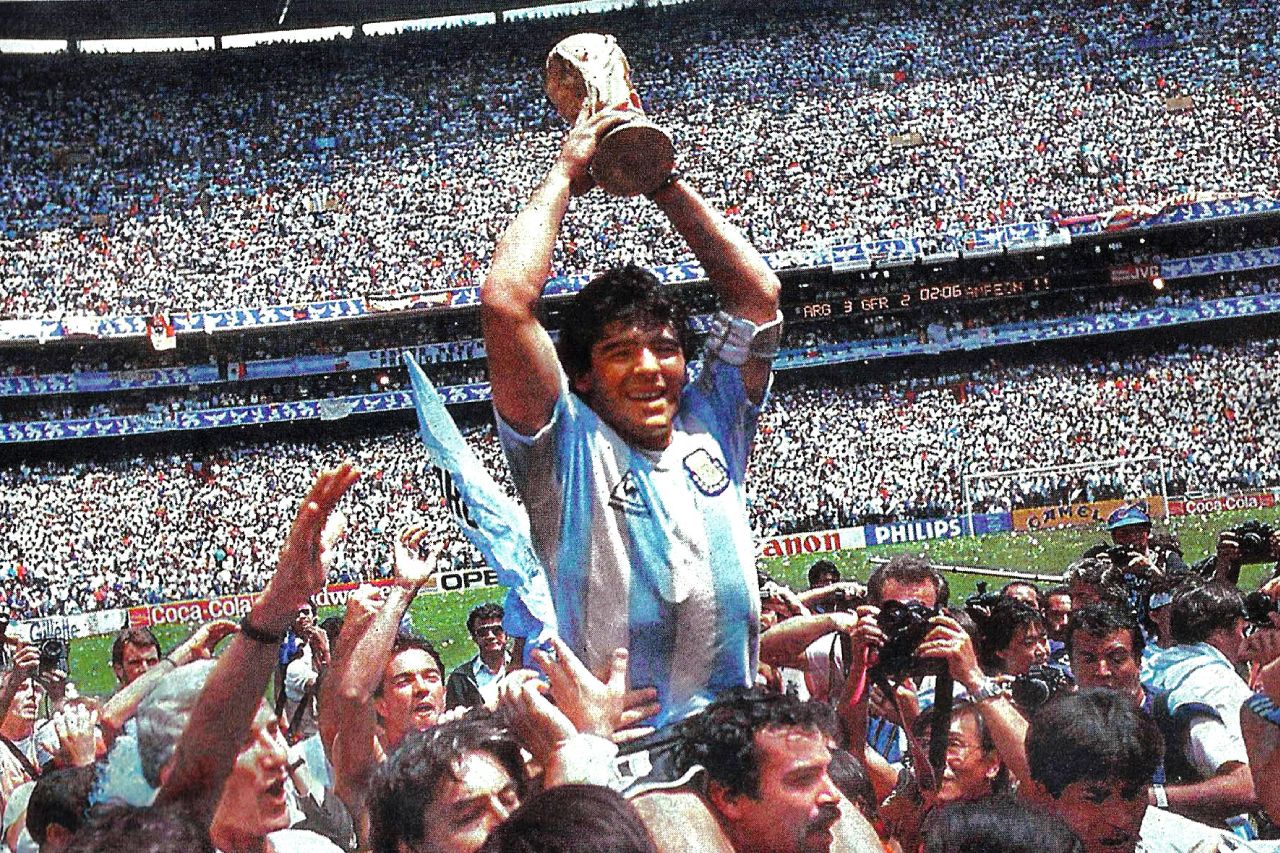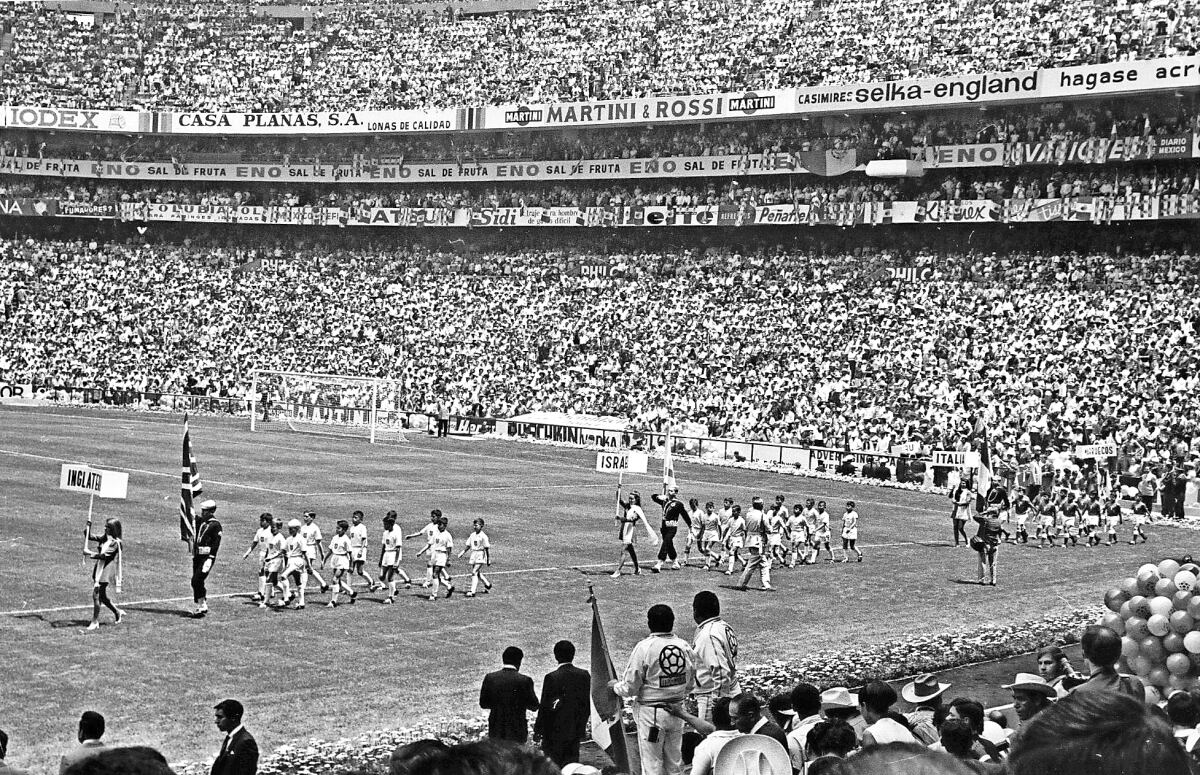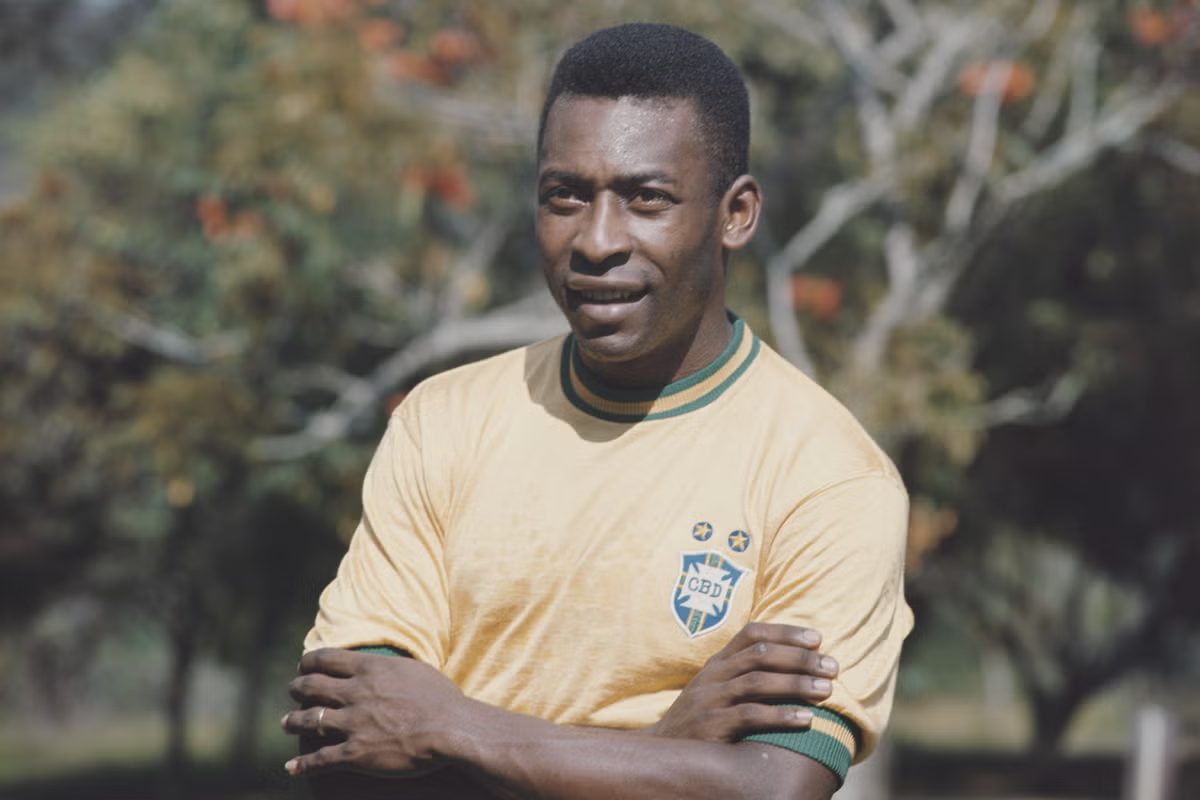
Pele, naturally, was making his own legacy. On the afternoon of 21 June 1970, as he watched Carlos Alberto lift Brazil’s third World Cup with “an intensity of emotion” he had never known, he says he mostly just felt a satisfaction.“I had played in every game, come through unscathed, and felt as though I had achieved everything I had set out to achieve.” No one else in football history has yet even come close to matching that. Pele is the only player to have won the World Cup three times. And he didn’t just win them: he illuminated and elevated the tournaments, in different ways and even forms.He is the ultimate World Cup player, the only choice to head a list like this.Pele (bottom-centre) was part of the famous 1970 Brazil World Cup-winning squad (Getty)But that also goes for reasons beyond mere football or unparalleled feats. There was the way it all happened, the stories around it. And, ironically, they don't always match the legacy Pele tried to curate. Others around the Brazil squad on that day at the Azteca have their own memories, after all, and portray a man who wasn’t only feeling satisfaction.As he came into the dressing room, Pele was apparently shouting “I didn’t die! I didn’t die! I didn’t die!” This was interpreted as release – and relief – after he had been ordered to return from self-imposed exile to the Brazilian national team by the military dictatorship. They didn’t just demand his return, either. They demanded victory.That has provoked renewed debate in Brazil over how much Pele aided a brutal dictatorship, but it was still extraordinary pressure to put on someone – regardless of the legend – that remained just a man.Such circumstances make it all the more remarkable that it was within all of this that the then 29-year-old produced the most famous moment of insouciant composure in football.It was also the centre-piece of maybe the game’s greatest goal, the most famous World Cup moment of all. That was Pele’s almost casual pass to Carlos Alberto for the orchestral move, in the brightness of Mexico, that made it 4-1 to Brazil against Italy.The appearance of the goal was only further testament to Pele’s greatness, of course, because there was nothing casual about it. It was perfect geometry in the moment. The number-10 really played the pass at the only pace and angle that he could, all computed from years of knowledge from playing with Carlos Alberto building up to this glorious crescendo.And from that, Pele didn’t die, as he said. He became immortal; he ascended.Fittingly for a story that always involves such mythological language, too, Pele’s history with the World Cup also involved prophecy; a sense of destiny.Twenty years before that, a mere nine-year-old had been playing football in the Bauru streets with his friends, occasionally running in to his modest family house to check the radio updates of the 1950 World Cup final. Pele’s father, Dondinho, was hosting a party in anticipation of Brazil’s long-awaited first victory.It didn’t turn out like that. Uruguay came back to win 2-1 in the famous “Maracanazo”, for a shock that was genuinely described as like “Brazil’s Hiroshima”. Pele’s own father displayed the scale of the nationwide depression, as it was the first time his son had seen him cry.The nine-year-old sought to comfort his father, and told him he would win him the World Cup.By 1958, despite a decent start by a promising side, Brazil still needed that impetus; even inspiration.They’d opened the tournament with a 3-0 win over Austria but a 0-0 draw with England left them needing something in a decisive final group game against USSR. A lot of the old ghosts were swirling around the game. Incredible as it is to think now, the World Cup’s greatest winners were at that point the competition’s great losers. They had never lifted the trophy and remained levelled by the most painful of defeats. Something had to change.So, for this decisive match, manager Vicente Feola returned a 17-year-old Pele to the side. The impact was immediate. Pele and Garrincha overwhelmed the Soviets for Vava to score after just three minutes.17-year-old Pele scores against Wales in the 1958 World Cup quarterfinal (AFP/Getty)The teenager himself would go on to score the winner against Wales in the quarter-final, a hat-trick against France in the semi-final and two against hosts Sweden in the final.There has never been an individual run to glory like that, not even from Diego Maradona.And, of course, Pele didn’t just have one, or just one like that.As befitting his unique three World Cup medals, he also had almost every different type of individual World Cup campaign.Pele was the young revelation, the dominant star, the man of the match in the final, the final goalscorer, the great player everyone wanted to see and some wanted to target, the pioneer, the returning hero and the grand master regally bringing everything to completion.Pele topped our list ahead of Diego Maradona and Lionel Messi (Getty)In that, there were elements of Johan Cruyff 1974, Diego Maradona 1982, 1986 and 1990, Roberto Baggio and Romario 1994, Kylian Mbappe 2018 and Leo Messi 2022. Duly, having matched anyone, Pele also tried things no one else could think of.If some of those were almost enriched by being near-misses, like the halfway line strike against Czechoslovakia or dummy against Uruguay, there was also the emphatic “here-i-am” statement of his key first goal in that momentous first final.In one flowing move, a mere teenager had the presence of mind and imagination to suddenly lift the ball over Reino Borjesson and then drive a volley into the bottom corner.Pele later described it as the favourite of his career because “no one had seen a goal like that before”. Paul Gascoigne had evidently watched given what came at Euro 96.This was just another way that Pele embodied the very spirit of the World Cup. He did something otherworldly, exotic, expanding the boundaries of the imagination.His legacy from 1958 wasn’t just in turning Brazil into its greatest winners. He also transformed the World Cup itself, with how the grand sense of quest elevated it as the great global event.Pele only continued that in 1970 by offering a new vision of the game as it was being broadcast in technicolor for the first time. Every element of Brazil’s brilliance was illuminated. It was also elevated by something more personal, that only further amplifies such legacies: there was the deeply personal. Pele 1970 was also about the comeback, with the echoes of another great figure of the era in Muhammad Ali.No-one else has been so central to the World Cup’s history (Getty Images/Hulton Archive)Pele’s greatness was such that, at 25 and his arguable peak, he was literally kicked out of 1966. He was so furious that he retired from international football, intending never to return.The influence of the dictatorship admittedly complicated the story this comeback, but it was still deeply personal to Pele. He wanted to prove himself anew. His sister Maria Lucia claimed it was “the victory he wanted to leave as his legacy”.And what a legacy. A promise had been fulfilled.No one has been so central to the World Cup's history, no one looks like matching this in the future.Pele is the World Cup.
Not Maradona, not Messi – this is why Pele is the World Cup’s greatest-ever player
The news is out: the only player to win three tournaments tops our greatest players of all-time World Cup leaderboard. And as Chief Football Writer Miguel Delaney explains, nobody epitomised the World Cup and what it stood for more than the Brazil legend
1,214 words~6 min read