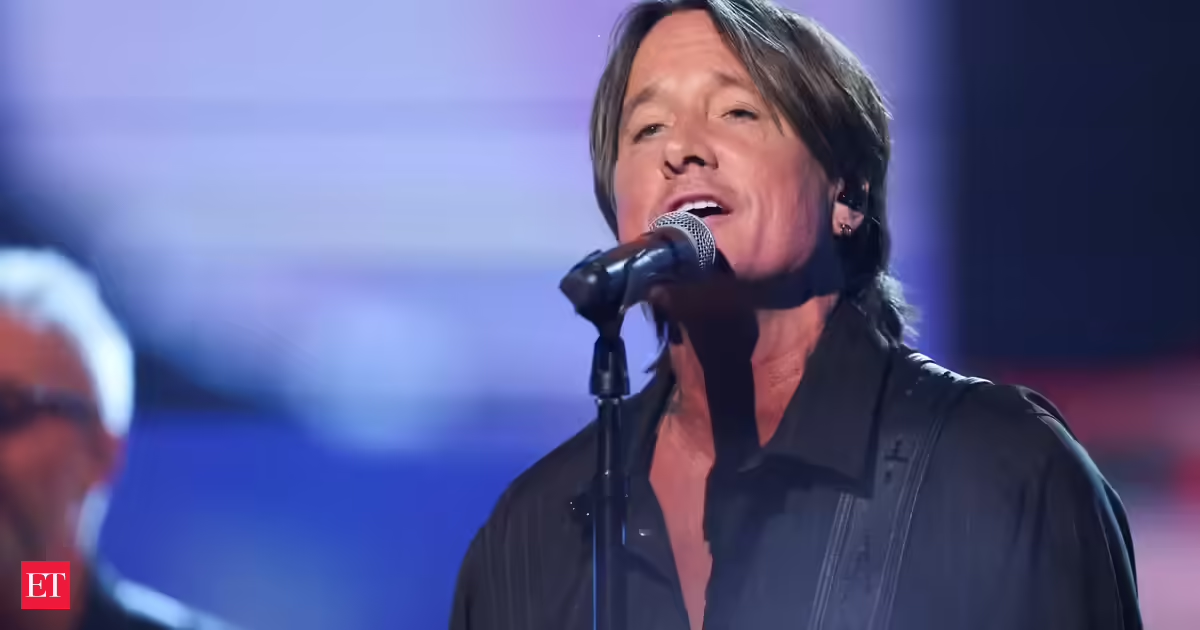
There are moments when a song says exactly what a person has been unable to explain. A lyric captures heartbreak, loneliness, hope, confusion, or joy with startling accuracy. Suddenly, someone sitting alone with headphones feels understood by a stranger they have never met.That emotional connection is what Keith Urban describes in one of his most thoughtful reflections on music and human emotion.Born in Whangārei, New Zealand, in 1967 and raised in Queensland, Australia, Keith Urban became one of the most successful crossover artists in modern country music. Influenced early by artists such as Glen Campbell, Mark Knopfler, and country legends from both America and Australia, Urban developed a reputation for blending traditional country storytelling with rock guitar techniques and pop melodies.He began performing publicly as a child and appeared on Australian television talent programs before moving to Nashville in the 1990s to pursue a professional music career. After early struggles in the competitive American music industry, Urban broke through with his self-titled 1999 album, which produced multiple hit singles and established him as a major country artist.Over the following decades, he released successful albums including ‘Golden Road’, ‘Be Here’, ‘Ripcord’, and ‘The Speed of Now Part 1’. His career produced numerous chart-topping songs such as ‘Somebody Like You ', 'Blue Ain't Your Color’, and ‘Days Go By’.Urban has won multiple Grammy Awards, Academy of Country Music Awards, Country Music Association Awards, and American Music Awards. He also gained broader mainstream recognition as a longtime judge on American Idol.Quote of the day by Keith Urban: “I think there's just so many people in the world that don't feel understood, and when you hear a song and you go, 'Oh, that song understands me,' that's an amazing feeling. I get it when I listen to the radio... That's a beautiful part of music.”What this quote really meansAt its core, Urban’s quote is about emotional recognition.Human beings often struggle to explain their feelings clearly, even to people close to them. Loneliness is not always physical isolation, sometimes it is the feeling that nobody truly understands your inner experience. Music can temporarily bridge that gap.Urban explains that songs create emotional validation. When someone hears lyrics that reflect their own experiences, fears, heartbreaks, or hopes, they feel seen. That moment can be deeply comforting because it reminds people they are not alone in what they feel.The quote also highlights the unique power of art compared to ordinary conversation. Music communicates emotion in a way that logic or explanation often cannot. Melody, rhythm, and lyrics together can express emotional truths that many people struggle to put into words themselves.Importantly, Urban admits that he experiences the same feeling when listening to music. Despite fame and success, he presents himself not as separate from audiences, but as someone equally searching for connection and understanding through songs.Why music matters emotionallyPsychologists and neuroscientists have long studied how music affects memory, emotion, and mental well-being. Songs are often tied to personal experiences, relationships, grief, celebrations, or major life transitions.For many people, music becomes emotional companionship during difficult periods. Certain songs help process sadness, anxiety, heartbreak, nostalgia, or uncertainty in ways that feel personal and healing.Urban’s quote captures this universal emotional function of music: it helps people feel recognized when words alone fail.
Quote of the day by Keith Urban: ‘I think there's just so many people in the world that don't feel understood, and when…’ – country singer on feeling understood
Music offers a unique connection, making listeners feel understood when words fail. Keith Urban, a celebrated country artist, shares this sentiment. His career highlights his ability to blend genres and achieve widespread success. This emotional resonance is a powerful aspect of music, providing comfort and validation.
541 words~2 min read