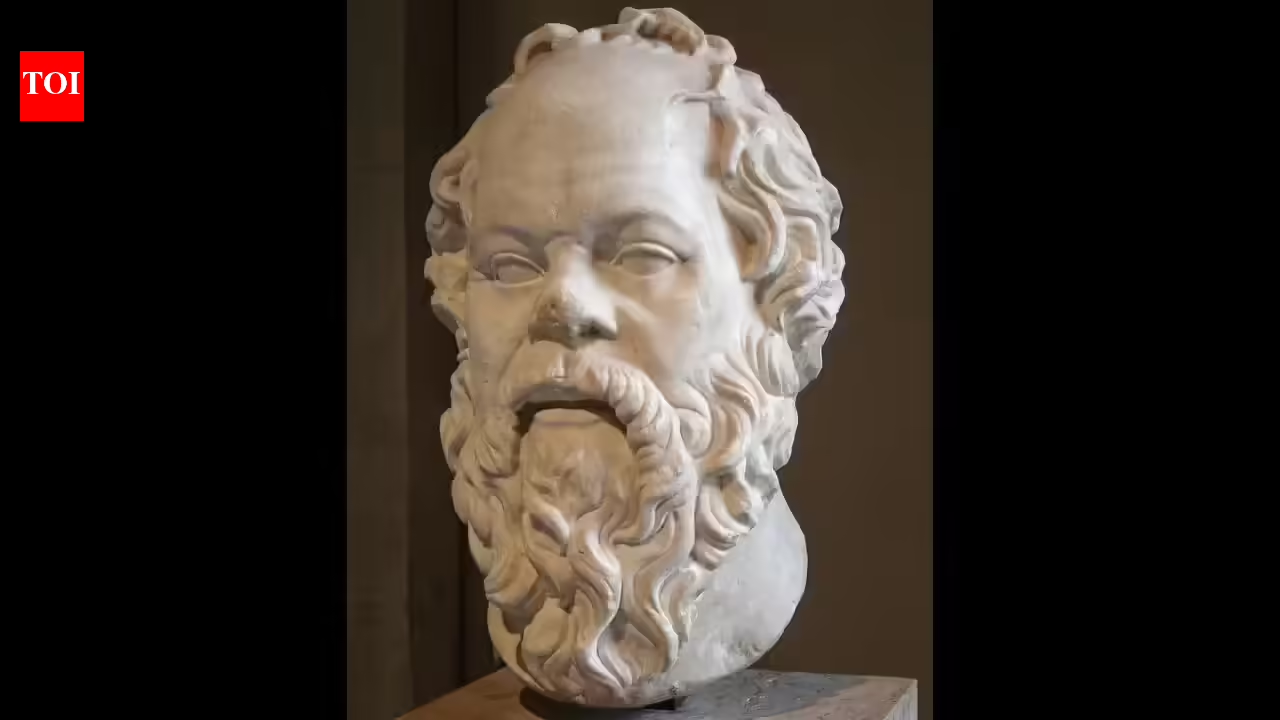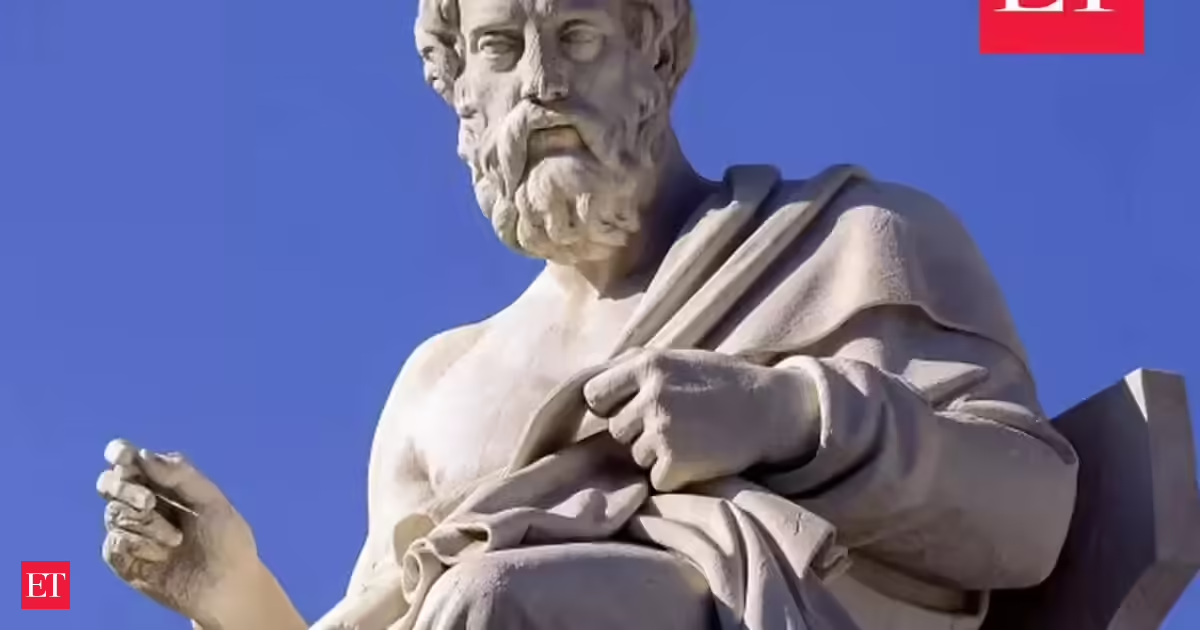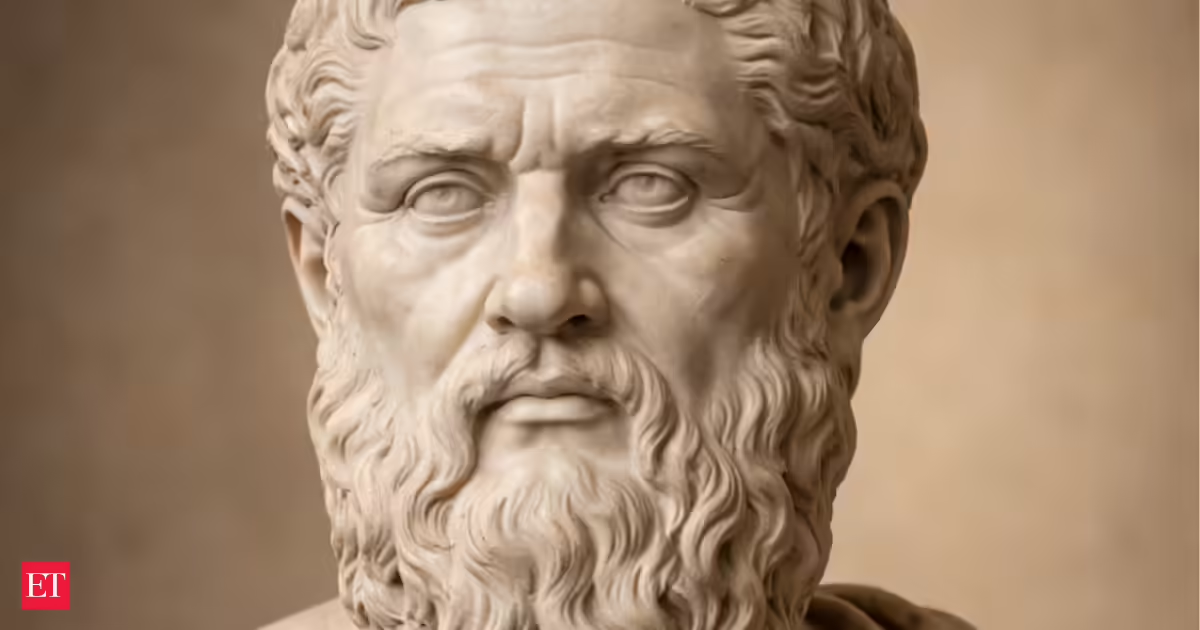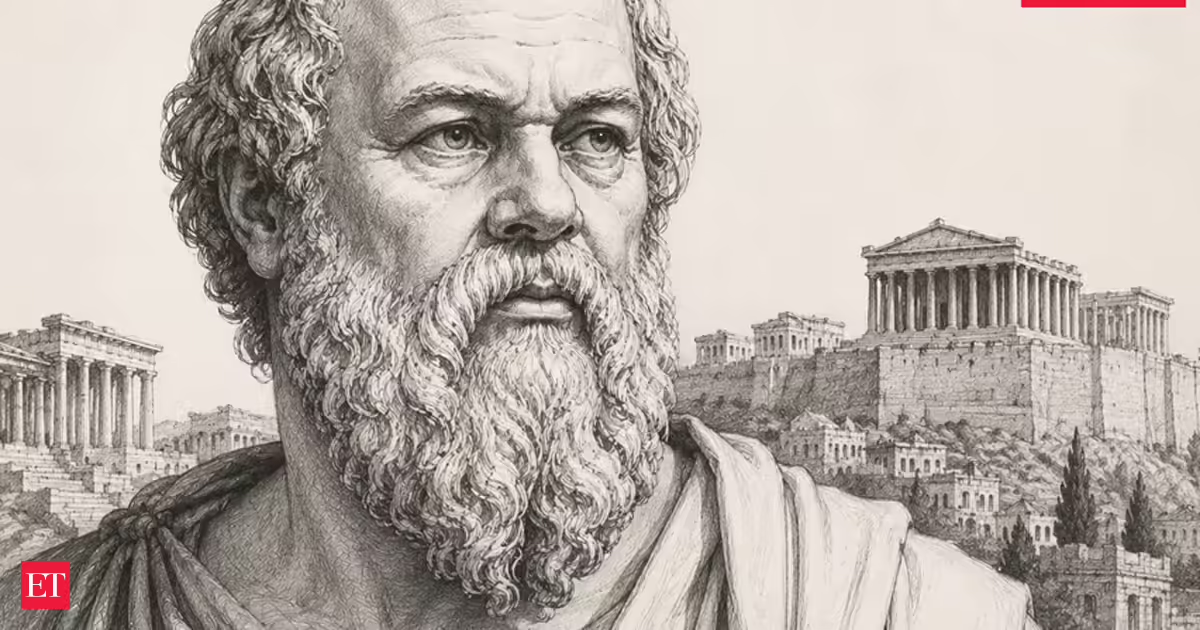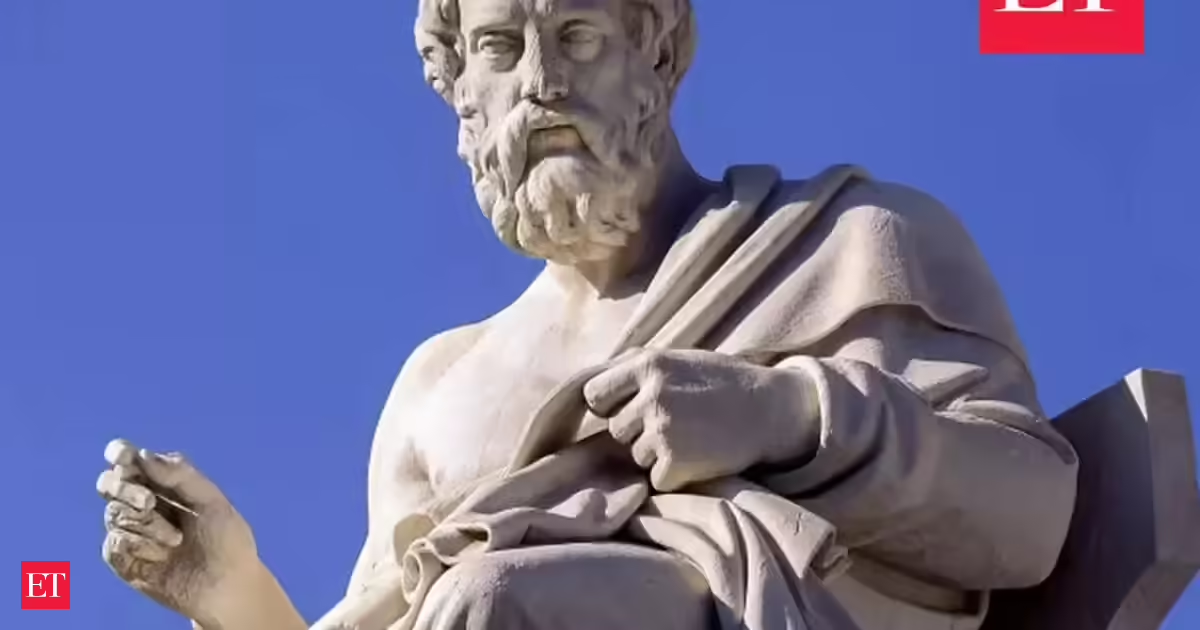
Quote of the Day by Socrates: ‘I am the wisest man alive, for I know one thing, and that is…’ - Father of Western philosophy explains why you should stop pretending you know everythingSynopsisQuote of the Day by Socrates explains wisdom lies in recognizing his own ignorance. In an age of instant answers, his philosophy emphasizes that true wisdom begins with admitting uncertainty, fostering intellectual honesty, curiosity, and humility. This approach encourages deeper thinking and genuine learning over superficial knowledge.AgenciesQuote of the day by Socrates explains true wisdom is not about having all the answers, but about recognizing the limits of your knowledge.Have you ever met someone like Sherlock Holmes, brilliant, razor-sharp, and almost always right, yet so convinced of his own deductions that he sometimes misses the human uncertainty sitting right in front of him? In contrast, consider a character like Hamlet, who overthinks every truth until certainty itself begins to collapse. Without any comparing of their intellects, between the ideas of two extremes there lies Socrates’ unsettling idea: real wisdom may not come from being certain at all but from recognizing how easily certainty can deceive us. Still confused? This Socrates quote might help. Quote of the Day by Socrates: “I am the wisest man alive, for I know one thing, and that is that I know nothing.”This statement is widely attributed to the Greek philosopher Socrates and is often cited in modern compilations such as Brainy Quotes. The idea behind it is strongly associated with Socrates based on accounts from Plato, especially in the Apology. Socrates suggests that his “wisdom” lies in recognizing his own ignorance compared to others who falsely believe they know more than they do.Why Socrates’ quote on wisdom matters todayAfter the cheap availability of the internet throughout the world, time-constrained people are drawn to short-format ideas, be it consuming news, entertainment, or understanding any queries. And the drawback is the uncontrollable urge to have immediate answers on complex topics, from politics to science to personal life decisions. The result is that the pressure to appear informed often replaces genuine understanding.You Might Also Like:Socrates’ idea challenges this behavior. It suggests that real wisdom begins when a person admits uncertainty. Instead of pretending to know everything, intellectual honesty allows space for learning, questioning, and growth. This mindset becomes especially important in education, leadership, and even everyday conversations where assumptions often replace deeper thinking.What Socrates’ quote means in real lifeIn practical terms, Socrates is highlighting the difference between knowledge and perceived knowledge. Many conflicts, misunderstandings, and failures in judgment arise when people are overly confident in ideas they have not fully examined. Recognizing ignorance is not a weakness; it is the starting point of genuine learning.This philosophy also encourages curiosity. When people accept that they do not have all the answers, they become more open to different perspectives. It builds humility in communication and reduces the tendency to judge or dismiss others too quickly. In this sense, Socrates is not promoting ignorance, but intellectual awareness and discipline.About SocratesSocrates (469–399 B.C.E.) remains one of the most influential figures in Western philosophy, despite never having written any of his ideas down. Most of what is known about him comes from secondary sources, particularly the dialogues of Plato, making his historical identity part of what scholars call the “Socratic problem.”He lived in Athens during a period of intense political and intellectual change. Known for his questioning method, Socrates engaged citizens in deep philosophical discussions that challenged assumptions about virtue, justice, and knowledge. His approach often unsettled those in power and eventually led to his trial and execution on charges of impiety and corrupting the youth.Socrates’ legacyFew people in human history carry as much intellectual weight in their name as Socrates. His legacy is not defined by written works; he left none behind, but by a revolutionary method of thinking that continues to shape philosophy, education, and critical inquiry. The Socratic method, asking probing questions to uncover underlying assumptions, remains a foundational tool in modern teaching, legal training, and debate. By refusing to provide answers and instead exposing ignorance through disciplined questioning, Socrates transformed philosophy from speculation into a living practice of self-examination, a legacy that endures over two millennia later. His life and death have also become symbolic of intellectual independence and moral courage. By choosing to stand by his principles even in the face of execution, Socrates established a model of integrity that has influenced thinkers for centuries. Each generation reinterprets him in its own way, yet the central idea remains unchanged: wisdom begins with questioning, not certainty.Read More News onRead More News on
Quote of the Day by Socrates: ‘I am the wisest man alive, for I know one thing, and that is…’ - Father of Western philosophy explains why you should stop pretending you know everything
Quote of the Day by Socrates explains wisdom lies in recognizing his own ignorance. In an age of instant answers, his philosophy emphasizes that true wisdom begins with admitting uncertainty, fostering intellectual honesty, curiosity, and humility. This approach encourages deeper thinking and genuine learning over superficial knowledge.
766 words~3 min read