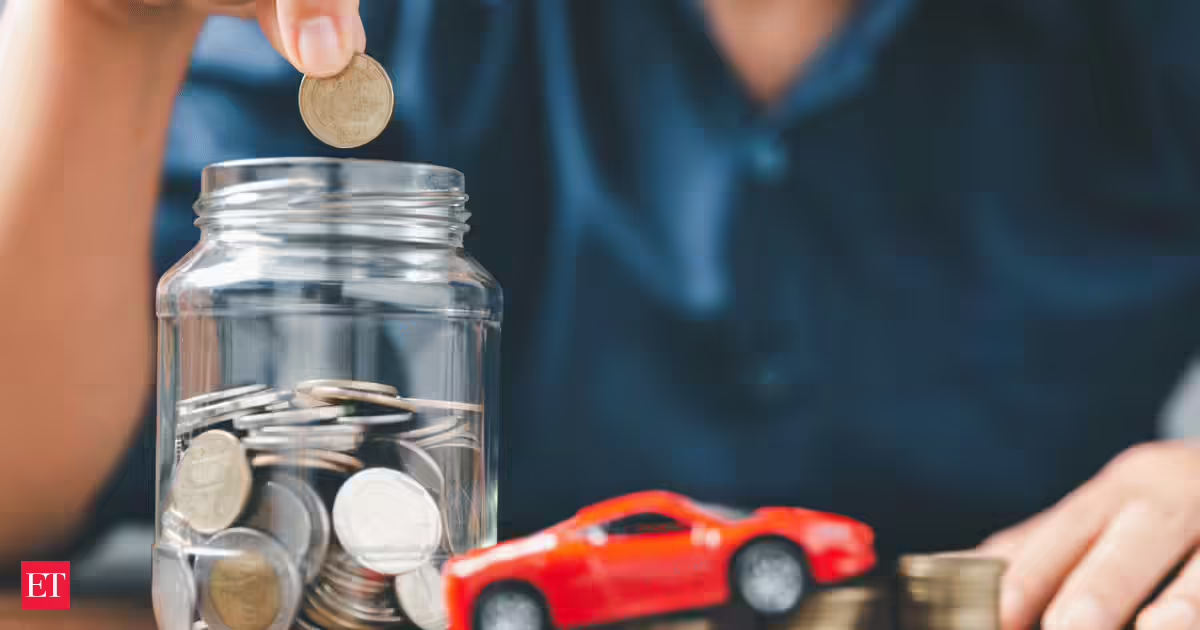
A simple ₹25,000 monthly car EMI over five years adds up to ₹15 lakh, but according to CA Nitin Kaushik, the real cost of ownership is far higher once interest and depreciation are factored in.Kaushik explained that while the buyer ends up paying ₹15 lakh over the loan tenure, the actual value of the car purchased is around ₹12 lakh, meaning nearly ₹3 lakh goes toward interest payments alone.The financial impact deepens further due to depreciation. After five years of regular use, the car typically loses about 60% of its value, bringing its resale price down to roughly ₹5.2 lakh.“So what is the total damage?” Kaushik asked in his breakdown.Adding interest and depreciation together, the effective wealth erosion comes to nearly ₹10 lakh over five years.He contrasted this with an alternative approach: investing the same ₹25,000 monthly in a mutual fund SIP. At an assumed 12% annual return, the investment could grow to around ₹20.6 lakh in five years.The comparison highlights a stark gap—owning a depreciating asset versus building a financial corpus worth over ₹20 lakh, a difference of nearly ₹15 lakh.Kaushik, however, clarified that the message is not to avoid buying cars altogether, but to rethink decisions driven purely by “affordable EMI” calculations without considering long-term wealth impact.Read full text here:Let’s do some basic math.Say you sign up for a ₹25,000 monthly EMI for 5 years.Over 60 months, you dump exactly ₹15 lakh cash out of your bank account into that vehicle.What do you actually have left at the end of year 5?Remember, that ₹25k EMI means you bought a car actually worth about ₹12 lakh. The rest went to interest.After 5 years of wear and tear, that ₹12 lakh car loses 60% of its value. It is now worth just ₹5.2 lakh.What do you actually have left at the end of year 5? Remember, that ₹25k EMI means you bought a car actually worth about ₹12 lakh. The rest went to interest. After 5 years of wear and tear, that ₹12 lakh car loses 60% of its value. It is now worth just ₹5.2 lakh.So what is the total damage? You lose roughly ₹3 lakh in pure interest to the bank, plus another ₹7 lakh in depreciation. That is a ₹10 lakh flat loss. Sure, you got 5 years of driving out of it. But look at what that same money could have done instead.Imagine instead of giving that ₹25,000 to a bank every month, you put it into a basic mutual fund or SIP that grows at a standard 12%.In those same 5 years, you aren’t left with an old car worth ₹5.2 lakh. Your money grows into a massive lump sum of roughly ₹20.6 lakh in cash.Look at the massive difference between the two choices: * The Car Route: You own a used machine worth ₹5.2 lakh. * The Saving Route: You have ₹20.6 lakh sitting in your account. The real price of that easy ₹25k EMI is the ₹15.4 lakh gap in your actual wealth.This doesn’t mean you should never buy a car. But stop letting salespeople trick you into looking only at the affordable monthly payment. They use small monthly numbers to hide how expensive the loan actually is.Numbers don’t lie.When you buy a car purely based on whether you can afford the monthly EMI, you are draining your own financial future.Buy only what you can truly afford, keep the loan short, and look at the total cost before you sign.
You are paying more, not saving: CA Nitin Kaushik explains why 'affordable car' through EMI might be a trap
A ₹25,000 monthly car EMI over five years totals ₹15 lakh, but the real cost, including interest and depreciation, is significantly higher. This approach results in a wealth erosion of nearly ₹10 lakh, contrasting sharply with investing the same amount, which could grow to over ₹20 lakh.
577 words~3 min read