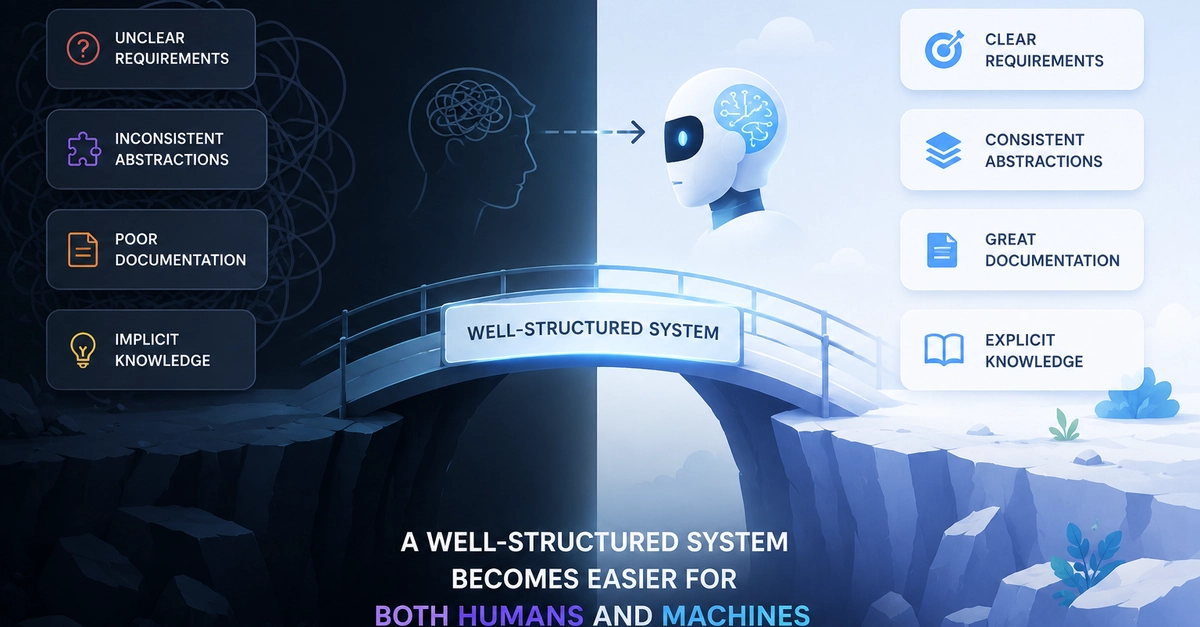
The conversation about cognitive debt in AI-assisted development has been framed as a tradeoff: you can go fast, or you can understand your system, but not both. The proposed mitigations — pair programming, code reviews, requiring a human to understand each change — are braking mechanisms. They trade speed for comprehension.
TRIZ (Theory of Inventive Problem Solving) says braking is a compromise, not a resolution. A resolved contradiction eliminates the conflict. You don't choose between speed and understanding. You restructure the system so they don't conflict.
There are six root causes of cognitive debt in AI-augmented development. Each one is a contradiction. Each one has a TRIZ resolution that doesn't involve slowing down.
Root Cause 1: The Velocity-Comprehension Gap
AI generates complex logic in seconds that would take a human hours to write. The human never spends the time typing the code during creation. The theory of the program is never fully formed.