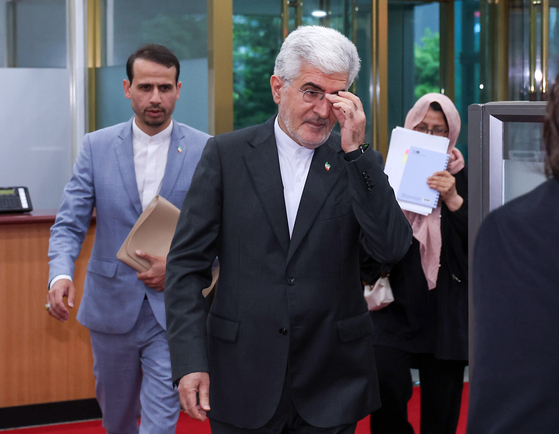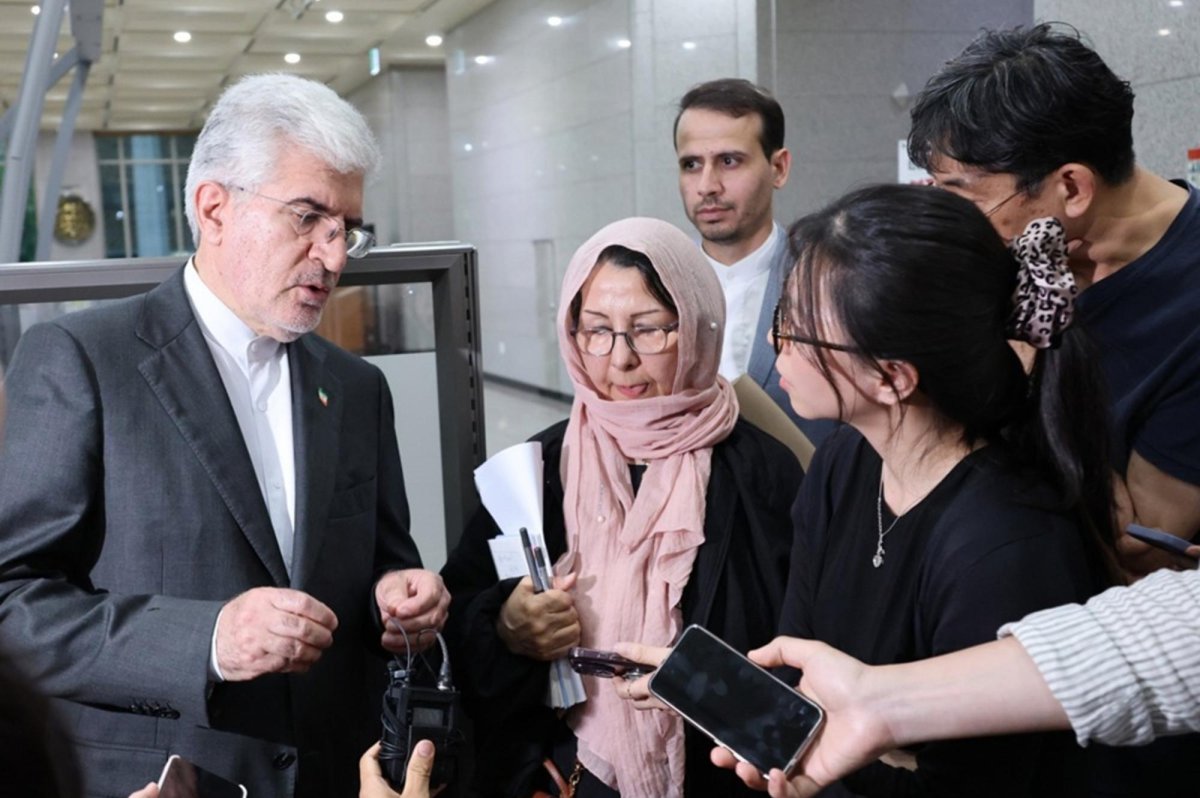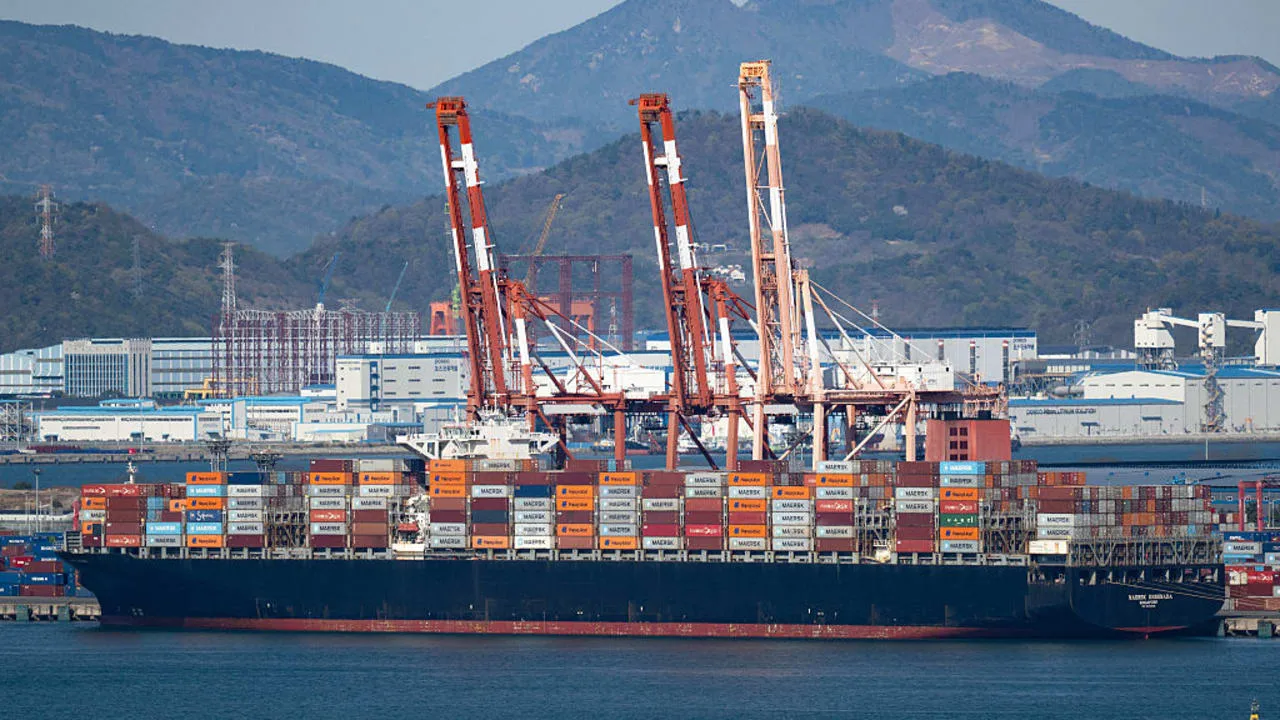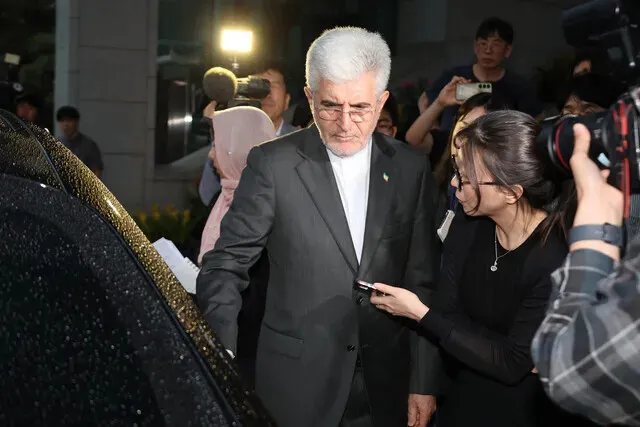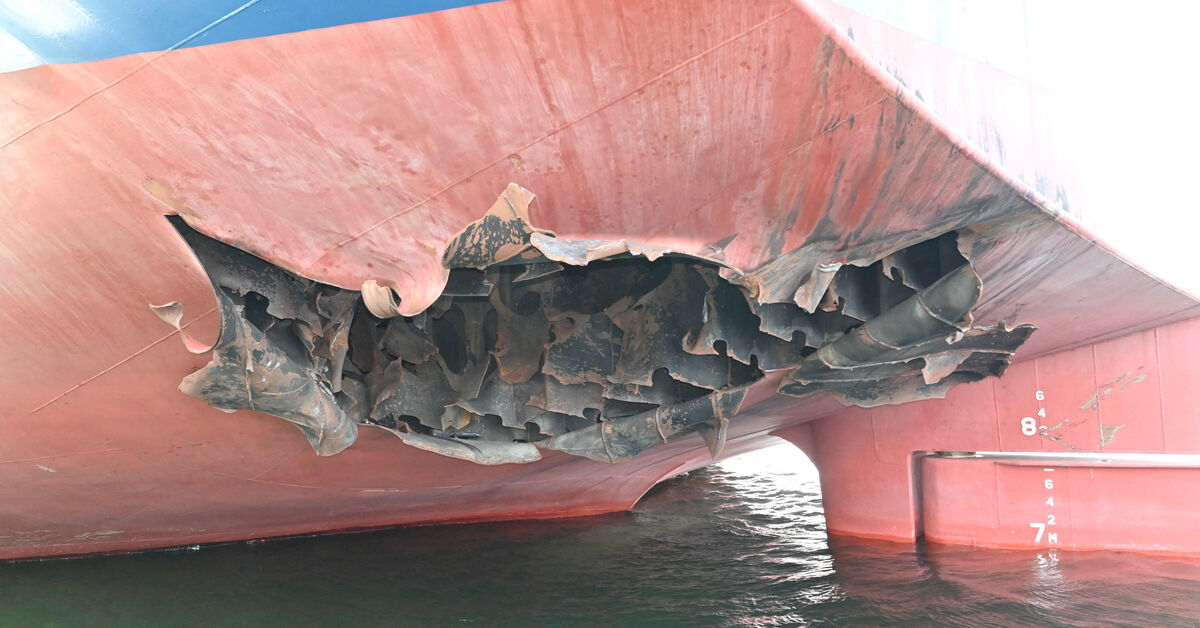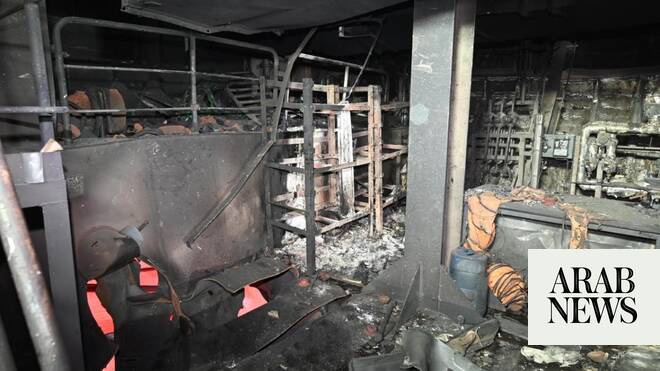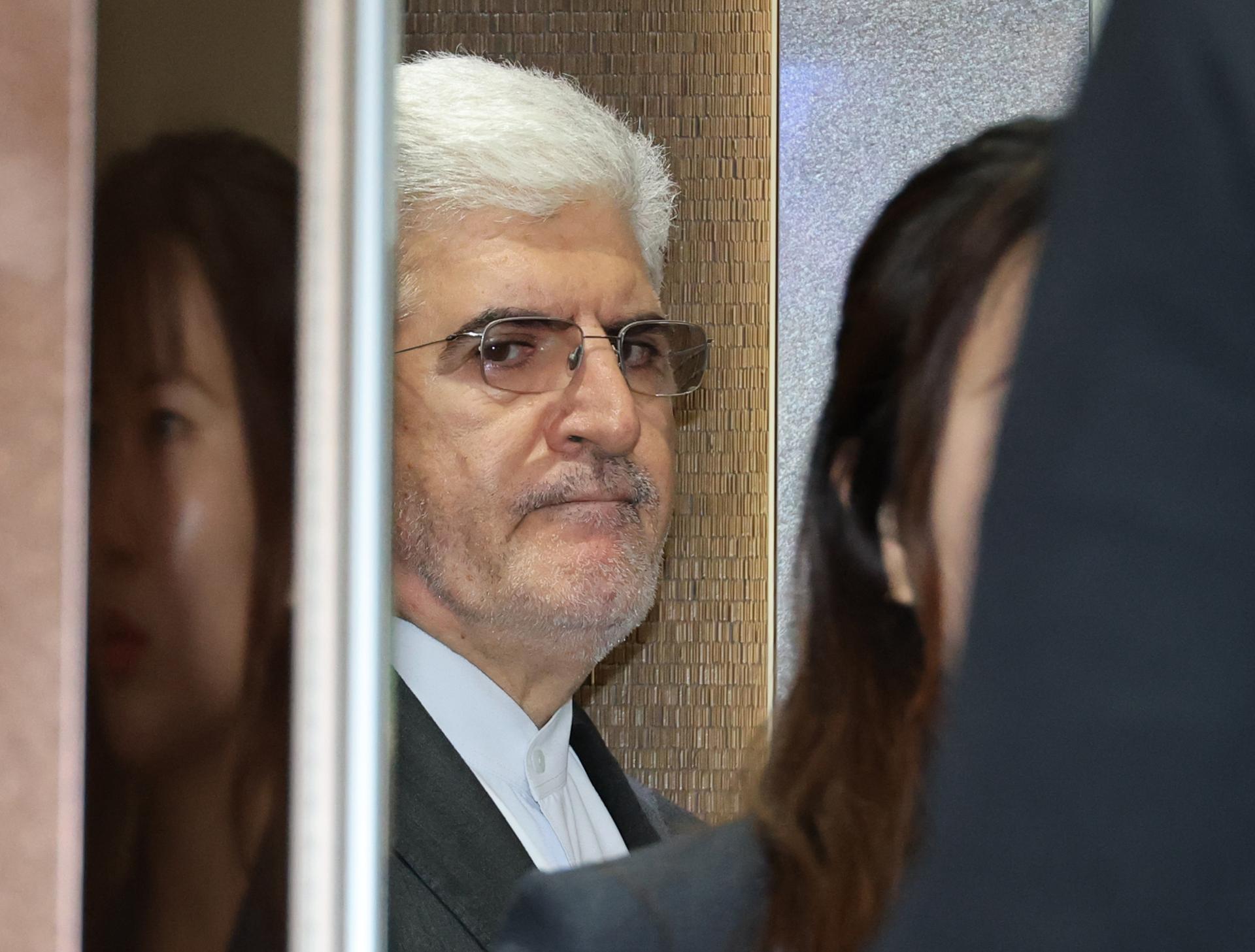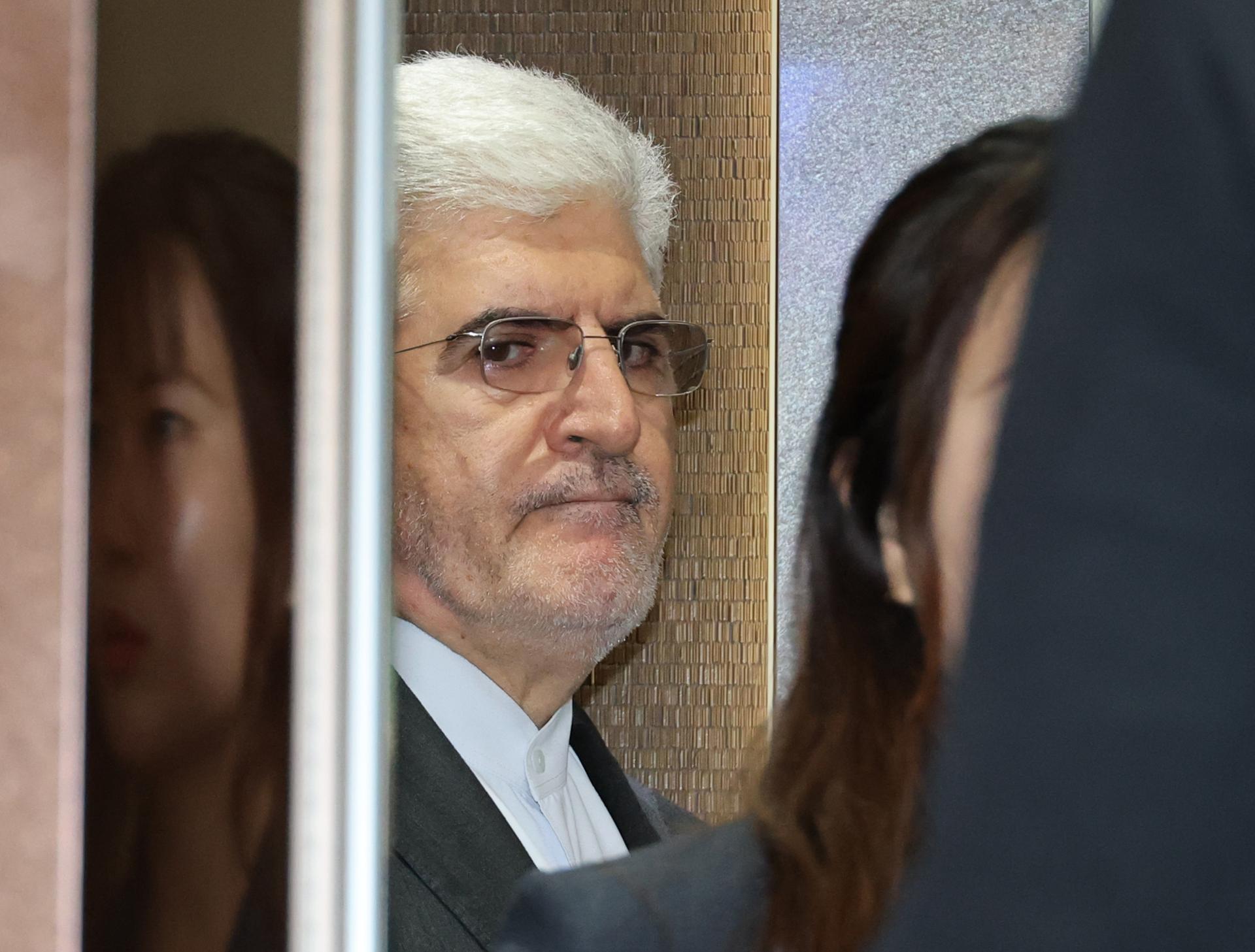
Iranian Ambassador to South Korea Saeed Koozechi is seen at the Ministry of Foreign Affairs building in central Seoul, Wednesday. Koozechi was summoned in connection with Iran's attack on the bulk carrier HMM Namu, operated by South Korean shipping company HMM. Yonhap What many believed to be true was right. Korea’s foreign ministry confirmed Wednesday that two Iranian missiles were fired at the stern of the bulk carrier Namu, operated by South Korean shipping company HMM, near the Strait of Hormuz.“All evidence points to Iran,” First Vice Foreign Minister Park Yoon-joo said during a briefing announcing the results of the government’s investigation into the May 4 attack in waters off the United Arab Emirates. Park said a team of experts examined debris recovered from the vessel and found Iranian-made engines and other components used in the anti-ship missiles. Based on their analysis, the government concluded that the weapons were from Iran’s Noor anti-ship cruise missile series.Two missiles were fired. The first failed to explode, while the second struck the vessel’s stern.Following the briefing, the foreign ministry summoned Iran’s ambassador to South Korea Saeed Koozechi to protest the attack and demand accountability from Tehran.However, the Iranian envoy denied his country’s involvement in the strike. Speaking to reporters, he said he was personally sorry for the incident but insisted that Iran was not responsible and had never been involved in the attack.The Iranian Embassy has yet to release an official statement regarding the findings.Iran must clarify its position on the Korean foreign ministry’s briefing. Tehran’s silence will only fuel speculation and suspicions that it is hiding something.Korea’s release of the investigation results came 23 days after the vessel was attacked. The announcement was long overdue, but several questions about the maritime strike remain unanswered.First, the timing of the briefing came as a surprise. The foreign ministry failed to explain why it took so long to confirm that the “unidentified objects” that struck the bulk carrier were Iranian missiles. Korea recovered an unexploded warhead along with other missile components, including engines. Given that investigators had access to an intact warhead, it should not have taken nearly three weeks to determine the weapons’ origin.Three days after the attack, a team of military experts was dispatched to the UAE to inspect the damaged ship, which had been towed to waters near Dubai. The team returned to Korea three days later, after conducting what officials described as a thorough investigation. The foreign ministry should explain why it waited 23 days before publicly disclosing the probe’s findings.Second, the manner in which the results were announced is also questionable. The foreign ministry stopped short of directly naming Iran as the attacker. When asked whether Iran carried out the strike, the senior official only said that “all evidence points to Iran.”Yet despite its reluctance to explicitly identify Tehran as the perpetrator, the ministry summoned the Iranian envoy to protest the attack — a move that itself constitutes a strong diplomatic rebuke. The government’s contradictory approach is difficult to justify. If officials were uncertain about Iran’s involvement, they would not have summoned the ambassador.The foreign ministry’s refusal to directly accuse Iran appears to be an attempt to minimize potential damage to Seoul-Tehran relations. But it remains unclear whether Iran deserves such caution.The attack endangered the lives of Korean sailors aboard the vessel, even though all crew members survived and only one suffered a minor neck injury. The strike also caused serious damage to the property of a Korean company. When the lives of its citizens are threatened and their property is attacked, the government is expected to respond firmly. Korea’s cautious approach risks emboldening countries like Iran and allowing them to justify such actions.Third, Korea’s initial response to the attack was also problematic.In a statement released on May 11, the presidential office condemned the strike but stopped short of identifying the responsible country. A senior official, speaking on condition of anonymity, said at the time that the government was unable to determine which country was responsible and was reviewing several possible perpetrators.Yet Iran’s Press TV published a column explicitly claiming that Iran had attacked the bulk carrier, arguing that the Korean vessel had violated maritime rules established by the Islamic Republic.Even before the investigation results were announced, Iran had widely been suspected of being the attacker. The main debate centered not on who carried out the strike, but on what type of weapon had been used. Based on security camera footage aired on television, some analysts pointed to Iranian drones, while others suggested missiles.Supporters of the government’s cautious stance argued that Seoul’s silence would help ensure the safe passage of 25 South Korean ships stranded in the Strait of Hormuz during Iran’s blockade of the waterway. However, silence cannot be justified when the lives of citizens are endangered and property is attacked. Protecting Korean nationals and their assets should be the government’s highest priority.
[ED] Seoul gives Tehran room to maneuver - The Korea Times
What many believed to be true was right. Korea’s foreign ministry confirmed Wednesday that two Iranian missiles were fired at the stern of the bulk...
814 words~4 min read