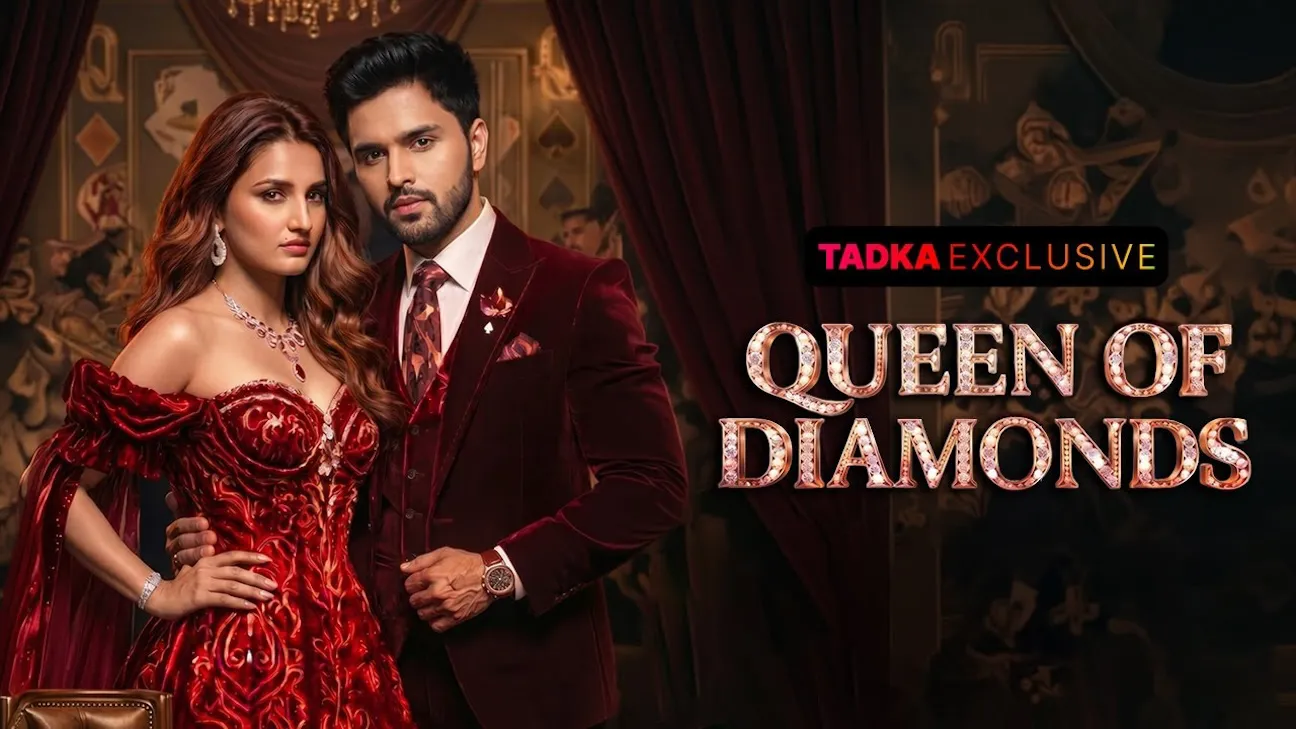
Back in 2017, Netflix co-founder and chief executive Reed Hastings famously said the company’s biggest competitor was not other streamers, but “sleep.”Eight years later, India’s streaming giants appear to have found an answer: microdramas.What began as a fringe category of hyper-short, vertically shot melodramas designed for endless scrolling is fast evolving into one of the hottest bets in India’s media and entertainment ecosystem. Platforms are no longer treating bite-sized content as mere filler for shrinking attention spans; increasingly, it is being seen as a low-cost, high-velocity pipeline for discovering scalable intellectual property (IP), testing audience behaviour and building the next generation of digital franchises.The rush is already visible.Reliance-owned JioStar launched “Tadka” on JioHotstar in April, rolling out more than 100 microdrama titles on day one. Integrated within the main app during the IPL season, the feature lets users seamlessly switch between long-form and short-form viewing. Titles such as ‘Secret Crorepati Jamai’ and ‘Section F Ka Only Boy’ lean into high-voltage storytelling — forbidden romance, betrayal, supernatural twists and family intrigue — with episodes typically lasting between one and three minutes.A snapshot of market growth of microdramas (Source: EY-FICCI report)Days before that, Amazon introduced “Fatafat” on MX Player, a free mobile-first vertical video service focused on serialized short-form fiction spanning romance, thrillers and youth-centric content.Meanwhile, Meta, in March, held a dedicated microdrama summit in Bengaluru alongside media consulting firm Ormax Media. Film studios including Yash Raj Films and Red Chillies Entertainment are also exploring the category, as per the report.What was once viewed as disposable short-form entertainment is quickly entering the mainstream.According to EY, platforms such as Kuku TV emerged among the fastest-growing entertainment apps during the year, highlighting rising demand for mobile-first, bite-sized storytelling. Industry players such as Double Tap Films are also betting on the format as microdramas increasingly evolve from scroll entertainment into a serious IP-testing ground.Source: EY-FICCI reportThe smartphone-native entertainment economyThe timing is no coincidence.India’s media landscape is undergoing a structural shift toward mobile-first consumption. According to EY and FICCI’s latest media and entertainment report, titled Stories, scale and impact: Unlocking India’s media and entertainment economy, Indians spent 1.2 trillion hours on their phones in 2025, with 59% of phone time dedicated to media and entertainment. Smartphone users crossed 584 million last year and are projected to rise to 670 million by 2028.The report also notes that 78% of all screens in India will be smartphones by 2030, sustaining demand for short-form content, microdramas, social media and mobile gaming.For media companies, that behavioural shift is forcing a rethink of storytelling formats.“Production houses will need to move to new formats, including short format video, podcasts, micro-dramas and vertical video,” EY said in the report, warning that remaining only a film or episodic specialist “may reduce uptake to less than 25% of screens in India by 2030.”Microdramas are emerging as a natural extension of that transition: fast, mobile-native and algorithm-friendly.Discovery itself is happening almost entirely through social media. According to a Meta-Ormax report, 89% of Indian viewers discovered microdramas through platforms such as Instagram, Facebook and YouTube, underscoring how tightly the category is intertwined with recommendation-driven consumption.Beyond entertainment, toward scalable IP But the bigger shift lies in how streaming companies increasingly view microdramas not merely as engagement tools, but as intellectual property laboratories.The economics are attractive. Microdramas are relatively inexpensive to produce, can be tested rapidly and generate instant audience feedback through completion rates, shares, comments and repeat viewing. In a streaming industry under pressure to improve profitability, such rapid experimentation offers a far cheaper way to identify breakout stories than betting heavily on large-budget originals.That is especially relevant at a time when India’s content ecosystem is being restructured around digital-first viewing.EY estimates that India’s media and entertainment sector grew 9.1% in 2025 to reach Rs 2.78 trillion, with digital media becoming the first segment to cross Rs 1 trillion in value.The firm also expects microdramas alone to generate revenues of Rs 23 billion by 2028.Crucially, the report points toward a broader industry evolution where “films are evolving into multi-platform intellectual properties” spanning OTT, gaming, commerce and live experiences.Microdramas fit neatly into that future.Instead of commissioning expensive long-form shows upfront, platforms can now test character arcs, genres and narrative hooks in miniature form before scaling winning concepts into larger productions. The model resembles the creator economy’s “build fast, test faster” philosophy, now being absorbed into mainstream entertainment.That may also explain why major studios and streamers are moving aggressively into the category despite lingering skepticism around quality.Questions, however, remain over whether microdramas can produce durable cultural franchises instead of just generating high-frequency engagement void of sustained subscriber value.The attention war intensifiesThe battle is ultimately about time.Streaming companies are no longer competing only against each other, but against every other format occupying smartphone attention: Instagram Reels, YouTube Shorts, gaming, social commerce and live streaming.Microdramas are designed for that ecosystem — consumed during commutes, work breaks and late-night scrolling sessions.And unlike traditional premium streaming, which depends heavily on long-session viewing, short-form serialised storytelling thrives on habit loops and algorithmic discovery.The IPL timing of JioHotstar’s Tadka rollout was therefore strategic. Sports remains one of the strongest user-acquisition funnels in Indian streaming, and integrating microdramas within the same app allows platforms to cross-pollinate audiences between live sports, premium OTT and short-form entertainment.The lines between social media, streaming and creator platforms are increasingly blurring.EY describes the sector as entering a “post-inflection phase” marked by platform convergence, AI-led personalisation, modular storytelling and hybrid monetisation models.Microdramas may currently look chaotic, melodramatic and disposable. But for India’s streaming industry, they are becoming something far more consequential: a real-time engine for audience discovery, retention and future franchise building.And in the race for attention, even sleep may now have competition.
Streaming giants in India are turning to microdramas in the battle for attention
India streaming platforms microdramas: Platforms are rapidly adopting microdramas, short, vertically shot melodramas. These bite-sized shows are no longer just filler but a key strategy for discovering new content and building future franchises. Major players like JioStar and Amazon are investing heavily.
950 words~4 min read