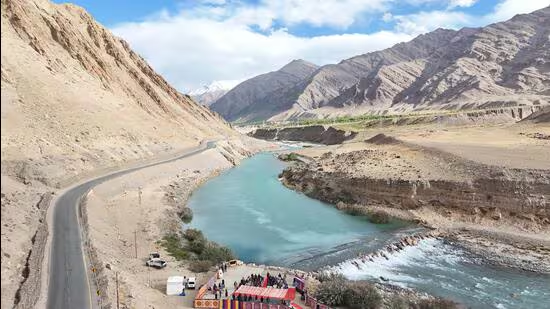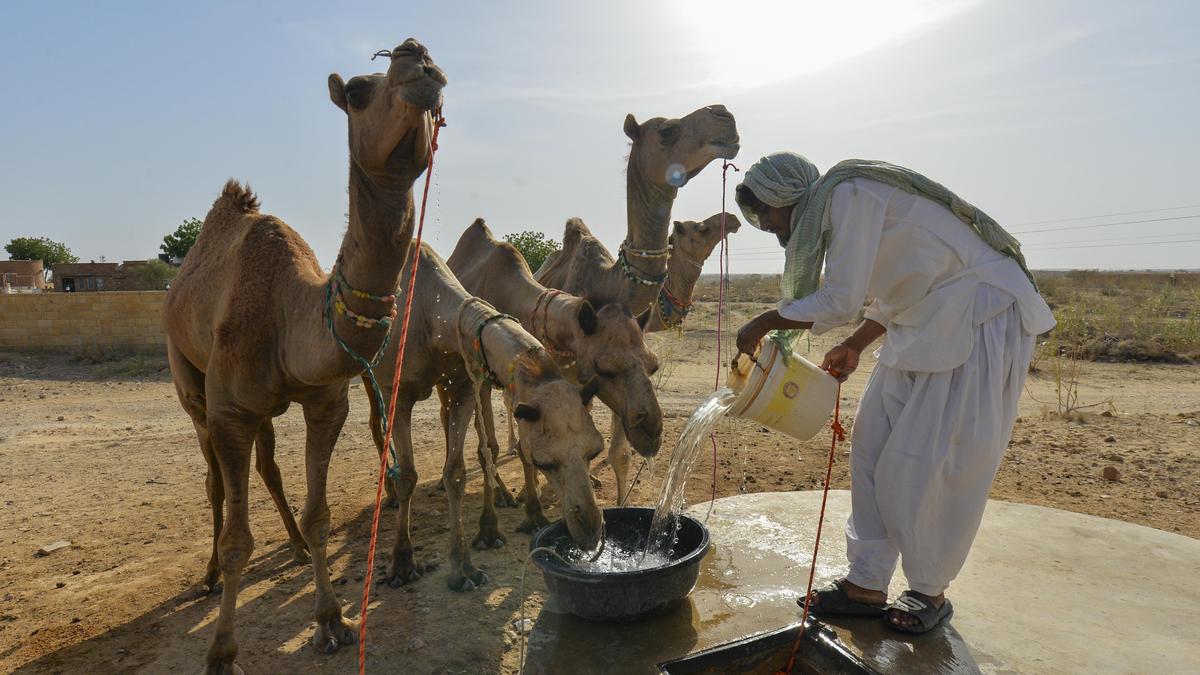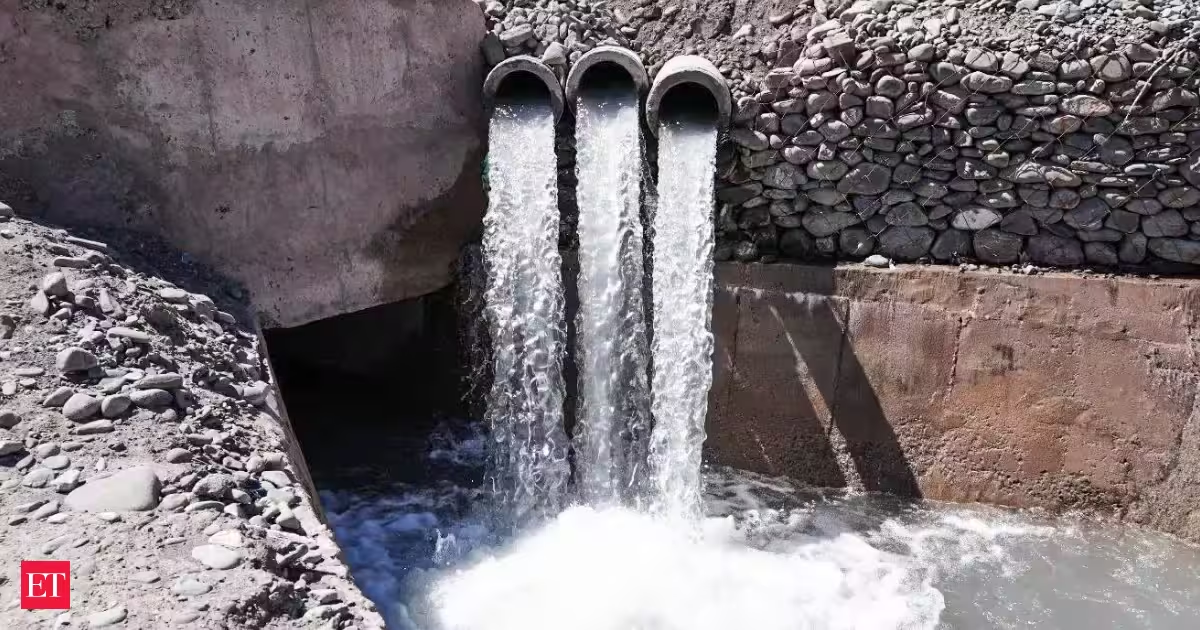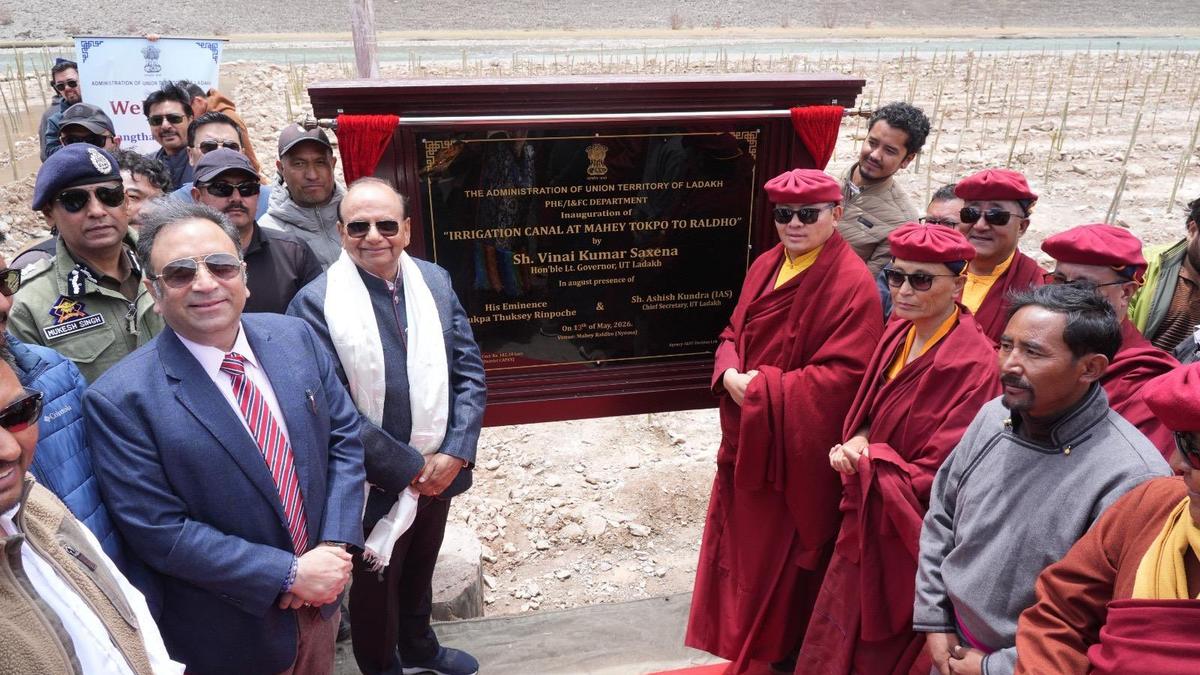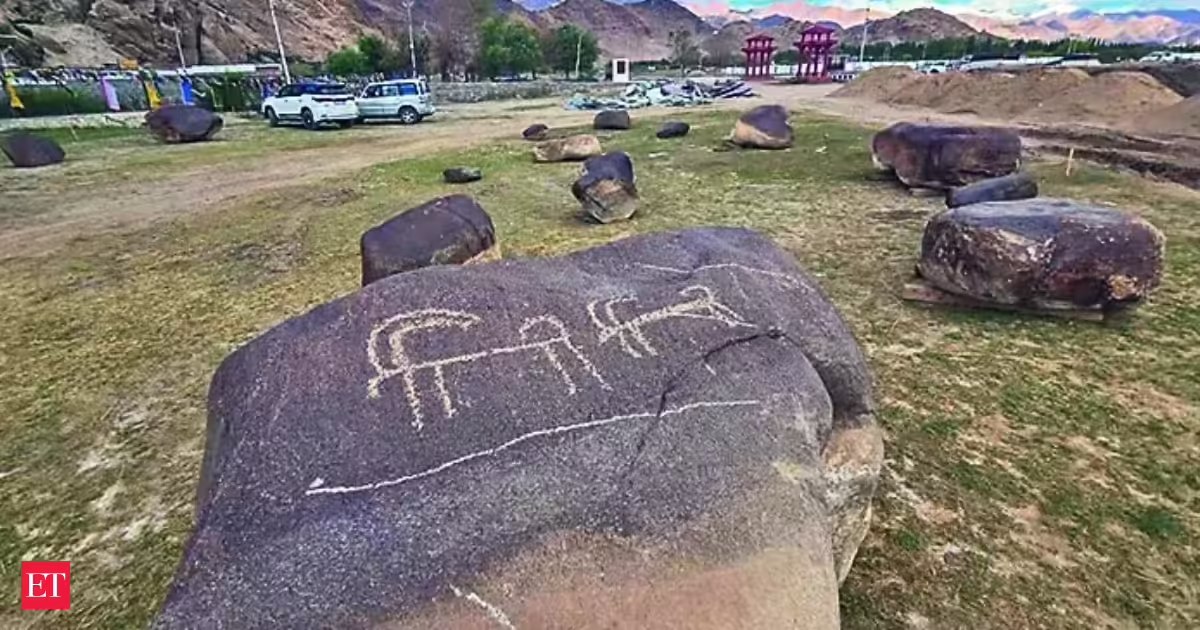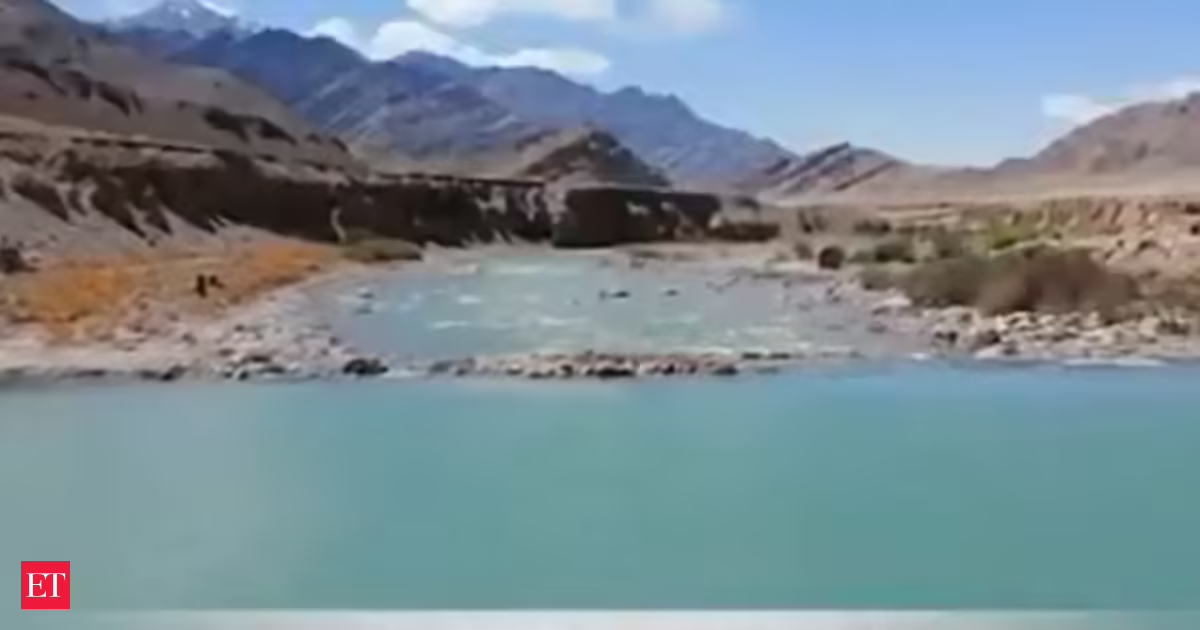
A new experiment on the banks of the Indus River in Leh is drawing attention for its unusual design and promise of helping farmers in one of India’s cold desert regions. Ladakh Lieutenant Governor Vinai Kumar Saxena has launched the ‘Sindhu Jal Samriddhi Abhiyan’ with the inauguration of what is being described as the country’s first rock check dam on the Sindhu River. The project has been introduced as a low-cost and environment-friendly solution to improve water availability for farming in remote parts of Ladakh, where water scarcity remains a major challenge for villagers.Rock dam built with riverbed stonesSharing details of the initiative on X, the Lieutenant Governor said, "Inaugurated the first of its kind Rock Check Dam on River Sindhu in Leh, under the ambitious 'Sindhu Jal Samriddhi Abhiyan', conceived as a sustainable, cost-effective solution for water and agricultural sustainability in Ladakh."— lg_ladakh (@lg_ladakh) "Unlike regular concrete structures, the newly built check dam uses large rocks collected directly from the riverbed. Officials said the rocks have been interlocked carefully to slow the river’s flow and create a water storage area upstream. This slows down the flow of the river and creates a huge water pondage area, to be used by farmers for agricultural purposes," a statement released by the LG read.The administration said the structure has also been designed to withstand rising river pressure during summer months when water levels increase sharply.Ladakh rock dam built in seven days at 11,400 feetThe dam has been constructed at Upshi in Ladakh at an altitude of nearly 11,400 feet. Officials shared several details highlighting the scale of the project.The check dam stretches around 200 feet in length, with a base width of 30 feet and a top deck width of 15 feet. Its height stands at five feet. Around 180 metric tonnes of rocks were used for the construction.— PTI_News (@PTI_News) Authorities estimate that the structure can create a pondage area of nearly 500 metres upstream and store close to 40 million litres of water. The project was completed within seven days at a reported cost of around Rs 10 lakh.More check dams planned in LadakhEncouraged by the first project, the administration has now decided to expand the experiment to other areas as well.The Lieutenant Governor said, "Have directed the Irrigation & Flood Control Department to construct three more such check dams, on experimental basis."He further added, "I am confident, this Rock Check Dam would emerge as an imitable model of engineering ingenuity and ecological sensitivity. It will offer sustainable remedy for farmers’ irrigation woes, strengthen water security and support sustainable agriculture in remote villages of Ladakh."Another restoration drive launched in LehThe rock check dam project comes days after the administration announced another environmental initiative in Leh focused on restoring barren land in Spituk village.The new ecological restoration drive aims to reclaim nearly 800 acres of degraded land by using excess freshwater from the recently restored Igoo-Phey Canal. Officials said the water will help hydrate dry soil, remove toxic salts and encourage natural vegetation growth over time.Speaking about the project, Saxena said, "Glad to share the launch of an ambitious ecological and degraded land restoration drive in Ladakh, aimed at restoring nearly 800 acres of degraded and barren land at Spituk Village in Leh, using a simple & cost-effective freshwater engineering."He added that the land, which had remained barren for centuries, is now being supplied with freshwater through simple engineering methods.The administration said the initiative builds on the earlier Project Him Sarovar and is expected to help recharge groundwater, stabilise soil and gradually expand fertile land for farming activities in the region.
India’s first rock check dam opens in Ladakh: Watch breathtaking blue paradise photos and video of Indus water at 11,000 feet
Ladakh has launched India's first rock check dam on the Indus River. This innovative structure uses riverbed stones to slow water flow and create storage. The project aims to boost water availability for farmers in the cold desert region. More such dams are planned. Another initiative is restoring barren land using canal water.
600 words~3 min read