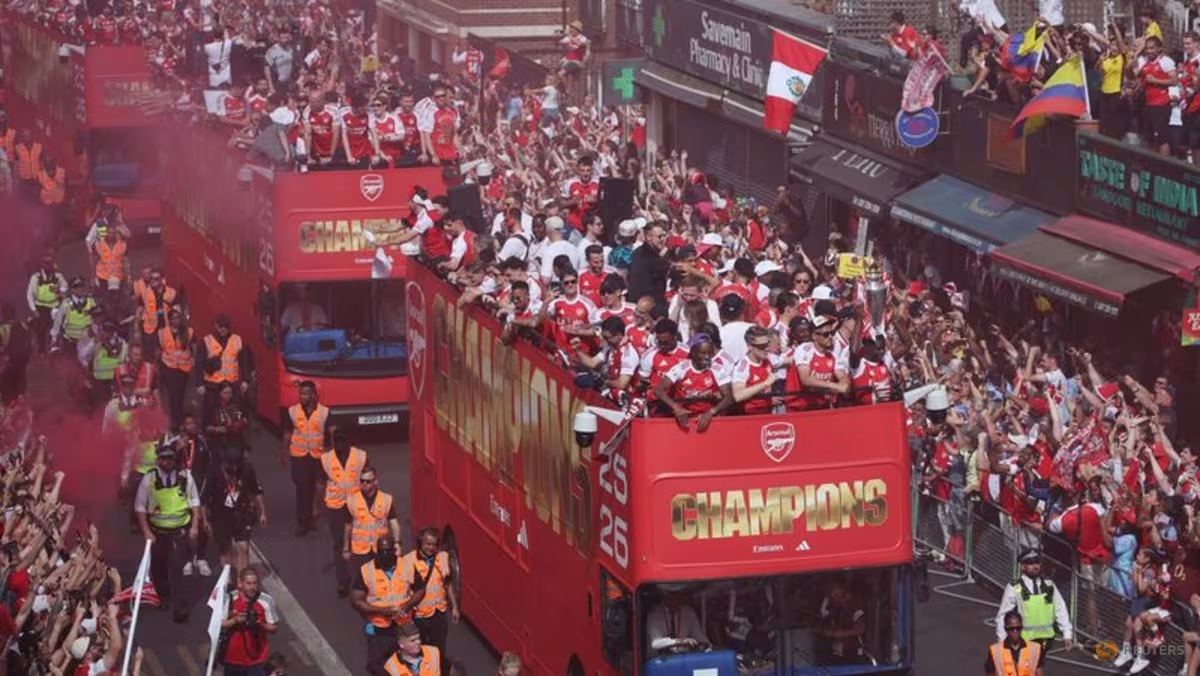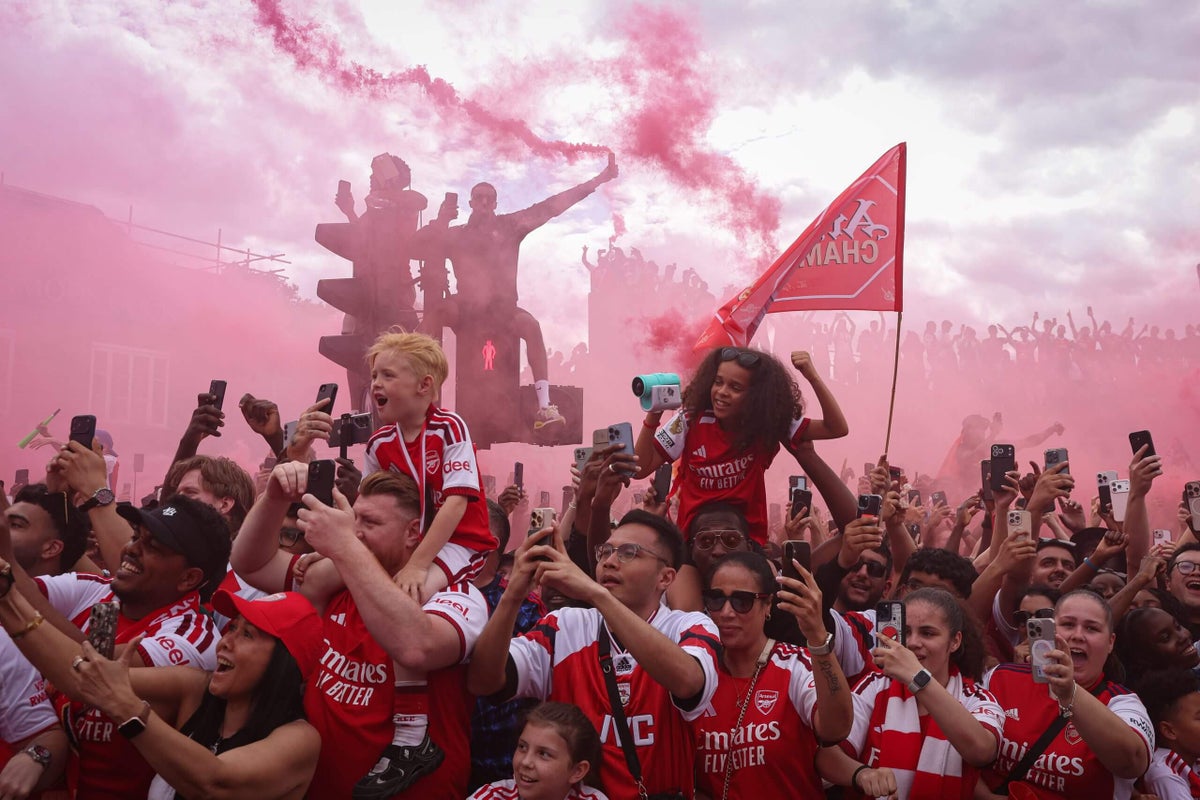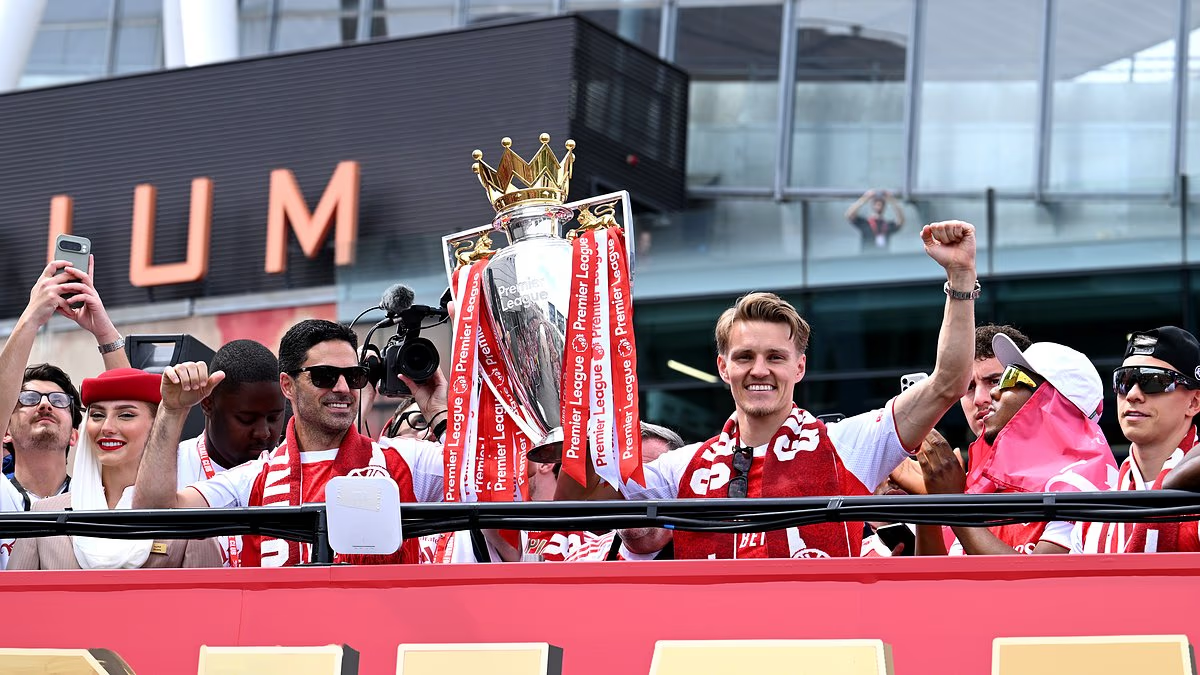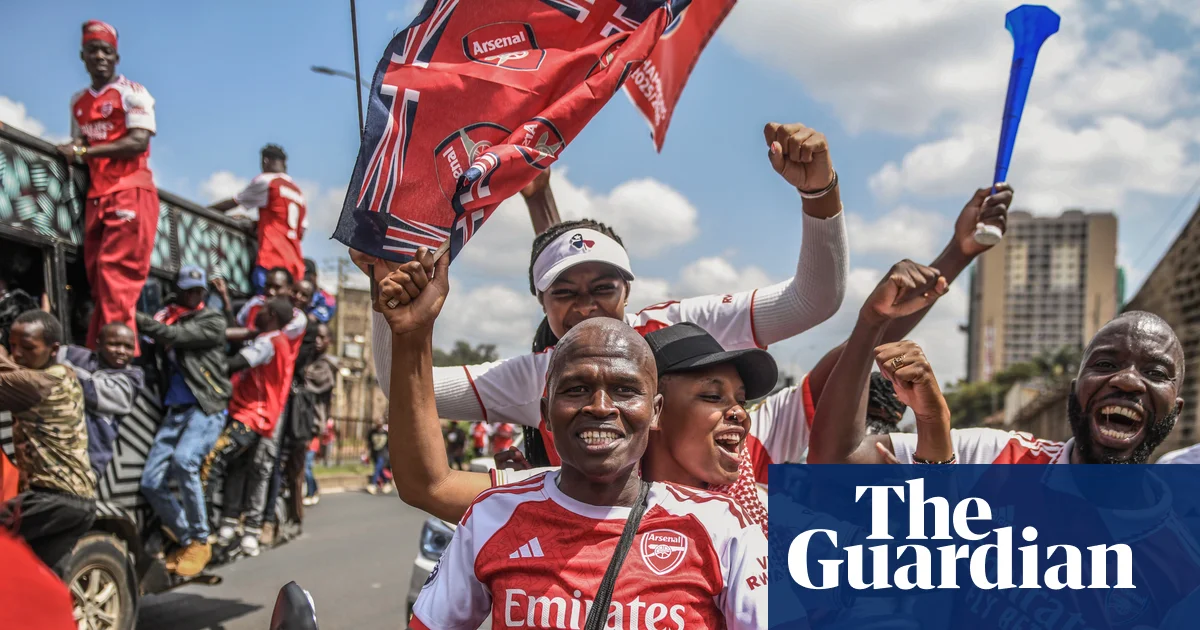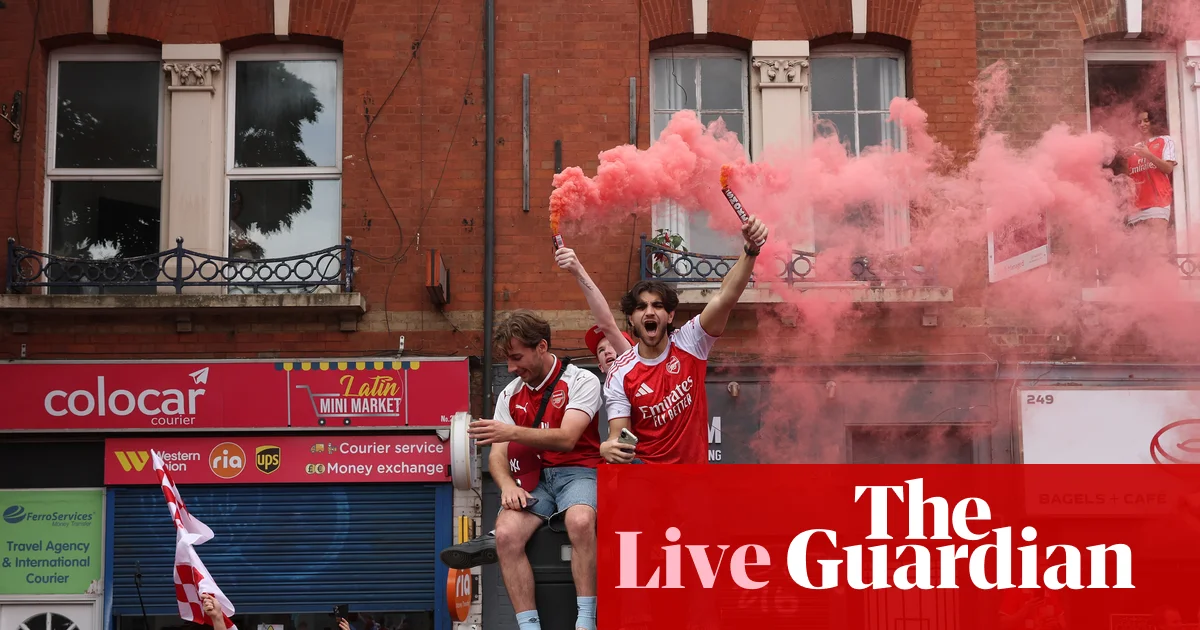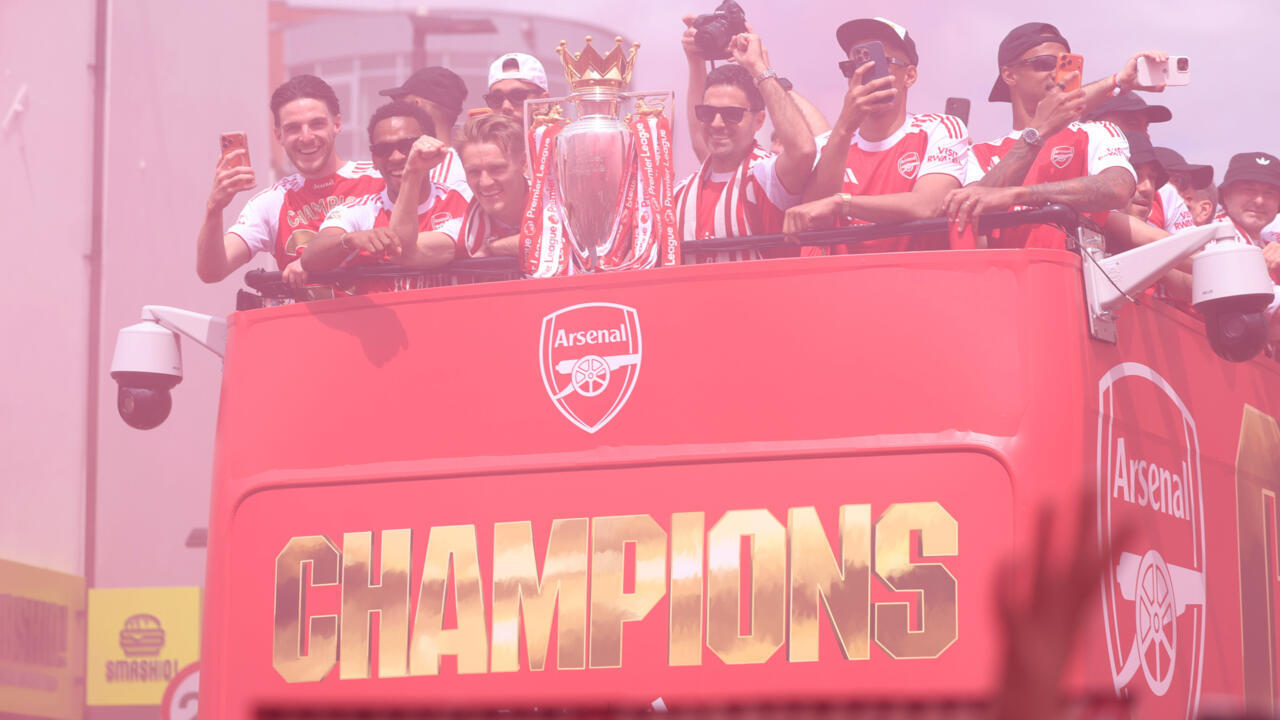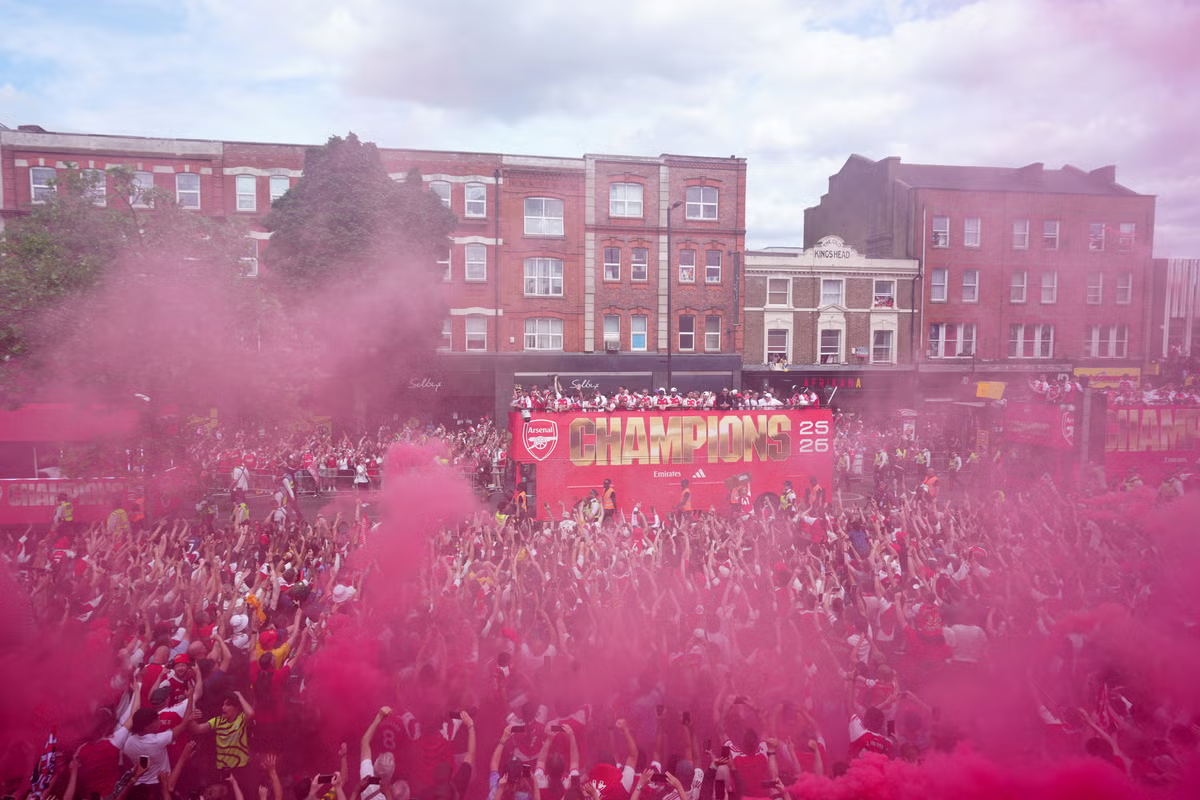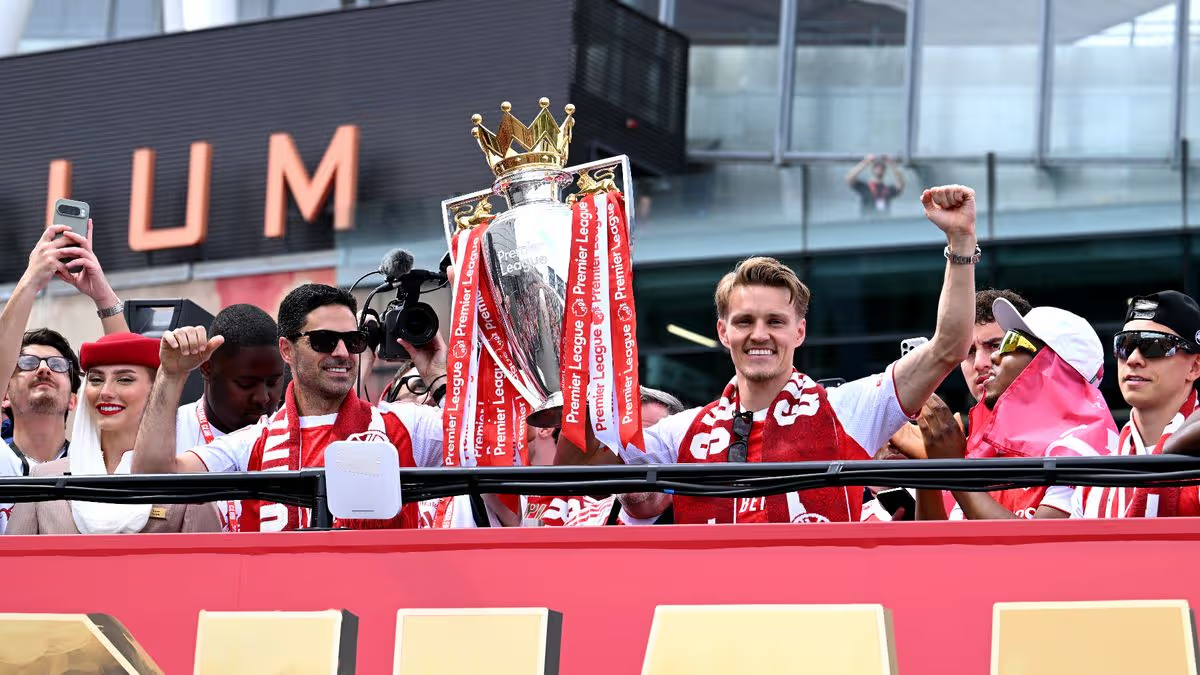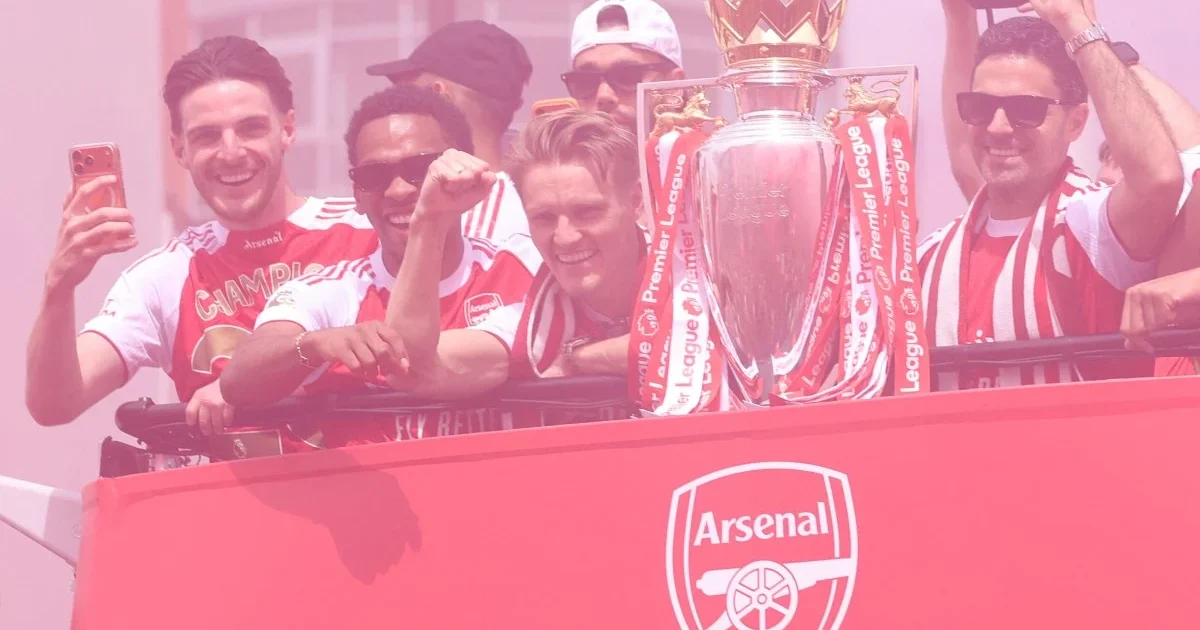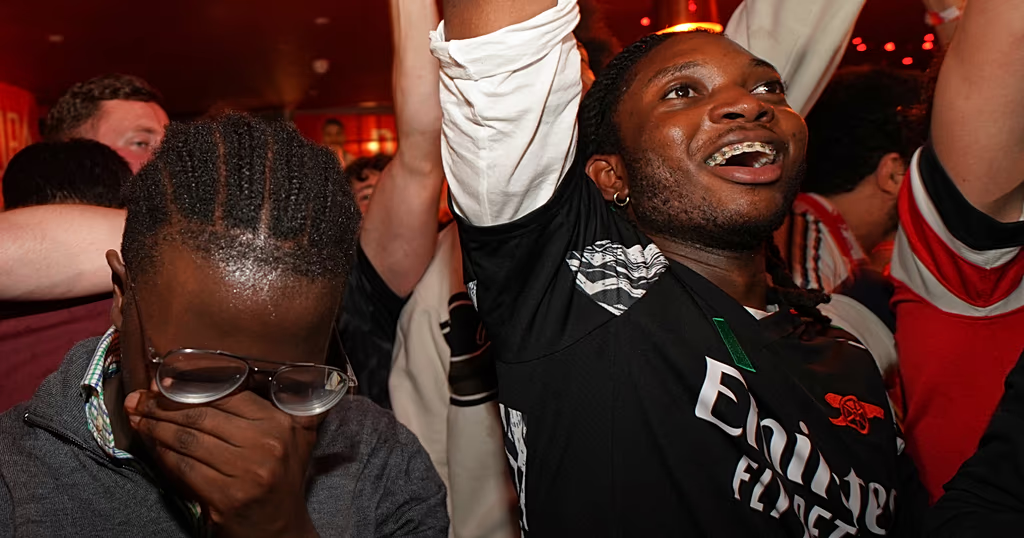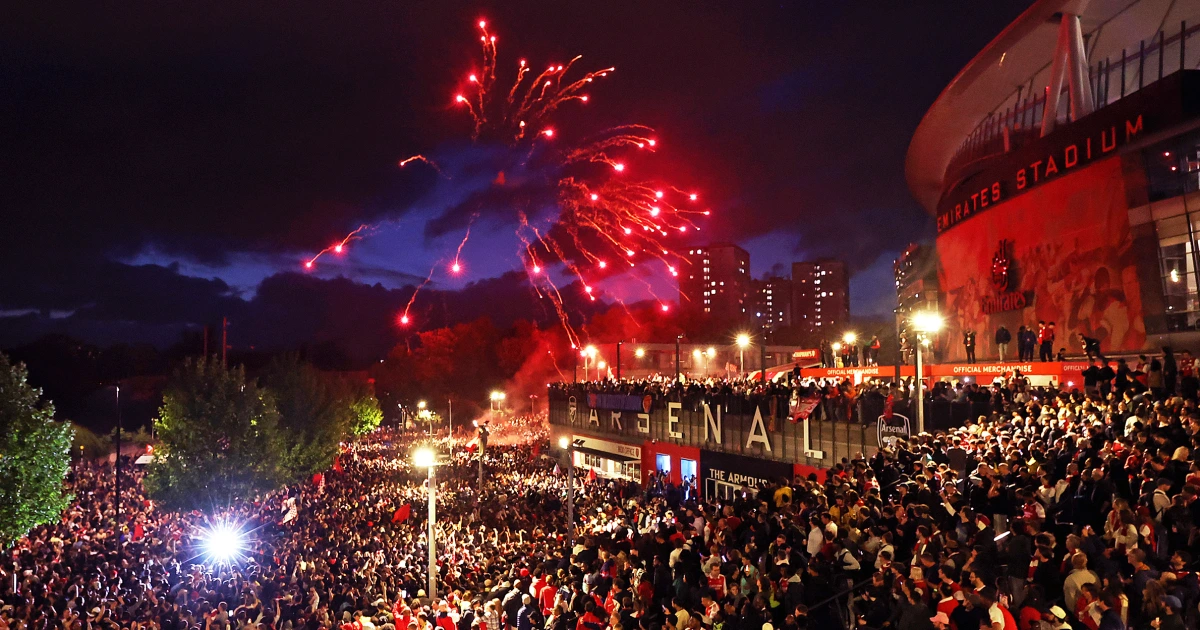
The cliche has already been done to death. But it is true – what else could flood the streets of north London late at night on a random Tuesday with so many people? Plenty showed up to the various people’s vote marches in 2018 – but that was during the day and on the weekend. The Iraq war inspired big crowds too, but again, not on a school night. No, this was Arsenal winning the Premier League for the first time in 22 years. And the roads around the Emirates Stadium succumbed to about the most good-natured mob I have ever seen. Arsenal have worked hard to earn a reputation as the club of the effete and metropolitan. Were you to want a last-minute matchday table at Trullo – a neighbourhood Italian with a reputation for a particularly good beef shin ragu – you might have to sacrifice a first born to the gods. Same goes for all the other small-plate, wine-bar type spots scattered through the shadow of the Emirates. When asked to conjure a stock image of an English football fan, how many of you are putting him in a Canali suit? Arsenal Man has two. But the point of Arsenal is the diversity, the spread, the broad church of it all. It is not just a warm bath for the elite. The economic polarity contained within just the borough of Islington – where Arsenal play – should be proof of that alone. That we watched professionals in north London and a rural village in Uganda celebrate Tuesday May 19th with equal vim is further evidence for the case. In fact, it has been a good week for anyone wanting to trade well-meaning patter about the success of multicultural Britain and the cheering effects of globalisation. Underdiscussed, however, is the role Arsenal has valiantly played for decades as the club of Irish London. You know the story: in the 1970s, Liam Brady, Frank Stapleton and David O’Leary came to play for the club. There was also Terry Neill, the Northern Irish man who managed the club from 1960 to 1970. All of this conspired to make the club very popular, particularly with the young middle classes in Dublin. One Irish Arsenal enthusiast contacted for this article likened Brady to Lionel Messi, which is an analogy that lives firmly in the land of overstatement. But hey, football inspires swivel-eyed devotion. In the stadium you will find tricolours and on the external wall, a mural to Brady. There’s a deeper story about Irish London here too. In the downbeat 1950s and 60s, Irish emigrants settled in the city’s northwest, Kilburn and Cricklewood. They looked for work in construction – scaffolding, bricklaying and building London’s post-war council housing. By the 80s and 90s, Ireland had picked its feet up a little bit and young professionals were emigrating to Clapham in the city’s south for professional, white-collar work. All those youngsters who were fans of Brady in the 1970s were grown-ups with mortgages now. Their football team reflected such middle-class pretensions. Now, the young Irish in London have conquered Hackney, Islington, the northeast – Arsenal territory. In fact, spend a Saturday afternoon wandering around the affluent (you could call it “trendy”) neighbourhood London Fields and you might find it harder to locate an English accent than an Irish one. This post-crash, post-recovery decade has sent the young Irish emigrant into London looking for a tech job and a handsome salary. In this neat, evolving economic profile of Ireland it seems only natural that Arsenal should come to be the diaspora’s club. I don’t wish to overstate the case. Yes, Manchester United exists. And what about Liverpool? Sure. And in London? Well, Chelsea has an Irish fanbase. Not sure about West Ham. I have never known an Irish person to support Tottenham but I am open to meeting them. And yes, Arsenal is a hugely international team with, as we discussed, devoted fans in Uganda. Even Zohran Mamdani, the mayor of New York, is in on the bit. Anne Hathaway too. In fact, this whole week has been an intellectual exercise for the fans – trying to explain exactly how Arsenal came to be the deracinated team of, well, pretty much everyone. They might win the Champions League in Hungary on Saturday night. I would fear for the streets of Budapest if the fans hadn’t such a reputation for politeness. But on Sunday afternoon, Arsenal will parade through the streets of Islington towards the Emirates and the streets will be thronged by that similarly good-natured mob again: the fairweathers, the bandwagoners, the genuine converts, the hedge-funders, the north Londoners, the south Londoners, and yes – you will probably see a tricolour or two, too.
Finn McRedmond: It seems natural that Arsenal would become the club of the Irish diaspora
Premier League title triumph was met with an outpouring of joy from an exceedingly good-natured mob
791 words~4 min read