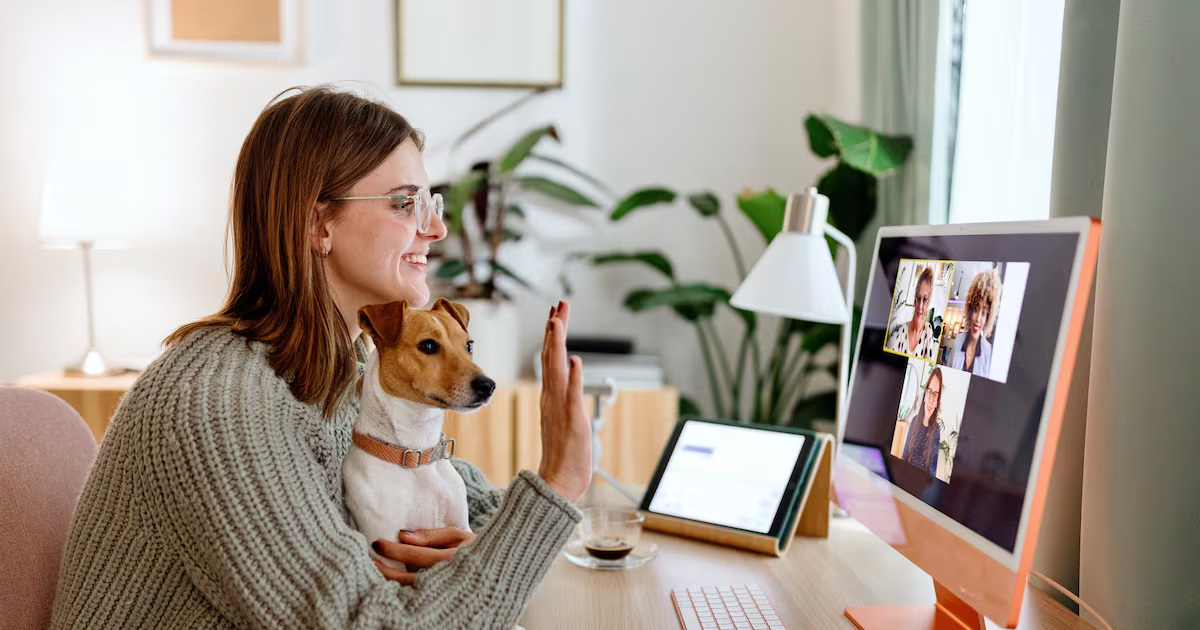
Will the pendulum keep swinging when it comes to hybrid working? Return to office mandates had been on the rise, but now the threat of fuel supply insecurities may see working from home fall back into favour. According to HR expert Louise Meehan of Woodview HRM, the broader shift to return to the office is ongoing and disputes still exist for some. “In the SME sector, where employers need employees in the office, many are already back and working well,” she says. “For others I work with, remote working has been successful and is now the norm. Where it works well, it is a perk that a smaller business can provide, which significantly impacts many current or potential employees.”Sara Riso is a senior research manager in Eurofound’s Working Life Unit. She notes high-profile cases in the media, particularly in the US, of big companies such as Amazon, AT&T, JPMorganChase, and Ford, introducing stricter office mandates. But she believes this does not signal a broader shift, especially in the EU. Sara Riso, senior research manager, Eurofound “Experts consulted for a Eurofound study on the management challenges of hybrid work agree that hybrid working is not disappearing; rather, it is evolving into a more structured and stable model,” she explains. Data from the European Working Conditions Survey (EWCS) show that in 2024, about 28 per cent of workers teleworked from home, with 3 per cent working full-time from home, 9 per cent in hybrid work arrangements (regular telework) and an additional 16 per cent worked from home sometimes or rarely. “Since the pandemic, organisations have continued to refine hybrid arrangements through formal policies and varied configurations, ranging from fixed schedules to more flexible approaches,” Riso says. These are tailored based on factors such as organisational culture, employee roles, technological capabilities, and client requirements. “The most common pattern now involves employees spending two to three days per week in the office, often centred on anchor days to support collaboration. This suggests, rather, that hybrid working has settled into a middle ground.”Meehan notes that the current debate regarding a potential shift in hybrid working due to commuting costs is set to continue. “If the cost of living continues to rise and fuel prices remain pressured, and if commuting times remain high, I think employers will likely face increased demands to facilitate ongoing or expanded hybrid working options.”Louisa Meehan, HR consultant, founder of Woodview HRM: 'Adults rarely like being "mandated" to do anything that feels controlling and implies a lack of trust.' Return to office mandates have been broadly successful, but Meehan believes this comes at a cost. “Adults rarely like being ‘mandated’ to do anything that feels controlling and implies a lack of trust; requiring them to return to the office a set number of days can feel this way,” she says. “Where employees are happy at work, they are up to 30 per cent more productive, make better decisions and have higher levels of performance.” While hybrid working may not necessarily make someone happy, Meehan points out that being forced into the office, enduring a long commute, or paying for fuel/transport can certainly make some employees unhappy and disengaged. “The issue here is not whether an employer can mandate an employee return to the workplace but what the impact is on the psychological contract,” she warns.The use of digital surveillance to monitor remote workers also has a significant impact on employee trust. Analysis of the 2024 EWCS survey data shows that while most teleworkers report that computer programmes are not used to monitor their work performance, telework arrangements are associated with higher levels of such monitoring compared to working exclusively from employers’ premises. “Full-time telework stands out as the arrangement with the highest prevalence of reported use of computer programmes to monitor performance at 15.7 per cent,” Riso notes. For hybrid work arrangements, this stood at 8.7 per cent, similar to those working exclusively at employers’ premises.Meehan points out that surveillance is a reality of the workplace – team leaders or managers have always observed work in person. “It is important that employees are made aware of what is being ‘surveilled’, whether via CCTV in the office or digitally remotely. But even though surveillance is a reality that is not going to go away, it should not be the primary focus,” she says. “A culture of trust almost always results in better performance. This trust must work both ways and the key management tool involves setting clear expectations and monitoring output. When that is working well, surveillance of key strokes or activity is less relevant.”
Energy and fuel supply insecurities may mean working from home becomes more prevalent
While return to office mandates were rising, the hybrid working model continues to evolve
762 words~3 min read