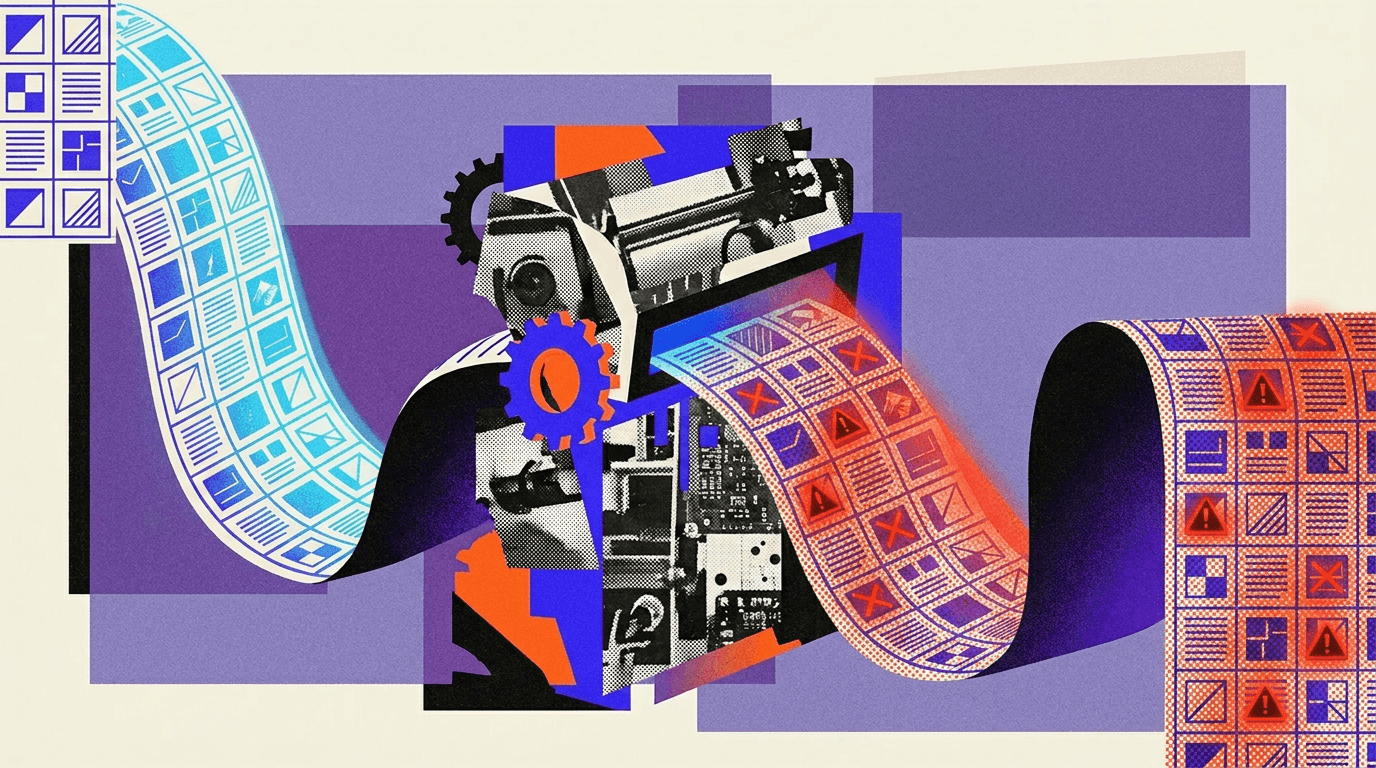
The story so far: Since OpenAI’s ChatGPT debuted in 2022, users have been experimenting with AI to write and publish human-sounding content at scale. According to a May 2026 report by digital consulting firm Graphite, the number of “primarily AI-generated” articles published on the internet equals the number written by humans.While the research methodology is debatable, its findings point to a growing need for transparency in authorship as readers want to know whether government circulars, work emails, social media captions, academic papers, text messages, news articles, and even books were written by humans or chatbots.AI-detection toolmakers claim their products are dependable and that readers who want to know whether something was written using AI or not can use them to confirm the authenticity of content. But how accurate are these tools in spotting AI generated text?How are AI text detectors used?Popular AI text detection tools are easy to access online, catering to a wide variety of users such as students, educators, social media managers, business experts, and content creators.They tout high accuracy rates and training standards. Some of these platforms offer free trials or limited checks where the user can paste a short text passage and have it analysed for signs of AI-generated or AI-assisted content. In order to evaluate longer drafts, or get help in editing AI text, users will have to sign up for a paid plan.Multiple AI text detectors also offer plagiarism checking features, or “humanisers” that claim to make AI-generated content look more natural, so as to evade detection by other AI text detectors.As frontier AI models from companies such as OpenAI, Google, and Anthropic continue to mature and produce more human-sounding text with fewer machine-generated “tells,” these AI text detection tools must evolve in tandem or risk throwing out inaccurate results.Some popular AI text detection tools include Pangram, Quillbot, ZeroGPT, Grammarly, and Turnitin.Can AI text detectors be trusted?This is the billion-dollar question — literally speaking. As Generative AI tools become accessible to just about anyone with an internet connection, people worldwide are looking for ways to detect AI-generated writing. Meanwhile, many writers want to hide their reliance on AI models for reputational reasons.AI text detectors are still prone to producing false negatives where they classify AI-generated work as being human-made, or false positives where they classify original human work as being partially or wholly AI-generated. The latter is an urgent problem, as it can lead to disciplinary action being taken against students and academics, even if they developed their work through honest means. False positives can also lead to social media trolling and career-impacting consequences.Turnitin, in particular, has seen several such cases and admitted to the potential for false positives. The company noted that it was a “powerful tool” but “not infallible.”More worryingly, the company’s website noted that “literary flair or a scholarly voice that strays from the norm can throw Turnitin for a loop,” leading to confusion when assessing the uniqueness of writing.When The Hindu ran 186 words of a 2010 Pulitzer prize-winning foreign journalism feature through several trending AI detection platforms, the results varied wildly: Pangram and Quillbot both classified the text as being 100% human written, while ZeroGPT said that it was 49.9% AI.Pangram is often cited as a trusted AI text detector on social media; it claims to detect AI-generated content with 99.98% accuracy, and stated it was reviewed positively by third parties including the University of Maryland and the University of Chicago.Pangram’s popularity is also due to efforts by CEO and co-founder Max Spero, who actively promotes the tool on X (formerly Twitter) and cites its results to claim outright that trending pieces were generated with AI. On the flip side, Pangram has also stated that for text under 75 words, the results may be less accurate.This brings up another problem: how much trust can everyday users place in the accuracy of commercial AI text detectors when their very business models depend on users signing up to paid plans in order to access AI text “humanisers” and other rewriting tools?Have AI text detectors been used to accuse authors?In March 2026, American author Mia Ballard’s horror novel Shy Girl was cancelled by publisher Hachette over allegations of AI writing, while Ms. Ballard was trolled online. Two months later, the Commonwealth Foundation defended its judging process after a few regional winners of its 2026 Commonwealth Short Story Prize were hit with AI accusations — namely the Trinidadian writer of East Indian heritage, Jamir Nazir, whose story The Serpent in the Grove was one of five shortlisted winners.In both cases, many social media users cited the results of AI text detectors in order to claim that the works of authors Mia Ballard and Jamir Nazir showed signs of being AI-generated. Specifically, Pangram was used to accuse both Ms. Ballard and Mr. Nazir of submitting AI writing. Though some users feel that being flagged by AI text detectors was clear evidence of creative dishonesty, others fear these still-experimental AI tools could wrongly damage the careers of authors and academics.Razmi Farook, Director-General of the Commonwealth Foundation, stated that AI checkers were not used in the 2026 short story judging process. She was concerned about the ethical implications of submitting “unpublished original work” to an AI checker.Ms. Farook further expressed disappointment at how the work of other feted writers and winners had faced scrutiny; Pangram AI published results claiming that it found more stories showing signs of AI use among the 2026 and 2025 Commonwealth short story prize winners.All the shortlisted writers this year had personally stated that no AI was used, according to Ms. Farook, who highlighted that AI detection tools were “not unfailing or infallible,” and that the competition had to operate on the principle of trust until a reliable detection process was available.
Should you trust AI text detectors? | Explained
AI text detectors are still prone to producing false negatives where they classify AI-generated work as being human-made, or false positives where they classify original human work as being partially or wholly AI-generated.
960 words~4 min read