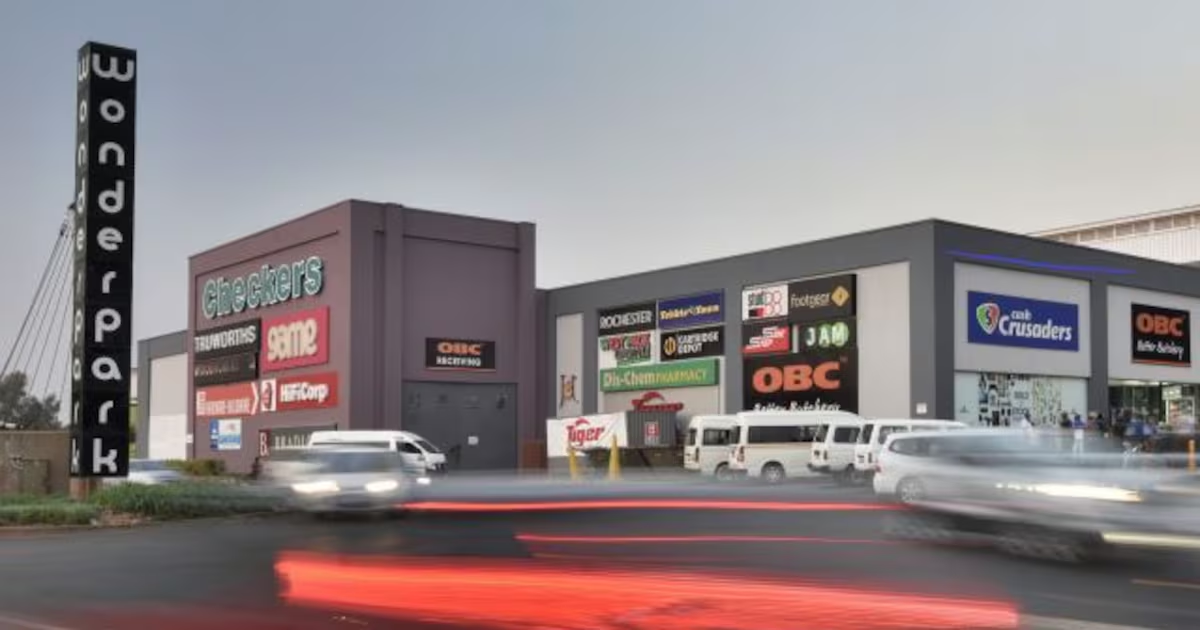
Emira’s move to woo back the contract of logistics group RTT helped the landlord slash its vacancy levels from 6.4% to 4.1%.Emria on Wednesday said RTT reoccupied the industrial space it vacated in the previous financial year, boosting its occupancy levels.The group, which released its full-year results for the year ended March, on Wednesday reported broad recovery in occupancy levels across its portfolio and highlighted the sustained demand for well-positioned logistics and warehousing assets.Industrial property was one of the strongest contributors during the period, with vacancies dropping to below 1% from 7.9% previously. Demand for warehouse and logistics space remained strong, supporting near-full occupancy levels.Retail assets also continued to provide stability for the group. Vacancies in the retail portfolio remained unchanged at 4.2%, slightly below the national benchmark, supported by Emira’s exposure to grocery-anchored neighbourhood shopping centres focused on essential consumer spending.The group declared a final dividend of 64.61c per share, up from 61.50c in the previous period. HEPS fell 58.2% to 160.74c from 384.42c a year earlier. EPS declined 68.7% to 154.35c.Wonderpark Shopping Centre in Pretoria North, the group’s largest retail asset, continued to anchor the portfolio’s retail performance through steady foot traffic and strong support from national retailers. Emira said its retail centres remain well positioned in the communities they serve, helping sustain stable rental income despite pressure on consumer spending.The office portfolio, however, continues to reflect the slow, uneven recovery in South Africa’s commercial property sector. Office vacancies rose to 9.9% after the South African Local Government Association vacated space at Menlyn Corporate Park in Pretoria in the period.Despite the increase, the group’s office vacancies remain below the South African Property Owners Association national average of 12.6%, it said. During the period, the group offloaded seven commercial properties for R479m, slightly above their most recent valuations, as the group continued to recycle capital and streamline its portfolio. It also transferred 1,377 residential units, generating gross proceeds of R813.8m before costs.“By the reporting date, assets worth R1.1bn had been classified as held for sale, including seven commercial properties and 538 residential units, with most of the transactions either already concluded or expected to be completed by March 2026,” the group said.The group’s loan-to-value ratio improved to 30.2%.Meanwhile, Emira’s residential portfolio recorded stable occupancy levels, with vacancies largely unchanged from the previous year. The portfolio, which is concentrated mainly in Gauteng and focused on the low- to middle-income rental market, continued to benefit from demand for affordable, well-located accommodation.Average rentals across the group’s residential portfolio are about R6,000 a month, reflecting its focus on the affordable rental market, which has remained relatively resilient despite continued economic pressure.Looking forward, the group said the latter part of the 2026 financial year is expected to provide a more stable domestic environment, supported by improved confidence, no load-shedding and easing inflation.“However, geopolitical tensions, particularly in the Middle East, have added uncertainty and could delay interest rate cuts. Despite this, the fund enters the 2027 financial year well positioned, supported by its diversified portfolio, lower gearing and hedging strategies,” the group said.
Emira slashes vacancies to 4.1% after winning back RTT business
Property group reports stable performance, with retail vacancies steady at 4.2%
508 words~2 min read