Brigadier-General Peter Aro (retd.), former Nigerian Army commander and ex-Director of Information and Communication Technology at the Army Signals Headquarters, speaks with SOLOMON ODENIYI on the resurgence of terrorist attacks in the South-West and possible solutions, among other issues
how would you describe the nature and profile of the bandits operating in the south‑west today, compared with armed groups in the north‑west or south‑east?
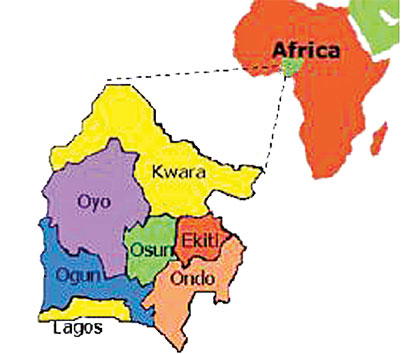
The nature of banditry in the South-West today differs from what exists in the North-West and South-East, even though there are overlaps. In the North-West, many armed groups evolved gradually from cattle-rustling networks, illegal mining economies, arms proliferation, rural collapse, and weak governance into heavily armed territorial structures controlling forests and vulnerable communities. In the South-East, insecurity is more politically charged, shaped by separatist tensions, cult-criminal overlaps, and cycles of confrontation that blur the line between agitation and organised crime. The South-West, is facing a more gradual and adaptive penetration model: one built around mobility, forest infiltration, local intelligence gathering, and psychological fear rather than open territorial occupation. What makes the South-West increasingly alarming is that it is no longer about isolated ransom kidnappings alone. The recent attacks involving schools, children, and coordinated rural abductions indicate a dangerous evolution in operational sophistication. It suggests, organised logistics, planning, and growing familiarity with vulnerable rural corridors. There is also the possibility that some of the terrorists may have lived around forest communities long enough to understand the terrain, local movement patterns, and security weaknesses of the region. Since school children are targeted , it stops being mere opportunistic crime and becomes psychological warfare against society itself, creating fear capable of paralysing communities and weakening confidence in state protection. The deeper concern is that the South-West may be witnessing the early formation of the same insecurity ecosystem that matured gradually in parts of the North-West: forest sanctuaries, informant networks, ransom economies, logistical support systems, and fear-induced silence within local communities. Across Ondo, Oyo, Ekiti, Ogun, Osun, and parts of Kwara and Kogi historically connected to the South-West, these networks appear to exploit difficult terrain, inter-state boundaries, weak rural policing, and existing local relationships with calculated precision. It would also be dishonest to ignore the psychological impact of what is unfolding. Sustained insecurity does not only take lives; it quietly affects how people think, move, farm, educate their children, and even how they perceive government itself. Whether or not some attacks are intended to send political signals, the effect is often the same once fear begins to spread and trust starts to weaken. This is why the conscience of government must now speak louder than bureaucracy. The South-West may not yet be at the stage of entrenched insurgency seen elsewhere, but it is clearly approaching a dangerous transition point where delay carries serious consequences. Once parents begin doubting whether schools are safe, once rural communities organise daily life around fear, and once silence replaces cooperation with authorities, insecurity begins to reproduce itself faster than enforcement can contain it. That is how security crises harden: not overnight, but through repeated hesitation, fragmented intelligence, and delayed coordination.