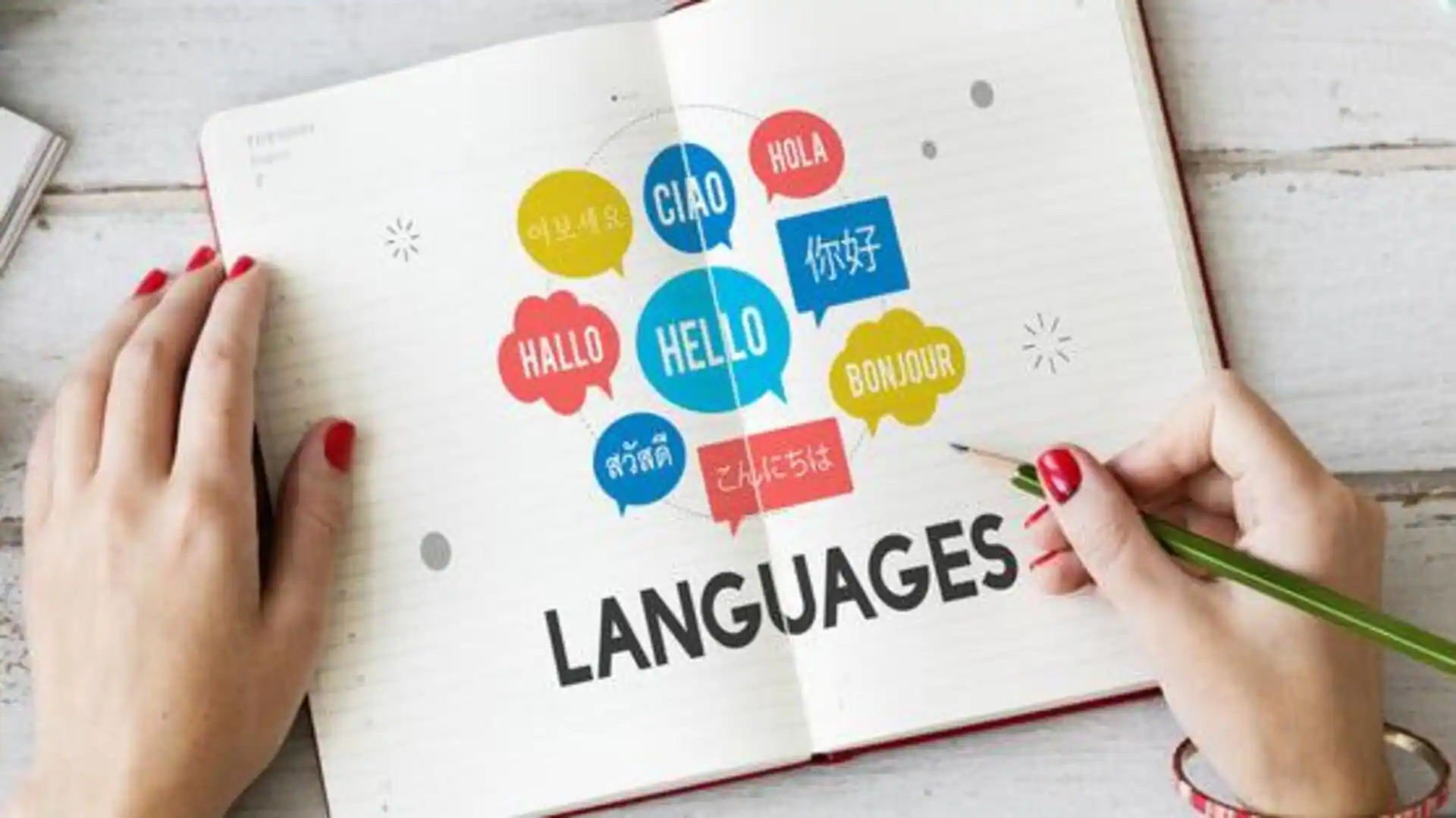
gettyimagesbankMany people are trying to learn a foreign language such as English, Spanish, French or Japanese. But after memorizing vocabulary only to quickly forget it, struggling with grammar and feeling embarrassed about making mistakes while speaking, many eventually give up.Experts say the reason may not be a lack of ability, but rather misguided beliefs some have about language learning itself.Abigail Parrish and Jessica Mary Bradley, both language education specialists at the University of Sheffield, analyzed common misconceptions that interfere with foreign language learning in an article for The Conversation.Drawing from their educational experience, the researchers argued that approaching language learning like a school exam can actually create barriers to progress.They focused on how people perceive language learning, examining school systems centered on testing, concerns about language acquisition and the gap between classroom learning and real-world communication. Their conclusion: Real communication matters more than grammar scores or memorization.The first misconception highlighted by the researchers was the belief that language learning is mainly about memorizing grammar rules and vocabulary.The experts explained that language learning is not simply a memorization task, but a process of understanding people, culture and history. They added that music, movies, books and games can all play an important role in language acquisition.These experiences can also help learners develop “intercultural agility” — the ability to empathize and connect with people from different cultural backgrounds.Another major misconception is the idea that mistakes are shameful.In school settings, correct answers and accuracy are heavily emphasized. Real-life conversations, however, work differently. People frequently misuse words or make grammatical mistakes in daily life, yet communication still happens successfully.The researchers warned that obsessing over perfect accuracy can reduce one's willingness to speak and eventually weaken motivation to learn.gettyimagesbank5 common myths about language learningA common mistake language learners make is focusing on memorization. Experts say language learning also involves understanding people, culture, history and context. Music, films and games can all be valuable learning tools.Another misconception about learning a foreign language is that mistakes are something to be ashamed of. Real communication is different from school exams. People make mistakes all the time in everyday speech, yet conversations continue. Communication itself matters more than perfection.Adults being deemed too old to learn a new language is also a common misconception. While children may have some advantages in language acquisition, adults often benefit from greater life experience and stronger learning strategies.Effectively learning a foreign language does not require living abroad. While this can help, it is not essential. Online classes, video content, language exchange groups, games and social media can all provide meaningful exposure to a foreign language.Lastly, the researchers emphasized that language ability is not an inborn gift possessed by only a few people. Consistent exposure and repeated use matter far more than natural talent.The researchers noted that modern apps for language learning, online communities and travel experiences increasingly support a practical, communication-focused style of learning.They concluded that foreign languages are not simply tools for achieving good test scores, but ways of connecting with other people. Negative experiences in childhood classrooms do not determine a person’s future language ability, and changing one’s approach to language learning can make the process far more accessible and enjoyable.This article from Kormedi.com, Korea’s top health care and medical portal, is translated by a generative AI system and edited by The Korea Times.
Grammar isn't everything: Misconceptions about foreign language learning - The Korea Times
Many people are trying to learn a foreign language such as English, Spanish, French or Japanese. But after memorizing vocabulary only to quickly fo...
551 words~3 min read