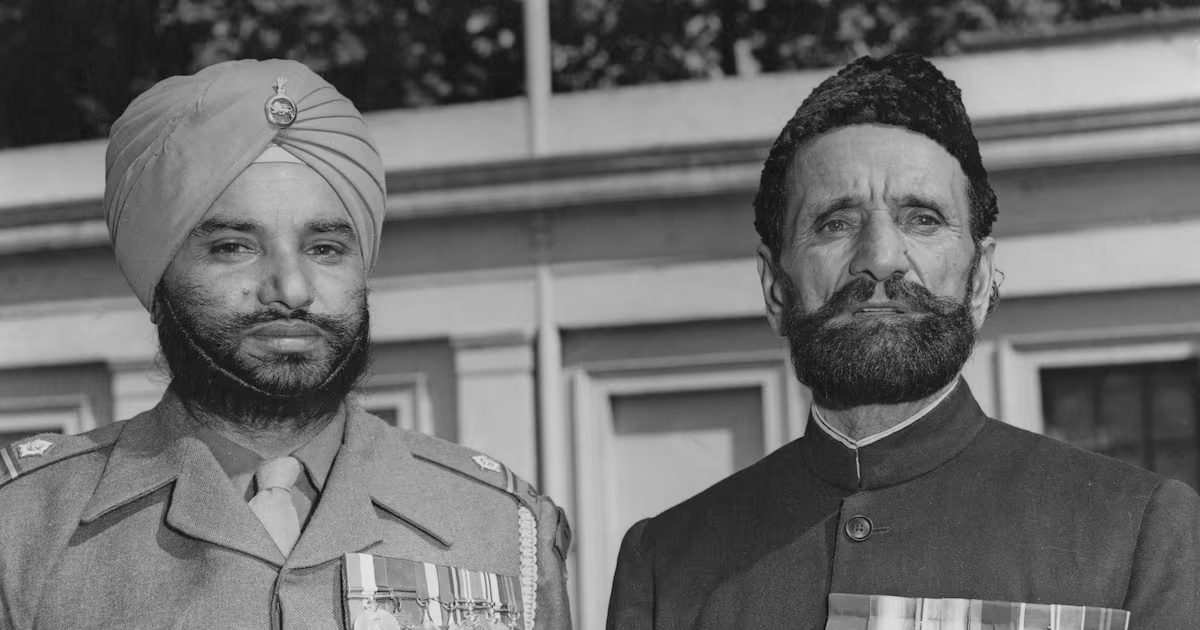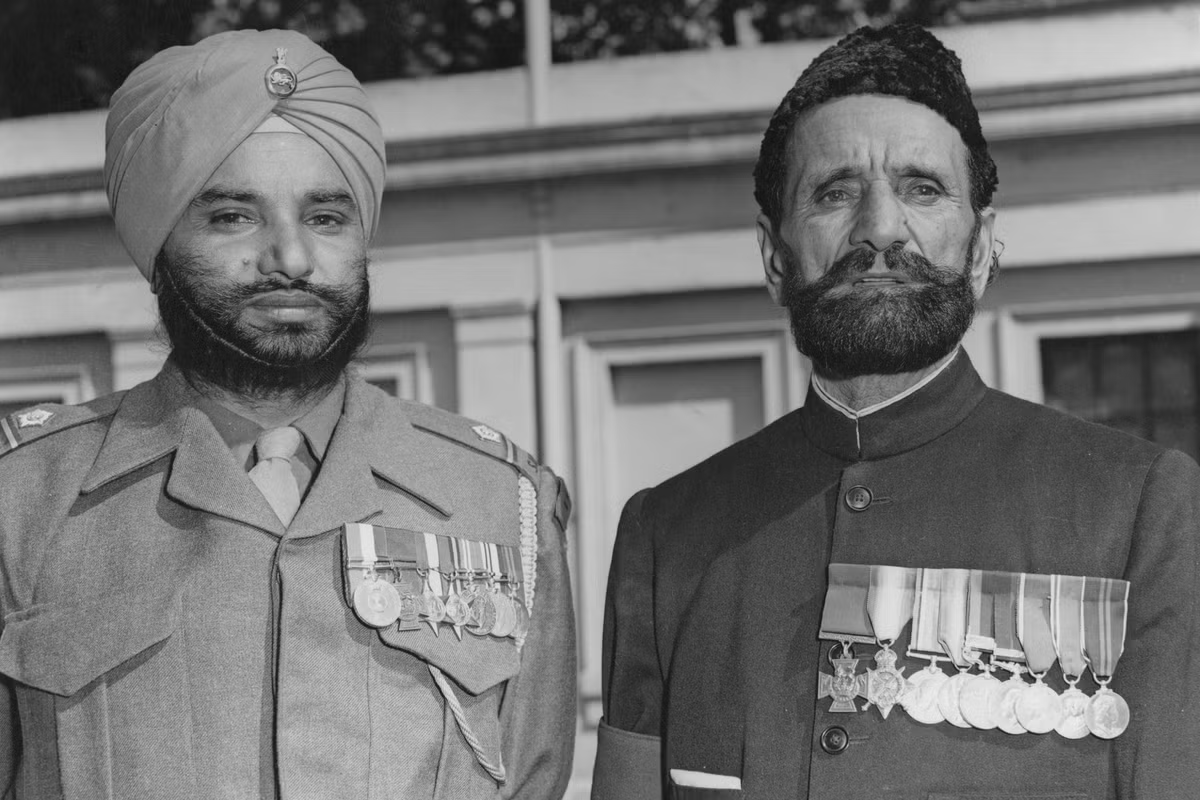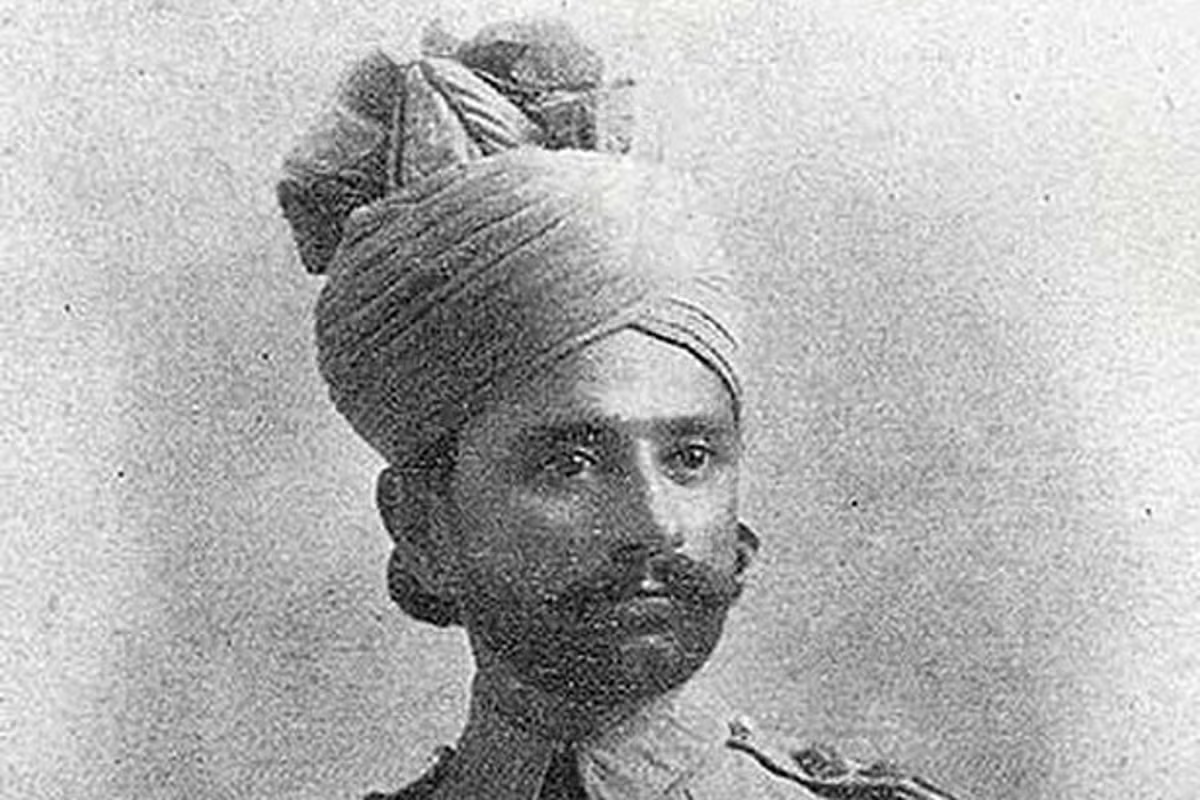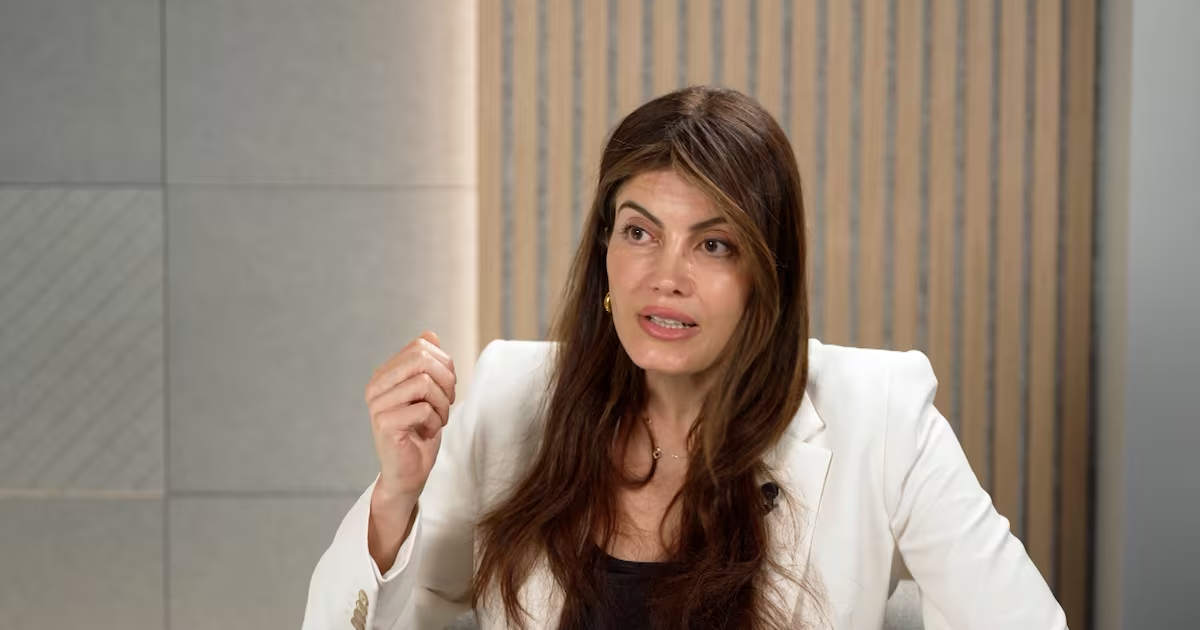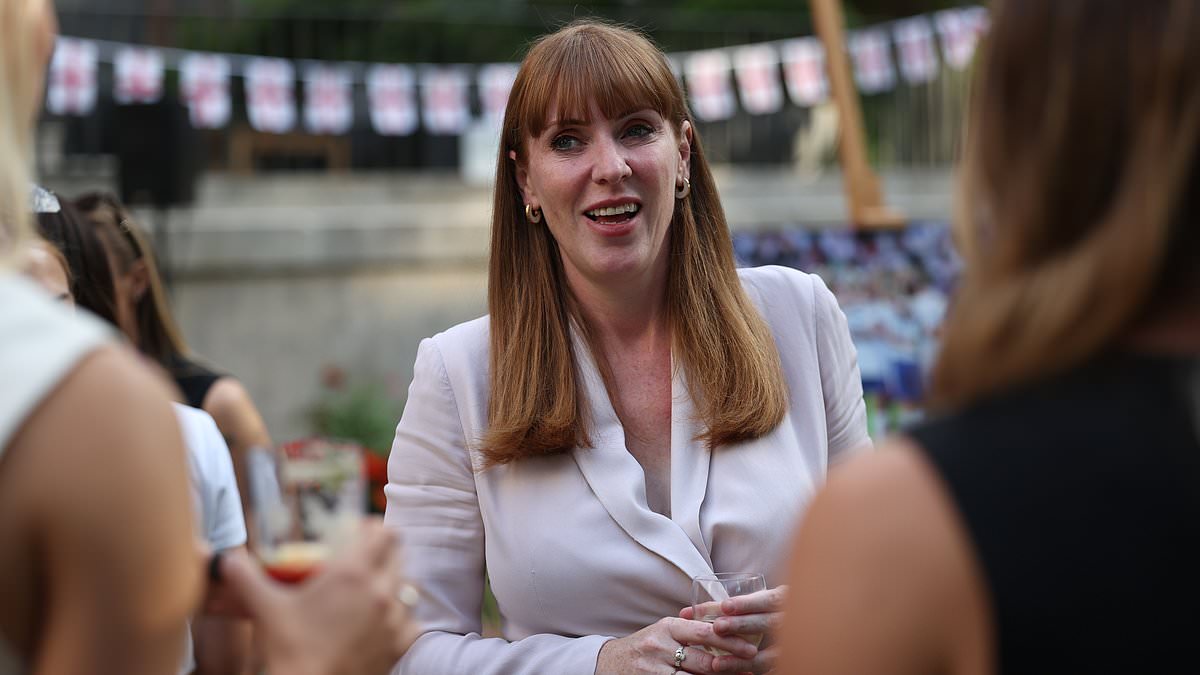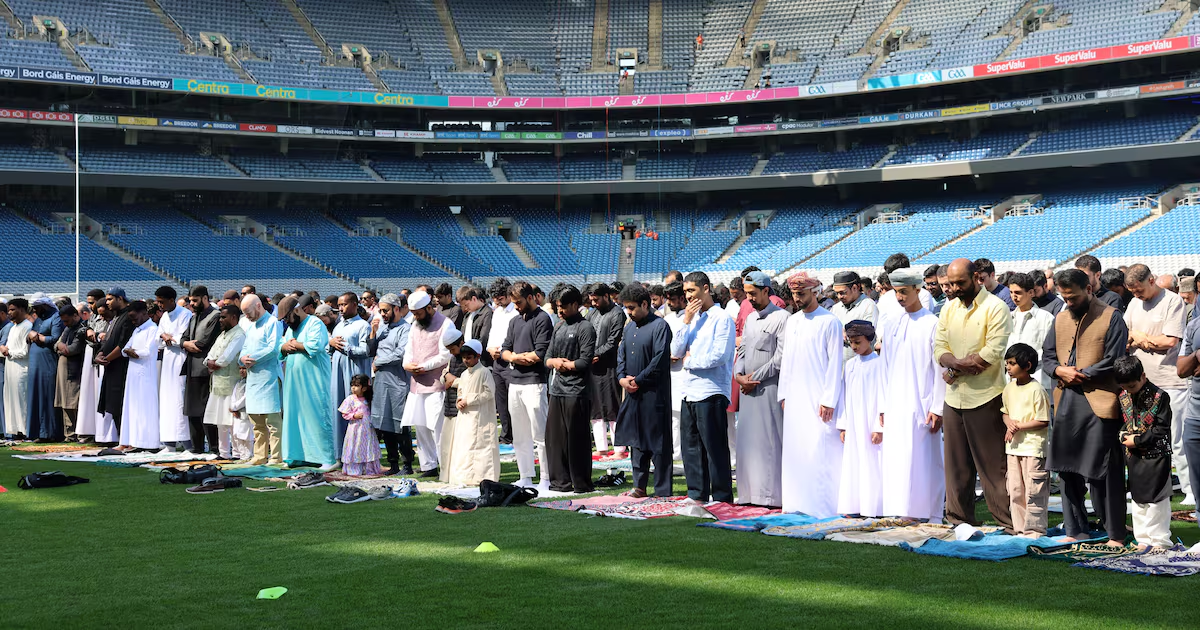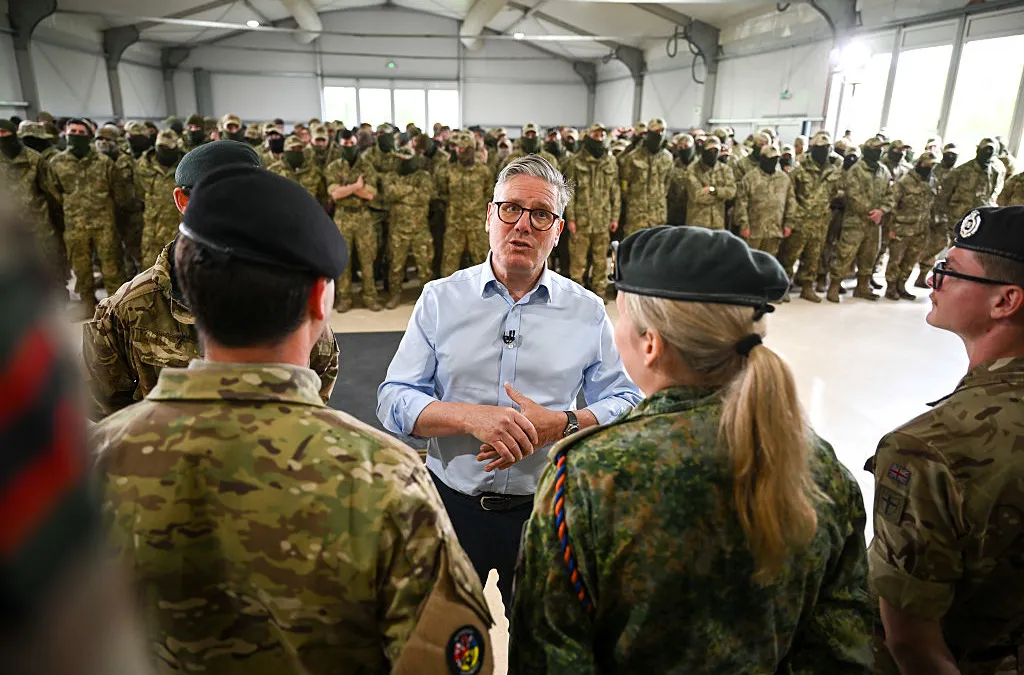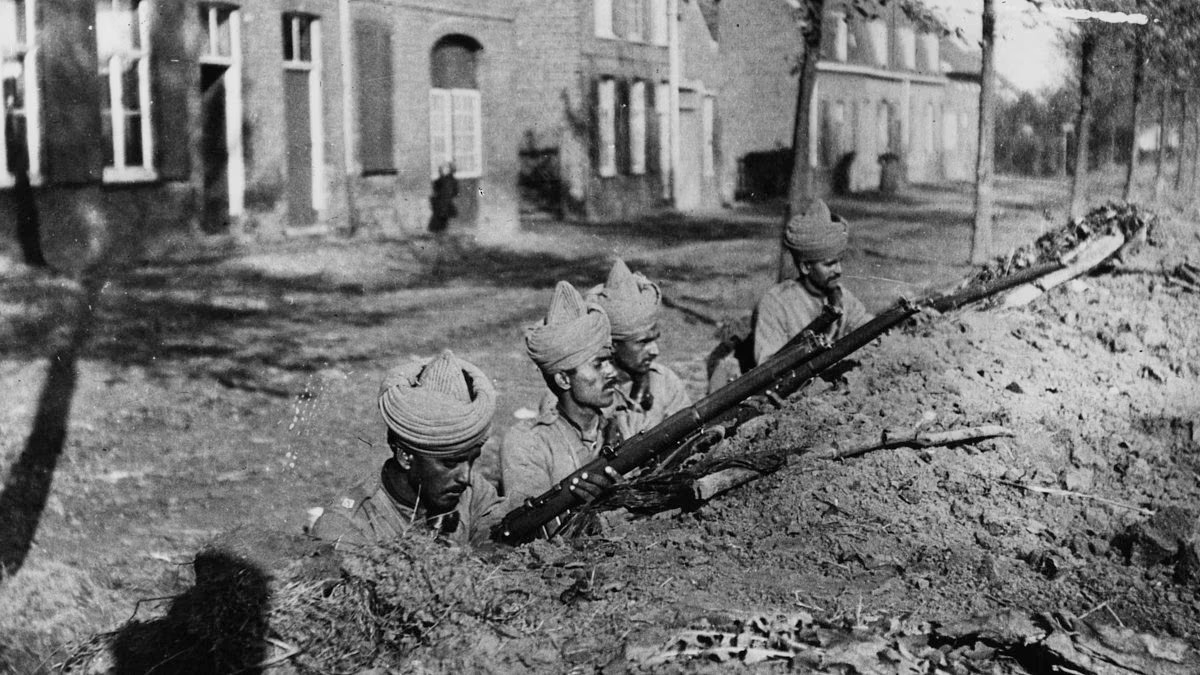
Labour has announced a £1million competition for a memorial to Muslims who fought for Britain in the world wars.The contest - first unveiled in the 2024 Budget by Conservative chancellor Jeremy Hunt - is searching for organisations to design and build the permanent display.Its winner will follow in the footsteps of acclaimed memorials celebrating servicemen from the Indian subcontinent, Africa and the Caribbean, as well as the Monument to the Women of World War II in Whitehall.The competition opens on June 10 and will be open to charities, companies and local authorities in England. The site of the memorial is yet to be decided and entrants will be asked to name where they would like their design to be located, and provide details of how they intend to secure planning permission.The memorial will offer a space for learning and reflection, according to the competition's organisers.High scoring designs need to include credible construction timelines and engagement activities, particularly with Muslim and armed forces communities.At least 400,000 Muslim soldiers saw action in the First World War, including Khudadad Khan, who is thought to be the first Muslim awarded the Victoria Cross during the conflict. The 129th Baluchis fighting at Ypres in 1914. Labour has announced a £1million competition for a memorial to Muslims who fought for Britain in the world wars At least 400,000 Muslim soldiers saw action in the First World War, including Khudadad Khan, pictured, who is thought to be the first Muslim awarded the Victoria Cross during the conflictAfter his fellow soldiers were killed at Hollebeke, Belgium in 1914, Mr Khan continued firing his machine gun alone - delaying a German advance long enough for reinforcements to arrive - before crawling back to his regiment at night.Faith and communities minister Nesil Caliskan said: 'Our country is made up of a strong, diverse tapestry of different faith communities and we owe that freedom to the bravery and sacrifice made by those who fought alongside us for a better future all those years ago.'Muslim soldiers were a fundamental part of securing victory, but their story has been in the shadows for too long.'This memorial will make sure their contribution stays in our memory now, and for generations to come.'The competition was first announced in 2024, with Mr Hunt saying the site would honour those Muslims lost 'in the service of freedom and democracy'.As he began his Budget speech on Wednesday, Mr Hunt vowed that past sacrifices made by those who lost their lives - no matter their faith, colour or class - would not be forgotten.His Conservative colleague Sir Sajid Javid had asked last month how the Government would help with a proposal to establish a memorial at the National Memorial Arboretum in Staffordshire.Sir Sajid, an ex-Chancellor, suggested it should honour an estimated 750,000 Muslims who have fought for British armed forces.Mr Hunt told the Commons: 'As we mourn the tragic loss of life in Israel and Gaza, the Prime Minister reminded us last week of the need to fight extremism and heal divisions.'So I start today by remembering the Muslims who died in two world wars in the service of freedom and democracy.'We need a memorial to honour them, so following representations from the Right Honourable Member for Bromsgrove (Sajid Javid) and others, I've decided to allocate £1million towards the cost of building one.'Whatever your faith or colour or class, this country will never forget the sacrifices made for our future.'Sir Sajid was seen nodding in acknowledgment of the funding announcement.The World Wars Muslim Memorial Trust was registered in 2016 and seeks to honour those Muslim soldiers from the Indian subcontinent, the Middle East and North Africa who were involved in the two global conflicts.It would also honour Muslim personnel from the UK who have died in combat in recent times.Memorials to several communities, groups and causes have already been built.These include the Memorial Gates near Buckingham Palace, unveiled in 2002 to mark the contribution of soldiers from the Indian subcontinent, Africa and the Caribbean.Also highly acclaimed are the Monument to the Women of World War II in Whitehall, unveiled in 2005, the African and Caribbean War Memorial in Brixton, unveiled in 2017, and the Animals in War Memorial near Hyde Park, unveiled in 2004 – all in London. Khudadad Khan's extraordinary braveryKhudadad Khan's story became one of the most heroic of the First World War after he battled through injury to slow down a potentially devastating German advance during the First Battle of Ypres in western Belgium.Born in 1888 in an area of the Punjab in India which is now Pakistan, Mr Khan enlisted as a sepoy - private - in the 129th Duke of Connaught's Own Baluchis, Indian Army, in August 1914.Recruits were being sent to the grim mud-ridden, rat-infested trenches in their tens of thousands at that time, with most hopelessly ill-prepared for the modern brand of warfare the Germans were unleashing. Dead bodies lay strewn across the nightmarish trenches as repeated volleys of artillery fire rained down, later causing many participants to suffer from shell shock.Machine gunner Mr Khan was flung into action in October 1914 when his regiment reached the front line in Belgium. Mr Khan's Victoria Cross was announced in The London Gazette on December 7, 1914Unfortunately, they were under-protected, exposed and low on numbers - and the Germans were poised to clatter through the British line.But Mr Khan's platoon had two things on their side - bravery and an iron will. Manning one of two Maxim machine guns desperately trying to fend off the Germans, the heroic sepoy sustained wounds to his arm and leg that were bleeding heavily.One by one, his team — Havildar (Sergeant) Ghulam Mahomed, Sepoy Lal Sher, Sepoy Said Ahmed, Sepoy Kassib and Sepoy Afsar Khan — were killed by enemy fire, their bloodied and maimed bodies lying where they fell. Mr Khan, however, kept firing his gun manfully until the last before disabling it so it could not fall into enemy hands. As the Germans arrived, he feigned death - but then, under cover of darkness, eventually crawled back to rejoin his company and receive medical assistance.He, and his fellow soldiers, had heroically staunched the flow of the enemy advance and prevented the Germans' much desired breakthrough. It came at a cost. During the battle, 164 Baluchis were killed or wounded, and 64 others were missing in action. A further three British officers were killed and three more wounded, while three Indian officers were killed and two wounded.Mr Khan's Victoria Cross was announced in The London Gazette on December 7, 1914, when his brief citation read:'On 31st October, 1914, at Hollebeke, Belgium, the British Officer in charge of the detachment having been wounded, and the other gun put out of action by a shell, Sepoy Khudadad, though himself wounded, remained working his gun until all the other five men of the gun detachment had been killed.'He became the first Indian and Muslim to be awarded the VC under the terms of the Royal Warrant of 1911, which extended the award of the medal to native troops.Mr Khan was shipped back to Britain at the beginning of November 1914 to be treated for his wounds at a hospital in Brighton. He was promoted to become a commissioned officer before retiring to work as a farmer in India. He died in 1971 aged 82.
Labour announces £1m competition for Muslim war memorial
The contest - first unveiled in the 2024 Budget by Conservative chancellor Jeremy Hunt - is searching for organisations to design and build the permanent display.
1,224 words~6 min read