Support CleanTechnica's work through a Substack subscription or on Stripe.
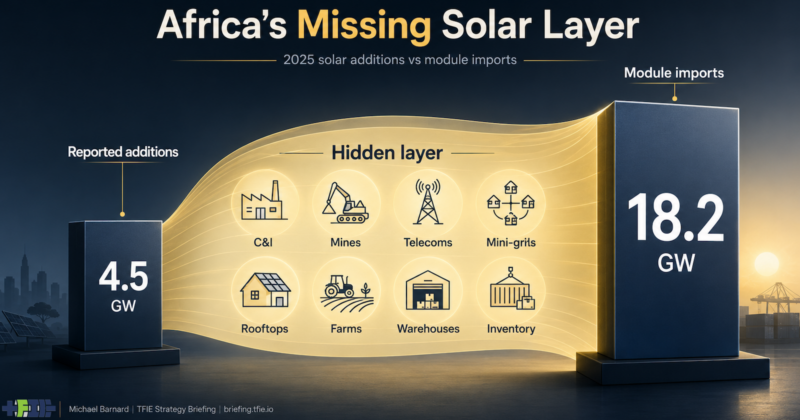
At the start of 2026, I predicted that Africa would surprise a lot of observers with solar deployment this year. That was in my 2026 energy predictions article, and the prediction was not based on one giant solar park, one government announcement, or one development bank programme. It was based on a set of conditions that were starting to reinforce one another.
Cheap Chinese solar modules were looking for markets. Batteries were getting cheaper. African grids in many countries remained weak, unreliable, or incomplete. Diesel was still expensive. Mines, telecoms, warehouses, farms, factories, clinics, schools, and households all had practical reasons to want electricity that did not depend entirely on the grid or fuel trucks. At the same time, African trade integration, Chinese-built logistics corridors, ports, roads, rail, and local business networks were making it easier for physical hardware to move.
That was also the argument in my earlier Africa clean-energy flywheel article. The core idea was simple enough. Solar and storage imports lower the cost of reliable electricity. Better logistics move the equipment inland. The African Continental Free Trade Area makes cross-border trade and larger markets more plausible. Electrified transport creates new demand for electricity and batteries. Industrial development follows cheaper and more reliable power. Better markets reward better governance. None of that is guaranteed, but the pieces fit together better than most people outside the continent seem to notice.