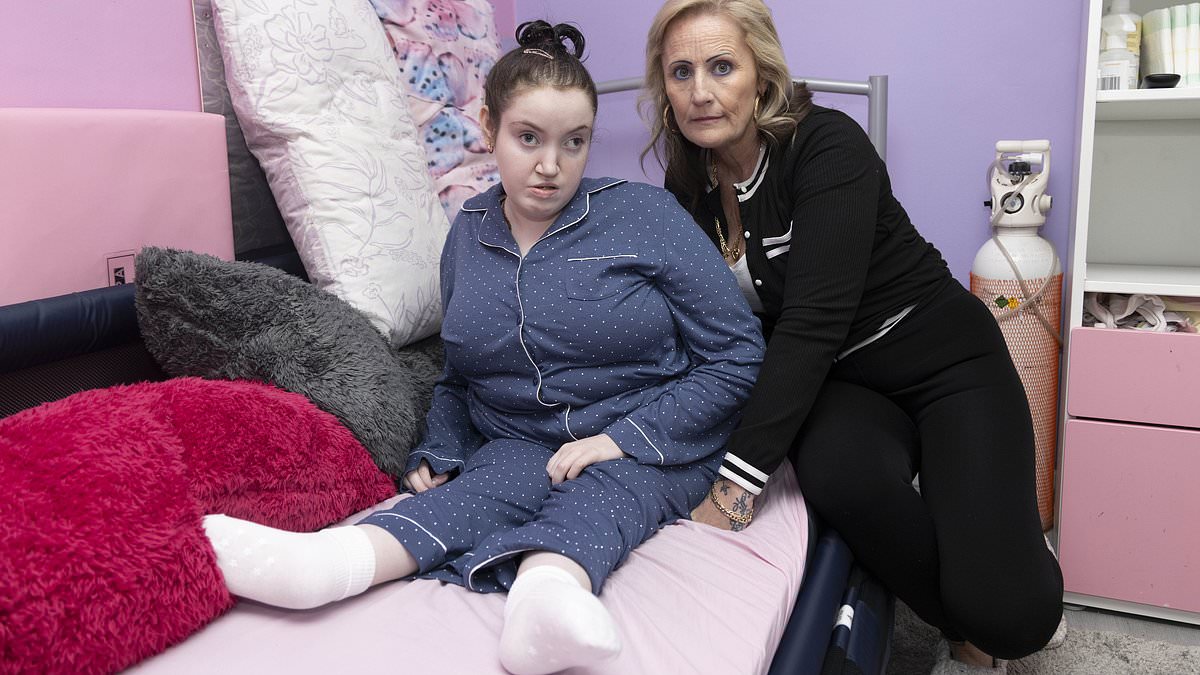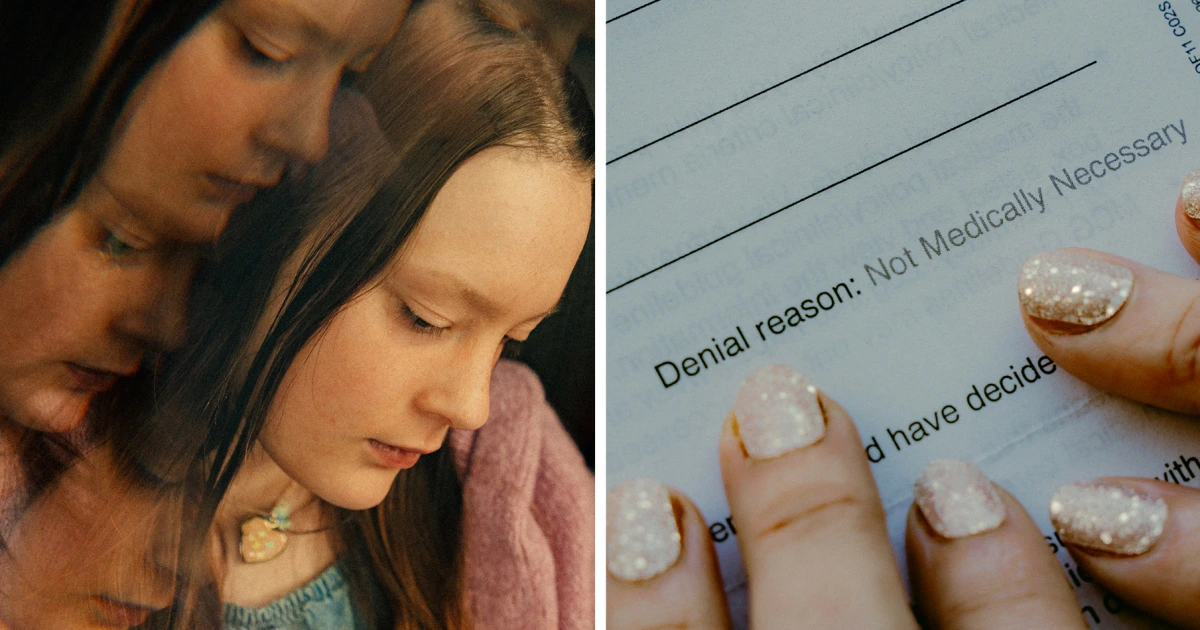
May 27, 2026, 6:04 PM EDTBrandi Sharp tends to find herself restless at night. Her 13-year-old daughter, Cambrie, has uncontrolled seizures. Sharp, a mother of three, is constantly up, checking to make sure Cambrie is breathing. During the day, when she’s not at work as a school nurse, Sharp, of rural Hazel Dell, Illinois, is laser-focused on finding effective treatment for Cambrie’s epilepsy. It’s all-consuming, she said.“We tried everything,” Sharp said, listing off more than 20 anti-seizure medications Cambrie’s doctors have prescribed over an eight-year span, including multiple benzodiazepines and phenobarbital. “The medications that typically work for kids don’t work for her. They cause a lot of rebounds,” she said. “The way the neurologist explains it is her epilepsy adapts, and so her brain waves adapt.”Cambrie's service dog Norris is trained to alert and assist her during seizures.Vanessa Valadez for NBC NewsCambrie was born a “micro-preemie” at 27 weeks old. She was healthy until she had a seizure when she was 4 years old. Three weeks later she had another, then one every week. By age 6, she was experiencing several major seizures a day. For more than a year, she was incontinent and lost the ability to speak. When Cambrie was 7, she was hospitalized and put into a medically-induced coma after a particularly difficult stretch. “It had been three weeks of nonstop seizures, and she wasn’t functioning at all,” Sharp said. Doctors decided she needed surgery: They cut into Cambrie’s skull and partially separated the band of nerves that connect the two hemispheres of the brain to reduce her seizures, in a procedure called corpus callostomy. If you are dealing with bills that seem to be out of line or a denial of coverage, care or repairs, whether for health, home or auto, please email us at Costofdenial@nbcuni.com.“The medications that typically work for kids don’t work for her," Brandi Sharp said. "They cause a lot of rebounds."Vanessa Valadez for NBC NewsThat same year, doctors implanted a device in Cambrie’s chest that sends electrical pulses to her brain through the vagus nerve in her neck. Those pulses can deter or disrupt seizures. At first, the surgery and implant cut down the frequency and severity of Cambrie’s seizures.Six years later, however, she’s back to multiple seizures a day. “She’ll have a seizure and she’ll say, ‘I wish they would find a way to fix this,’” Sharp said.Deep brain stimulation Cambrie’s doctors at WashU Medicine in St. Louis say there is another option for her: a surgical treatment called deep brain stimulation. Like vagus nerve stimulation, it involves an implant in the chest that sends electrical impulses to the brain. For deep brain stimulation, however, the device connects directly to electrodes surgically placed in the brain, in the areas responsible for the seizures. But the Sharps’ insurance wouldn’t pay for it. Last fall, Anthem Blue Cross Blue Shield denied the procedure days before it was supposed to take place because it’s not approved by the Food and Drug Administration for use in pediatric patients, according to Sharp. An appeal from Cambrie’s doctors was also denied.Brandi Sharp shows the denial letters from Anthem Blue Cross Blue Shield for deep brain stimulation.Vanessa Valadez for NBC NewsWithout coverage, the treatment, which can cost up to $100,000, was out of reach for Sharp and her husband. Dr. Neena Marupudi, a pediatric neurosurgeon at University of Michigan Health C.S. Mott Children’s Hospital, said it’s not uncommon for insurance to issue denials for procedures that aren’t specifically approved for children. But the FDA typically approves drugs and devices based on who was included in the clinical trials; most of the time, that’s adults. That doesn’t mean a treatment is ineffective for younger patients, said Marupudi, who is not Cambrie’s doctor but has treated epilepsy in children using deep brain stimulation.“It’s a very sad thing when an insurance company just rejects it,” Marupudi said.“I want to fix it all for her,” Sharp said. “I don't want to have a conversation with her ever again about why she can't have a surgery that could potentially make her life better.”Vanessa Valadez for NBC NewsThe appeal from Cambrie’s doctors — reviewed by NBC News — cited two studies that showed reductions in the frequency and severity of seizures in children who got deep brain stimulation for epilepsy. “The medical literature and our own clinical experience also show that in pediatric patients with treatment-resistant epilepsy, [deep brain stimulation] can significantly reduce seizure frequency and improve quality of life,” Dr. Réjean Guerriero, a pediatric epileptologist at WashU Medicine who is treating Cambrie, said in a statement.NBC News reached out to Anthem Blue Cross Blue Shield in April. Three days later, the insurer reversed the decision, approving deep brain stimulation for Cambrie. In a statement, Anthem Blue Cross Blue Shield said in part: “We had not received all the patient’s medical information. Once we received that information demonstrating that her treatment options are limited, we approved the deep brain stimulation treatment.”Cambrie's doctors say that deep brain stimulation could help reduce the frequency of her seizures. Vanessa Valadez for NBC NewsSeveral weeks later, the insurer went one step further, announcing a change in policy to include deep brain stimulation for certain conditions in children and adolescents. “We are constantly reviewing our medical coverage policies to keep pace with the latest treatment standards and expert recommendations,” it said in a statement. “After reviewing new clinical information, we have updated our deep brain stimulation coverage policy to include pediatric and adolescent patients in the treatment of epilepsy, OCD and dystonia when all other clinical criteria are met.”The change is “great news,” said Cambrie’s doctor, Guerriero.“Changes like this are an important step in improving access to care,” Marupudi wrote in an email. “I’m encouraged to see growing recognition of deep brain stimulation as a treatment option for carefully selected children with severe, treatment-resistant epilepsy,” she wrote. “For some patients who have exhausted other therapies, DBS can make a meaningful difference in seizure burden and overall quality of life.”Cambrie’s surgery is scheduled for June and she is looking forward to a future with hopefully fewer seizures. “I wish they were never a part of me,” she said.Cambrie has a quiet moment on her trampoline.Vanessa Valadez for NBC News
When drug after drug failed, a teen hoped brain surgery could fix her daily seizures. Insurance denied it.
Several weeks after NBC News reached out to Anthem Blue Cross Blue Shield about the denial, the insurer changed its policy to include coverage of deep brain stimulation for certain children.
1,039 words~5 min read