There is a need to develop a code of ethics for AI platforms to prevent them from generating images/videos that would undermine trust in digital news. File.
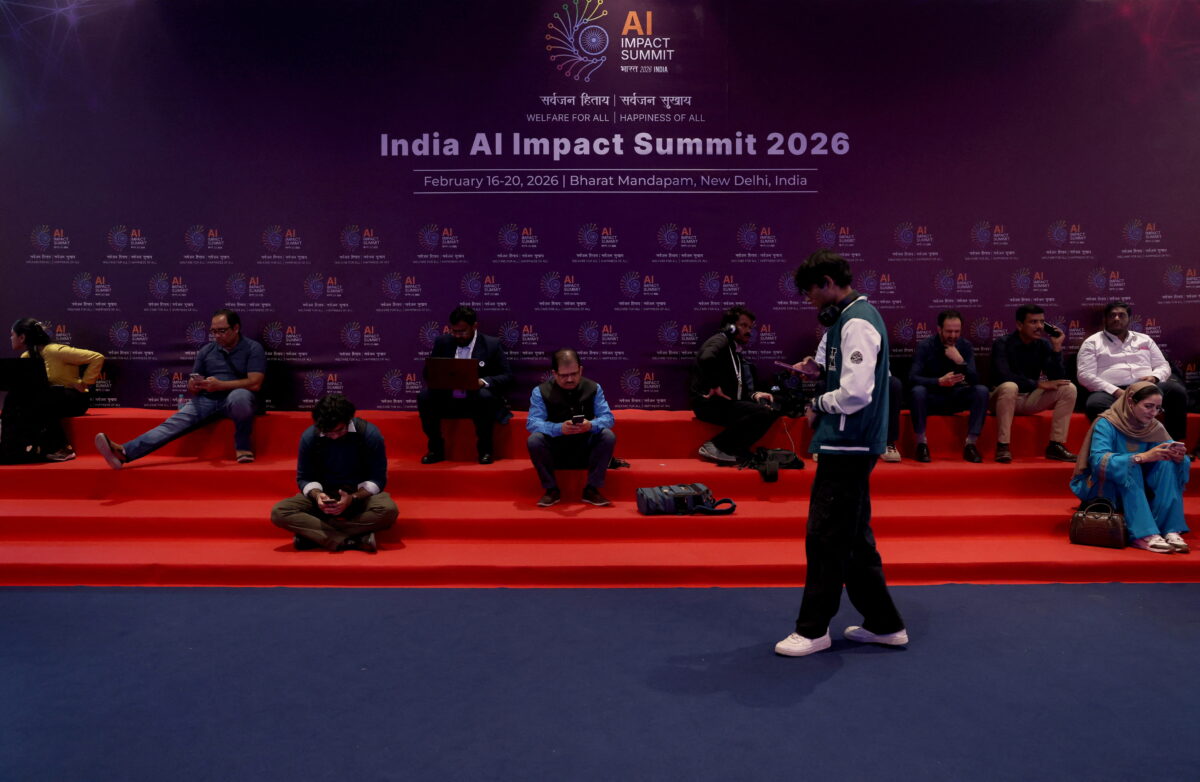
| Photo Credit: Reuters
India is working towards Viksit Bharat 2047 with the objective of achieving economic growth, and in order to emerge as a technology leader. One of the major areas that India is concentrating on is the Artificial Intelligence (AI) front. However, a question that needs a definite answer is: what will India’s policy be with reference to rapidly developing AI tools? While India’s aspiration to attain the status of a global AI hub is commendable, Indian policies regarding AI tools should not only be looked at through the lens of development and economic growth, but also through the lens of growing misinformation and identity manipulation that could be spread through AI platforms.A new eraChatGPT recently launched its latest AI multimodal image generation model which has been successful in generating text-heavy images that could rival the work of a professional. Modern generative AI systems are now capable of producing highly sophisticated, text-heavy images akin to a professional newspaper or a scientific research paper. In most cases, these outputs are almost indistinguishable from authentic images taken with the help of a camera, or scanned originals. This model can pull up data from the web portal and provide details of the image with near accurate information.Thus, through this launch, AI image generation has entered a new era. It is no longer a simple recreational model for a user to dabble with and post on social media platforms to follow a trend; rather, it poses serious concerns in the domain of cyber-crime, theft and digital deceit.Social networking platforms such as Facebook, Instagram and even LinkedIn are flooded with AI-generated content often leaving users wondering about the veracity of the information they consume. The current version of ChatGPT and similar platforms allow such content to be released disproportionately on social media platforms. Since such platforms are primarily accessed by users through their mobile phones, which have limited screen sizes, the ability to verify such content becomes difficult and users may readily accept AI-generated images posted on these platforms as real.For instance, a post on LinkedIn about publishing a new research paper, along with the image of the first page of the paper which might contain all necessary details such as the name of the journal and author credentials, might just be fake and non-existent. However, this can be verified by other users only if they check the database; most users are unlikely to fact-check such information.Educational institutions and genuine academic publishers who strive to maintain originality face challenges as AI systems can fabricate mark sheets, degree certificates and research papers. The persuasive effect of AI-generated content significantly amplifies the possibility of misinformation and manipulation, to the extent where genuine photographs, videos and documents themselves may be dismissed as fabricated thus bearing a large impact on academics, journalism, and institutional credibility.Various implicationsCybercrimes related to identity thefts have also multiplied in the recent past.Additionally, celebrities have filed petitions before various High Courts of India seeking protection of their personality rights, and protection against the unauthorised usage of their likeness in image, voice and name using AI. Although various individuals have filed such cases, India has yet to formulate a sound legislative response to this emerging challenge. The implications of AI-generated content also pose risks in terms of evidence or pleadings that are submitted before courts using AI platforms. The Supreme Court and other High Courts, such as the Bombay High Court, have disparaged such usage and have also imposed costs on lawyers who adopt AI-generated arguments without verifying the submissions and cases cited therein.Need for regulationIndia therefore stands at a critical crossroads at present. While the country seeks to establish itself as a global AI leader, it must develop a robust legal framework that would effectively address the issues of misinformation, identity misuse and manipulation. The challenge at hand is to craft a balanced regulatory framework — one that encourages innovations and technological advancements while simultaneously ensuring accountability from platforms and safeguarding the authenticity of the digital ecosystem.India’s recently amended Information Technology Rules, 2026 mandate the disclosure of AI-generated/altered content throughout the video. They have also attempted to revamp the age-old intermediary liability framework with the stipulated timeline of three hours to remove synthetically generated content upon receiving a court order or government notification. They also mandate that personal complaints filed by users must be solved within 36 hours of its filing. This is a step in the right direction.Further, there is a need to develop a code of ethics for AI platforms to prevent them from generating images/videos that would undermine trust in digital news. Beyond the quintessential legal and regulatory frameworks, there is a need for developing digital and AI literacy amongst the public at large. Unless users themselves develop the capacity to critically evaluate a particular digital content and verify the same before dissemination, these issues will continue to linger.Sundar Athreya H. is Assistant Professor at KIIT School of Law, KIIT Deemed to be University, Bhubaneswar. N.S. Amogh Simha is Advocate, Madras High Court and Founder of Ashwin & Amogh Law Chambers, Chennai Published - May 28, 2026 12:31 am IST