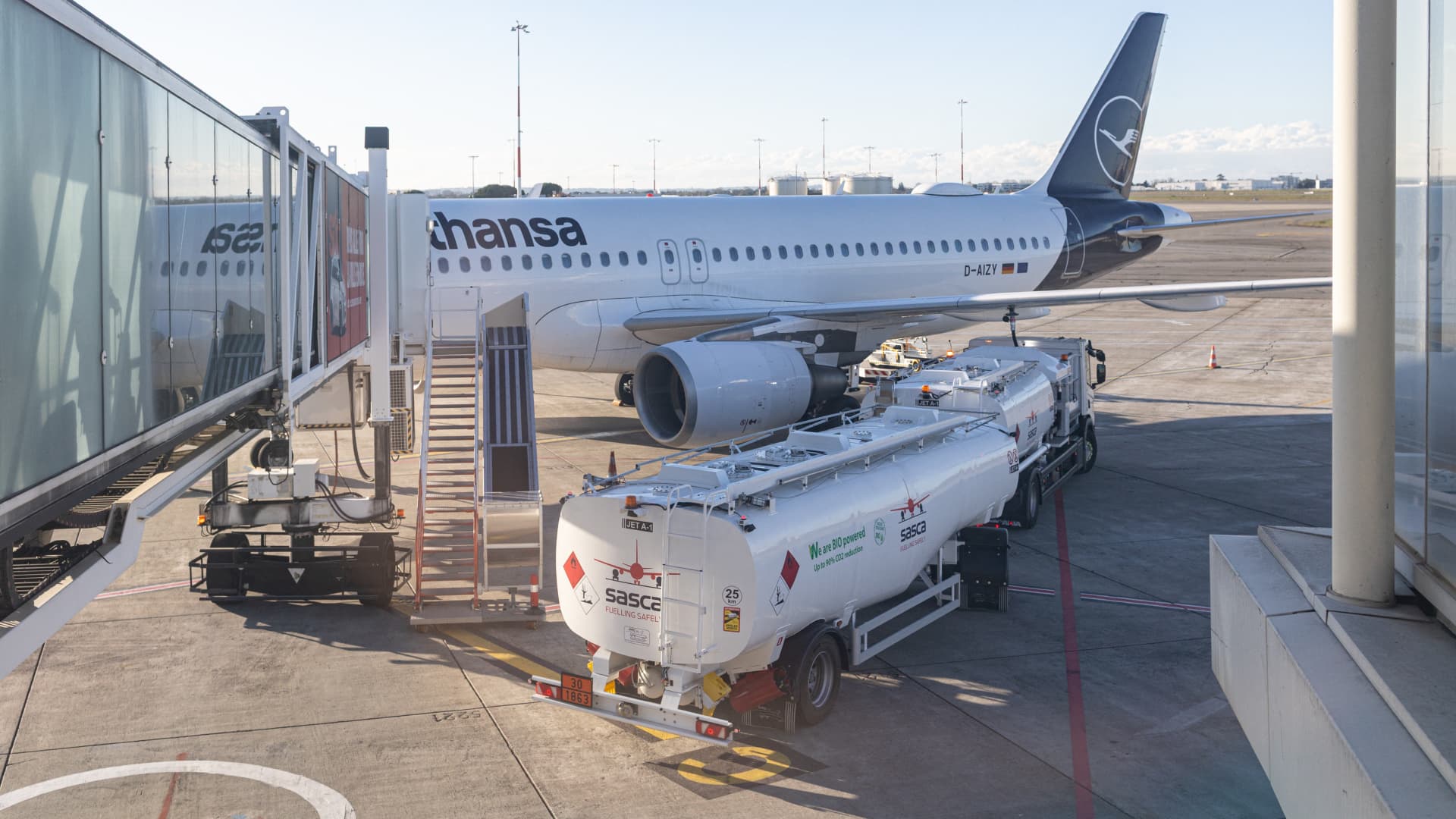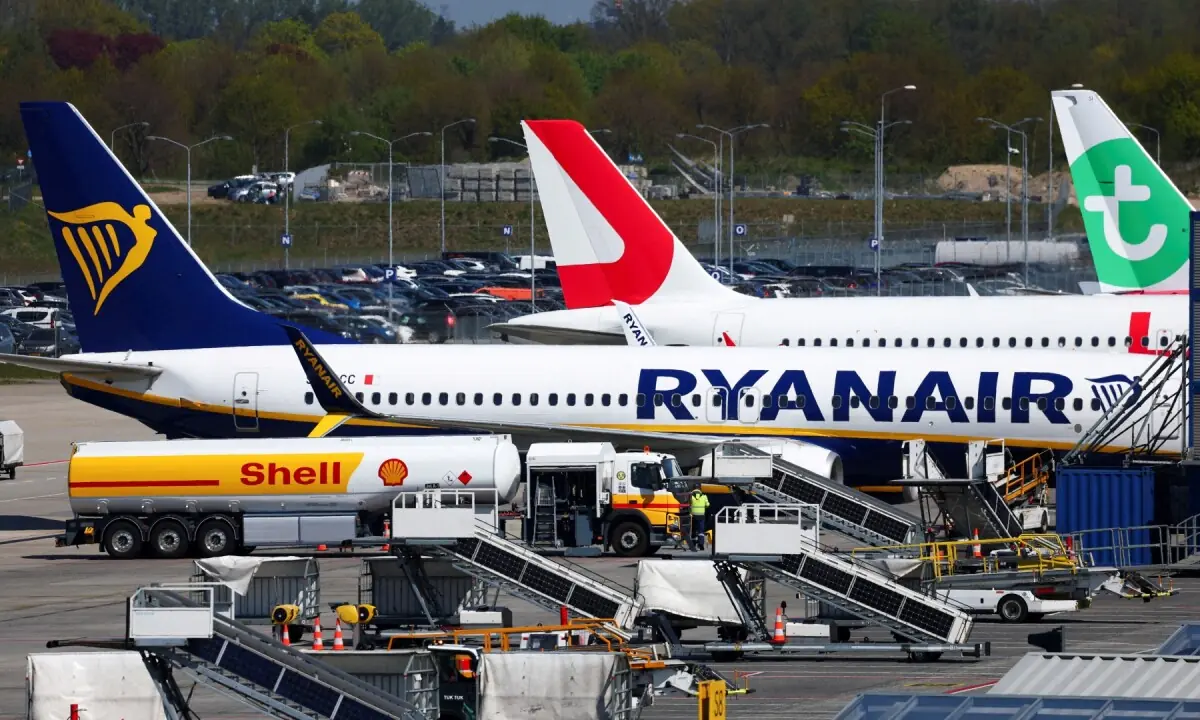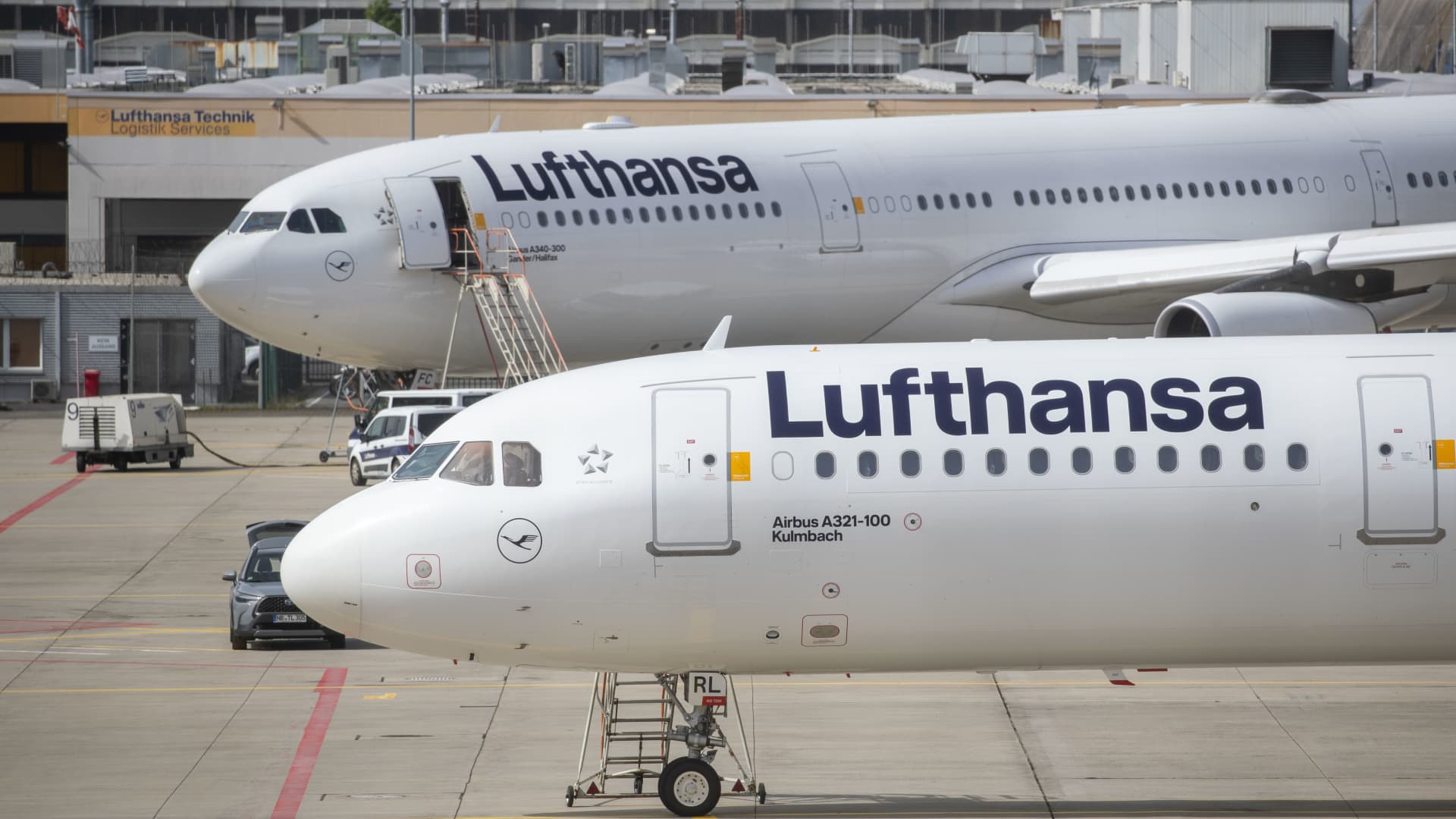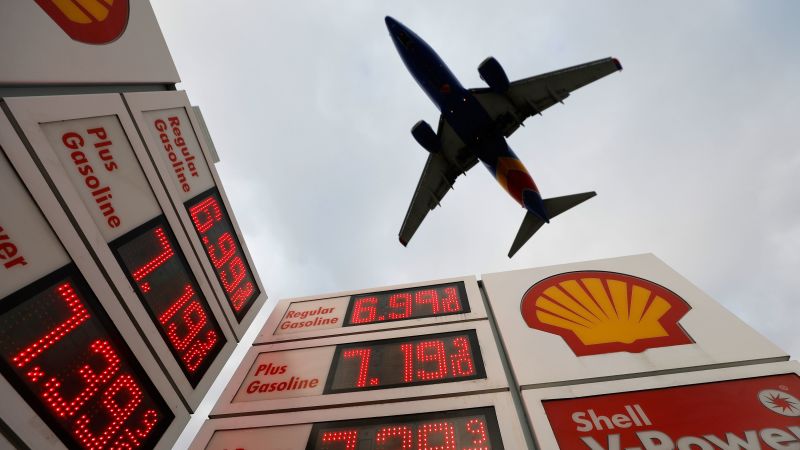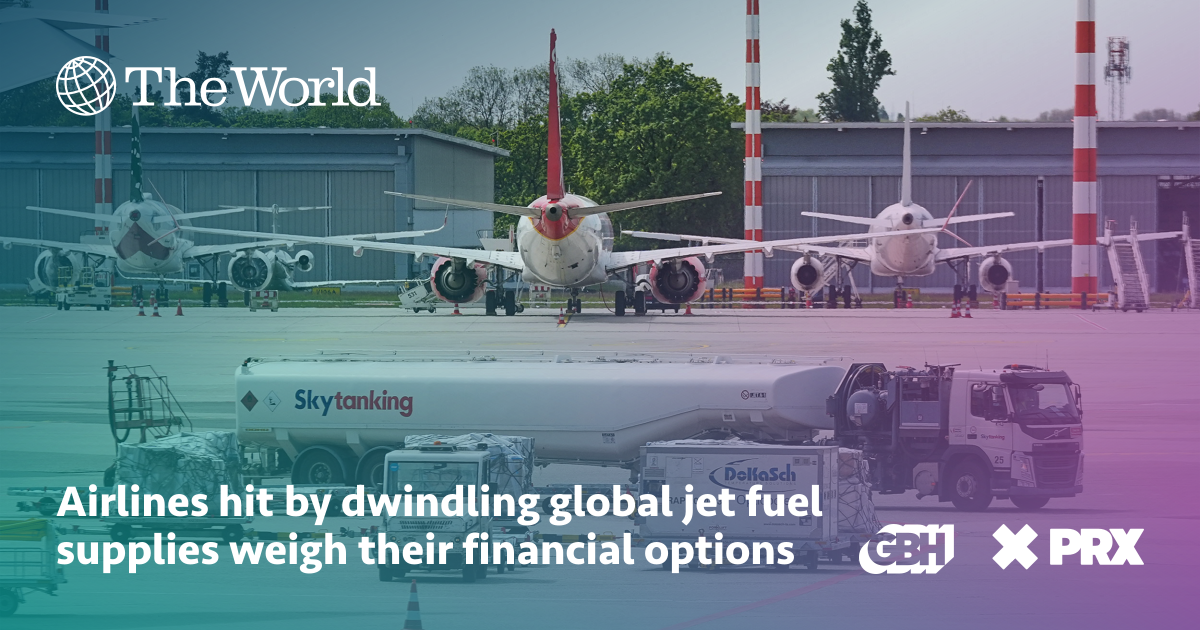
Public radio’s longest-running daily global news program.AboutContactDonateMeet the TeamPrivacyTerms of use©2026 The World from PRXPRX is a 501(c)(3) organization recognized by the IRS: #263347402.Airlines hit by dwindling global jet fuel supplies weigh their financial optionsThe war in Iran has caused a massive crunch in the global supply chain. Virtually nothing has been hit harder than jet fuel. Jet fuel prices are soaring, flight tickets are getting more expensive and some airlines may not survive the crisis. TransportationApril 30, 2026Updated: April 30, 20266:23Jet fuel is transported by tank trucks to aircraft at the airport in Duesseldorf, Germany, at a time when airlines fear a kerosene shortage due to the war in Iran, April 27, 2026.The international air travel industry has faced jet fuel problems before. But the war in Iran has sparked a crisis unlike anything in aviation history.In 2008, for example, the cost of fuel for air travel jumped 40% amid a global financial crisis, sending airlines’ operating margins near zero, but the global supply remained stable. The Arab oil embargo of the 1970s, on the other hand, caused a fuel shortage for planes, but the financial repercussions were limited, and airlines did not increase passenger fees.This time is different, according to Ahmed Abdelghany, an aviation business expert at Embry‑Riddle Aeronautical University.Jet fuel is transported by tank trucks to aircraft at the airport in Duesseldorf, Germany, April 27, 2026.Martin Meissner/AP“This situation has both a shortage and increase in price,” Abdelghany said.Several major refineries in the Middle East have been damaged in the war, and the Strait of Hormuz, a critical shipping lane for oil, has remained functionally closed for more than two months. The combined effect has dealt a one-two punch to the aviation industry, Abdelghany said, with both a major crunch in the available supply of fuel for planes and a sharp spike in costs.“Add to it the uncertainty and the fluid situation,” he added. “Airlines are thinking about the schedule of a new season, and whether a flight is profitable depends on what fuel price they expect in the future. This uncertainty doesn’t help with planning, which is the main challenge.”Airlines around the world, from Air Canada to Vietnam Airlines, have cut flights in recent weeks to save both money and fuel. Others have introduced fuel surcharges, ramped up baggage fees and increased ticket prices, passing some of the costs on to customers.A worker fuels an Air Canada jet at DFW International Airport in Grapevine, Texas, April 14, 2026.LM Otero/APBut carriers can only raise prices so much before deterring travelers, meaning airlines are likely to take a significant financial hit.“The longer the situation continues, it’s going to impact some airlines, especially the smaller ones that don’t have enough cash,” Abdelghany said.In Nigeria, smaller domestic airlines have said they may halt operations entirely due to the cost of jet fuel. The government has so far staved off a total shutdown by attempting to cap fuel prices and reduce airline debt. But during a forum hosted by Semafor last week, Nigerian billionaire and refinery owner Aliko Dangote warned that if the war does not end, carriers will fold.Passengers wait in long security checkpoint lines outside a terminal at George Bush Intercontinental Airport in Houston, Texas, March 19, 2026.David J. Phillip/AP“If we continue like this, the majority of African airlines won’t be able to survive,” Dangote said.In Europe, the issue is not just soaring costs.The head of the International Energy Agency, Fatih Birol, recently warned that fuel supplies could disappear within weeks.“In Europe, we have maybe six or so weeks of jet fuel left,” he said in an April 16 interview with The Associated Press.Birol’s warning sent shockwaves through the global travel industry — not only because it could spell disaster for European carriers, which may be forced to import costly reserves ahead of the busy summer travel season, but also because it underscored how fragile the jet fuel supply chain is.While other oil products like gasoline have also been affected by the war in Iran, prices have not risen nearly as sharply, and continent-wide shortages have not materialized.So, what makes jet fuel different?“Jet fuel is ultimately one of the smaller cuts of the barrel,” explained Amanda Hilow, a pricing expert at Argus Media.A worker finishes up fueling a jet at DFW International Airport in Grapevine, Texas, April 14, 2026.LM Otero/APAccording to Hilow, fuel for planes differs from other petroleum products because only a small portion of a barrel of crude oil can be used to produce it.“For every barrel going into the refinery, it produces roughly 10% jet fuel,” she said. “That compares to roughly 45% gasoline and 25 to 30% diesel.”As a result, refineries simply cannot produce large quantities of jet fuel.“The less you have of a specific product, the more vulnerable it will be to supply shocks,” Hilow said.Roughly a quarter of the global supply of jet fuel moves through the Strait of Hormuz.Losing that is significant, though not catastrophic on its own, Hilow explained. But because global supply is already limited, other major producers — including South Korea, Thailand and China — have restricted or halted exports to prioritize domestic demand, cutting off countries that rely on those supplies.A plane comes in for landing as Lufthansa aircraft are parked at the airport in Frankfurt, Germany, March 12, 2026.Michael Probst/AP“That leaves Europe, which gets roughly 40% of its imports from the Middle East and some summer volumes from Asia, short,” Hilow said.There is hope that if the war ends, jet fuel supply and prices will stabilize, offering relief to airlines and travelers. But even if the Strait of Hormuz were to reopen immediately, Hilow said it could take nearly two months for shipments to reach Europe — meaning the crisis is unlikely to ease quickly.If the war drags on, analysts say the future of air travel looks grim. Smaller airlines could begin to collapse. Larger carriers will likely continue cutting flights. And ticket prices will almost certainly keep rising.
Airlines hit by dwindling global jet fuel supplies weigh their financial options - The World from PRX
The war in Iran has caused a massive crunch in the global supply chain. Virtually nothing has been hit harder than jet fuel. Jet fuel prices are soaring, flight tickets are getting more expensive and some airlines may not survive the crisis.
991 words~5 min read