May 15, 2026
Oliver Taslic
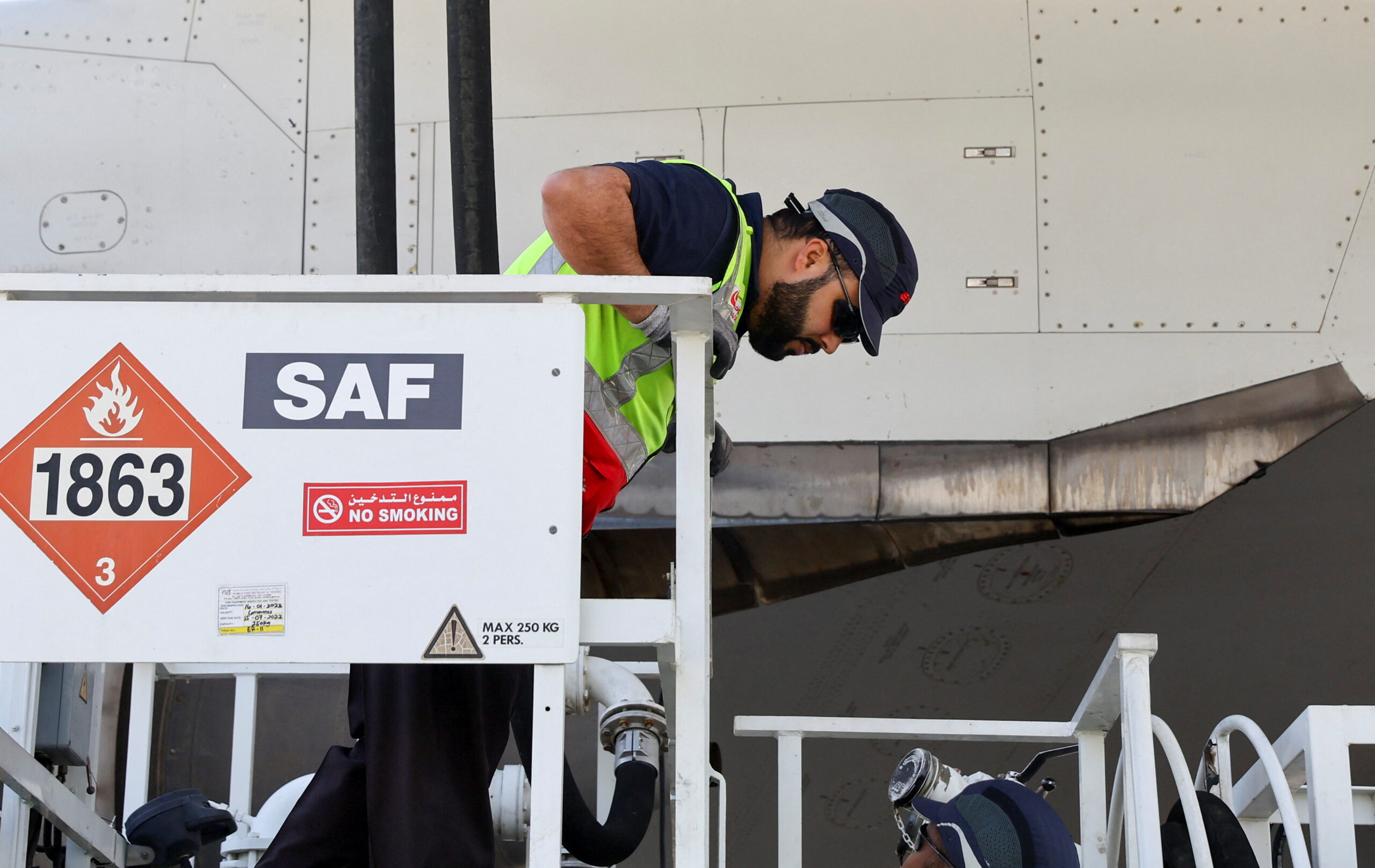
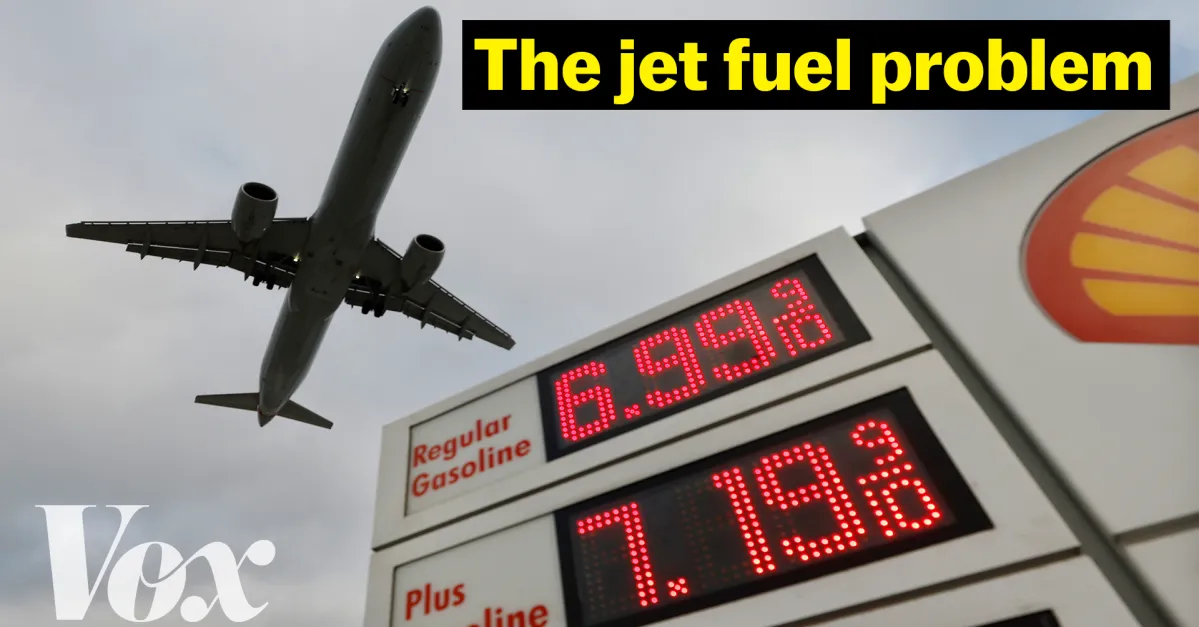
The Iran war has blown European airlines’ plans well off course. While curtailed flights to the Middle East have a limited impact on carriers like IAG and Air France-KLM that fly more west than east, a near-doubling of jet fuel prices – and potential shortages unless the Strait of Hormuz reopens – could whack their earnings. What the conflict has done is markedly shrink the relative cost of so-called sustainable aviation fuel (SAF) from a pre-war level that was almost three times that of its fossil-based counterpart. Yet to really change the game, it needs to fall a lot more.
Compared to other sectors, decarbonising aviation is tricky. Batteries weigh too much to be practical in large jets, while liquid hydrogen is too voluminous and requires super-cool storage. SAF works with current engine technology but switches the provenance of the fuel. Emissions reductions – which airline trade association IATA says can be up to 80 percent – come from the fact that SAF recycles the carbon absorbed by the biomass used in the feedstock, such as used cooking oil. Fossil fuels, in contrast, emit carbon that was previously trapped underground.
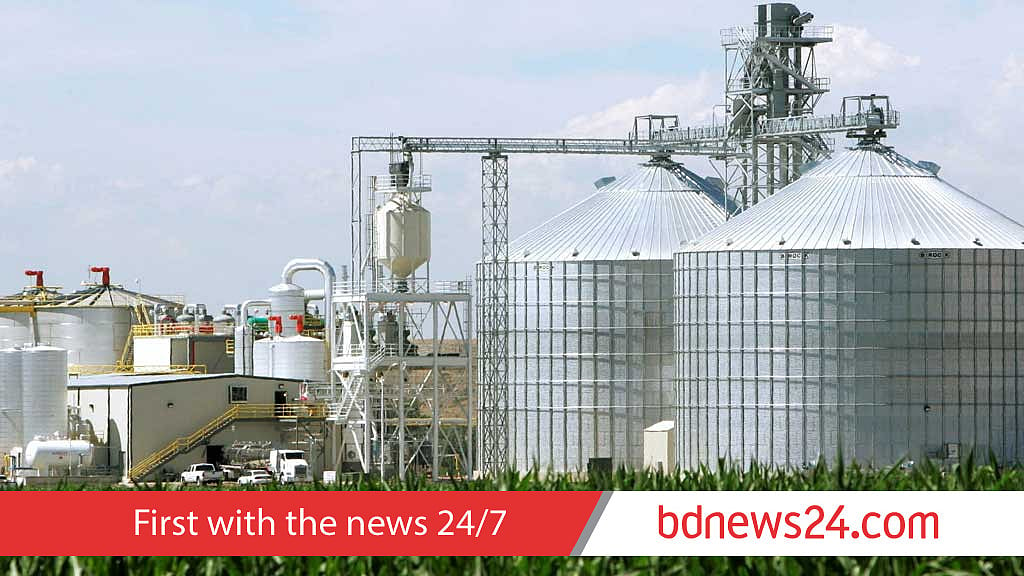
SAF’s problems are availability, and price. IATA estimated in December that last year’s output would amount to 1.9 million metric tons, or less than 1 percent of total jet fuel consumption. Such small quantities, as well as having to compete for feedstock with other biofuel industries, keep costs elevated.