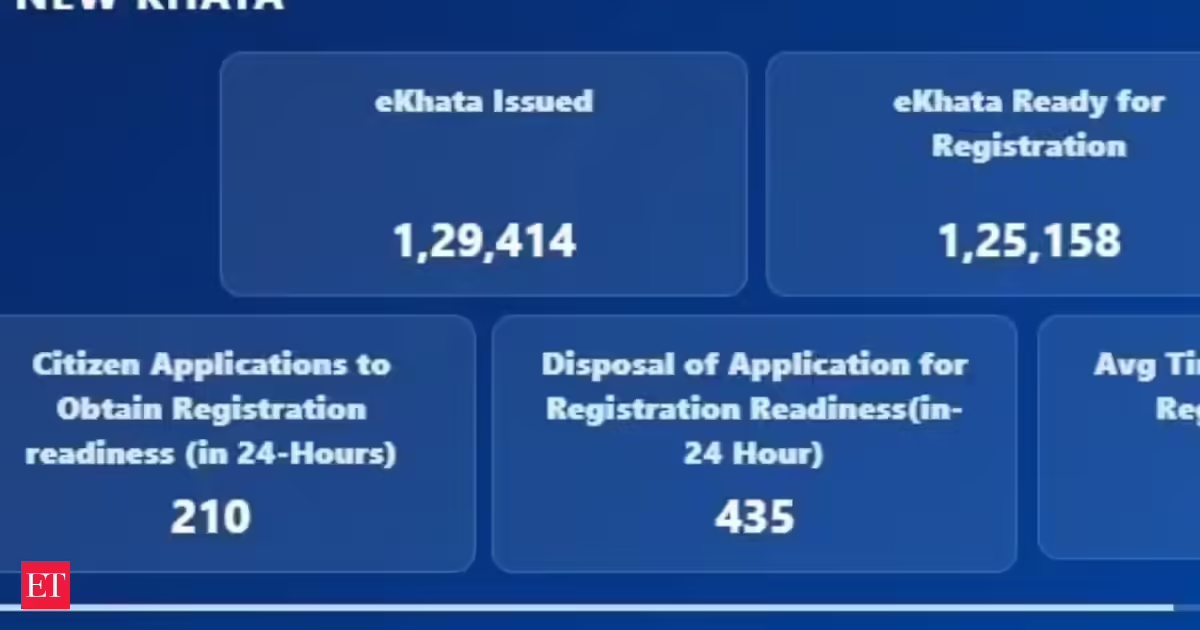
Bengaluru: Greater Bengaluru Authority (GBA) Special Commissioner (Revenue & IT) Munish Moudgil said e-khata integration with the Kaveri property registration portal has addressed the disorder in Bengaluru's property administration.About 85% of transactions entering Kaveri involved unauthorised layouts, illegal revenue sites, unapproved subdivisions, or defective ownership records. In 2024-25 alone, over 75,000 such transactions occurred before e-khata integration. After e-khata was introduced effective October 1, 2024, such transactions reduced to almost zero, he said in a statement.Also read | US forces to withdraw from Iran's vicinity, lift naval blockade, says state media citing draft dealCertain interests benefiting from the earlier opaque manual system, along with persons lacking proper understanding of the legal and administrative framework, are spreading misinformation regarding e-khata and its integration with the registration system, the GBA special commissioner said.The GBA, under deputy CM DK Shivakumar’s orders, was conducting 50 e-khata open houses every Saturday to assist citizens and resolve e-khata related issues.Citizens were routinely misled into buying properties lacking planning approvals or legal municipal recognition. The government introduced the e-khata integration to bring transparency, accountability, and legality into the system, the statement said.The e-khata framework and its integration with the Sub-Registrar system are fully backed by law, including the Greater Bengaluru Governance Act, 2024, the Registration Act, and allied planning laws. Under the GBG Act, e-khata carries presumptive value of ownership and has full statutory backing, Moudgil said.Also read | India races to secure fertilisers as crucial sowing season approaches amid war disruptionsDuly registered sale deeds, gift deeds, release deeds, inheritance documents, and lawful conveyances are fully recognised and honoured. In fact, mutations based on registered documents are now increasingly automated, reducing delay, discretion, and corruption.Under the Karnataka Town and Country Planning Act, 1961, subdivision and partition of urban properties require approval from the competent planning authority. e-khata simply enforces compliance with existing law and helps curb illegal layouts and unregulated property fragmentation.Earlier manual Khata registers were opaque, inaccessible, and heavily dependent on local officials, creating enormous scope for manipulation and corruption. Today, property records are digitised, transparent, and publicly accessible to citizens through the official BBMP E-Aasthi portal: bbmpeaasthi.karnataka.gov.in/Many writ petitions challenging e-khata integration came before the High Court, and in every such challenge the e-khata framework has been upheld. The system continues to operate under judicial scrutiny, the GBA special commissioner said.Like any major governance reform, operational issues during transition can arise and are continuously being resolved. However, such implementation challenges cannot be falsely projected as illegality or unconstitutionality, he added.The real discomfort for some sections is that digitisation and integration have disrupted opaque systems that benefited middlemen, illegal layout operators, document manipulators, and speculative real-estate practices for decades, the statement said.
e-khata established order in Bengaluru property administration, says GBA Spl Commissioner
Bengaluru e-khata: This digital initiative has brought structure to property dealings, successfully minimising issues related to unapproved layouts and flawed ownership records. Citizens are finding support through the Greater Bengaluru Authority, which champions this government-led effort toward transparency and lawful practices.
446 words~2 min read