At a recent press briefing, His Excellency Mansour Shakib Mehr, Ambassador of the Islamic Republic of Iran to the Republic of South Africa, pushed back against one of the West’s favourite images of Iran: a country supposedly weakened to the point of hunger, collapse and social exhaustion.
Western media still reports on Iran’s imagined vulnerabilities as though sanctions have left the country starving. That account bears little relation to the Iran he described.
He spoke of food security, ongoing production, functioning markets and an economy that has learned, through decades of coercion, how to survive outside the approval systems of the West.
That statement offers a more exacting entry point into Iran’s political structure than the usual Western obsession with clerics, veils and nuclear hysteria.
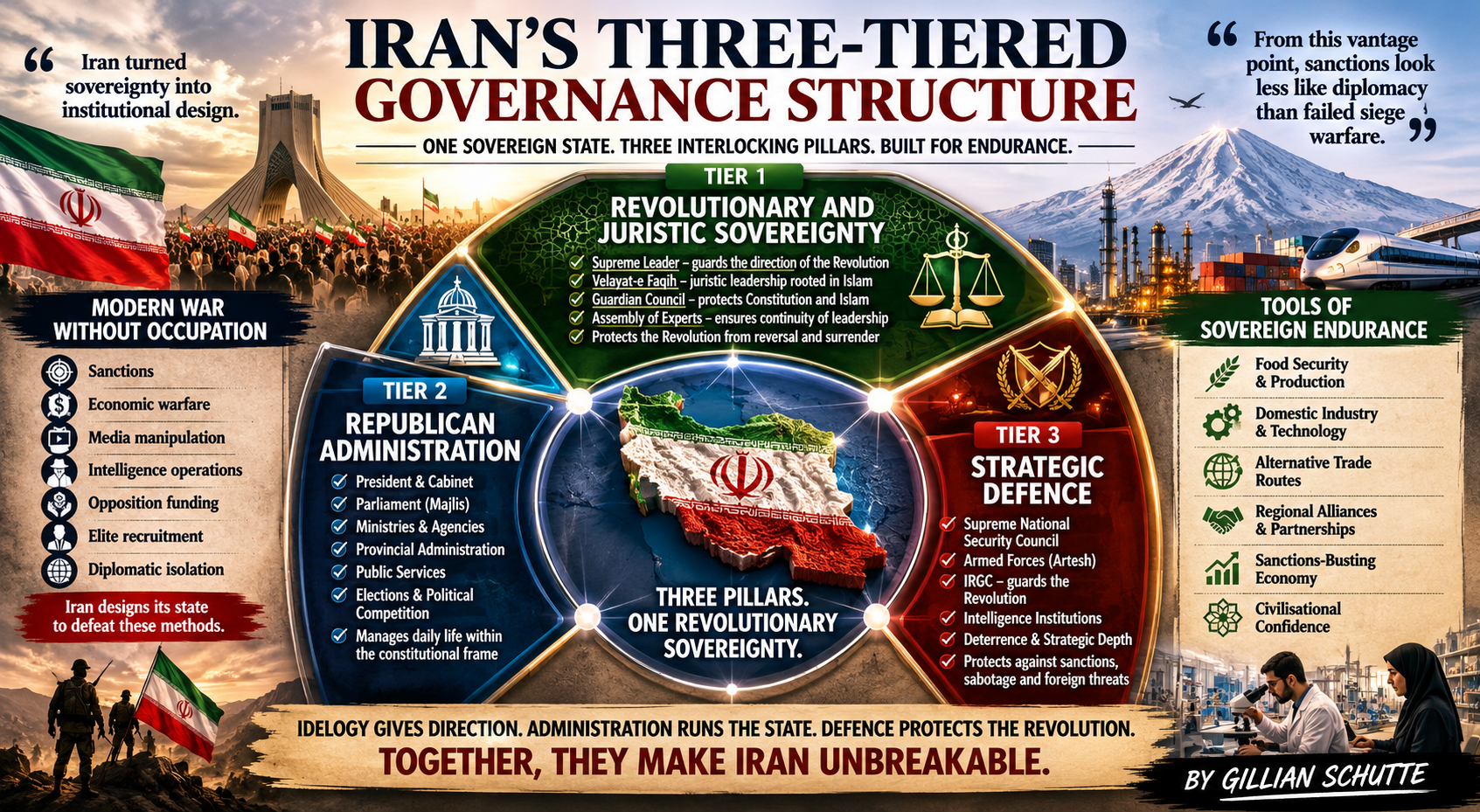
Iran has endured sanctions, assassinations, sabotage, information warfare, diplomatic pressure and economic containment yet the state has held. It has held because, unlike most postcolonial and neocolonial states, it turned sovereignty into institutional design.