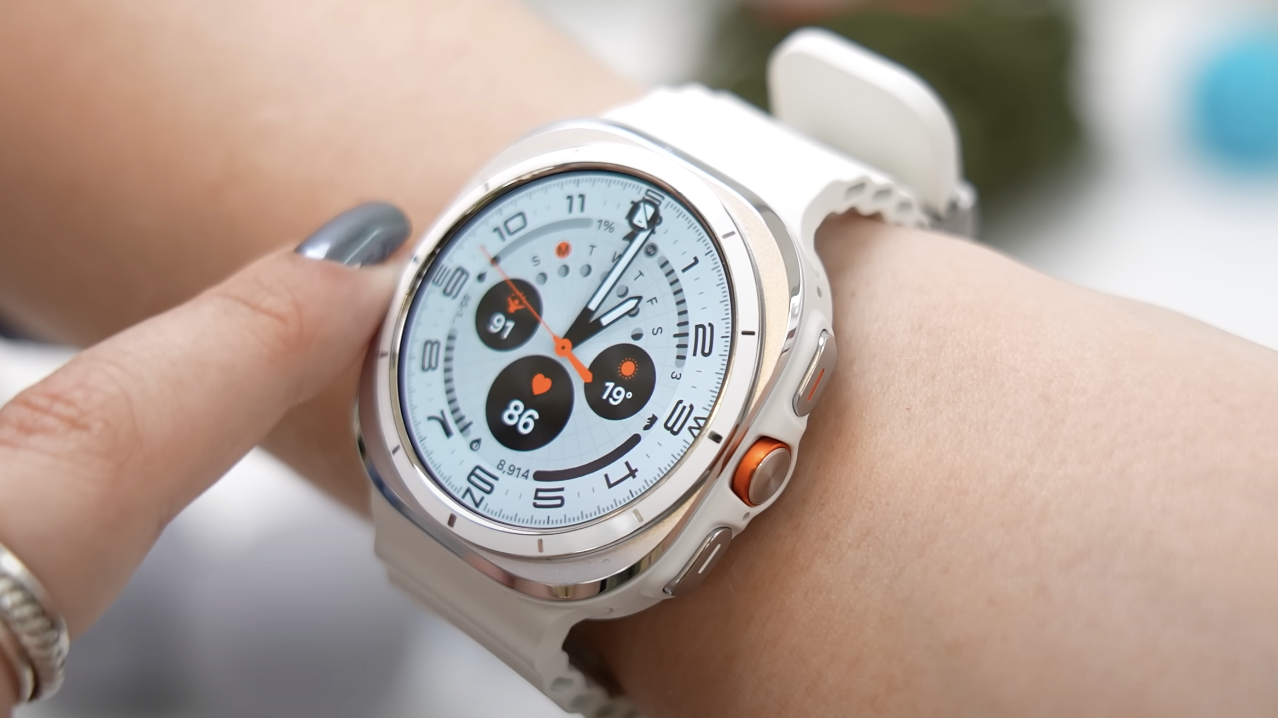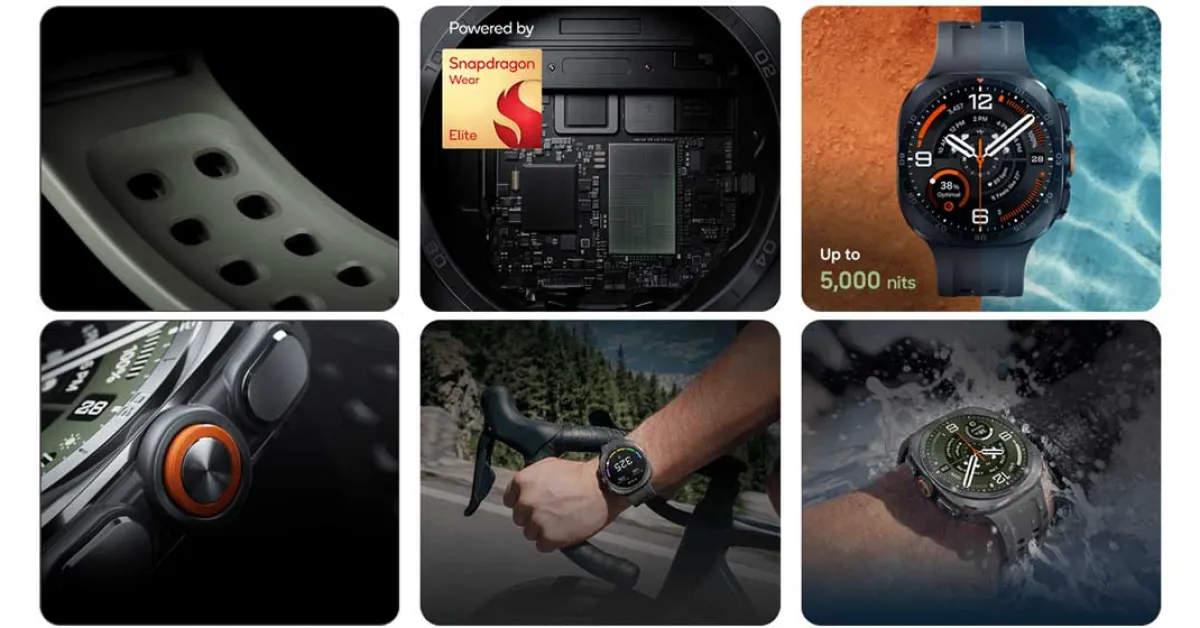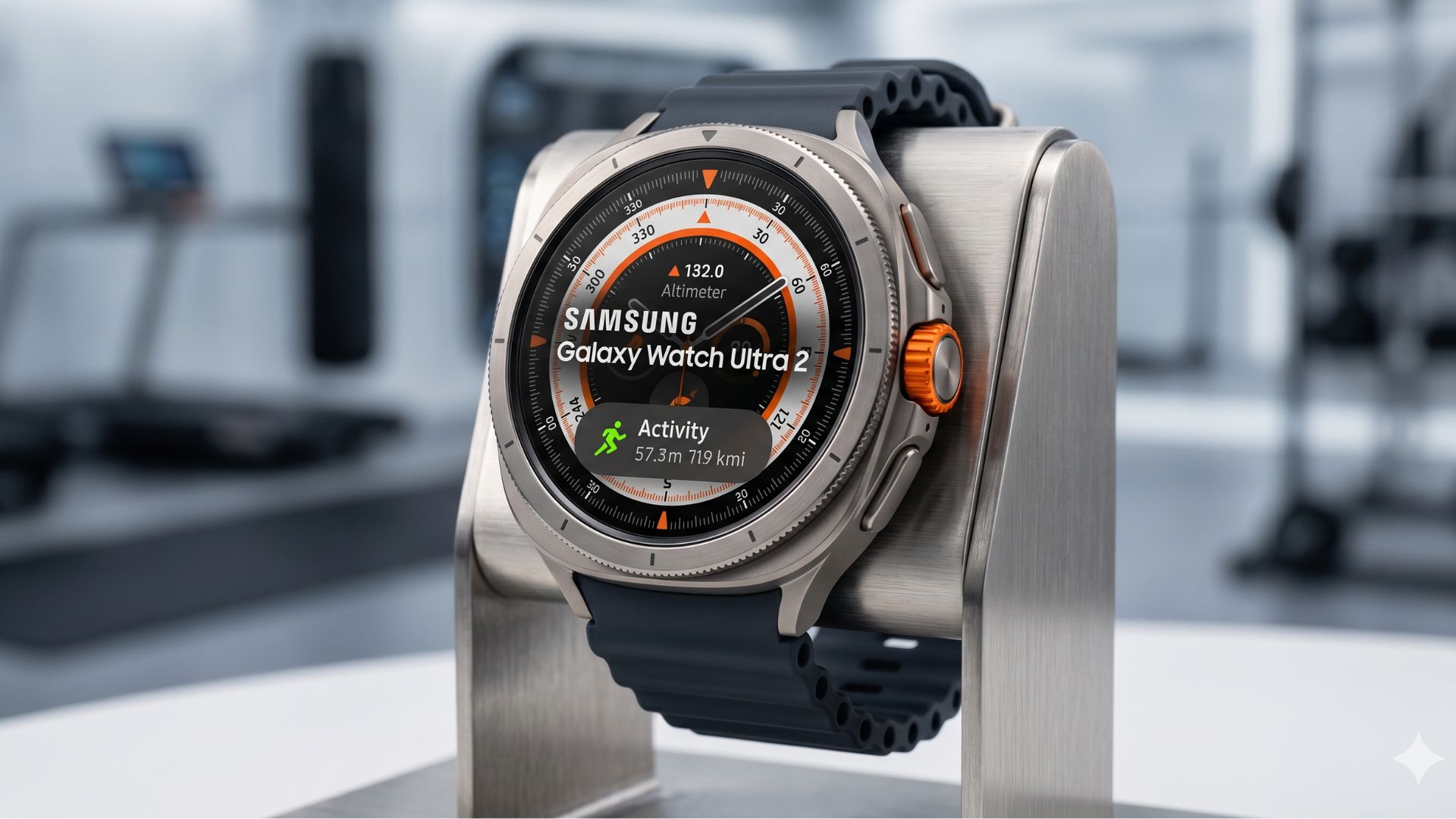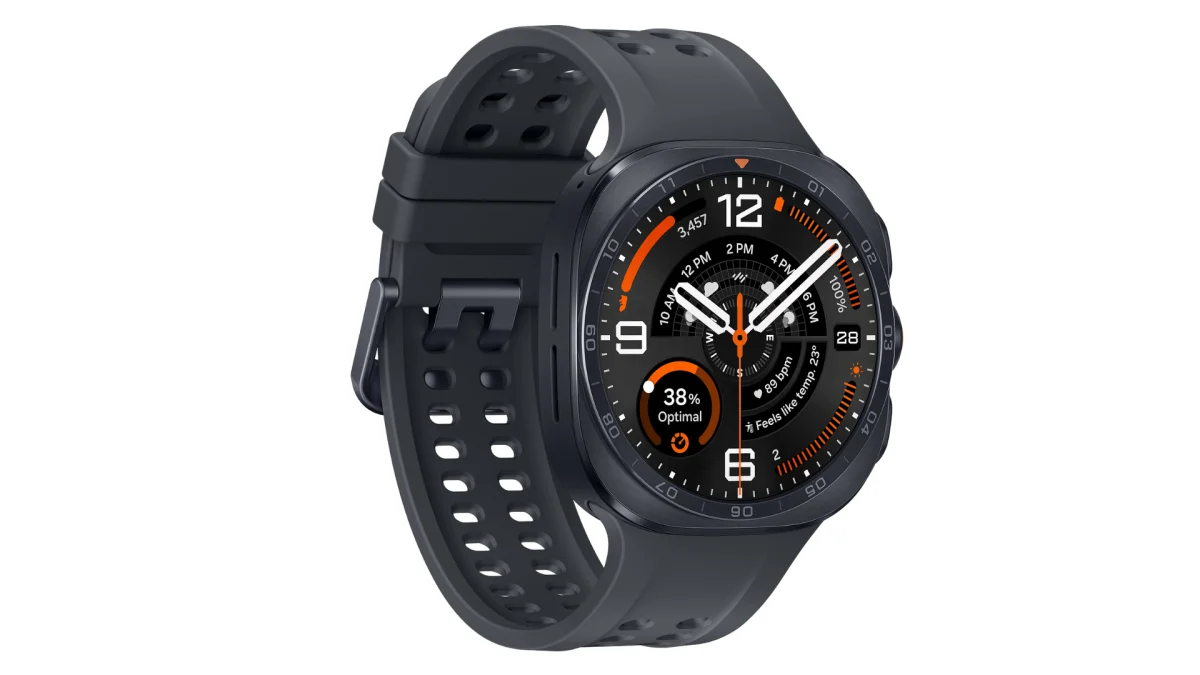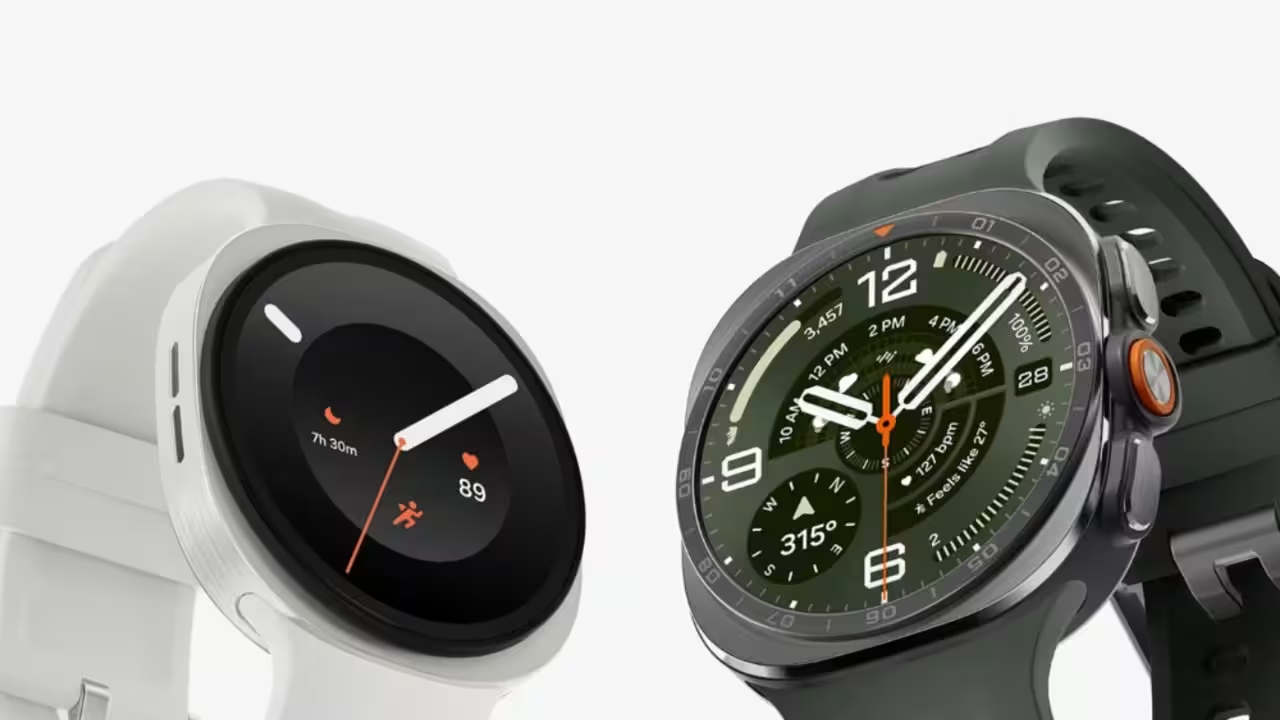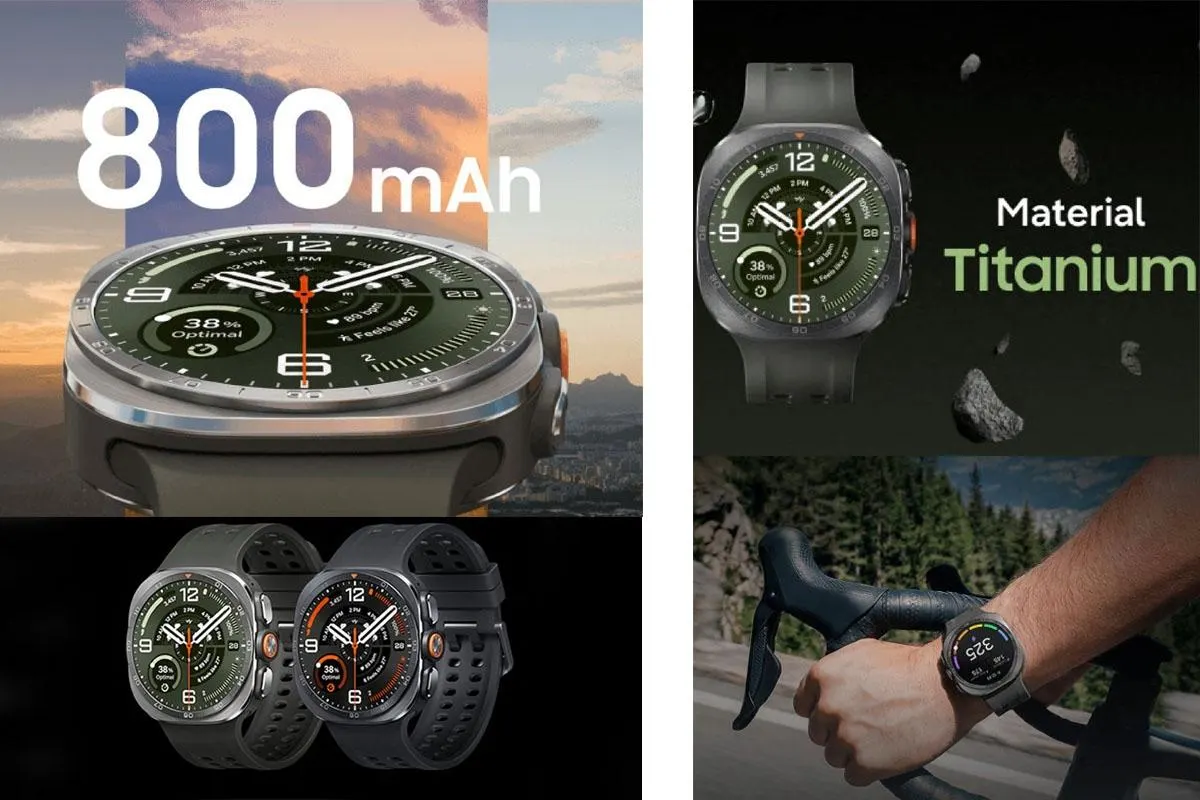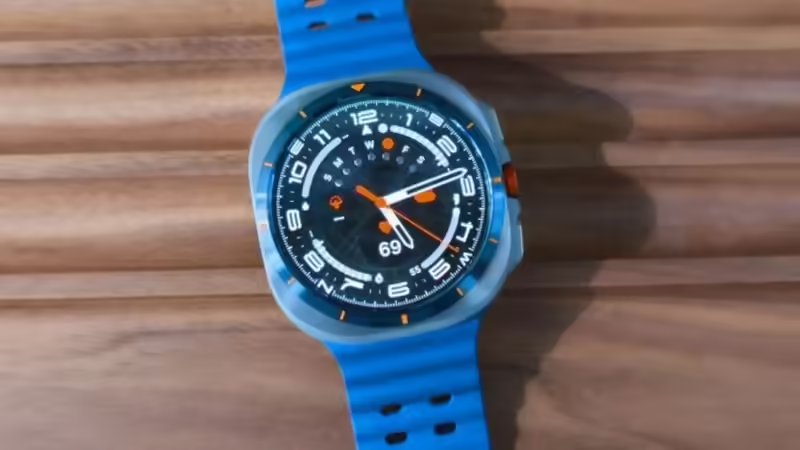
Photo credit: X/@AndroidAuthSamsung is set to launch the Galaxy Watch Ultra 2 in three connectivity variants — Bluetooth-only, 4G/LTE, and 5G — at the Galaxy Unpacked event scheduled for 22 July 2026 in London. Across a sequence of leaks from Dutch outlet Galaxy Club, corroborated by SamMobile and Android Authority, the model numbers map to specific regions: SM-L716 (5G) for South Korea and the US, SM-L715F (LTE) for the rest of the world including India, with a Bluetooth-only variant slotting in beneath both as the cheaper entry point. The bigger structural shift sits inside the case. Samsung is moving the Ultra 2 from its in-house Exynos W1000 chipset to Qualcomm's new 3nm Snapdragon Wear Elite, while the standard Galaxy Watch 9 stays on the Exynos.What The Leaks Say Across Three VariantsThe variant signal comes from Samsung's own model-numbering scheme. The company uses "0" for Wi-Fi-only models, "5" for 4G/LTE variants, and "6" for 5G variants in the last digit before the regional suffix. SM-L716 first surfaced in February 2026 inside the IMEI database, pointing to the 5G version. SM-L715F turned up on Samsung's own firmware servers in April 2026, pointing to the LTE version. The Bluetooth-only model surfaced in late May via Galaxy Club, completing the three-variant picture.What the variant split changes is the entry-point economics. The original Galaxy Watch Ultra shipped only in an LTE configuration at £599/$649 in 2024, putting it deep in flagship-smartwatch territory. The price slid soon after launch as the wearable competed with Apple Watch Ultra 2 at the same band. By introducing a Bluetooth-only variant, Samsung gives buyers who connect through their phone — most consumers — a way into the Ultra design language minus the cellular hardware.The 5G variant goes the other direction: faster cellular data, lower latency, and standalone independence from the paired phone. Samsung positions this version against the Apple Watch Ultra 3, which Apple equipped with 5G across its 2025 smartwatch lineup including the Series 11 and SE 3. The Ultra 2's 5G push is Samsung catching up to Apple on cellular generation, a year behind.VariantModel NumberConnectivityLikely MarketsGalaxy Watch Ultra 2 (5G)SM-L7165G + eSIMSouth Korea, United StatesGalaxy Watch Ultra 2 (LTE)SM-L715F4G/LTE + eSIMRest of world including IndiaGalaxy Watch Ultra 2 (Bluetooth)PendingBluetooth + Wi-FiGlobal, lower-priced entry tierThe Snapdragon Wear Elite ShiftThe chipset move is the under-the-hood story. The original Galaxy Watch Ultra ran Samsung's in-house Exynos W1000, a 3nm-class wearable SoC that delivered the performance step-up the first-gen Ultra needed against the Apple Watch Ultra 2's S9/S10 chips. For the Ultra 2, Samsung is switching to Qualcomm's Snapdragon Wear Elite, the new flagship wearable platform Qualcomm announced this year and confirmed in a Samsung partnership.Across the Galaxy lineup, the split matters more than the chip swap itself. The standard Galaxy Watch 9 and Watch 9 Classic launching alongside the Ultra 2 stay on the Exynos W1000 line — Samsung is keeping the Exynos roadmap alive at the mainstream tier while putting Qualcomm silicon inside the premium variant. That decision tilts the Ultra 2 towards better third-party app support (Wear OS apps tend to optimise for Snapdragon Wear), better radio integration (Qualcomm owns the modem stack), and stronger thermals at sustained 5G workloads.The trade-off Samsung accepts is a deeper Qualcomm dependency in its premium wearable line — a sharp departure from the Exynos-everywhere strategy Samsung has pursued in wearables since the original Galaxy Watch. The shift mirrors what Samsung has done on the flagship smartphone side, where Snapdragon-for-flagship plus Exynos-for-mainstream has become the standing pattern. Wearables are now following the same architecture.Following Apple's 5G PlaybookSamsung's 5G smartwatch arrives a year after Apple's lineup-wide adoption. Apple put 5G inside the Apple Watch Series 11, Apple Watch Ultra 3, and Apple Watch SE 3 in late 2025 — the full lineup moved to 5G in one shot. Samsung is moving the Ultra 2 alone to 5G in 2026, with the Galaxy Watch 9 and Watch 9 Classic staying on 4G/LTE. The strategic read is straightforward: Samsung is testing 5G demand on the premium tier first before committing to a lineup-wide upgrade.The practical wearable difference between LTE and 5G stays modest. A smartwatch's screen, processor, and use case sit well inside what LTE already delivers — the throughput 5G enables on a phone is overkill at the wrist. The improvements are at the edges: faster syncing of large workout files to the cloud, lower-latency voice calls, smoother streaming of audio over cellular in areas where LTE struggles. Each upgrade is incremental rather than the kind of headline that drives a generational refresh on its own.What the 5G push does buy Samsung is positioning. The Apple Watch Ultra 3 with 5G has carried a year of marketing-cycle advantage at the premium tier; the Ultra 2 with 5G closes that gap. For buyers comparing the two devices side by side, 5G is a feature parity item rather than a competitive gap for Samsung.Why The 5G Version Stays RegionalThe 5G version's restricted launch comes down to telecom infrastructure variation. Standalone smartwatch eSIM service — where the watch carries its own number and data plan independent of the paired phone — depends on operator support that varies sharply by market. South Korea (SKT, KT, LG U+) and the US (Verizon, AT&T, T-Mobile) have built out wearable 5G eSIM as a paid add-on tier. Europe runs further behind: only a subset of operators across the UK, Germany, France, and Spain support wearable eSIM, and 5G-specific wearable plans are rarer still.For Samsung, shipping a 5G variant into markets where carriers stop short of 5G watch eSIM provisioning creates a product mismatch — the device works, but the cellular generation it advertises drops back to LTE on activation. Limiting 5G to South Korea and the US sidesteps that mismatch and keeps the marketing aligned with what the watch delivers.The India AngleIndia sits in the LTE bucket. Jio and Airtel already support wearable eSIM on smartwatches, and the LTE variant of the Galaxy Watch Ultra 2 will land in India alongside the global launch, with availability through Samsung Shop, Amazon, Flipkart, and authorised retail by August 2026 on standard Samsung timelines. Vi has limited wearable eSIM provisioning and would follow rather than lead.Pricing follows the first-gen template. The original Galaxy Watch Ultra launched globally at $649 / £599 in 2024, with Samsung pricing the India variant in the premium-smartwatch band. The Ultra 2 LTE variant should land in similar territory at launch, with the Bluetooth-only variant slotting in as the cheaper entry point. The 5G variant skipping India removes the top SKU from the local market — buyers face a clearer choice between the Bluetooth and LTE versions, which compresses the lineup at retail and could land in Samsung's favour.For Apple Watch buyers in India, the parity question matters less since Apple ships the Apple Watch Ultra 3 with cellular only in select markets, with India outside the cellular launch list — leaving the cellular-watch market here as a Samsung-led category by default. The Ultra 2 LTE landing on time gives Samsung a clean six-month run before competing 5G wearables enter the Indian market in earnest.The Watch ListThree signals will matter when the Ultra 2 lands on 22 July. The first is the entry price for the Bluetooth variant — anything inside Rs 40,000 reads as Samsung pricing for share rather than margin. The second is the Snapdragon Wear Elite performance delta against the Exynos-powered Watch 9, where early reviews will benchmark sustained workloads and battery efficiency side by side. The third is the AI Health Index, the algorithmic single-score health metric Korean reports suggest Samsung is rolling out alongside the launch — the question is whether it earns trust as a daily wellness number or reads as a marketing layer over the same underlying sensor data.Frequently Asked QuestionsWhen will the Samsung Galaxy Watch Ultra 2 launch?Samsung is set to unveil the Galaxy Watch Ultra 2 at the Galaxy Unpacked event scheduled for 22 July 2026 in London, alongside the Galaxy Z Fold 8, Z Flip 8, Galaxy Watch 9, and Galaxy Watch 9 Classic.What are the connectivity variants of the Galaxy Watch Ultra 2?Three variants per the leaks: a 5G version (model SM-L716) for South Korea and the US, a 4G/LTE version (SM-L715F) for the rest of the world including India, and a Bluetooth-only variant slotting in as the lower-priced entry tier.Which chipset will the Galaxy Watch Ultra 2 use?Qualcomm's Snapdragon Wear Elite — a new 3nm wearable platform. This is a switch from the original Galaxy Watch Ultra's Samsung Exynos W1000. The standard Galaxy Watch 9 and Watch 9 Classic launching alongside will stay on the Exynos W1000.Will the Galaxy Watch Ultra 2 launch in India?The 4G/LTE variant will land in India, alongside the Bluetooth-only model, with availability expected by August 2026 on Samsung's standard post-Unpacked timeline. Jio and Airtel support wearable eSIM provisioning. The 5G variant is expected to stay limited to South Korea and the US at launch.How will the Galaxy Watch Ultra 2 compare to the Apple Watch Ultra 3?Apple moved its entire smartwatch lineup to 5G in 2025 — Series 11, Ultra 3, and SE 3. Samsung's Ultra 2 5G arrives a year later and only on the premium tier, with the Watch 9 staying on LTE. The Ultra 2 closes the 5G gap at the wrist between the two ecosystems.What is the expected price of the Galaxy Watch Ultra 2 in India?The first-gen Galaxy Watch Ultra launched globally at $649 / £599 in 2024 and shipped in India in the premium-smartwatch band. The Ultra 2 LTE variant should land in similar territory, with the Bluetooth-only variant slotting in as the cheaper entry point. Final India pricing comes at launch.Does the Galaxy Watch Ultra 2 support satellite connectivity?Rumours point to NB-NTN (Narrowband Non-Terrestrial Networks) support that would allow basic communication in areas outside cellular coverage. Samsung has held back confirmation of the feature.end of article
Samsung Galaxy Watch Ultra 2 Lined Up For Bluetooth, LTE And 5G Variants
Find latest technology news, gadgets reviews & ratings. Popular & latest gadgets specifications, features, prices, photos & videos. Trending mobile phone comparisons, slideshows, how tos and videos for latest mobile phones, tablets, technology news updates.
1,648 words~7 min read