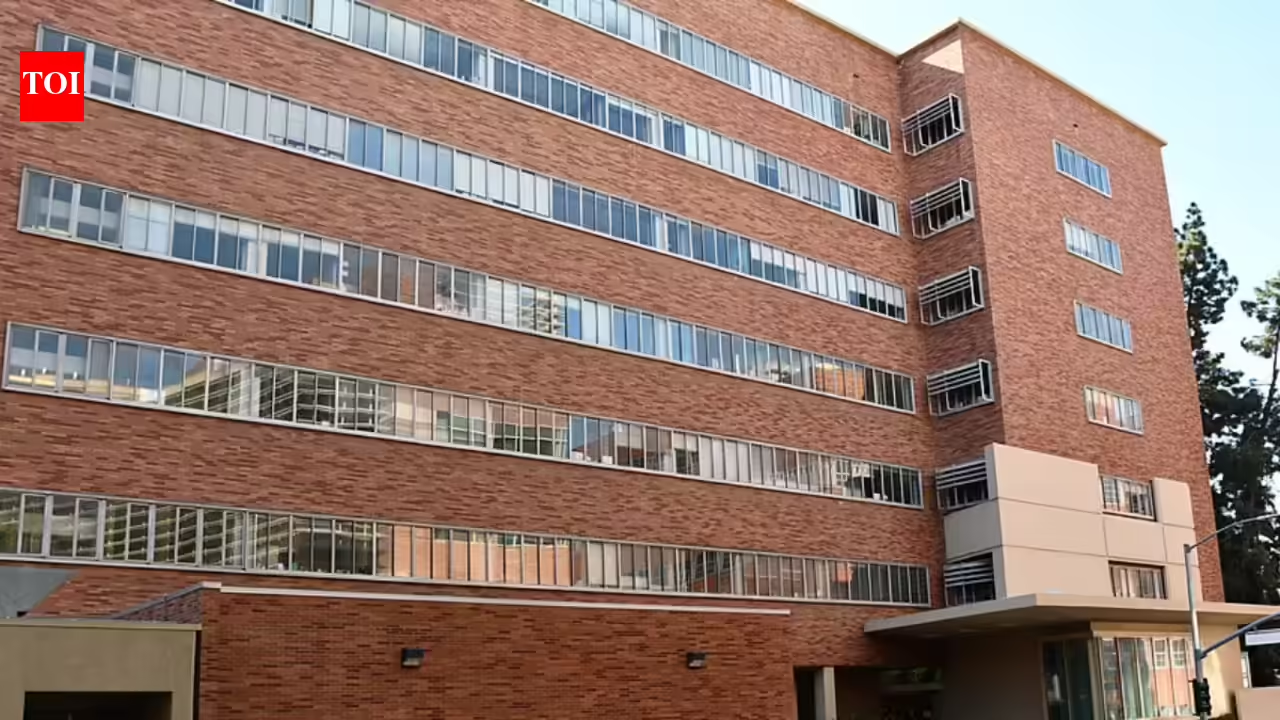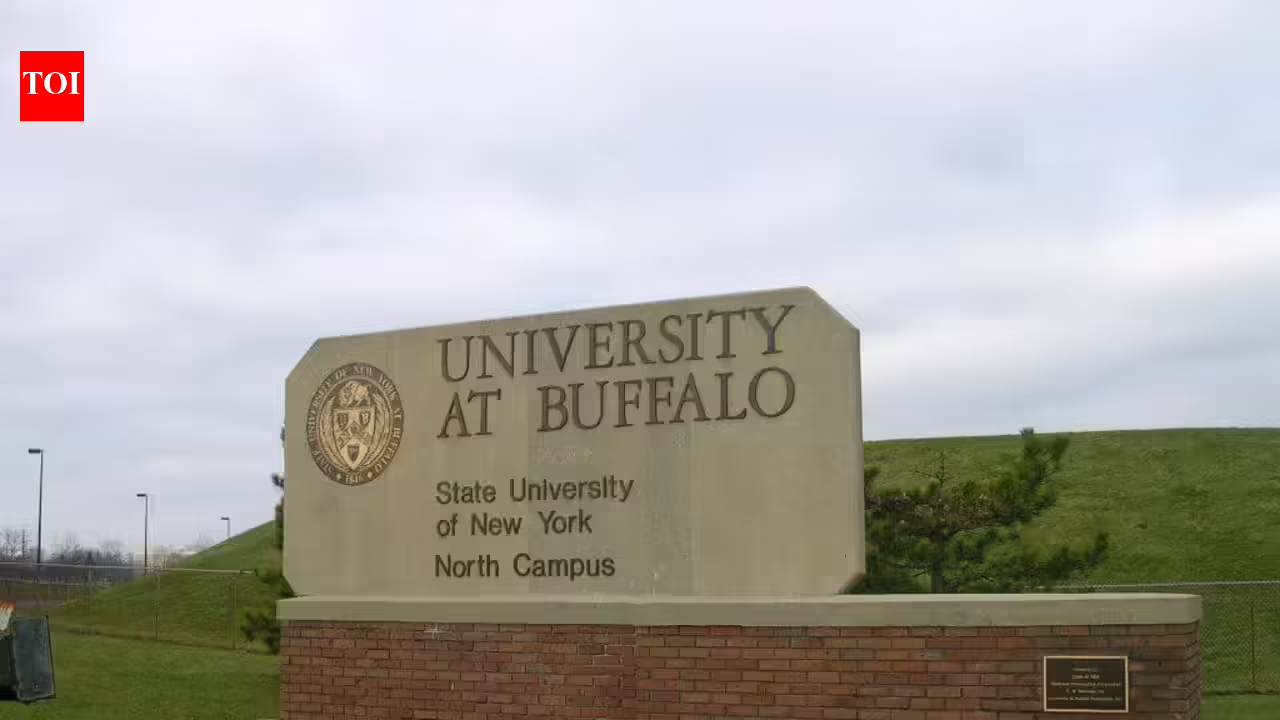
A significant anonymous donation to the University at Buffalo's medical school shifted focus from buildings to essential needs. This approach prioritizes recruiting, scholarships, and endowed chairs. Image Credit: Wikimedia CommonsIn the world of big-money university giving, the idea of large academic gifts is often seen as a contest where the goal is to establish the donor’s legacy and build something ambitious. When the famous businessman writes a cheque like no other to a top university, one assumes that the sole purpose of the act is to establish a state-of-the-art laboratory complex.However, this conventional building-focused approach fails to consider the harsh economic dynamics that regional medicine has to endure, long before they are able to improve their facilities. Emerging medical institutions have to contend with increasing demands, recruiting problems, and strict financial guidelines restricting regional healthcare progress. A more sustainable strategy is to invest in a process which moves away from flashy public relations tactics and focuses purely on the everyday reality of educating future healthcare professionals.Silent capital transformation of regional medical barriersBy having the visionaries go outside conventional building and opt to use their flexible capital for human equity investments, they effectively create a whole new equation in both higher education and regional public health. Private abundance becomes immediate metropolitan mobility through the power of using one’s degree at university to propel regional health forward.In line with the findings presented in a thorough institutional analysis from the report A Country Doctor Gives UB Its Largest Gift Ever, there is an anonymous country doctor who donated $40 million to his alma mater, aimed directly at addressing the day-to-day demands of the medical program. The data points out that instead of concentrating on a superficial project as most people do, the important investment was strategically directed towards practical recruiting expenses, student scholarship and endowed chair. Through including strict civic obligations in the fundamental structure of the project, medical education proved to be adaptable.In addition, UB Reporter’s article titled UB receives largest gift ever from an individual donor, making it clear that the moment a benefactor is able to successfully leverage systematic and specific institutional endowment contributions, he or she greatly amplifies the momentum of that city for generations to come. According to the recorded information, the original gift contribution to a university can easily multiply for decades, culminating in a huge donation that pushes the university-wide fundraising efforts to cross the historic multi-million dollar mark. The model of generational support clearly contributes to successful professor recruitment while guaranteeing diversity on campus without any self-promotional involvement.George Melvin Ellis Jr.'s legacyWith his unique approach to generous donations, George Melvin Ellis Jr. successfully broke the stereotypical pattern of education philanthropy. Indeed, with the passing away of Dr Ellis in 2010, his unprecedented bequest resulted in a massive $40 million contribution to the University at Buffalo’s Jacobs School of Medicine and Biomedical Sciences. In contrast to other donors, who seek publicity by launching a large-scale promotional activity, the former wartime medical student insisted that his name stay anonymous until after his own demise, along with that of his wife, Kelly.By putting this strict anonymity requirement within the heart of the gift agreement itself, his passing silently launched an important structural overhaul. The endowment quickly rose to $50 million in value, thus creating the potential to fundamentally transform the healthcare of Western New York without needing immediate recognition. In doing so, it enabled the organisation to operate freely, pouring money in precisely where it was needed most through the pipeline.A significant anonymous bequest to the University at Buffalo's medical school prioritized human equity investments over facilities. This flexible capital addressed recruiting, scholarships, and endowed chairs, fostering sustainable regional healthcare progress. Image Credit: Wikimedia CommonsBuilding stable health ecosystemsWith a focus on building out the system itself rather than simply focusing on bricks and mortar structures, the enormous capital infusion was specifically designed to address the very clinical needs that hinder a fast-growing region from becoming a leader in healthcare. This goes beyond simply lowering tuition and origin story symbolism.Even when day-to-day public discussion revolves around judging wealthy individuals' donations on the sheer scale of the initial press release, the true impact of such an achievement comes through instant structural integration. Using a structure that was inherently flexible and based on trust, with complete avoidance of any administrative obstacles, the program relieved the institutions of any burdens related to the cost of administration.Any long-term transformation of education and healthcare could not be achieved through one isolated contribution that relies on strict donor control; it can only be created incrementally through trusting local university administrators to make the best use of available capital where the need for it is greatest at the moment. Whenever contemporary wealth generators combine their resources with the potential of people, rather than building monuments, they remove the administrative pressure from the system.A consistent philosophy of choosing a location, knowing what exactly must be done there, and always building on past successes makes it possible for a state-owned university to act as a major powerhouse in the field of medicine within the region. By using a large private fortune not as a means of achieving personal recognition but as a vehicle of civic power, this historical tradition continues to demonstrate that the true value of any gift lies in helping people become doctors and serve their communities.
A country doctor gave $40 million to his alma mater and kept his name hidden until after death
In the world of big-money university giving, the idea of large academic gifts is often seen as a contest where the goal is to establish the donor’s legacy and build something ambitious. When the famous businessman writes a cheque like no other to a top university, one assumes that the sole purpose of the act is to establish a state-of-the-art laboratory complex.
891 words~4 min read