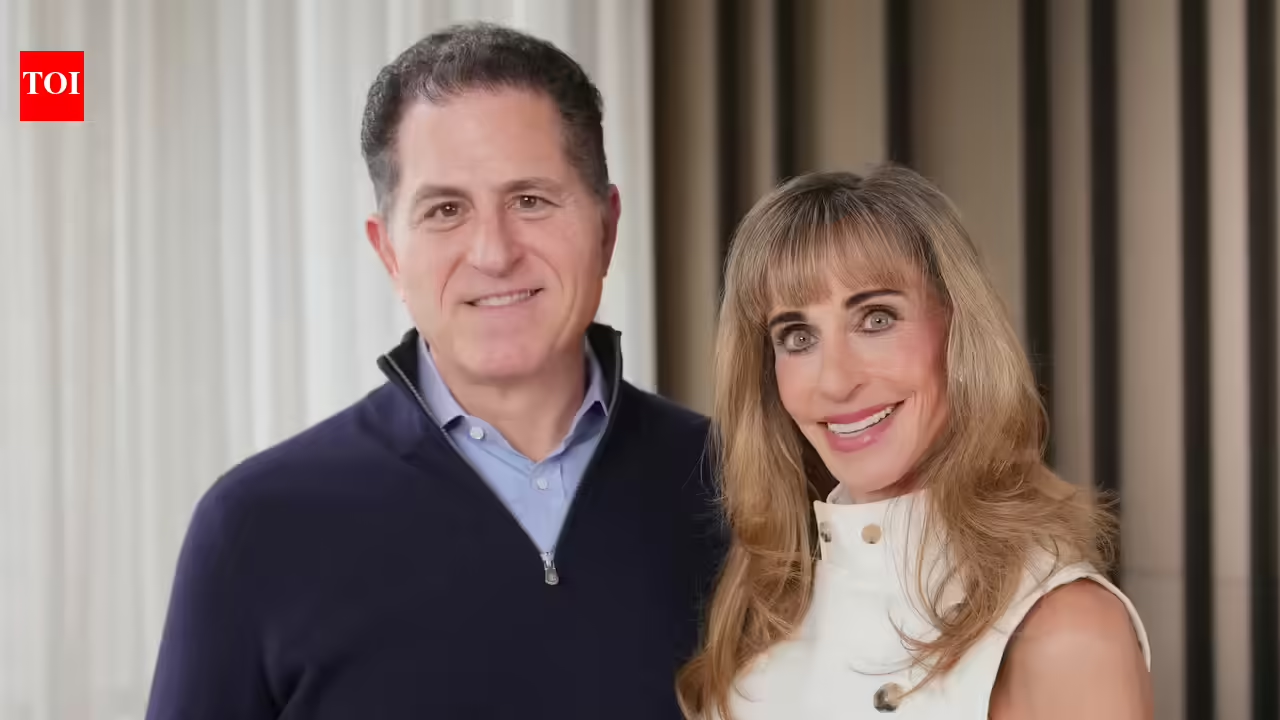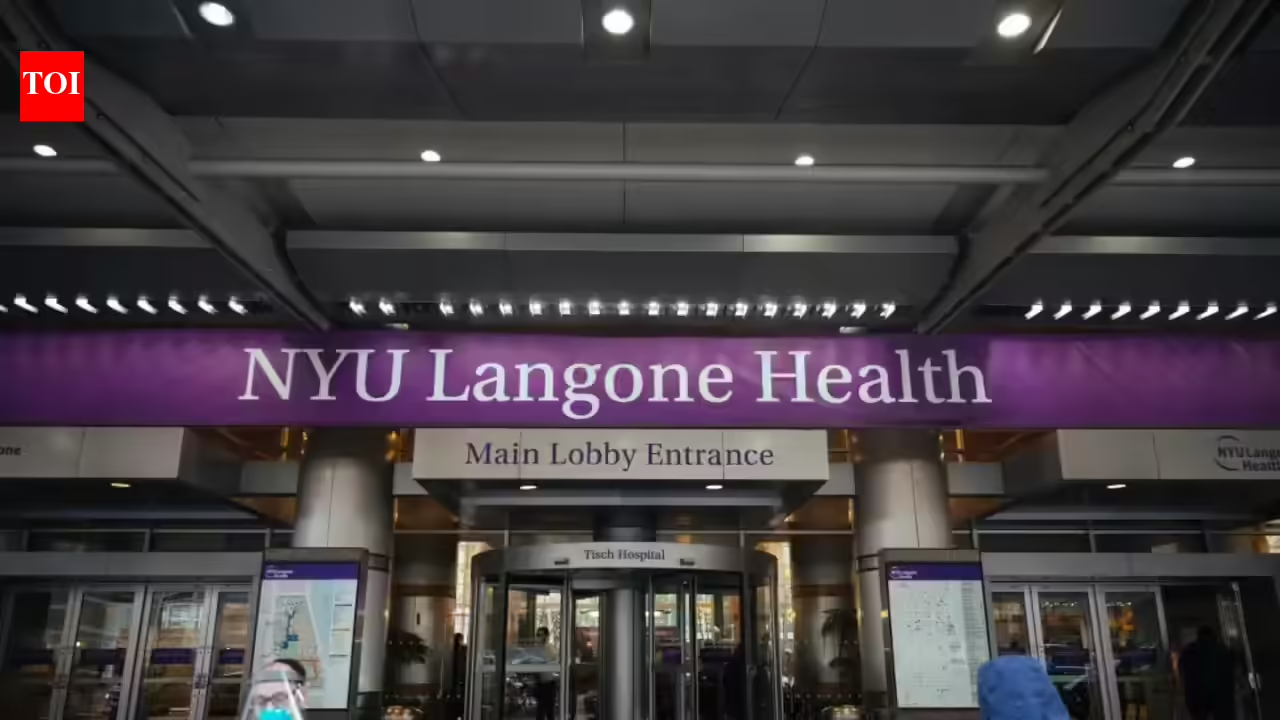
Philanthropists Kenneth and Elaine Langone have transformed medical education. Their record donation to NYU Grossman School of Medicine funds a tuition-free program. Image Credit: AP Photo/Kevin Hagen, FileIn the highly competitive field of philanthropy amongst the best universities, huge donations made by scholars are usually perceived as a game of legacy and idealistic construction. However, what we would ideally like to believe is that when a celebrity businessman makes a record donation to a reputable university, everything becomes about constructing an advanced building for laboratories or an institute named after the individual himself or herself.However, the traditional, architectural approach does not take into account the severe economic tension that millions of students go through long before entering any actual classroom or lecture room. Medical scholars in particular have to struggle against increasing costs of tuition, expensive living expenses, and rigid institutional policies, which push them to depend on enormous amounts of commercial borrowing at high interest rates.By ensuring that such incredible philanthropy made its impact felt first at a grassroots level, rather than as an addition to the greater institutional story, Kenneth and Elaine Langone transformed this story like nothing else before. With the inclusion of their capital directly within the tuition-free medical school approach, these two succeeded in transforming one of America’s premier urban institutions of higher learning from one of prestige to one of revolution.Tuition abolition creates opportunities beyond financial constraintsBy transforming the very approach taken by social innovation experts, from construction to injection of capital into human capital programs, the formula for higher education is transformed forever. This generosity ensures that personal wealth turns directly into upward social mobility, thus enabling any highly esteemed medical degree to become just the beginning of a lifetime of international success, and not of perpetual indebtedness.Based on the formal statements concerning the admissions program for the NYU Grossman School of Medicine MD Admissions Program provided in the web guidelines, all students admitted are entitled to automatic receipt of a full-tuition scholarship. As per the outlined criteria, rather than providing a one-off scholarship, a system was developed, which ensured that the provision of debt-free scholarships could cater to further needs in addition to the tuition fees. This approach ensured that, through the incorporation of these strict systems within the administrative setup, clinical excellence could be achieved without putting an undue burden on the students from a business perspective.Additionally, empirical tracing that was made from the institutional statement, NYU Long Island School of Medicine Receives $200 Million Gift from Kenneth & Elaine Langone, shows that the tuition-free program has been adopted very fast in all the university institutions due to health shortages in the region.Notably, it has been pointed out that a considerable amount of money to the tune of $200 million has been used to ensure the provision of full scholarship to all existing and future students within the newly introduced three-year primary care curriculum. By directing such a major amount of funding towards the development of accelerated learning pathways, the generational funding program definitely takes away the financial pressure, which discourages young medical graduates from becoming general physicians, internal medicine specialists, and paediatricians.his initiative injects capital directly into students, fostering upward social mobility. It removes financial barriers for aspiring doctors. This approach ensures clinical excellence without student debt. Image Credits: Instagram/@NYU Grossman Long Island School of MedicineRegional stability for sustainable healthcare efficiencyGiven the fact that regional stability depends on addressing issues surrounding debt instead of physical resources, the large-scale deployment of funds was carefully formulated in order to tackle the problems faced by certain people when accessing the current healthcare system.Although daily opinion may tend to measure high-net-worth donations based solely on the size of the initial statement, it is important to note the actual significance of such an achievement as an event that was immediately incorporated into the structure. It is because the initiative made a decision to use a highly flexible, trust-based model of funding, which skipped any administrative hurdles that could occur within the process.Long-term change in education and medicine cannot be achieved through one-off, inflexible grants that are bound by stringent donor control; it has to be gradually developed through the use of local university administrators' judgment to direct the resources where they are most needed currently. Modern philanthropists who understand the essence of investing in human potential will reduce the administrative burden on poorly funded institutions.This philosophy, which involves selecting the proper pipeline of professionals and discovering their exact needs while consistently removing all financial limitations from the equation, turns this learning facility into a mighty engine of medicine in its community. This is because the real meaning of a donation comes out once the full potential of the people trapped within the limitations can be unleashed by using a vast fortune to make this possible for the citizens, instead of making the donor feel glorified.
Kenneth Langone’s NYU gift helped make medical school tuition-free for future doctors
In the highly competitive field of philanthropy amongst the best universities, huge donations made by scholars are usually perceived as a game of legacy and idealistic construction. However, what we would ideally like to believe is that when a celebrity businessman makes a record donation to a reputable university, everything becomes about constructing an advanced building for laboratories or an institute named after the individual himself or herself.
810 words~4 min read