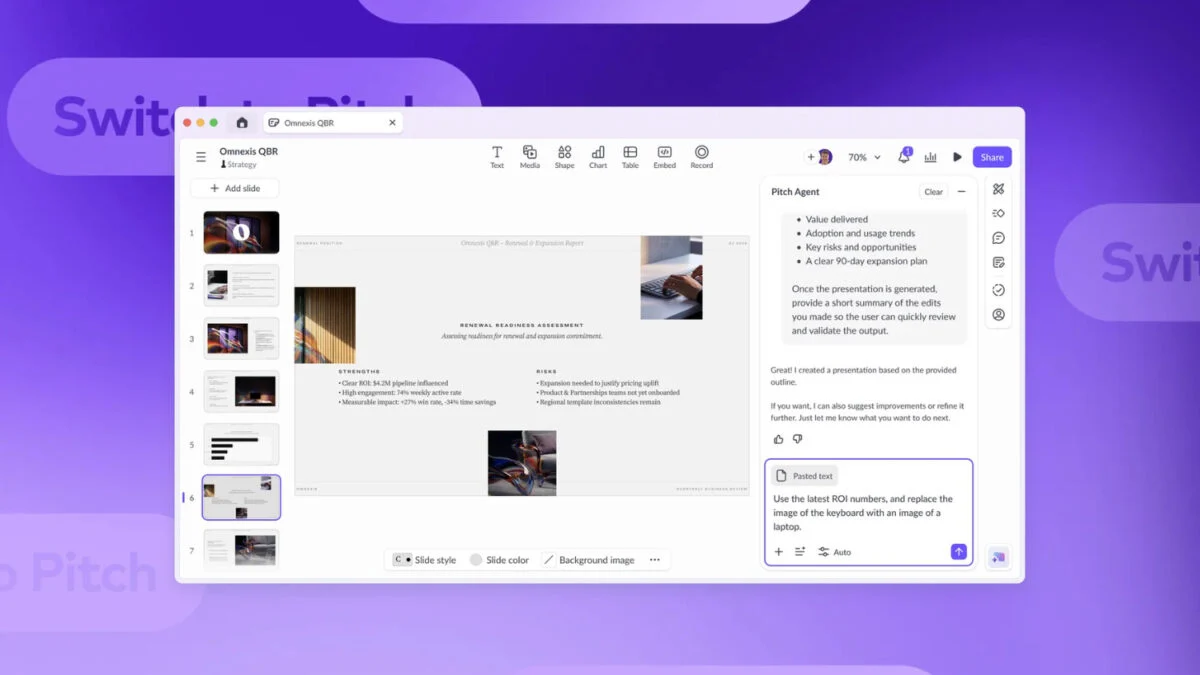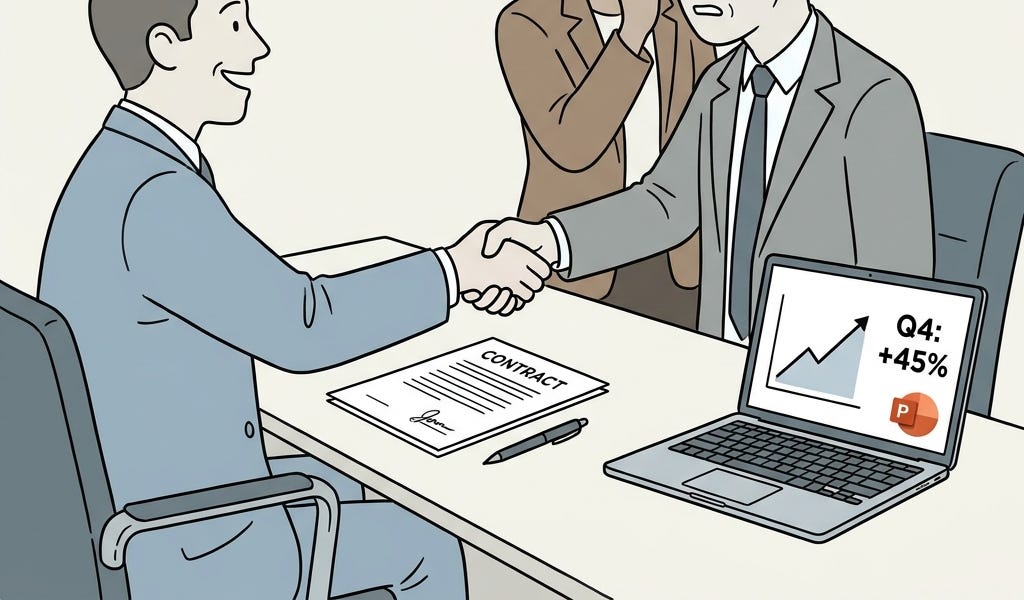
AI builds your board deck now. Drop a folder of messy files into ChatGPT or Claude or Copilot, ask for the deck or the budget or the QBR, and you get back something that looks like finished work. The capability is real and it is not the interesting part anymore. The interesting part is that the file looks done long before it is true.Last quarter I opened a workbook that looked like a financial model. Assumption inputs at the top, revenue projections, valuation rolling up cleanly, and a written guide attached saying the model had been validated. Then I opened the revenue growth row. The formula copied the same two cells across every future year instead of rolling forward: =C5/B5-1, again and again. Excel did not flag it. There was no #REF! error. The valuation still looked clean. A busy person signs that deck and forwards it, and the mistake travels with it.That is the new Office risk, and it is specific. A deck mixes current numbers with old ones. A spreadsheet carries a formula that points to the wrong cell. A model gets saved as an Excel file with almost no live formulas inside it. A chart looks executive-ready while nobody can say which source the data came from. None of these look wrong. They are wrong in the one way polish cannot show you, because polish is exactly what we are trained to read as trust.So stop treating the generated file as the first thing you make. Make the truth layer first: an inventory of your sources, a map of which claim rests on which source, a log of every assumption, and a verification pass that tries to break the result before anyone else can. Build that, and the model gets far more useful, because now it is working on top of something real instead of guessing inside a costume that looks like work. Skip it, and you are shipping confidence you have not earned.Here’s what’s inside:The four-stage workflow that turns a messy folder into a file you can defend: source prep, structure, creation, and verification, in that order and not skippable.Source prep and structure, the two stages nobody does, and the exact inventory and specification to demand from the model before it writes a single slide or formula.The PowerPoint rules: how to make slide headlines into traceable claims and turn speaker notes into the evidence layer that survives the forward.The Excel rules: a raw-data tab, an assumptions tab, and a checks tab that works like a smoke alarm, so a broken formula trips an alarm instead of riding into a board meeting.The Trust Layer, a guide and prompt kit for Office files that survive the forward: the guide that maps the six ways Office work breaks, plus a five-prompt runbook you paste in order, from the source-packet setup that catches conflicting numbers before a slide exists, to the two-model hostile review that hunts the formula a busy reader would have signed.The truth layer is the whole game. The rest of this piece is how to build one.
Your AI built a model with zero live formulas. The Trust Layer's checks tab would have tripped the alarm.
Watch now | A workflow for turning messy sources into MS Office files you can actually trust.
510 words~2 min read