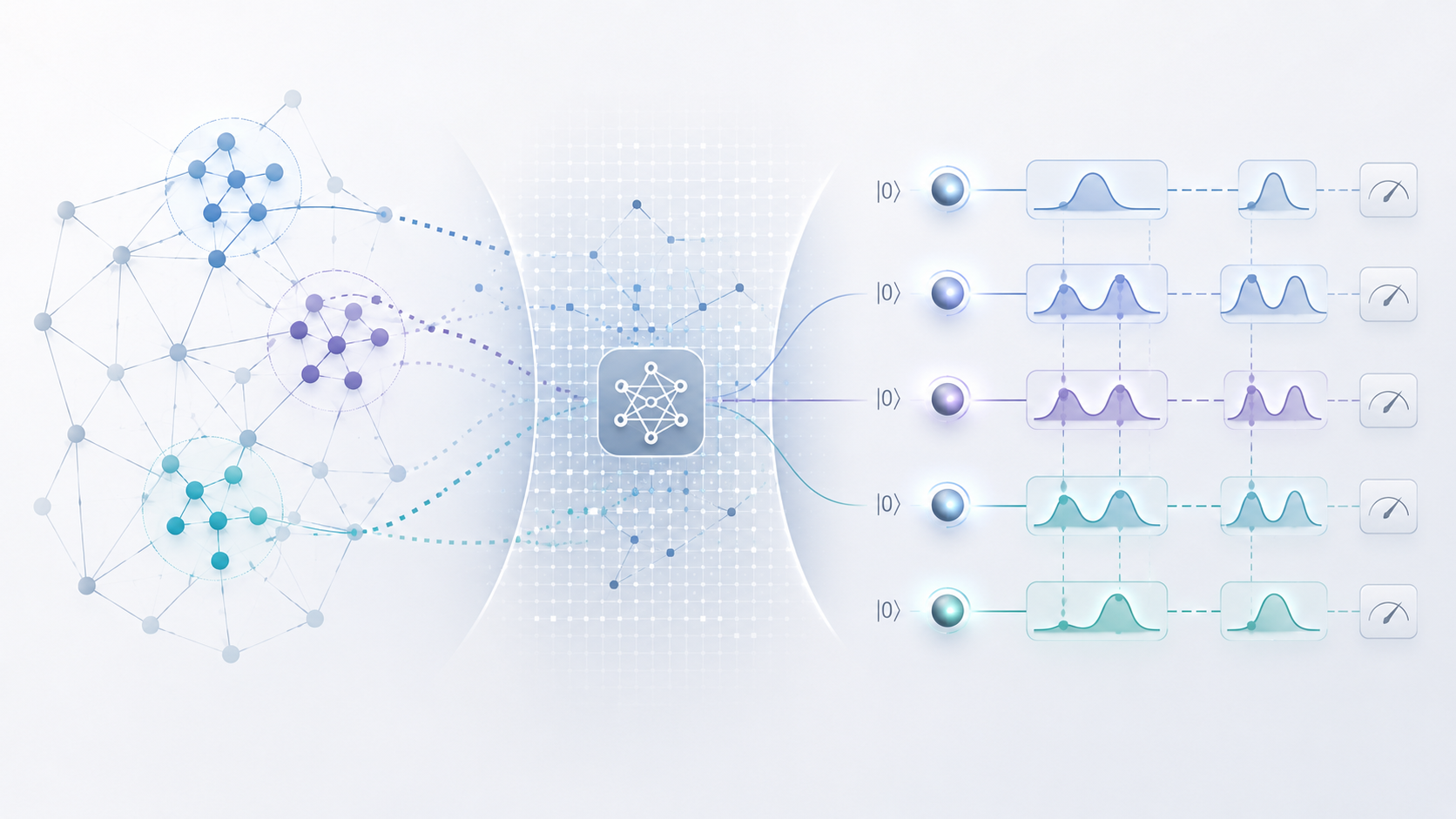
Quantum computing and artificial intelligence are often discussed as two separate frontiers. One is about exploiting quantum mechanics for computation; the other is about building increasingly capable learning systems and agents. The core argument behind TensorCircuit-NG is that this separation is becoming less and less meaningful. If modern AI infrastructure has already solved core problems around automatic differentiation, compilation, accelerator execution, batching, and distributed training, then quantum software should stop reinventing those layers badly and start standing on top of them directly.
This is the central idea behind TensorCircuit-NG. The project is a quantum software stack built in the age of AI, aimed at AI-facing workloads, and increasingly shaped for collaboration with AI agents. Its vision is simple: quantum software on AI, for AI, with AI.
On AI: quantum software should inherit the AI stack
Quantum software has long been held back by two familiar problems. Too much of the workload remains trapped in Python-level control flow or in classical state-vector simulation patterns that scale poorly. At the same time, many quantum libraries sit outside the deep learning ecosystems where most of the tooling innovation has happened. JAX, PyTorch, and TensorFlow already have mature answers to questions like compilation, vectorization, accelerator placement, and distributed execution, yet quantum software has often kept those capabilities at the edge of the stack.