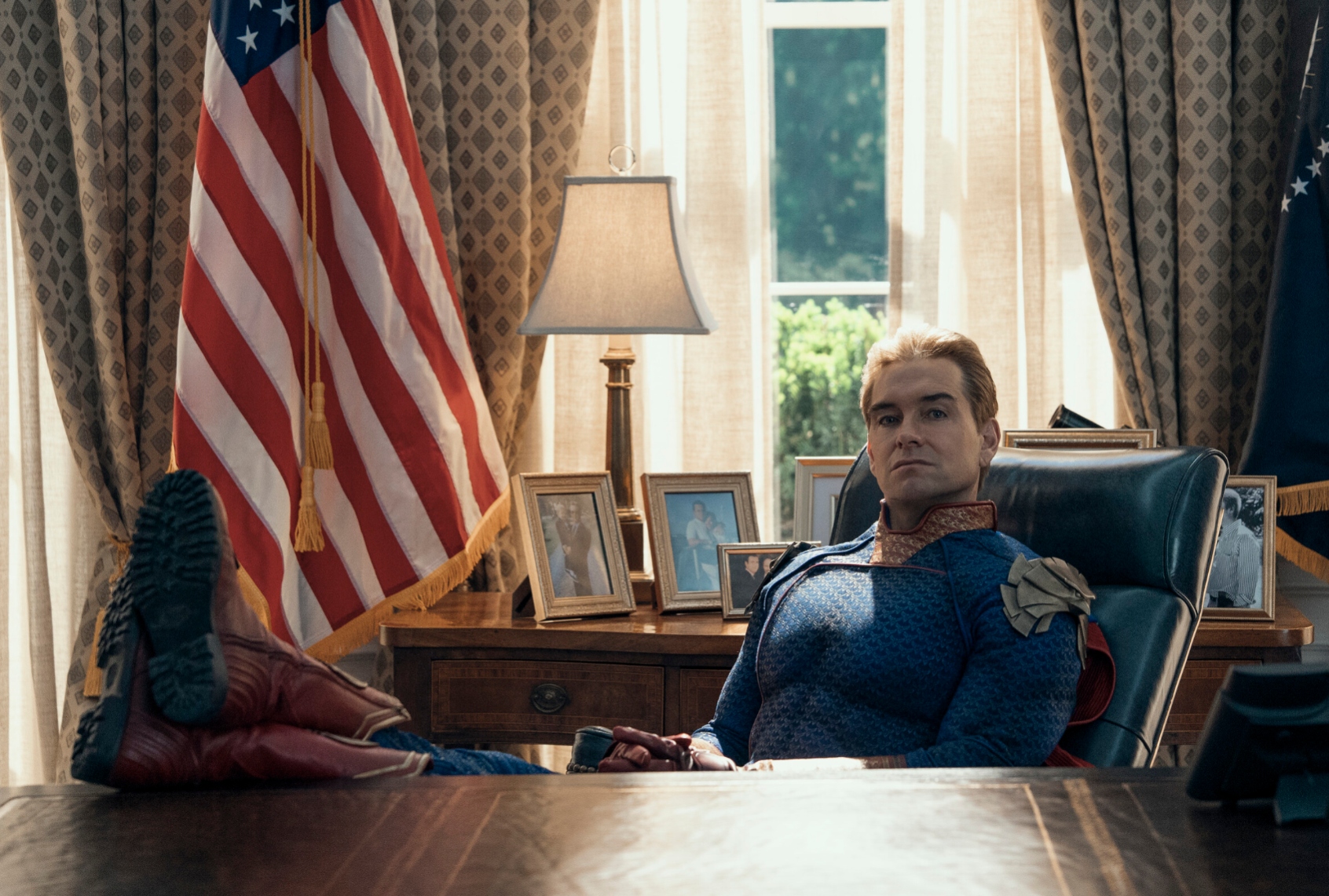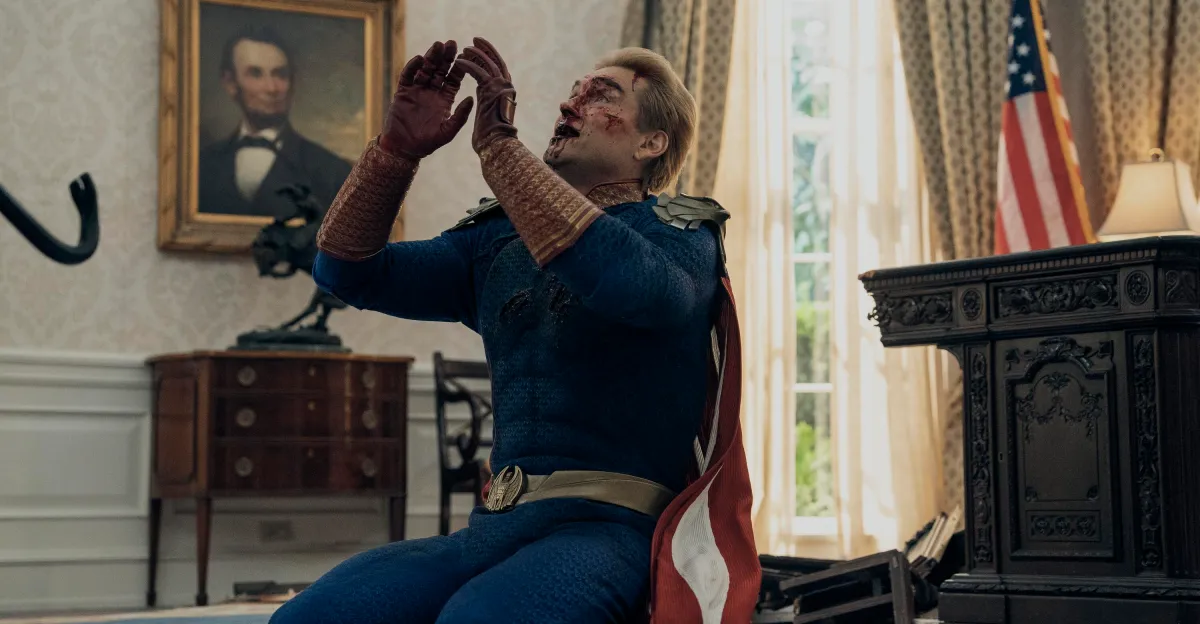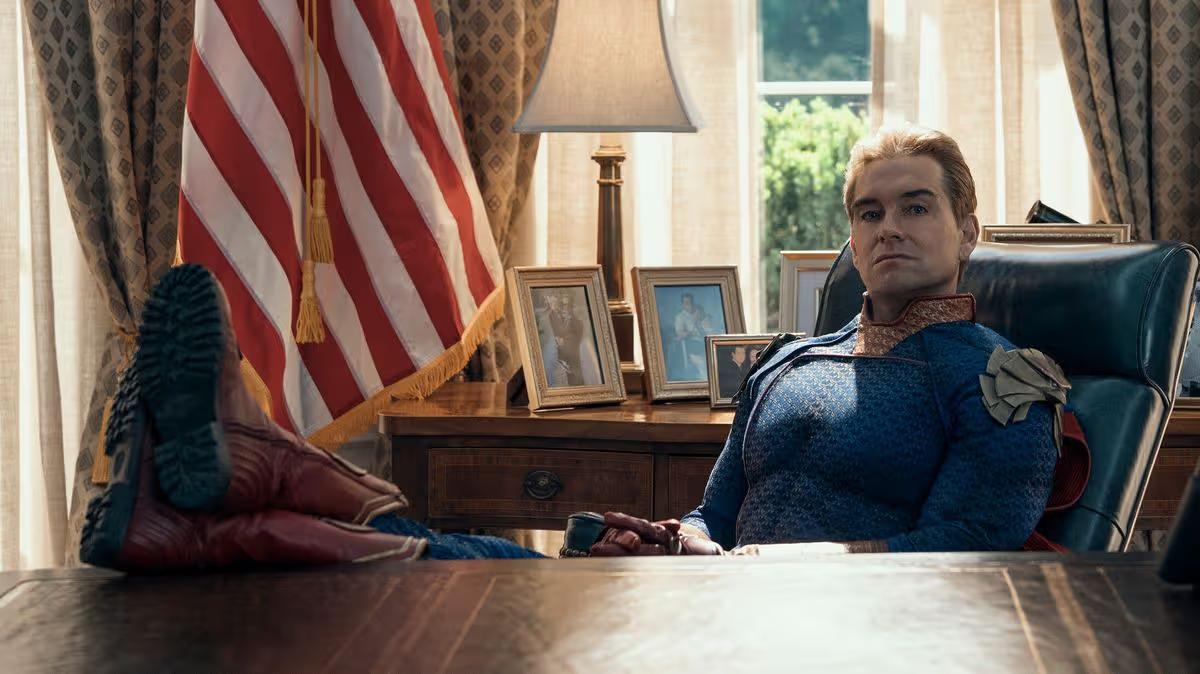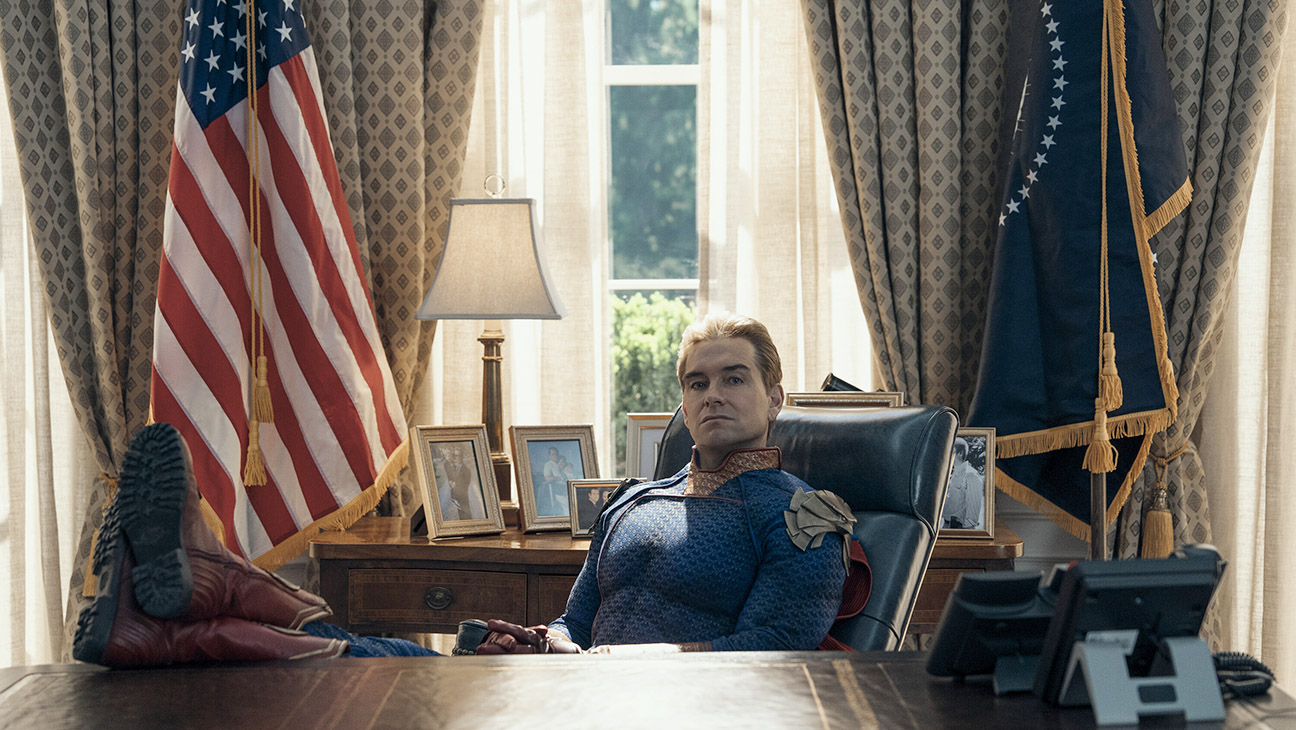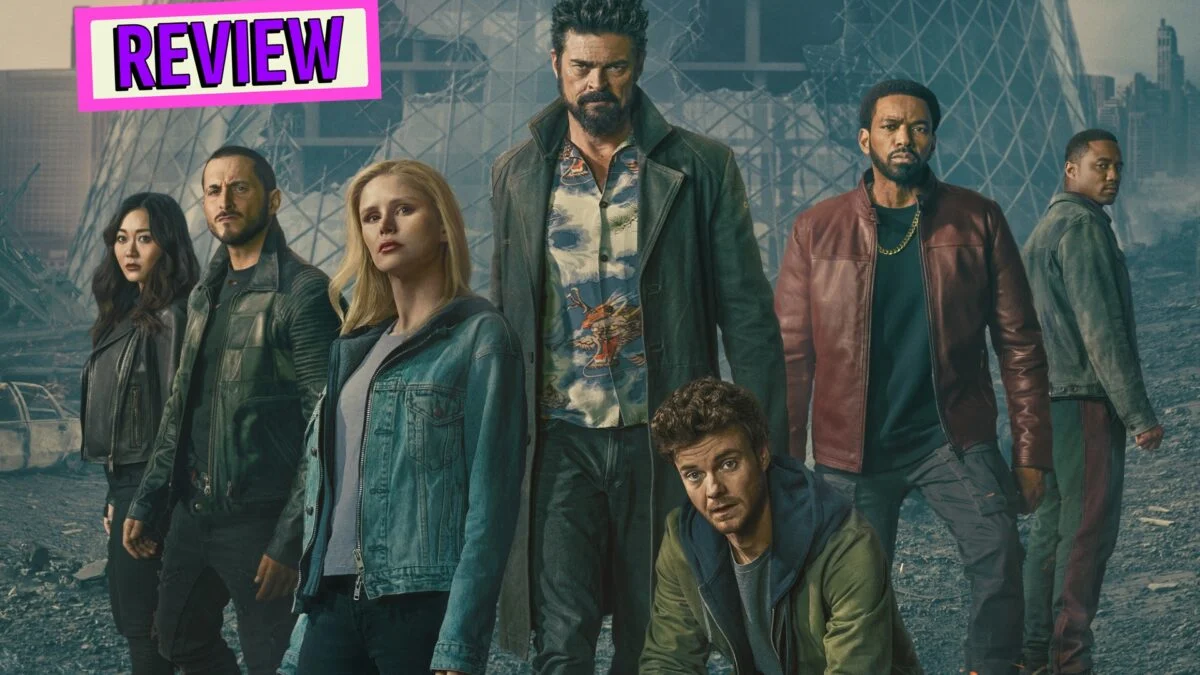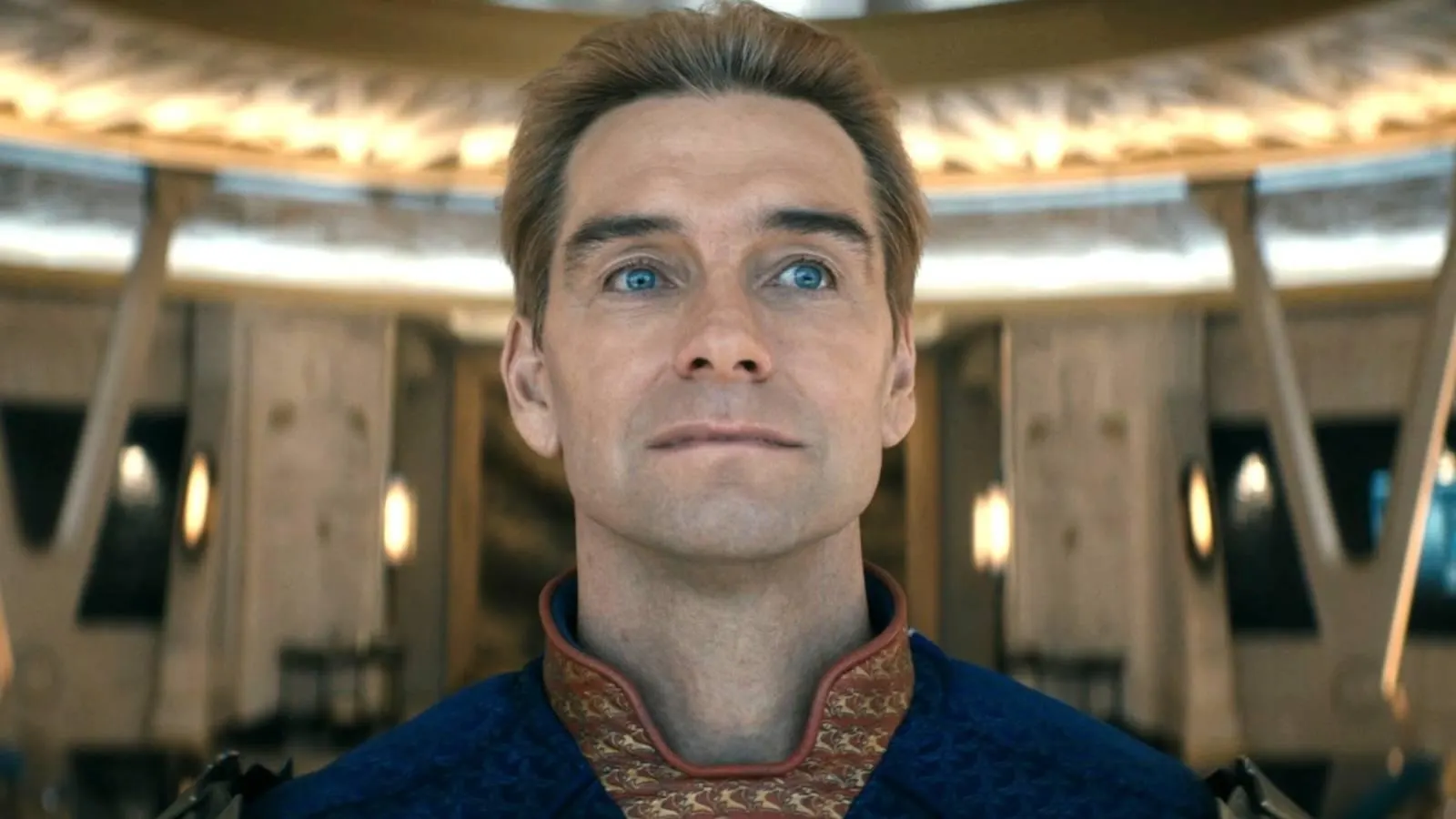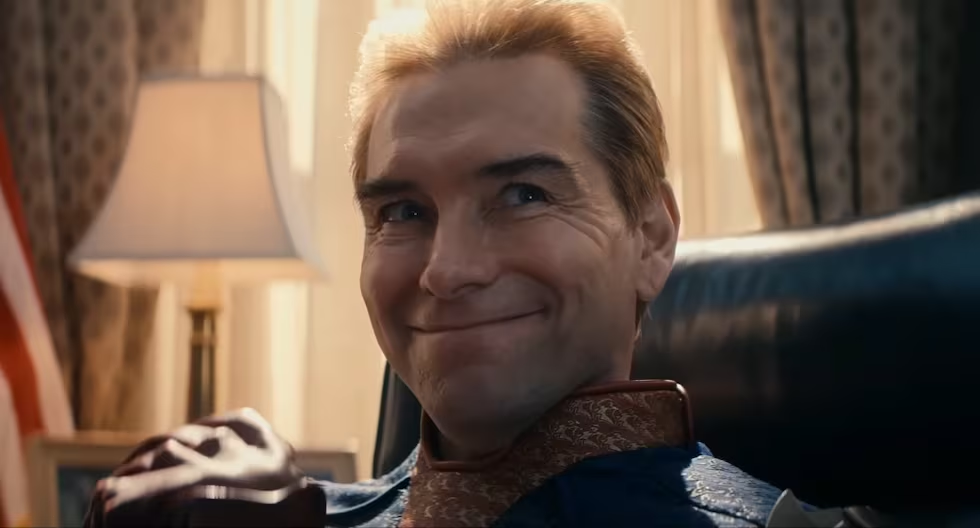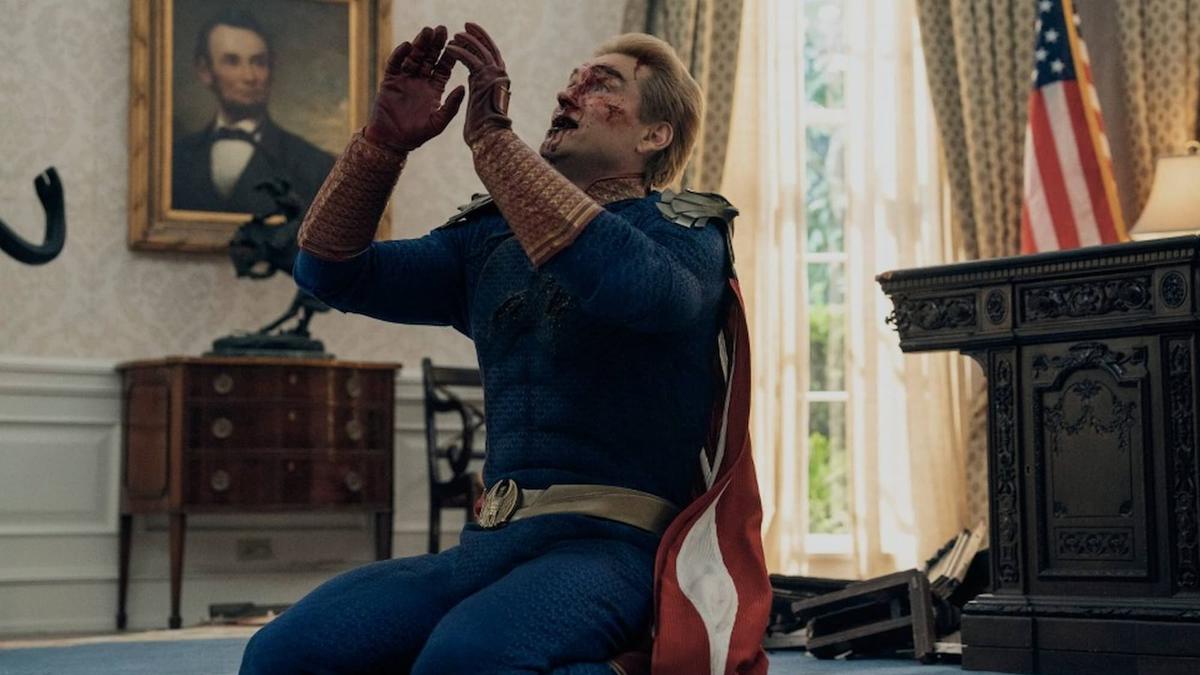
A still from ‘The Boys’ Season 5
| Photo Credit: Prime Video
For five seasons, Eric Kripke’s adaptation of Garth Ennis and Darick Robertson’s comic-book acid trip has enthralled and entertained us with one diabolical bar fight staged against the corpo-fascist echelons of the American elite after another. After seven years of watching caped celebrities juiced-up on pharmaceutical-grade godhood collide with the titular rag-tag insurgency of traumatised malcontents, The Boys has finally staggered towards its curtain call. The premise behind The Boys has always rested on a pleasingly ugly foundation: superheroes exist, albeit as intellectual property assets manufactured by the fictional conglomerate Vought International, while Billy Butcher (Karl Urban) and his coalition of anti-supe insurgents dedicate their lives to exposing and dismantling these superhuman mascots of late capitalism. The fifth and final season carries the burden of concluding that mission in a cultural ethos where our political realities seem to have developed the disturbing habit of stealing the writers’ material in real time.The Boys Season 5 (English)Creator: Eric KripkeCast: Karl Urban, Jack Quaid, Antony Starr, Erin Moriarty, Jessie T. Usher, Laz Alonso, Chace Crawford, Tomer Capone, Karen Fukuhara, Nathan Mitchell, Colby Minifie, Susan Heyward, Valorie CurryEpisodes: 8Runtime: 63–68 minutesStoryline: As Homelander tightens his grip on America and begins recasting himself as a divine authority, Billy Butcher and the Boys race to stop his ascent once and for all.As Season 5 begins, Homelander (Antony Starr), the all-American lab-grown crown jewel and television’s premier prophet of superhuman megalomania, has secured control over the machinery of the American state after spending previous seasons consolidating Vought’s media apparatus and transforming his supporters into a congregation of star-spangled loyalists. The season opens with concentration camps housing political dissidents, media networks manufacturing superganda at industrial scale, and nationalist hysteria machinery providing entertainment to the aloof. With earlier seasons, most of this sardonic imagery felt exaggerated enough to come off as political satire. But in this final season, the material has unfortunately aged like fine wine, much to the chagrin of Kripke’s razor sharp wit.The writing spends much of the season placing Homelander on a theological escalator because political authority no longer satisfies him once power from the White House and beyond enters his bloodstream. Through Firecracker’s evangelical broadcasts and Oh Father’s super-powered sermons, Homelander attempts to apotheosise himself from his own state-sponsored gospel dubbed the Democratic Church of America — Starr attacks this material with frightening precision as always.