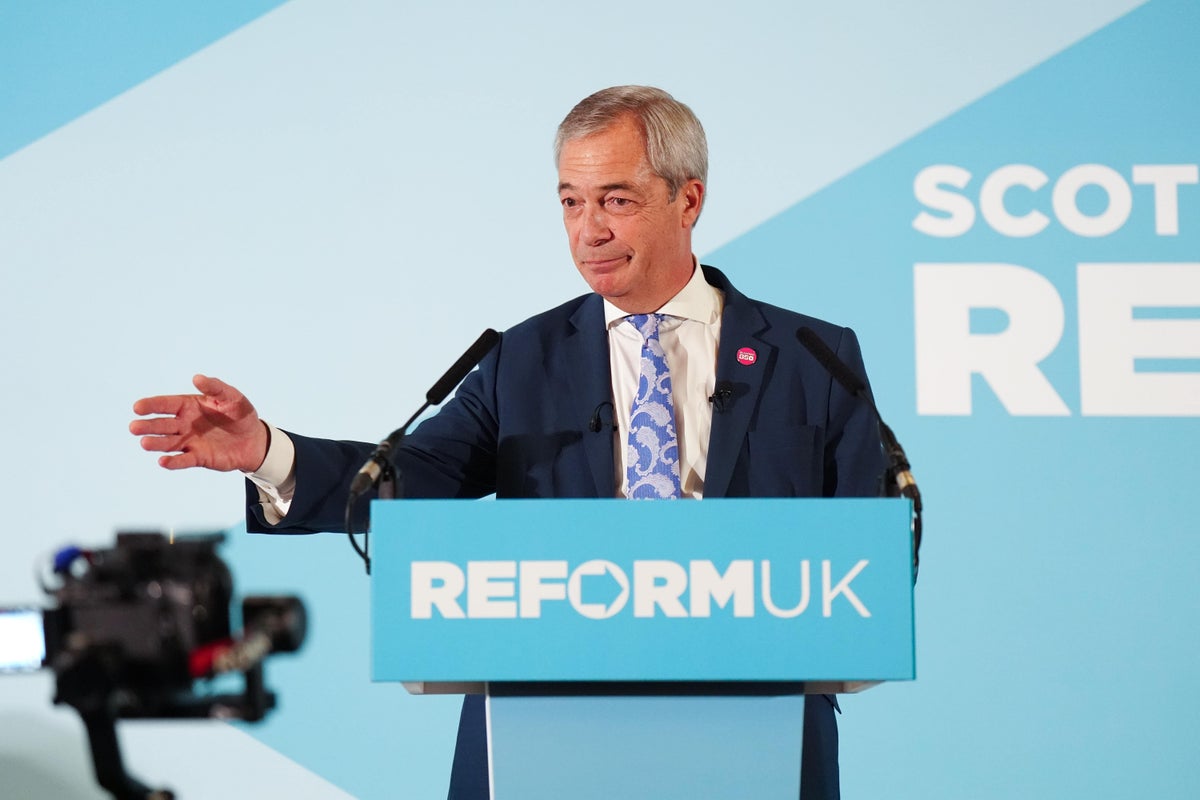
Reform UK ramped up the funding and sophistication of its political Facebook ads in the final weeks of campaigning for the May elections, in a sign of the growing financial muscle of Nigel Farage’s party.There were several days in the fortnight before the party’s breakthrough electoral performance when Reform spent more than any other party on the influential platform.Reform’s spending through its main Facebook pages almost matched that of Labour. Only a late spurt of spending by Labour meant it narrowly outspent its rightwing rival, according to analysis by the Who Targets Me campaign group.Reform spent £252,000 in the final two weeks of the campaign on its main Facebook pages. That spending was highly centralised through just two pages – its main party page and that of Farage.Labour spent £276,000 on the platform via its main Facebook pages, but that spending was more spread out between its main page and those of its Welsh, Scottish and regional parties.The analysis counted spending among a party’s main accounts, defined as the main pages of its party, main regional parties and political leaders. The data raises questions for Conservatives, as the party was a distant third, spending £76,000 with Meta, the owner of Facebook, in the final two weeks before the election.It was only narrowly ahead of the Scottish National party, which spent £75,000, and the Greens, who spent £74,000 over the period.A Reform Facebook ad targeting the SNP. Illustration: Facebook/Reform UKThere was also an increased sophistication to Reform’s campaign, both in its targeting of ads and in the quality of the ads themselves. The party adopted local ads, popularised by the Liberal Democrats, which claimed to show local polling with Reform as the main challenger to the incumbent party, often Labour. “Don’t waste your vote on the Conservatives,” one reads. “Only Reform UK can stop Labour.”In Scotland, it targeted the SNP by describing them as a “calamity for Scotland” and pitching Reform as a vote for “real change”. In Wales, it targeted voters with messages about stopping “another Labour-Plaid [Cymru] coalition”.Sam Jeffers, founder of Who Targets Me, said the party had “dramatically upped its game”.“Previously, Ukip didn’t really have any money,” he said. “Their rise wasn’t from ad spending. Traditionally, the popular right relied on the virality of their online messages. But now Reform has loads of money and can do the spend thing, too. It is not just about going viral. There’s a real sense of professionalism and targeting.”Data published by Meta showed Reform was doing far more targeting of voters by their postcode than in previous elections, a sign of a professionalised digital campaign aided by its boosted financial coffers.“[Farage’s previous parties] didn’t use location targeting at all, but now there are thousands of individual postcodes being targeted where they thought they would win,” Jeffers said.“In 2024, they ran a national campaign based on national vibes. Here, they have run on local vibes, like saying: ‘Reform can beat Labour here.’ It’s like they are running five Lib Dem campaigns all at once. It’s not rocket science, but it is organised.”The online efforts follow a huge inflow of cash in recent months. Farage’s party attracted £5.5m in the last quarter of 2025, more than all the other parties. It also included a £200,000 donation from JC Bamford Excavators – traditionally a Conservative donor – which gave the same sum to the Tories that quarter.A Reform ad showing Senedd voting intention before this month’s elections. Illustration: Facebook/Reform UKThe bulk of Reform’s cash – another £3m – came from crypto investor Christopher Harborne, who has become its main bankroller. He already donated a record £9m last summer. Harborne’s money came in as the party was planning its local elections strategy.Reform brought in more than twice as much in donations as the Conservatives in the final three months of 2025, once public funding was excluded.Labour, traditionally the party that has pushed ahead with digital campaigning, comfortably outspent Reform once all accounts associated with the party were included, such as local branches and candidates.When all these accounts were included, Labour spent £653,427, to Reform’s £290,000. The Conservatives also slightly outspent Reform with all accounts included. Jeffers said Reform’s spending was high, but still highly centralised.Ad spending data also shows that Labour remains the only party spending on YouTube, the world’s dominant video-sharing site, using the platform to present its candidates to voters.Jeffers said the previous Conservative government may have inadvertently given Reform an advantage by increasing the general election spending limit by 80% in 2023.“That spending space is there for anyone who can go and use it,” Jeffers said. “Right now, Reform looks like they are the ones who can go away and raise that money ahead of time. They can staff up and maintain that level – and run well-resourced campaigns.“That would be my concern if I were in another political party. The rules allow so much headroom for higher spending.”
Reform UK spending on Facebook ads surged before May elections
Party spent £252,000 in last two weeks of campaign on its main Facebook pages compared with Labour’s £276,000
817 words~4 min read