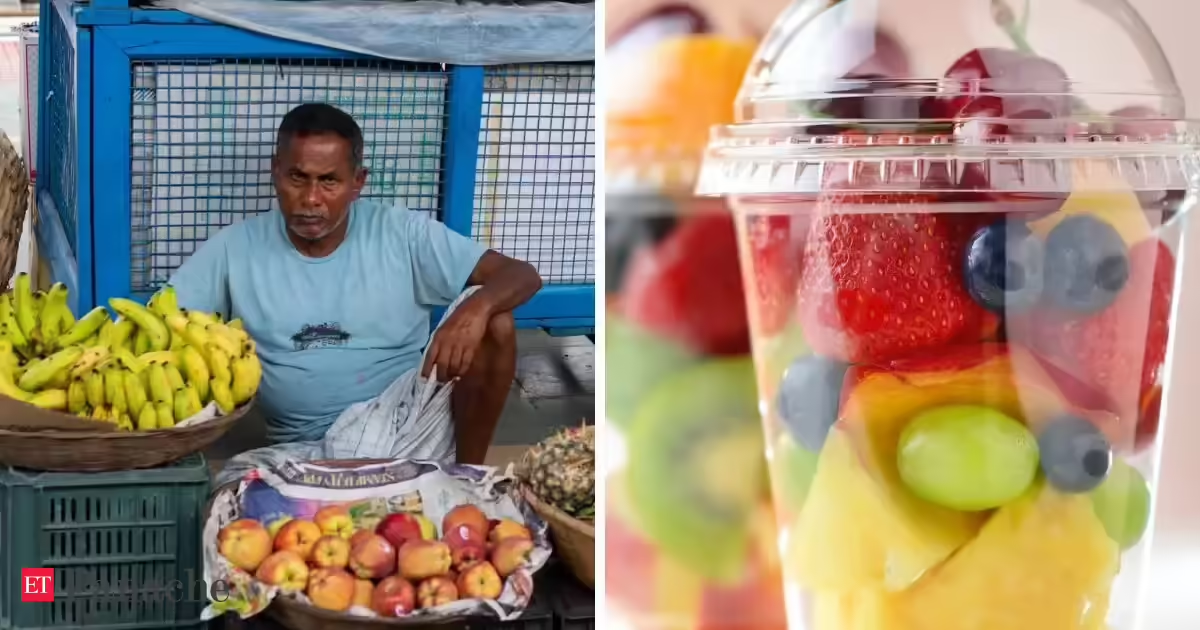
Sometimes, the smartest business lessons do not come from expensive marketing seminars or bestselling strategy books. They appear quietly in everyday places, hidden inside ordinary human behaviour. A Bengaluru-based founder recently discovered one such lesson while standing at a railway station in Tamil Nadu. What looked like a simple fruit cup priced at Rs 40 quickly became a fascinating example of how perception shapes buying decisions. His observation about height, packaging, and psychology has now sparked widespread discussion online about how consumers are influenced without even realising it.Pradeep Kannan, a former Oracle employee who is now a Bengaluru-based founder, shared the incident in a post on X after visiting Trichy Railway Station in Tamil Nadu. According to Kannan, a fruit vendor at the station was selling five pieces of fruit in a tall transparent glass for Rs 40. At first glance, the serving appeared generous and satisfying. But what caught Kannan’s attention was not the fruit itself. It was the way the product had been presented.“A tall glass can make you feel like you’re getting more. Even when you’re not,” he wrote. Kannan explained that the trick works because human brains naturally associate height with quantity. In simple terms, people tend to believe taller containers hold more, even if the actual volume remains the same. “Our brains judge ‘more’ by height, not volume,” he observed.He further explained the visual illusion by comparing tall and wide containers. According to him, a tall glass creates a sense of abundance and generosity, while a shorter or wider container may appear smaller despite holding the exact same amount. “Tall equals generous. Wide equals small,” he wrote while describing the psychological effect.Kannan pointed out that marketers and product designers have relied on this principle for decades across multiple industries. From food packaging to luxury products, brands carefully design containers that influence how customers perceive value. He gave several examples to support his observation, including tall cold drink glasses, slim cereal boxes, and narrow perfume bottles. All of them, he said, are designed to create the feeling that consumers are receiving more than they actually are.Screenshot of the postThe Bengaluru founder found the railway station example particularly interesting because the fruit vendor likely arrived at the strategy through observation rather than formal business education. “The vendor never read a pricing book. He just watched people,” Kannan remarked. According to him, the seller understood something many businesses spend years trying to learn: customer perception often matters more than the actual product itself.“Perception is the product,” Kannan wrote in his post. He concluded by saying that businesses rarely sell only the physical item in front of customers. Instead, they are selling the feeling associated with it. “You’re never selling what’s in the glass. You’re selling how full it feels,” he added.
Bengaluru founder spots clever Rs 40 fruit-selling trick at railway station. The psychology behind it is fascinating and age-old
A simple fruit cup sold for Rs 40 at a Trichy railway station revealed a powerful business lesson. A Bengaluru founder noticed how a tall glass made the serving appear more generous. This trick, using height to influence perception, is an age-old marketing strategy. Businesses often sell the feeling of value, not just the product itself.
463 words~2 min read