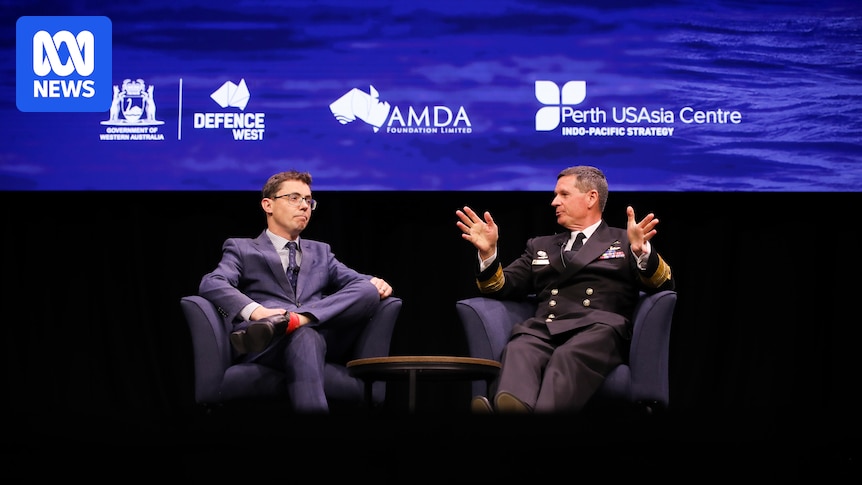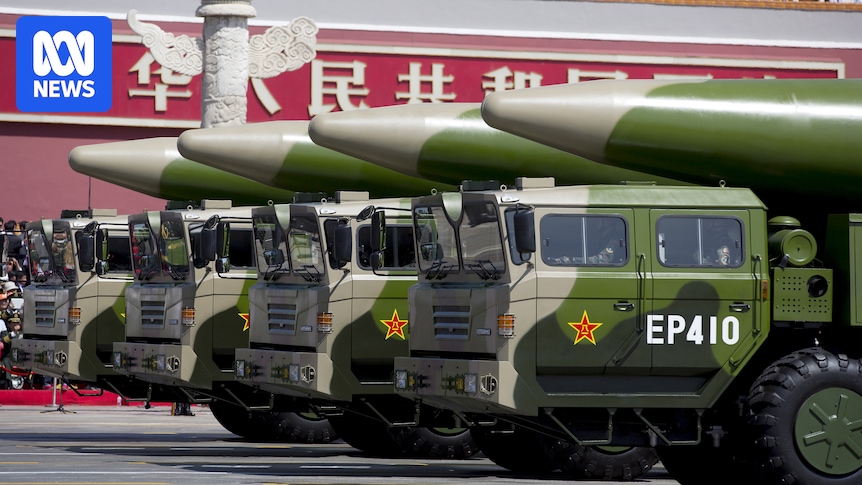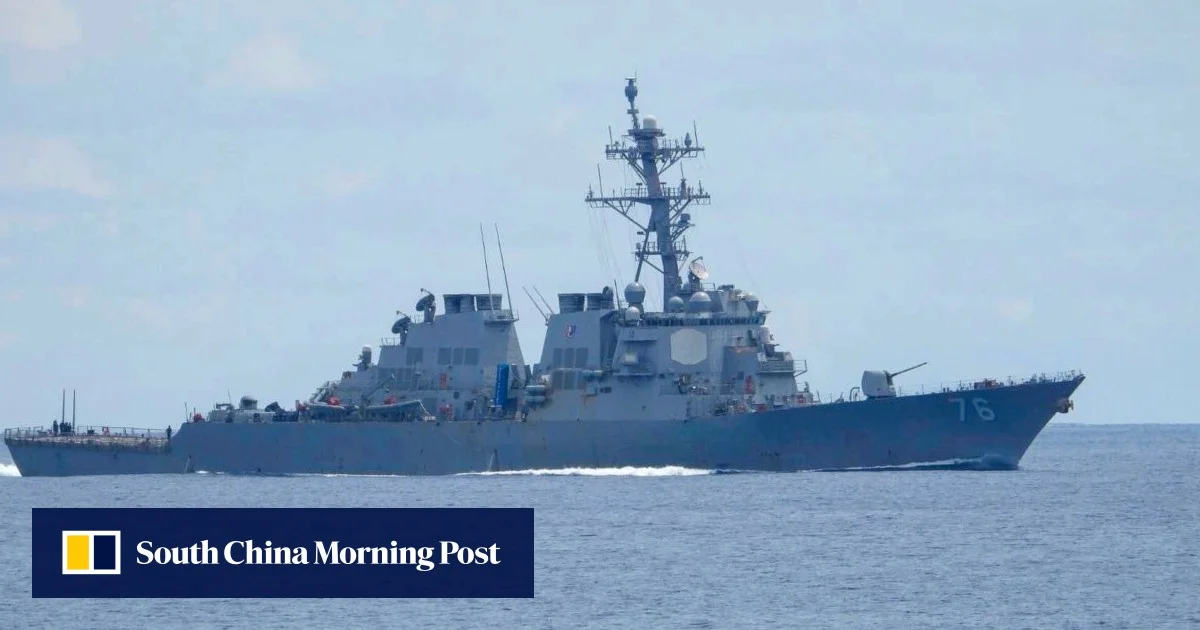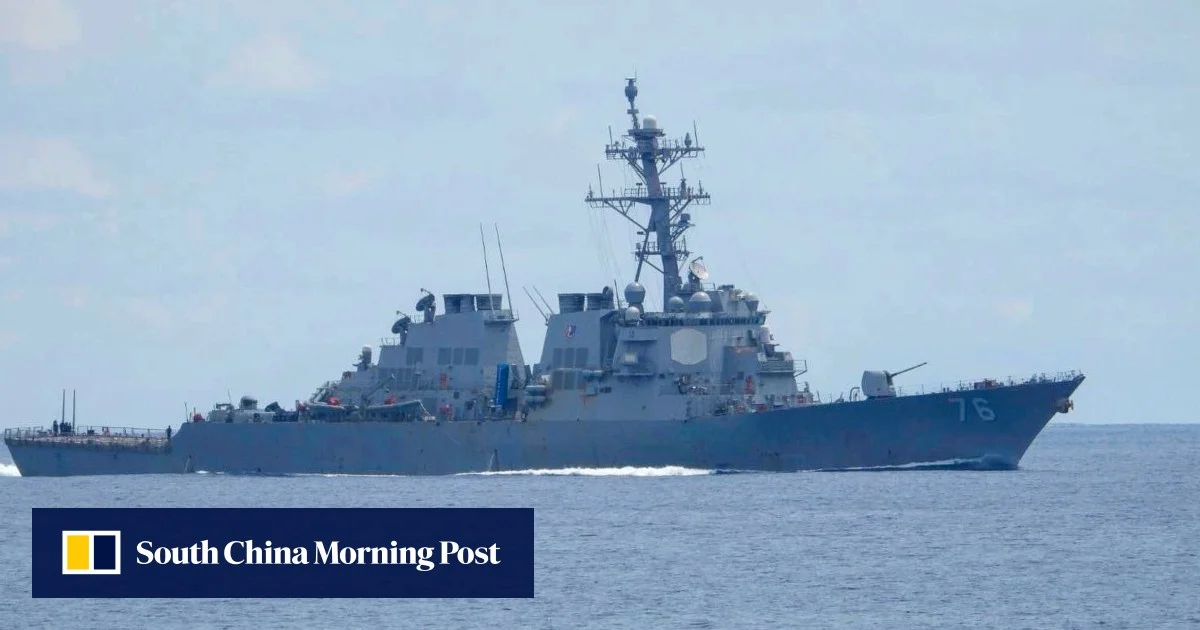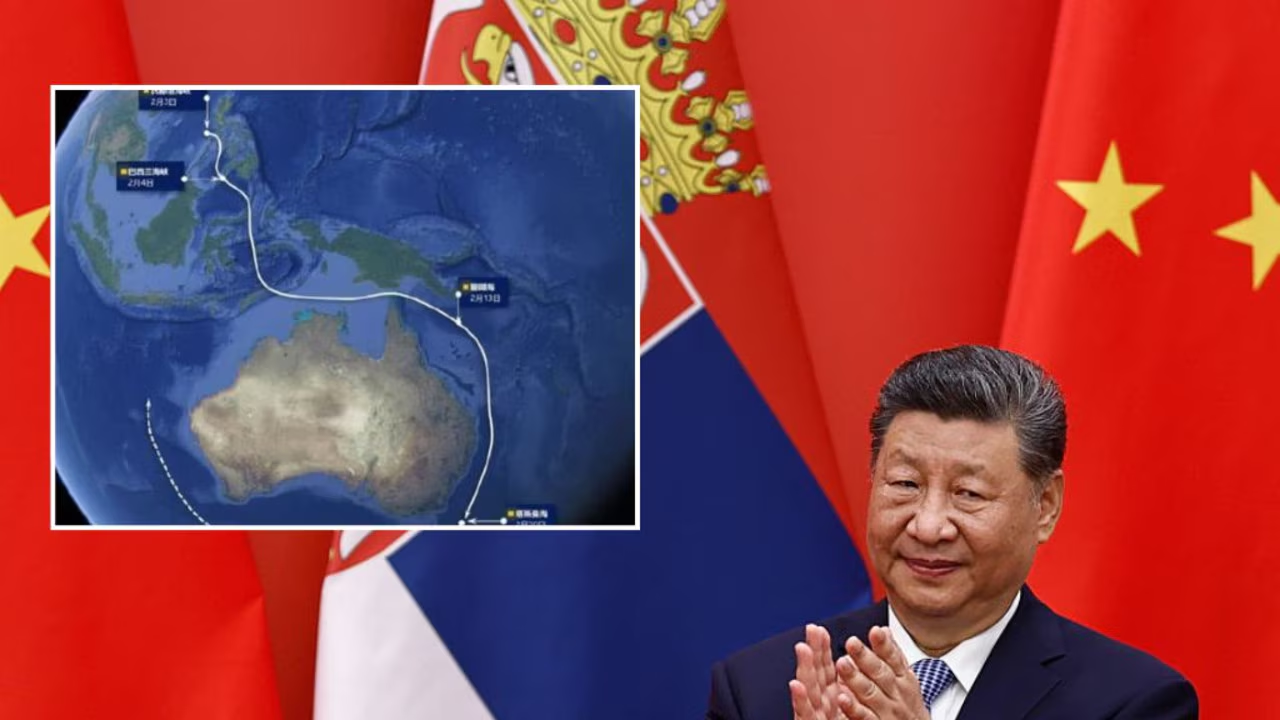
A powerful Chinese flotilla that sailed through the Tasman Sea last year rattled Canberra and exposed Australia’s biggest vulnerability, a Navy chief and defence analyst have said. Jennifer Parker, a former Royal Australian Navy (RAN) officer, said the almighty task force which circumnavigated the country in February and March last year delivered a clear message the world was changing – and China was ready.On Tuesday, Australia’s Navy chief Vice Admiral Mark Hammond said the bold move by Beijing triggered a wave of anxiety in Australia and a “level of anger” in New Zealand and prompted the Albanese government to “double down” on defence spending commitments.“It certainly had an impact,” the Vice Admiral told a packed auditorium at the Indian Ocean Defence and Security conference in Perth.Ms Parker agreed but said defence funding had only “marginally increased” and more was needed if Australia wanted to protect its shipping lanes from Chinese interference.“It was clearly designed to send a message. I think it reminded Canberra that the world is changing, and so were China’s naval capabilities,” she said.She said the government has invested in Australia’s missile-manufacturing capabilities and is building uncrewed underwater drones but the funding boost “still isn’t enough”.“[We need to] address our current capability gaps and that includes limited ability to detect sea mines, a limited ability to detect missiles and drones, limited ability to replenish ships,” she said.“I hope that the government sees those gaps, sees the changing strategic circumstances they have articulated in their own national strategy and funds those gaps. “But given this year the National Defence Strategy talked about how much our strategic circumstances have deteriorated and yet our defence spending is not going to be enough to address those gaps, I suspect it will take another crisis to prompt defence spending.”‘We will succeed’Ms Parker has previously said Australia’s naval fleet cannot defend vital shipping lanes, and that even with the help of allies and partners.She also said Canberra was caught off guard by the breakneck speed of China’s military development. “Under the previous planning, you used to say that you had 10 years of strategic warning time. So you get 10 years indication the region was changing and you start to change the capabilities you’re investing in. Since 2020, we said that’s gone,” Ms Parker said.It comes as Vice Admiral Hammond told the Perth conference China’s circumnavigation of Australia was part of a broader shift away from a rules-based system, which had been in place since 1945, to a “power-based system” where might equals right.This had provoked other Indo-Pacific countries to boost investment in their militaries, he said.The Vice Admiral also urged critics not to “politicise” Canberra’s push for nuclear-powered subs under the AUKUS defence pact.“I have complete confidence in our sailors to be able to deliver this program and become competent operators of nuclear-powered submarines,” he said.“The evidence is we are succeeding and we will succeed.”Beijing has previously characterised the task group’s activities in the Tasman as a routine exercise in international waters, consistent with international law.The People’s Liberation Army Navy (PLAN) Task Group 107 comprised the Type 055 cruiser Zunyi, the Type 054A frigate Hengyang and the Type 903 replenishment ship Weishanhu.The ships were observed making their way from the South China Sea, through the Philippine and Indonesian archipelagos, across the Arafura Sea north of Darwin, past Queensland’s Cape York and down through the Coral Sea.The task group conducted two live-fire tests of their weapons systems in international waters between Australia and New Zealand.Read related topics:China
Chinese warships: The act that rattled Australia and exposed its biggest vulnerability
A powerful Chinese flotilla that sailed through the Tasman Sea last year rattled Canberra and exposed Australia’s biggest vulnerability, a Navy chief and defence analyst have said.
583 words~3 min read