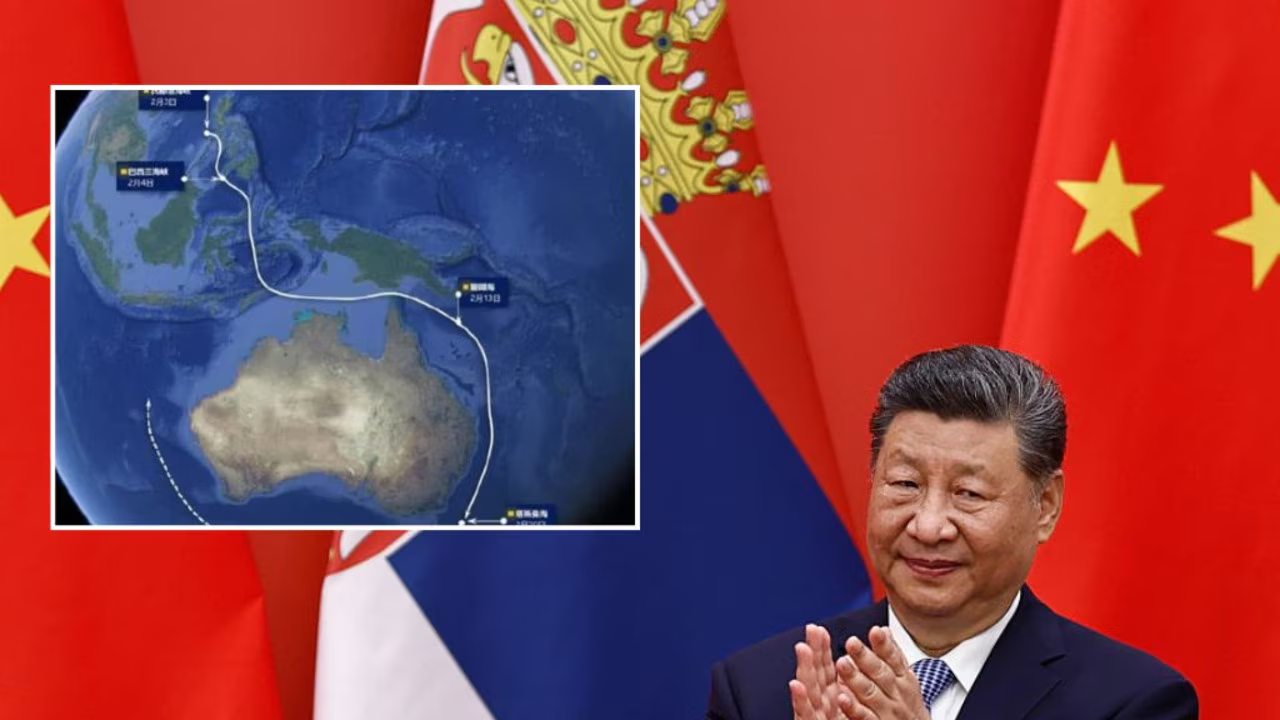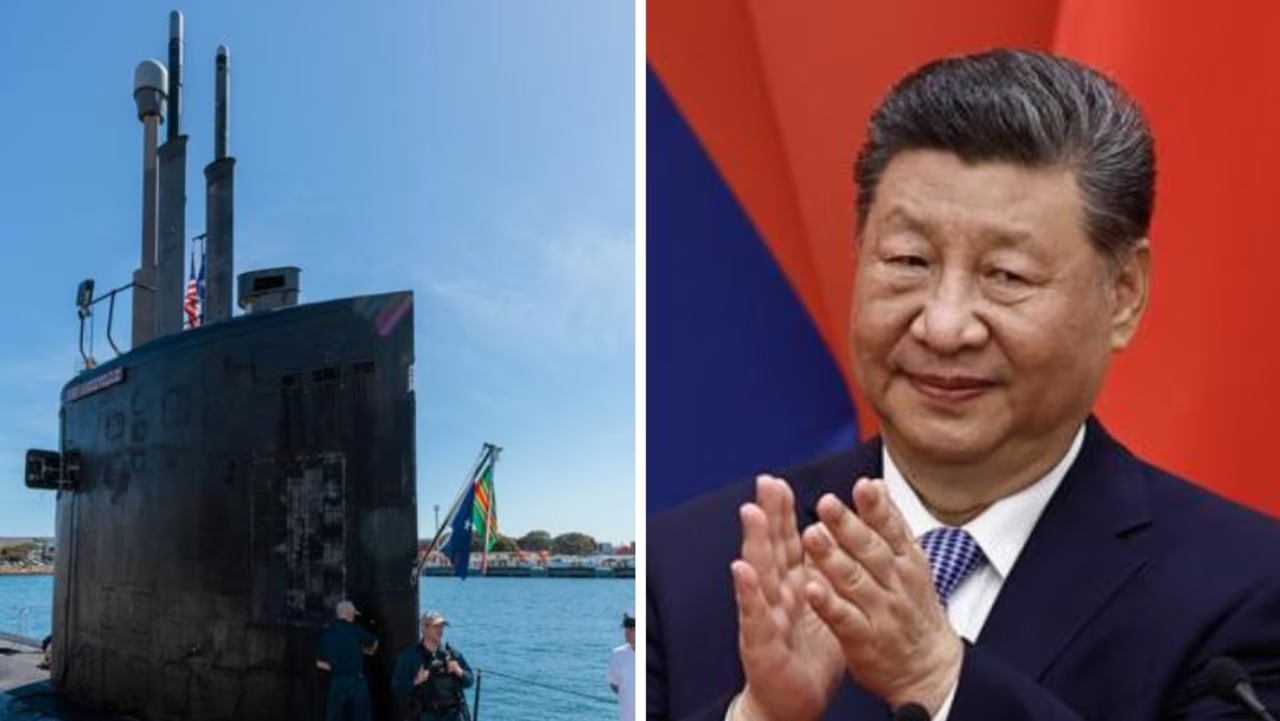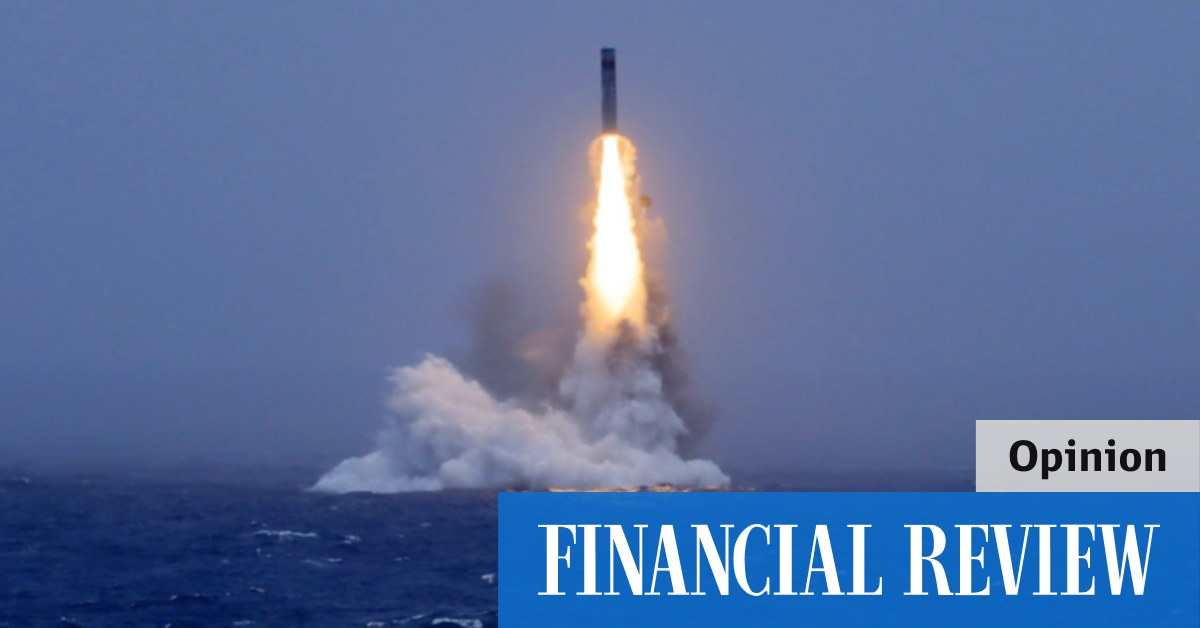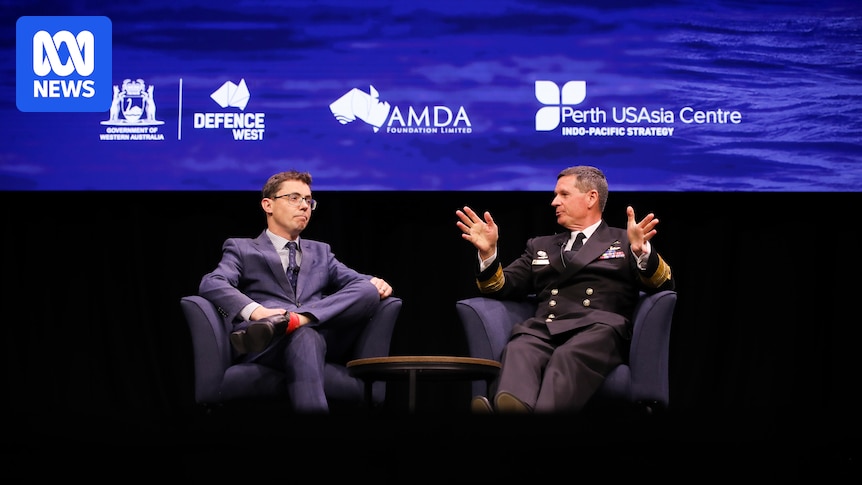
Australia's Chief of Navy says China stirred "anger" in New Zealand when it sent a powerful naval flotilla into the Tasman Sea last year, as well as building political support in Australia for increased defence spending.Vice Admiral Mark Hammond, who is due to become the new Chief of the Defence Force within weeks, also delivered a forceful defence of AUKUS, urging critics not to "politicise" the federal government's ambitious push for nuclear-powered submarines.Speaking at the Indian Ocean Defence and Security conference in Perth the navy chief fielded multiple questions about the Trump administration, dangerous encounters between the People's Liberation Army Navy and the Australian Navy, China's massive military build-up, and the 2025 circumnavigation of much of the Australian mainland by a powerful Chinese task group.Vice Admiral Hammond said he did not want to speculate about why China decided to send the task group towards Australia last year, but said the circumnavigation had repercussions here and in New Zealand."It occurred in the middle of a federal election in this country and it occurred in the midst of a defence strategic review across the Tasman," he said."The timing triggered a level of anxiety here in the populace and, to quote a colleague from New Zealand, a level of anger across the ditch," he said."[It] ultimately resulted in the doubling of their defence budget."Vice Admiral Hammond said the Albanese government had also "doubled down" on its plan to "deliberately uplift the lethality and commitment of the ADF at speed" in the wake of the circumnavigation."So it certainly had an impact," he said.The Chinese embassy in Canberra was contacted for comment. Beijing has previously characterised the task group's activities in the Tasman as a routine exercise in international waters, consistent with international law.The navy chief said it was also part of a broader shift to a "power-based system" replacing a "rules-based system" in the region which was fuelling broader defence spending increases across the Indo-Pacific.Australia will not acquire its first Virginia-class nuclear-powered submarine from the United States until the 2030s. (Reuters: Brian Snyder)He also urged critics of the AUKUS program to stop white-anting the hugely ambitious nuclear submarine push, saying Australia was a "nation that does hard things".Multiple parliamentarians have raised deep doubts about Australia's ability to assemble its own nuclear-powered submarines in Adelaide, and the capacity of the US and UK submarine industrial bases to sufficiently increase production to allow AUKUS to succeed."We should stop politicising ambitious, challenging programs with the partners being completely transparent about the risks and the challenges," he said."This is not a simple program, but let's put it into context. The first submarines we operated [and] acquired just prior to World War I were the longest range, most capable submarines on the planet."I have complete confidence in our sailors to be able to deliver this program and become competent operators of nuclear-powered submarines.""The evidence is we are succeeding and we will succeed."Former ambassador Joe Hockey raises AUKUS concernsMeanwhile, speaking in Canberra today, former US ambassador Joe Hockey aired fresh concerns about the capacity of the United States to build enough Virginia-class submarines to meet Australia's needs."For the first time I'm a little nervous about the Virginias," he said.Under the AUKUS pact, the US will sell Australia the first of three Virginia-class nuclear-powered submarines in 2032.But that will require the US to lift its submarine production rate from about 1.2 per year at present to 2.33 per year, to ensure it is producing enough to build its own fleet and provide additional boats to Australia.If it can't reach that production rate, the US will have to decide whether to run a smaller fleet of submarines than it would like, or delay the sale.In an address to the National Press Club alongside former White House chief of staff Mick Mulvaney, Mr Hockey said shipbuilding capacity was emerging as a real issue."The US has just not got the production of the Virginias up to speed," he said."The Americans have their own production challenges. We are confident — there is great integration, we've got crews on the [currently operating] Virginias, there is no problem at a military to military or bureaucracy to bureaucracy level."It's just a question of whether they can actually build the Virginias fast enough."Mr Hockey said the best thing Australia could be doing was continuing its diplomatic efforts in Washington, and ensuring Australian docks were ready to receive the submarines, to avoid giving the US any reason to delay."We've got to prove that we're ready for the Virginias here and display the physical capability to house them and support their presence here," he said."Not to give the Americans any hook not to deliver."
Navy chief says Chinese flotilla in Tasman Sea had 'impact'
Australia's Chief of Navy says China stirred "anger" in New Zealand when it sent a powerful naval flotilla into the Tasman Sea last year, encouraging political support on both sides of the ditch for increased defence spending.
773 words~4 min read