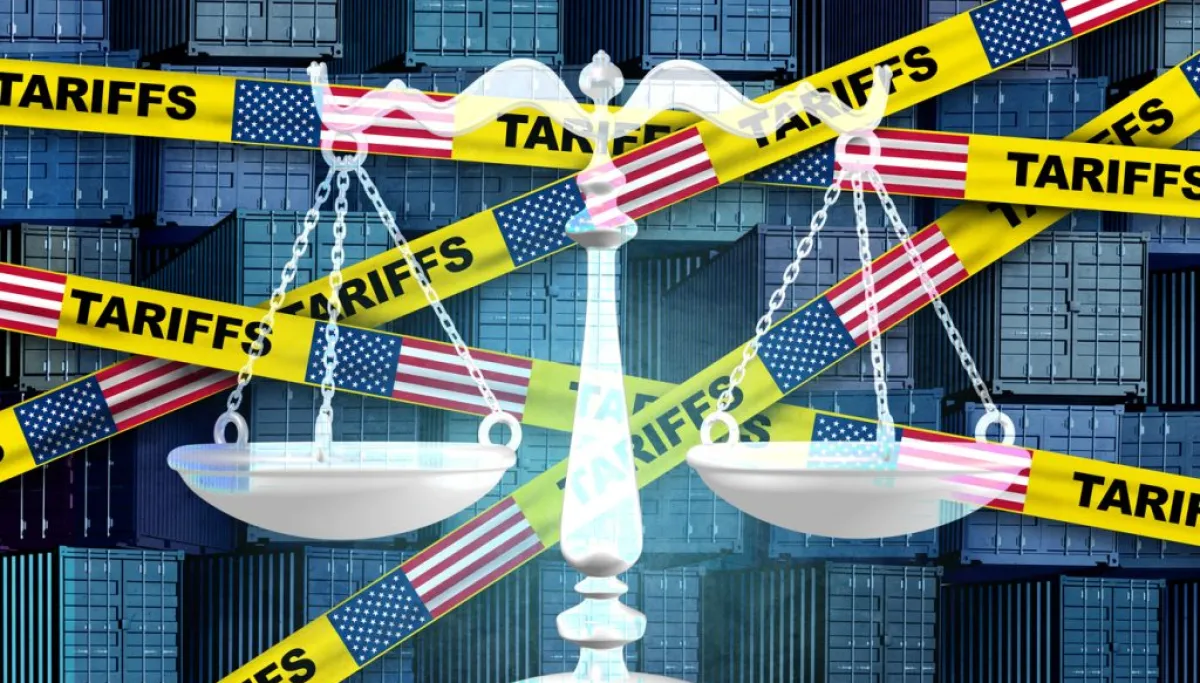
The Court of International Trade issued a 2-1 opinion last week striking down President Donald Trump’s latest tariff scheme under Section 122 of the Trade Act of 1974. The Section 122 tariffs had been imposed shortly after the Supreme Court struck down the president’s “Liberation Day” tariffs in February — tariffs that had already lost in three lower courts before reaching the justices. Now, the administration has appealed the CIT’s ruling to the Federal Circuit.The president’s tariffs now stand 0-5 in court. They should be 0-6 before summer is over. The president imposed this latest round of tariffs arguing that deficits in the U.S. trade balance — and the current account more broadly — amounted to “large and serious U.S. balance-of-payments deficits” under Section 122. These new tariffs were always a stopgap: by law, Section 122 tariffs are temporary (unless affirmed by Congress) and set to expire in late July.
Yet Congress designed Section 122 for a different purpose than the one the president claims they address, one directly related to the monetary system of fixed exchange rates that existed at the time of the statute’s creation.
Under that system, a “balance-of-payments deficit” — not to be confused, as the president appears to have done, with a “trade deficit” — referred to a situation in which foreign governments holding dollars sought to convert them to gold, leading to a decrease in U.S. reserves. Section 122 provided a temporary, tariff-based remedy for this problem.