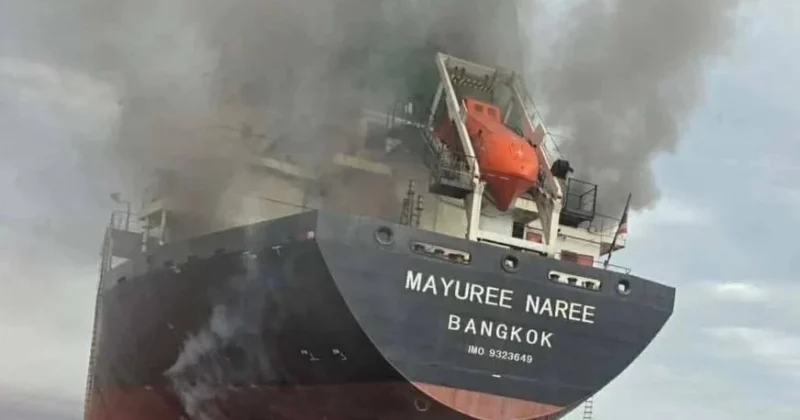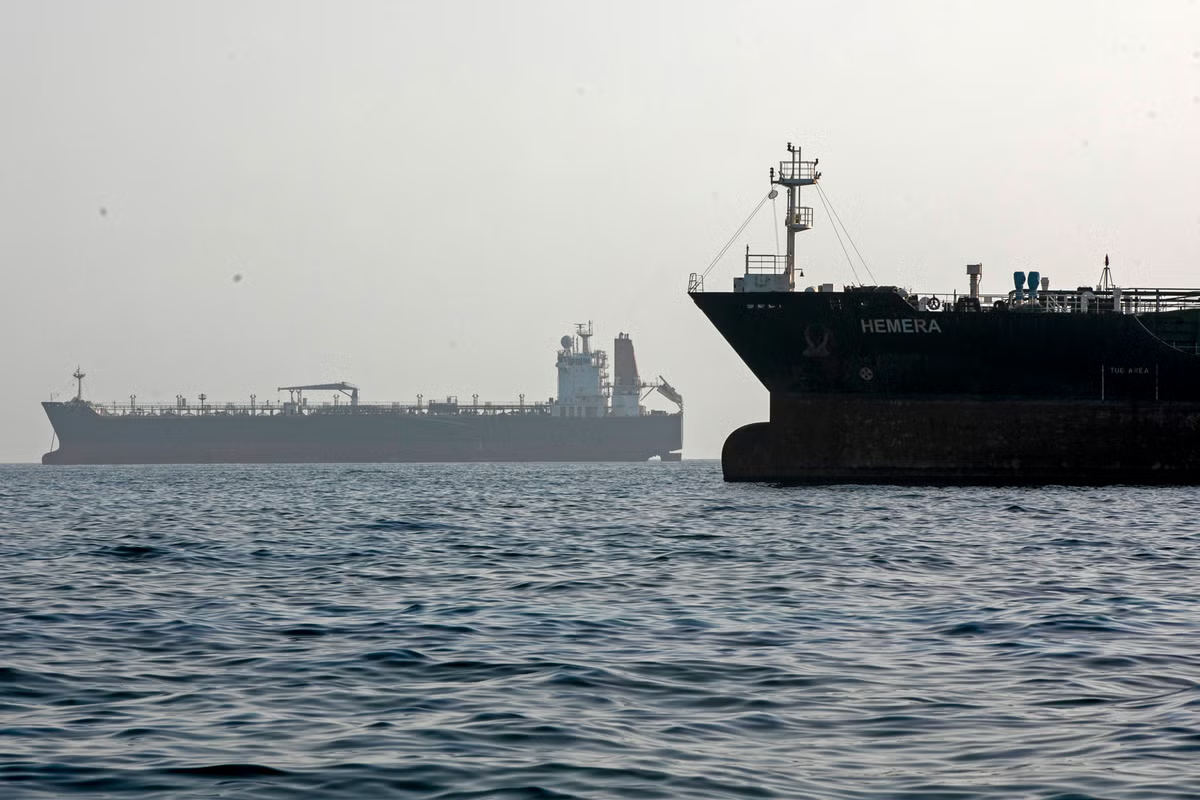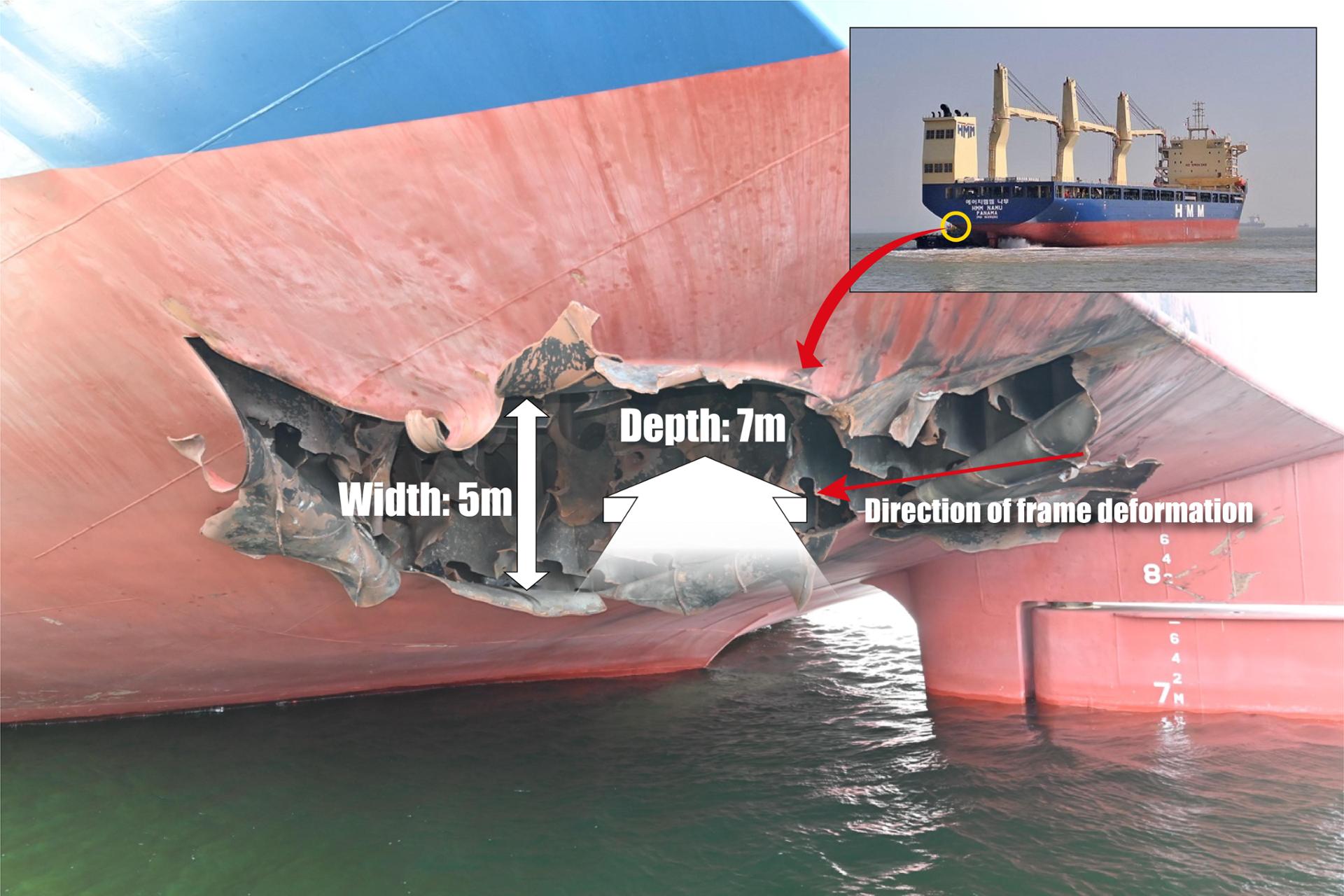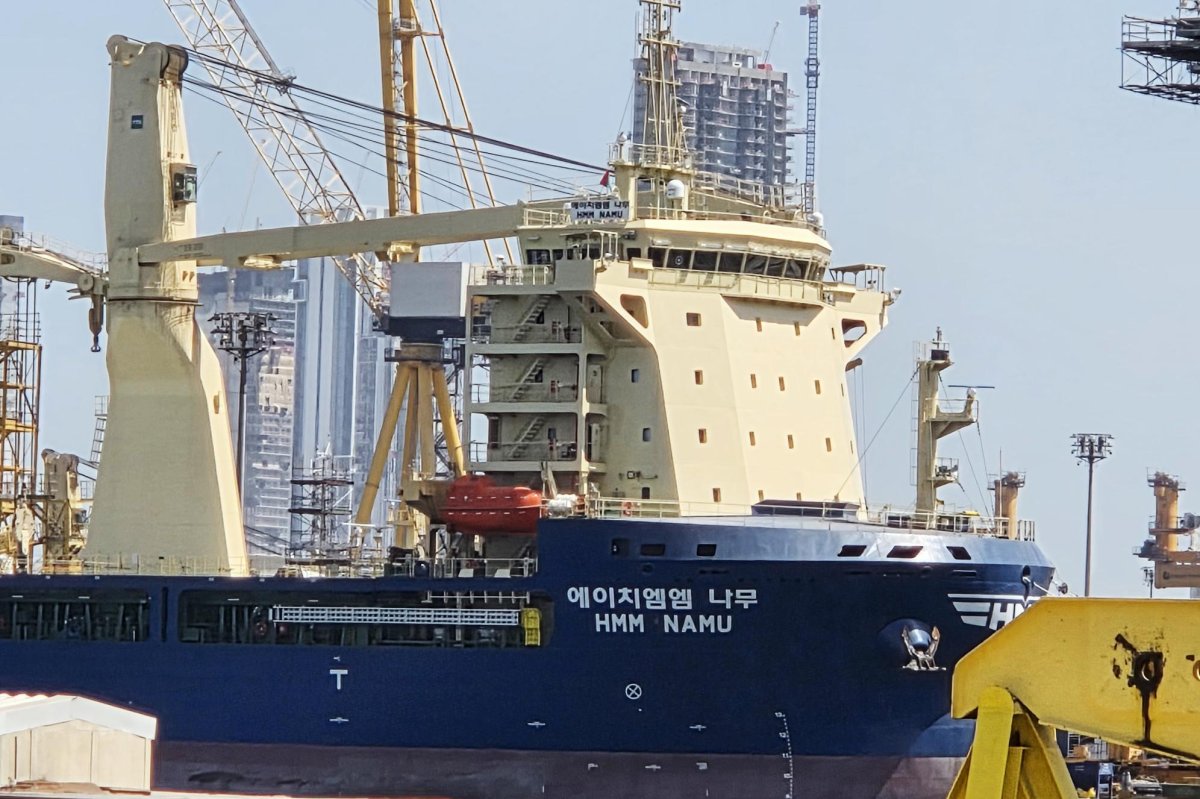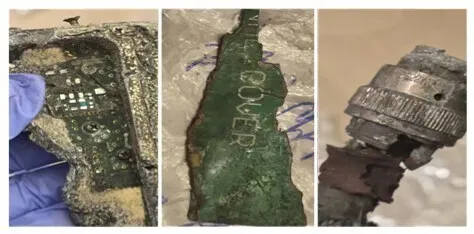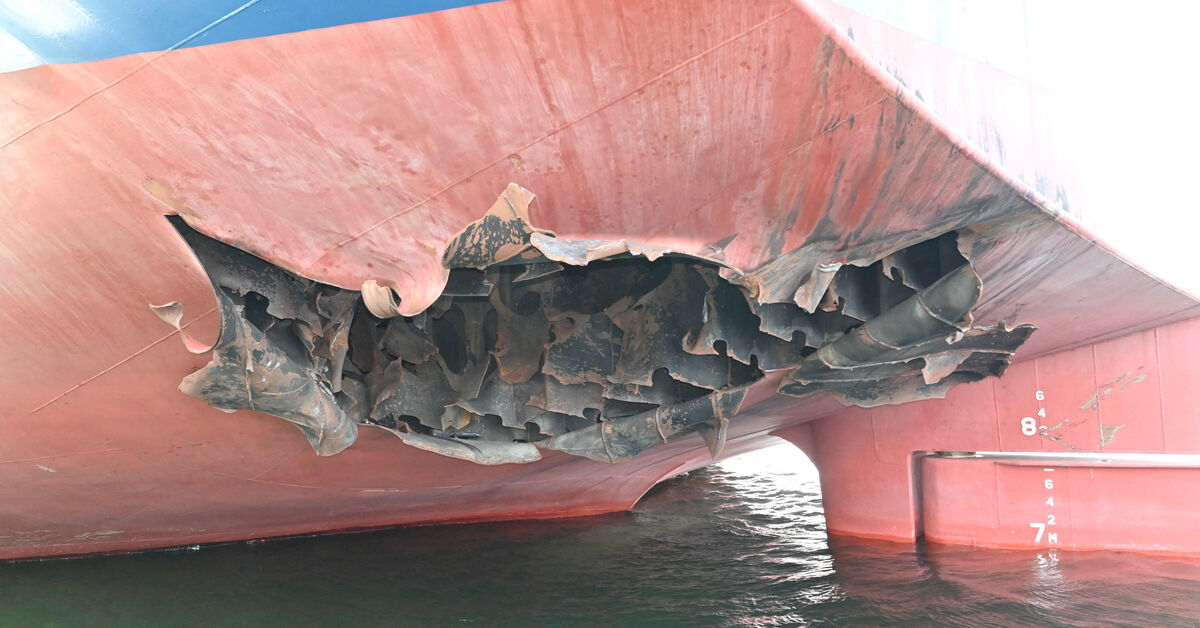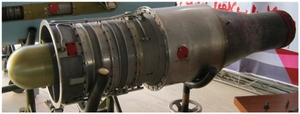
The photo provided by the Foreign Ministry on Wednesday shows a catalog image of the engine believed to match the projectile that struck the HMM Namu.. (Ministry of Foreign Affairs) Seoul said Wednesday that at least one of the projectiles that struck the South Korean-operated vessel HMM Namu in the Strait of Hormuz earlier this month was highly likely to have been an Iranian-developed anti-ship missile, while stopping short of formally assigning direct responsibility to Tehran.Speaking at a press briefing at the Government Complex Seoul, First Vice Foreign Minister Park Yoon-joo said the joint investigation team recovered one unexploded warhead from one of the two projectiles found on the hull of the HMM Namu.He said that the shape of the warhead was similar to those used in Iran’s Noor- or Qader-series anti-ship missiles.Park said the assessment was also based on factors including the the color and characteristics of debris recovered from the scene.“Various pieces of evidence point toward Iran,” Park said.He added that Seoul plans to summon Iranian Ambassador to South Korea Saeed Koozechi to explain the findings and deliver a strong protest over the attack.“The government will summon the Iranian ambassador to explain the results of the investigation into the HMM Namu incident and convey our strong protest over the attack on our vessel,” Park said.Seoul also plans to request “responsible measures, including steps to prevent a recurrence,” he added.The Foreign Ministry said it was coordinating schedules with the Iranian Embassy and hoped to hold the meeting later Wednesday.Park also said Seoul would urge Tehran to ensure the safety of South Korean nationals and vessels and support the free and safe navigation of all ships operating in the Strait of Hormuz.Asked whether the South Korean government believed Iran had intentionally targeted the vessel, Park declined to make a definitive assessment.“Intentionality involves subjective factors, and unless the other side acknowledges it, determining intent itself is extremely difficult,” he said.The HMM Namu, operated by major South Korean shipping company HMM, was struck on May 4 by what Seoul initially described as “two unidentified airborne objects” while stranded in the Strait of Hormuz amid heightened tensions surrounding the US-Iran conflict.The attack caused an explosion and fire aboard the vessel, leaving one of the ship’s 24 crew members with minor injuries.Since announcing preliminary findings on May 10 that the damage had been caused by external strikes rather than internal factors, the South Korean government has carried out additional investigations to identify the type of projectile involved and determine those responsible for the incident.Debris recovered from the vessel was transported to South Korea on May 15 for detailed analysis by the Agency for Defense Development, while a Defense Ministry technical analysis team was dispatched to Dubai in the United Arab Emirates, where the damaged vessel had been towed, to conduct onsite inspections of the hull damage and related evidence.Questions had persisted over whether the vessel was struck by anti-ship missiles or drones, though government officials had increasingly leaned toward the possibility that anti-ship missiles were involved.Earlier this month, a senior Foreign Ministry official, declining to be named, said the possibility of a non-Iranian actor being behind the attack appeared low, though the government had continued to maintain a cautious stance regarding formal attribution.Shortly after the incident, US President Donald Trump claimed that Iran had “taken some shots” at the HMM vessel and other targets in the region. The Iranian Embassy in Seoul, however, has continued to insist that Tehran “firmly and categorically” denies any involvement by Iranian military forces in the attack.Tehran has not issued further public comments since Seoul announced preliminary findings indicating that the explosion and fire aboard the vessel were caused by external strikes rather than internal causes such as an onboard accident or mechanical failure.
Seoul says HMM vessel probably hit by Iranian-made anti-ship missile
Seoul said Wednesday that at least one of the projectiles that struck the South Korean-operated vessel HMM Namu in the Strait of Hormuz earlier this month was h
626 words~3 min read