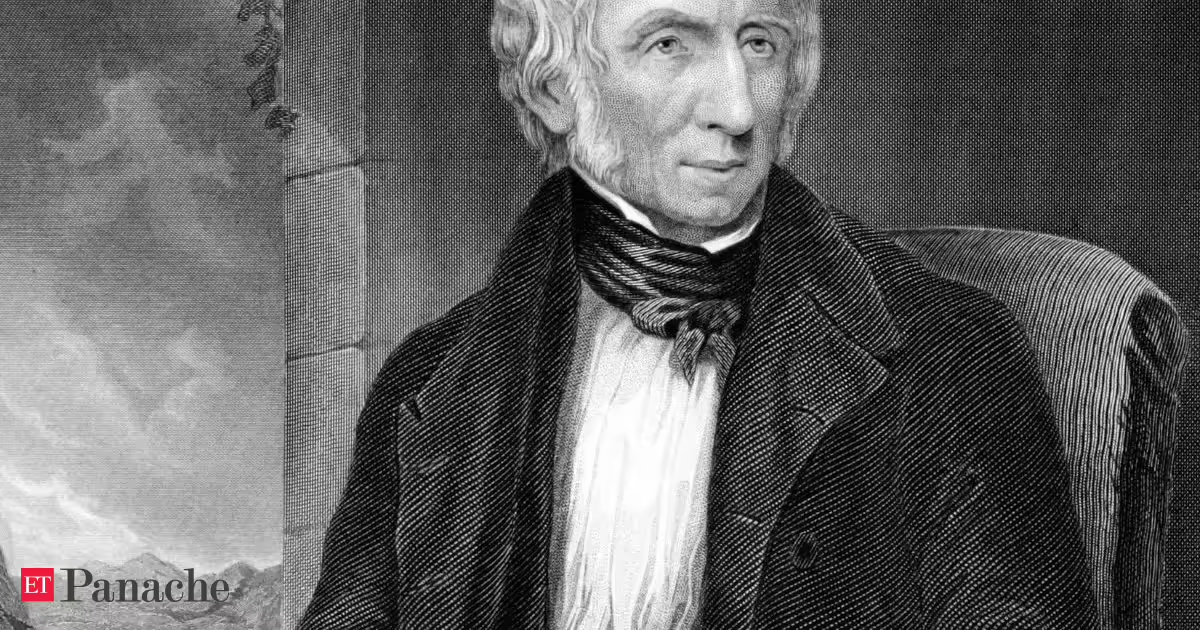
SynopsisQuiet strength and deep thinking are often overlooked in today's noisy world. William Wordsworth's quote highlights that the strongest minds are those the world hears least. True intelligence and resilience lie in thoughtful observation and action, not constant visibility. This wisdom remains relevant, encouraging introspection and valuing meaningful conversations over loudness.William Wordsworth's quote of the day is from his poem, The Excursion. (Image - iStock)In a fast-paced world dominated by noise, constant opinions and the pressure to always be visible, quiet strength often goes unnoticed. Yet some of the most thoughtful, intelligent and resilient individuals are those who observe deeply, speak carefully and let their actions reflect their wisdom. Silence is not always a sign of weakness; in many cases, it reflects emotional maturity, self-awareness and inner confidence. Great thinkers, writers and philosophers have long celebrated the power of introspection and calm minds in shaping character and perspective. Today’s quote of the day by acclaimed English Romantic poet William Wordsworth beautifully echoes a similar sentiment about silent strength and quiet intelligence.William Wordsworth’s quote of the day, ‘Strongest minds are often those whom the noisy world hears least’, finds a mention in his philosophical and autobiographical poem, The Excursion, specifically found in Book I: The Wanderer, which was published in 1814. Quote of the day by William Wordsworth: Quiet power of deep thinkers‘Strongest minds are often those whom the noisy world hears least’ highlights the idea that intelligence and strength are not always loud or attention-seeking. In today’s social media-driven culture, people are often encouraged to constantly express opinions, showcase achievements and remain visible online. However, William Wordsworth’s quote reminds us that some of the wisest individuals are quiet observers who think deeply before speaking. Their strength lies in reflection, patience and emotional control rather than constant validation from others. Introverted personalities are frequently misunderstood as timid or uninvolved, but many influential thinkers, writers and innovators throughout history possessed calm and introspective minds. In modern life, where noise and distraction dominate conversations, the ability to stay thoughtful and composed has become increasingly valuable. The quote encourages people to appreciate silent intelligence and understand that true wisdom often speaks softly rather than demanding attention.William Wordsworth quote of the day: Silence can reflect strengthThe second half of the quote carries a powerful message about emotional resilience and self-confidence. Often, the loudest voices in a room are not necessarily the strongest or most knowledgeable. People who possess genuine confidence rarely feel the need to constantly prove themselves or seek external approval. Instead, they focus on learning, observing and responding with purpose. In workplaces, relationships and everyday interactions, individuals who remain calm under pressure often demonstrate greater maturity and mental clarity. The quote also reflects the growing importance of mindfulness and self-awareness in a fast-paced world filled with endless noise and overstimulation. Modern society tends to reward visibility and constant communication, but Wordsworth suggests that depth of thought matters far more than volume. His words remain deeply relevant today, encouraging people to embrace introspection, value meaningful conversations and recognise that silence can sometimes reveal far greater strength than loudness ever could.More about William WordsworthWilliam Wordsworth, born on April 7, 1770, in Cockermouth, Cumberland, went on to become one of the most celebrated figures of the English Romantic era. His literary partnership with Samuel Taylor Coleridge led to the publication of Lyrical Ballads in 1798, a groundbreaking collection that transformed the landscape of English poetry. Through this influential work, Wordsworth moved away from the formal and decorative poetic traditions of the past, choosing instead to focus on simple language, human emotions and the experiences of ordinary people.William Wordsworth strongly believed that poetry should arise from sincere emotion rather than exaggerated artistic expression. In the famous preface to the later edition of Lyrical Ballads, he explained that poetry should portray everyday life and real human experiences using natural speech familiar to common people. This approach marked a turning point in literary history and helped establish him as one of the most important innovators in English literature, according to Britannica.A major influence on William Wordsworth’s personal life and creative journey was his sister, Dorothy Wordsworth. Her journals and observations often inspired his poetry, including the imagery behind his iconic poem I Wandered Lonely as a Cloud, famously associated with daffodils. Some of his most renowned works include Tintern Abbey, The Solitary Reaper, Michael and Ode: Intimations of Immortality. In 1843, Wordsworth was appointed Britain’s Poet Laureate after succeeding Robert Southey. He spent much of his later years at Rydal Mount in Westmorland, where he remained until his death on April 23, 1850.Read More News on...morelessRead More News on...moreless
Quote of the day by William Wordsworth: ‘Strongest minds are often those whom the noisy world hears least’ - English Romantic poet on the power of quiet minds
Quiet strength and deep thinking are often overlooked in today's noisy world. William Wordsworth's quote highlights that the strongest minds are those the world hears least. True intelligence and resilience lie in thoughtful observation and action, not constant visibility. This wisdom remains relevant, encouraging introspection and valuing meaningful conversations over loudness.
770 words~4 min read