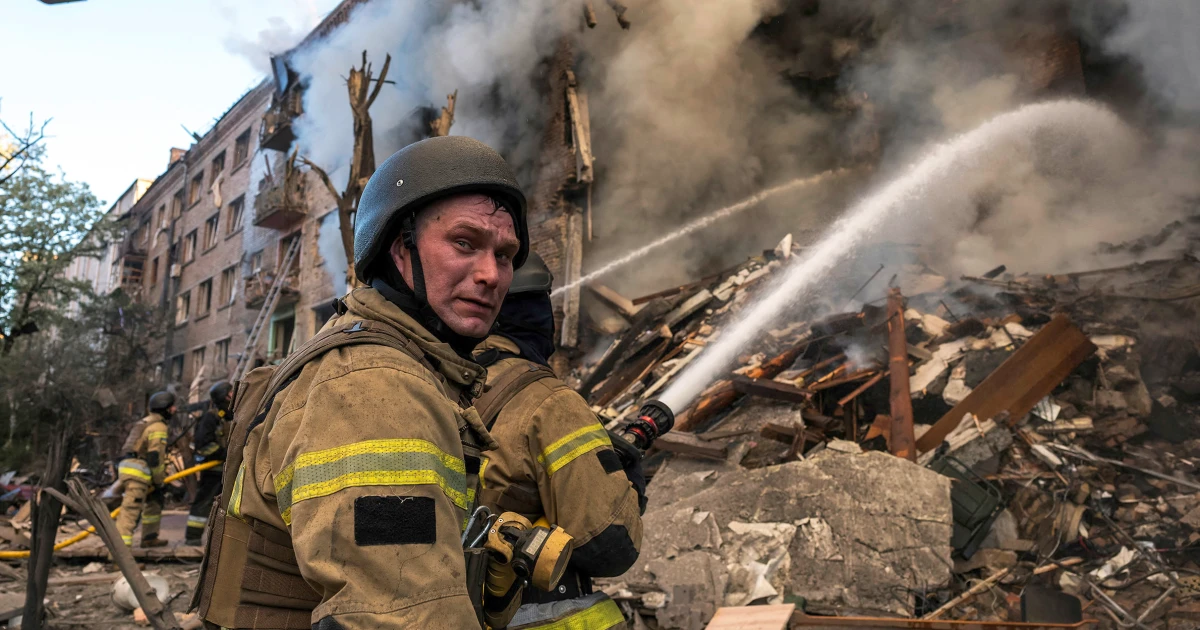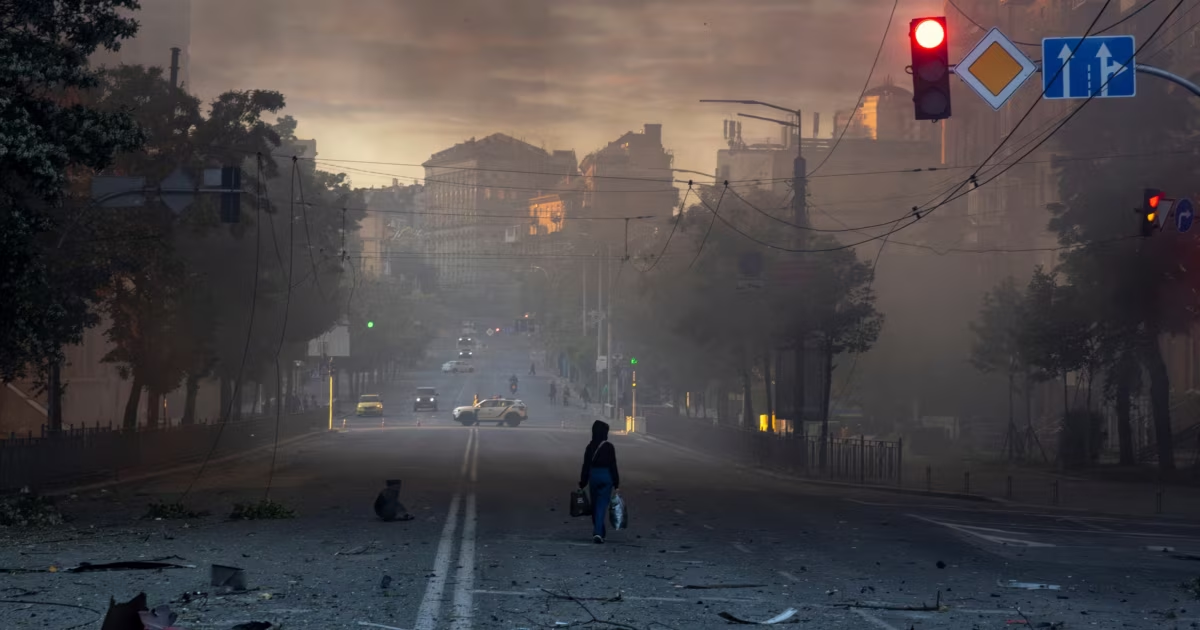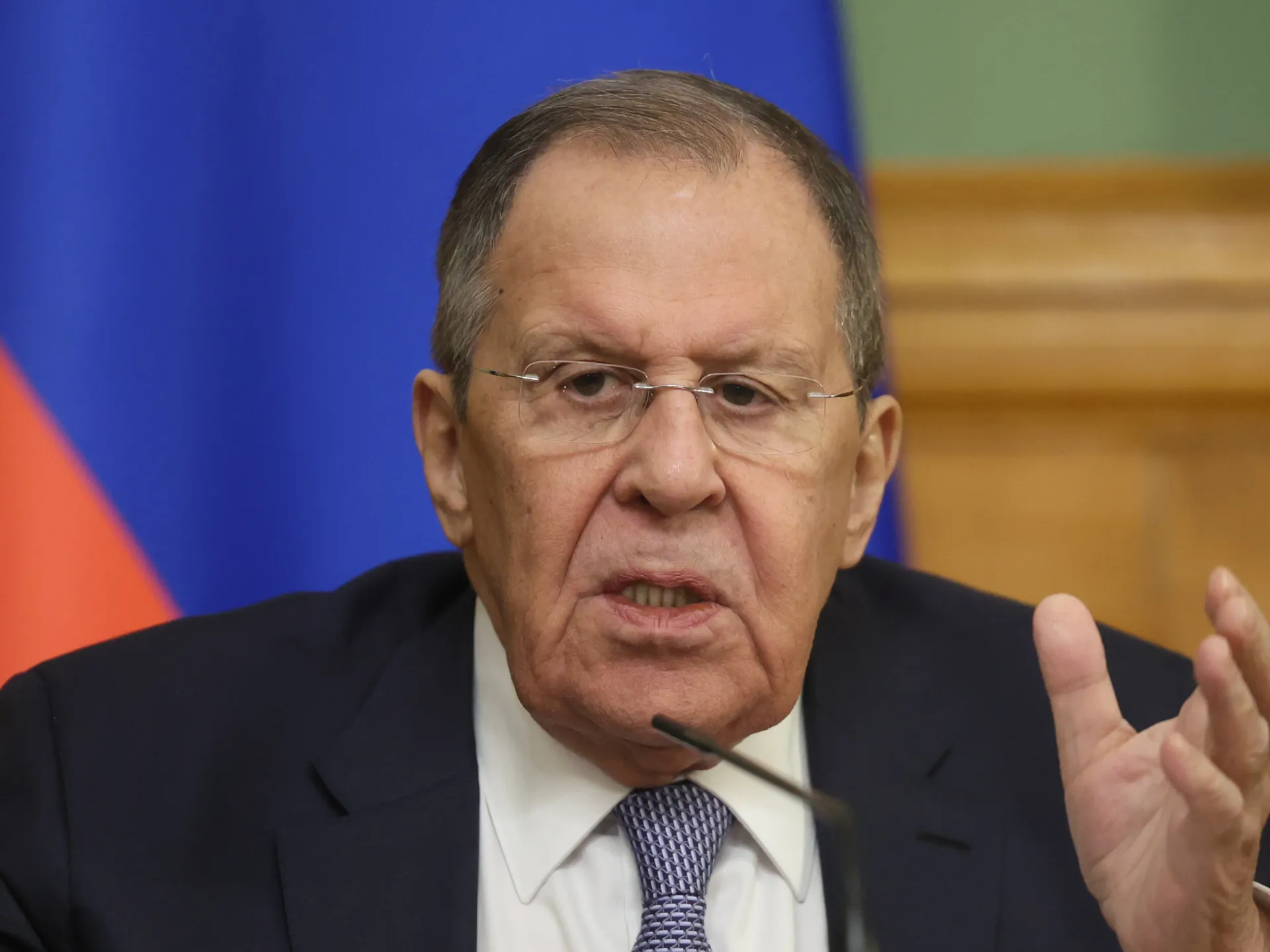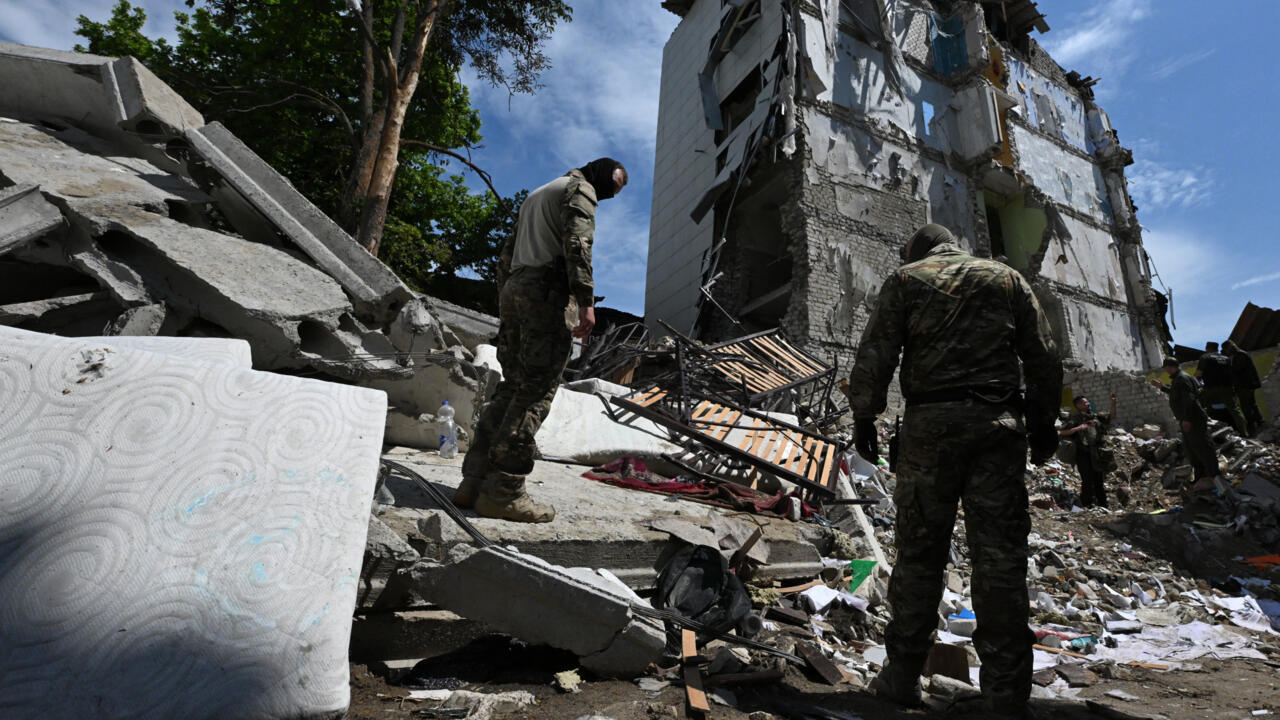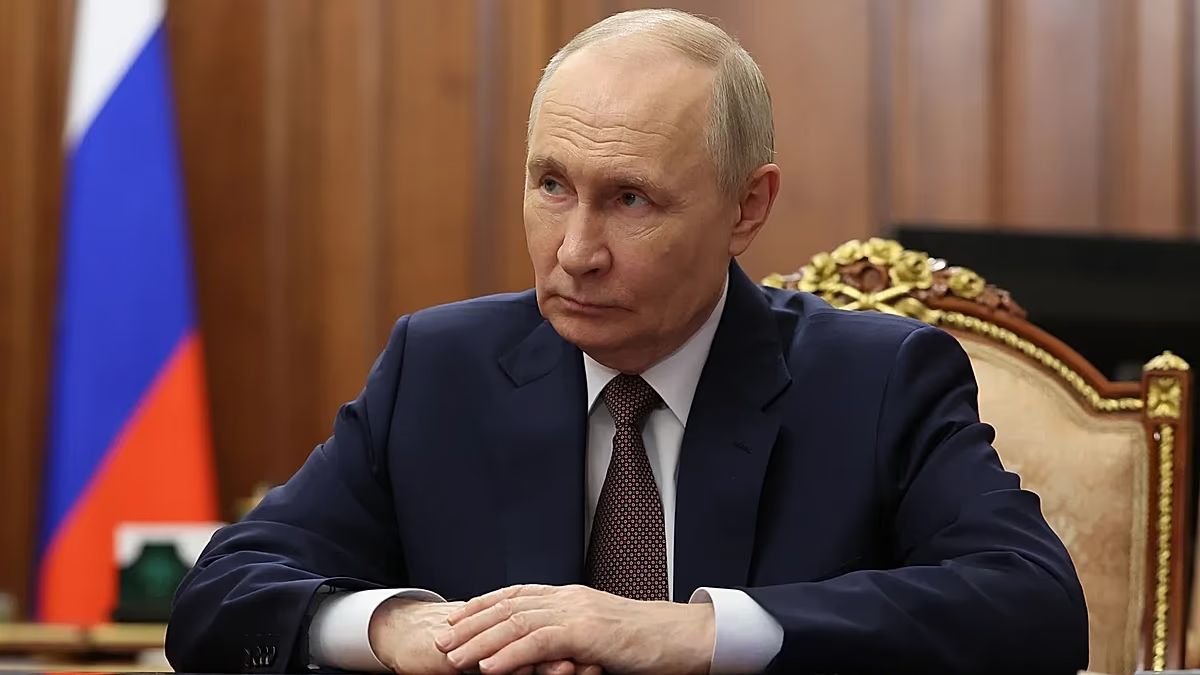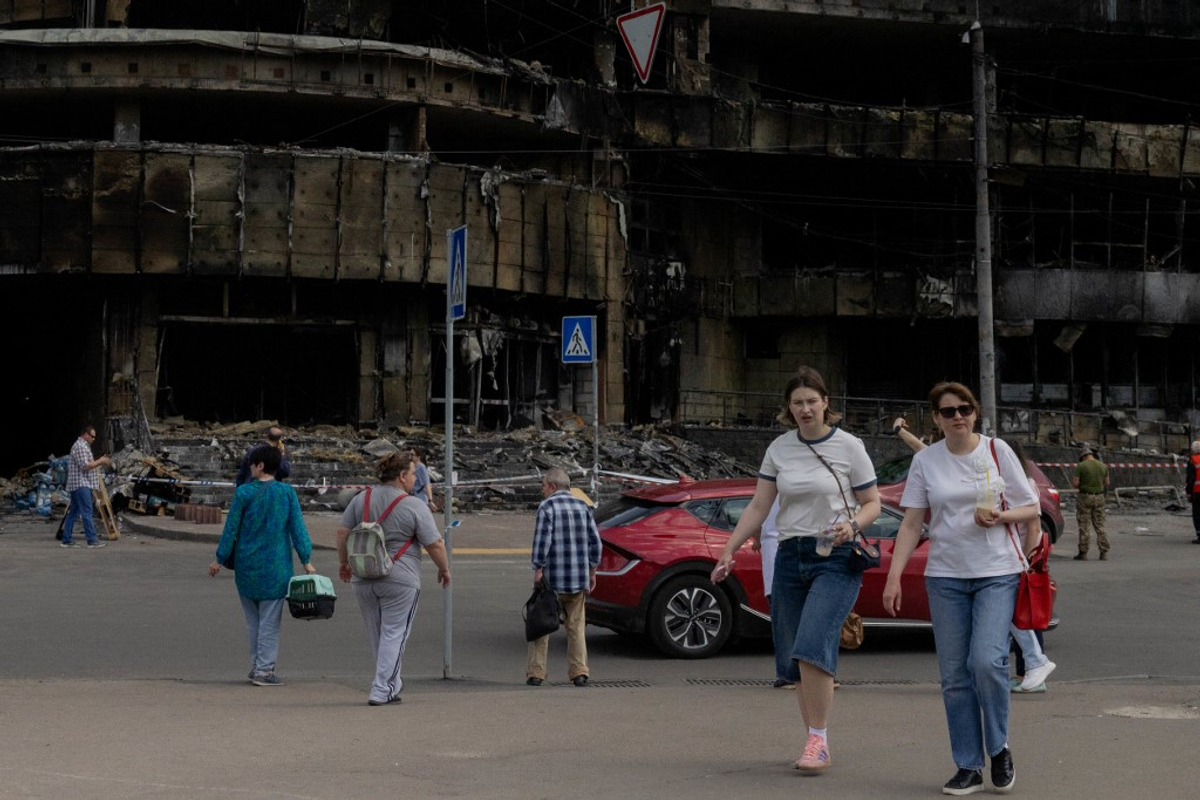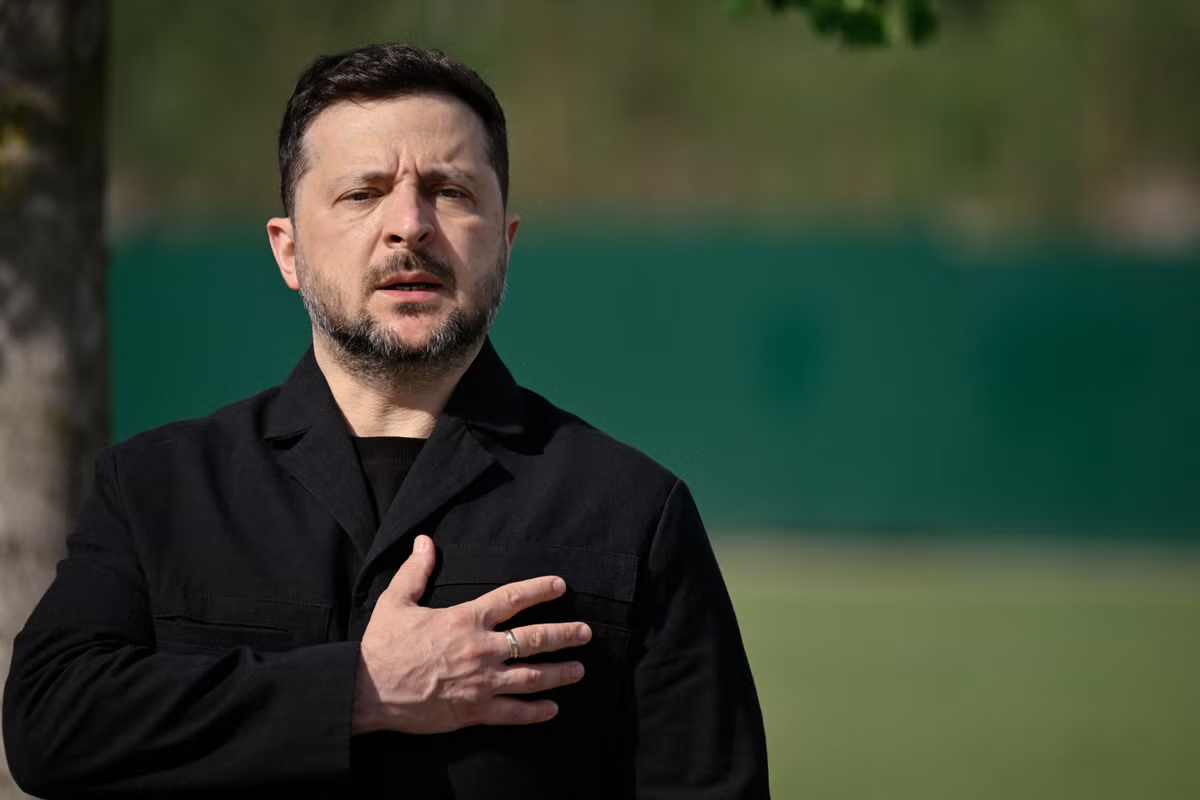
Russia tells Washington it plans systematic strikes on Kyiv and urges diplomats and foreigners to leave, while EU envoys refuse to evacuate and NATO moves to bolster defenses in Latvia and EstoniaRussia has sharply escalated its threats against Kyiv, sending a direct and unusual message to the United States that it plans to launch “systematic and consistent” strikes on military targets and “decision-making centers” in the Ukrainian capital, and urging Washington to evacuate civilians and diplomats.According to Britain’s Daily Mail, Russian President Vladimir Putin asked that the warning be conveyed personally to U.S President Donald Trump ahead of what was described as a possible systematic blitz on Kyiv.5 View gallery Donald Trump and Vladimir Putin (Photo: Oliver CONTRERAS / AFP, REUTERS/Brian Snyder, REUTERS/Gleb Garanich)Russian Foreign Minister Sergey Lavrov called US Secretary of State Marco Rubio on Monday to relay the message. Rubio told reporters that Putin had personally asked for the warning to be passed to Trump, and confirmed that he had done so. The secretary of state added that there are currently no active negotiations with Ukraine, though Washington is prepared to “play a constructive and helpful role if the opportunity arises.”In a statement, the Kremlin said the planned strikes would target “decision-making centers” and military headquarters. Moscow also called on foreign nationals, diplomatic mission staff and representatives of international organizations, not only Americans, to leave Kyiv “as soon as possible.”The warning prompted the European Union, Germany, Norway, the Netherlands and Poland to summon Russian ambassadors for talks. EU officials described Russia’s demand that diplomats and foreigners leave Kyiv as an “unacceptable escalation.”Ukrainian Foreign Minister Andrii Sybiha called on Kyiv’s allies not to give in to “Russian blackmail.” Katarina Mathernova, the EU ambassador to Ukraine, said the bloc’s delegation would not leave the city.5 View gallery Kyiv after Russian attacks (Photo: Zoya Shu/ AP)“Russia wants fear, panic and isolation of Ukraine. This will not work. The European Union is not going anywhere. We are staying in Kyiv, we are staying with Ukraine,” she said.Paris sent a similar message. A French Foreign Ministry spokesperson said: “We are used to Putin’s threats. There is no question of evacuation.”The Russian threat comes after heavy strikes on Kyiv earlier this week that killed four people and wounded about 100 others. Moscow claims those strikes, as well as the future attacks it is now threatening, are a response to what it says was a deliberate Ukrainian strike on student dormitories in the city of Starobilsk in the Luhansk region of eastern Ukraine, an area occupied and annexed by Russia during the war and now under Russian control. According to the Kremlin, 21 people were killed there, and Putin ordered a response.Ukraine’s military rejected the claim that it had attacked a civilian target, saying the target was an elite Russian drone unit operating in the area. Moscow has presented the planned strikes as retaliation for Kyiv’s “terror attacks,” while Ukraine denies hitting civilian dormitories.5 View gallery The strike on the student dormitories in Luhansk, where 21 people were killed (Photo: AFP)This is not the first time Russia has used a public threat against Kyiv in an attempt to influence the diplomatic and military environment around the war. Earlier this month, Moscow issued a similar warning, threatening broad strikes in central Kyiv if Ukraine disrupted the military parade in Red Square.This time, however, the combination of a direct warning to Washington, a call for foreigners to evacuate and the summoning of Russian ambassadors across Europe has turned the episode into a broader crisis, not merely another round of shelling on the Ukrainian capital.At the same time, Russia has continued attacking other areas of Ukraine. According to local Ukrainian authorities, Russian strikes in the east killed four people and wounded more than 10 on Monday. In the town of Derhachi in the Kharkiv region, two men, aged 68 and 25, were killed, and more than 20 others were wounded. In another strike in Kramatorsk in the Donetsk region, two people were killed, according to Mayor Oleksandr Honcharenko.Ukraine’s air force said that overnight from Monday to Tuesday, Russia launched two Iskander missiles and 122 drones of various types at Ukraine. Kyiv said air defense systems intercepted or disrupted 111 of them, though hits were recorded in several locations.In the Sumy region, officials reported a strike on a residential area and infrastructure in the city of Romny, where three people were wounded. In Zhytomyr, one person was reported wounded and infrastructure was damaged.Unusually heavy activity was also recorded along the front lines. According to Ukraine’s military, 267 clashes between forces took place over the past day. In the Pokrovsk sector alone, Ukrainian forces said they repelled 47 Russian assault attempts.Ukrainian President Volodymyr Zelensky acknowledged that Kyiv has struggled to advance efforts with Washington to expand production of defense systems against ballistic missiles.5 View gallery Ukrainian President Volodymyr Zelensky (Photo: John MACDOUGALL / AFP)“Unfortunately, for a long time there has been no progress with America regarding the expansion of production,” he said.According to Zelensky, Kyiv is now trying to accelerate work with Europe in order to promote independent production of such systems on the continent “in sufficient quantity.” Still, he stressed that Ukraine continues to press the United States, and that American leadership remains essential.The The fighting is also spilling into the Baltic arena. In recent weeks, Ukrainian drones launched toward targets in Russia have strayed into the airspace of Lithuania, Latvia and Estonia. Kyiv and the Baltic states blame Russian jamming systems, while Moscow claims those countries are helping Ukraine. One drone was intercepted by a NATO aircraft over Estonia.5 View gallery European Commission President Ursula von der Leyen: 'Russia is trying to destabilize the continent' (Photo: REUTERS/Yves Herman)Against that backdrop, and alongside the Russian threats against Kyiv, NATO is planning to reinforce the defense of its eastern flank, particularly Latvia and Estonia. According to Reuters, Germany and the Netherlands have reached an agreement, in coordination with NATO, under which the German-Dutch corps based in Münster, Germany, would take responsibility for defending Latvia and Estonia in the event of war with Russia.The aim is to allow the alliance to bring “mass quickly” into the area, as one military official put it.Currently, NATO forces in the three Baltic states and northern Poland are under a single multinational command in Szczecin, Poland. Adding another corps to the region is intended to address the central vulnerability of the Baltic states: very limited strategic depth, direct proximity to Russia and Belarus, and concern that in the event of a conflict, the window for reinforcement would be especially short.A full military corps usually commands three divisions, about 40,000 to 60,000 soldiers, though in peacetime it operates as a smaller command framework with essential capabilities such as artillery, air defense, engineering and medical support.European Commission President Ursula von der Leyen, visiting Lithuania alongside the presidents of the Baltic states, warned that Moscow is trying to “destabilize” Europe. She said the Baltic countries are experiencing a reality many had thought belonged to another era: sirens, families in shelters, closed schools and disrupted transportation.“When the Baltic states are tested, all of Europe is tested,” she said.Lithuanian President Gitanas Nauseda warned that “the skies above the Baltic states are not safe enough,” and rejected Russian claims that countries in the region had allowed Ukraine to use their territory or airspace for attacks on Russia.
‘Leave Kyiv now’: Putin’s warning to Trump and NATO’s preparations
Russia tells Washington it plans systematic strikes on Kyiv and urges diplomats and foreigners to leave, while EU envoys refuse to evacuate and NATO moves to bolster defenses in Latvia and Estonia
1,226 words~6 min read