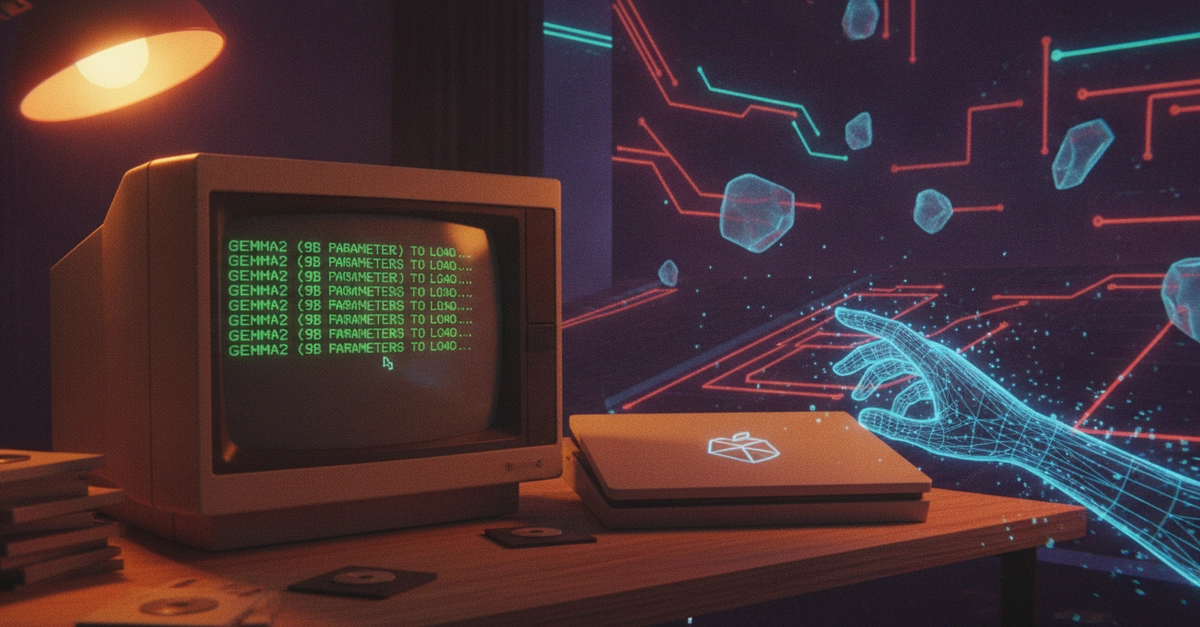
There is a pause between sending a prompt to a language model and seeing the first token appear. Half a second, sometimes more. Engineers call it latency. I think it is the most honest thing about this technology.
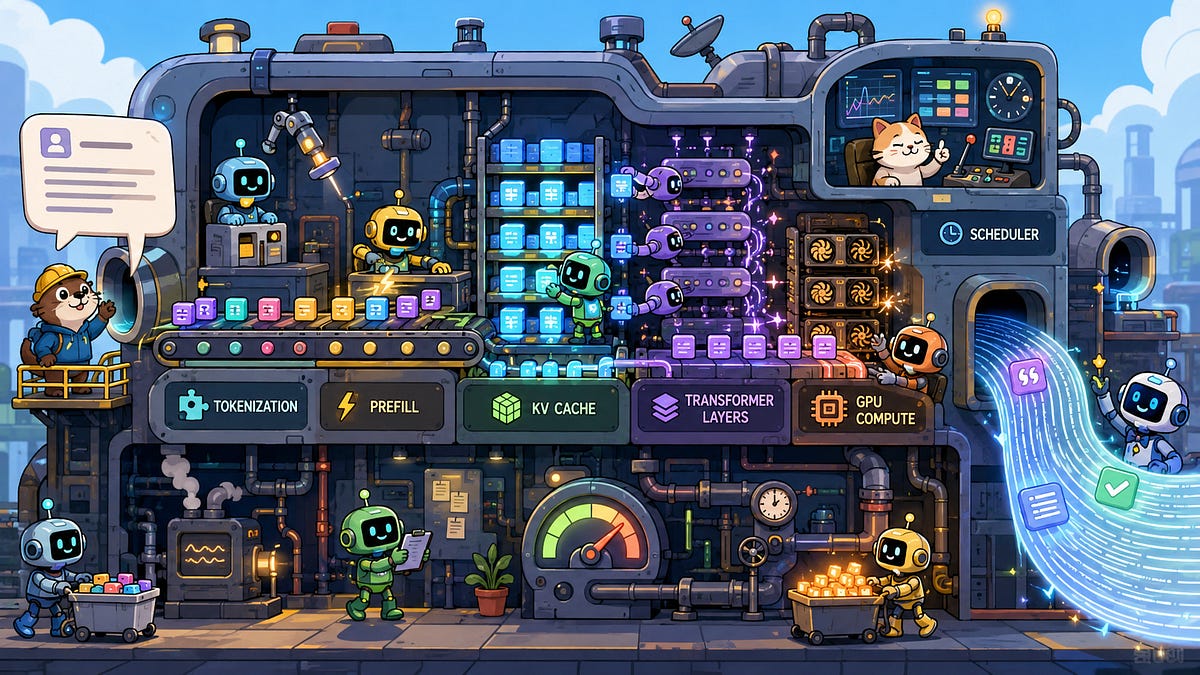
In that pause, nothing thinks. There is no consideration, no weighing. There is matrix multiplication, attention heads firing across context windows, KV cache loading from memory. The system is not deciding what to say. It is computing a probability distribution over its entire vocabulary and then sampling from it. The pause is throughput, not deliberation.
And yet I find myself filling that pause with expectation. I lean forward. I hold the question in my mind. I wait the way I wait for a friend to choose their words. I project intention onto silicon that has none.
This is the strange theatre of working with AI. We know the trick. We can read the papers. We can trace every weight back to its training step. We can show that the model has no inner life, no continuity, no stake in the conversation. But the interface — the chat, the pause, the cursor blinking — invites an older posture. We anthropomorphize because the form invites it, because dialogue has shape, because a sentence arriving feels like someone arriving.