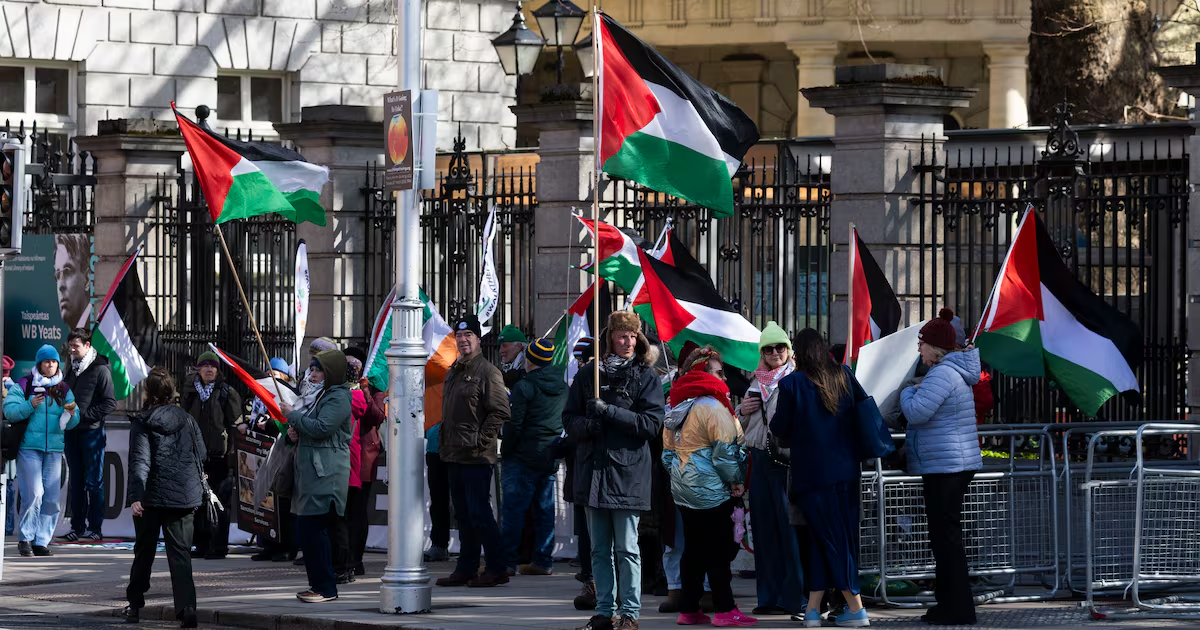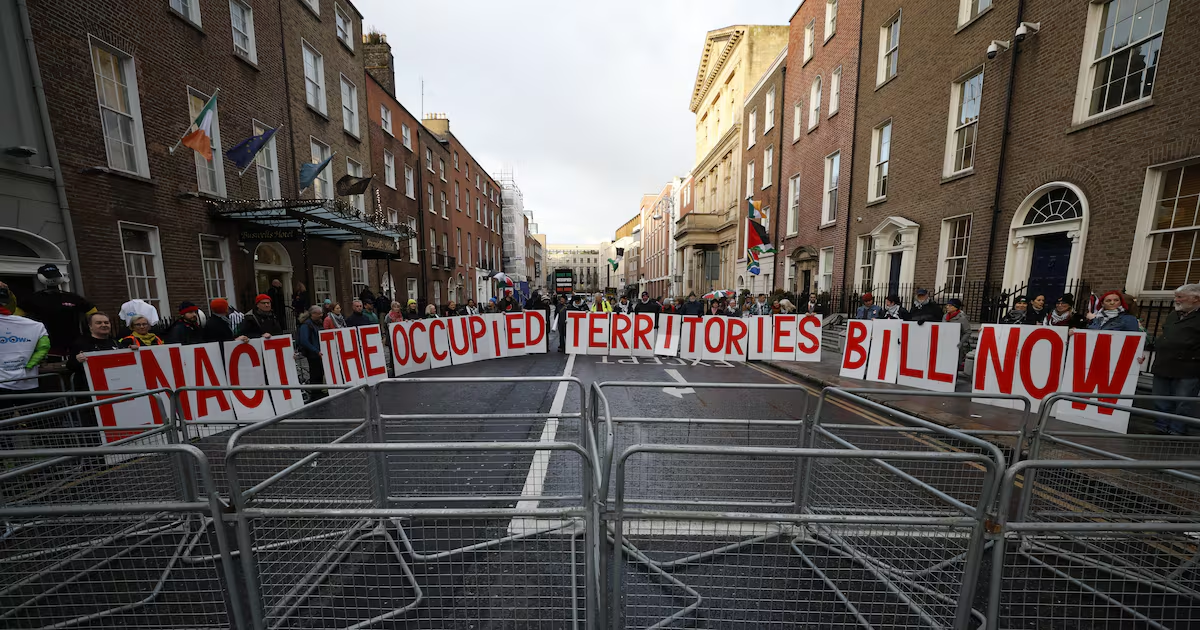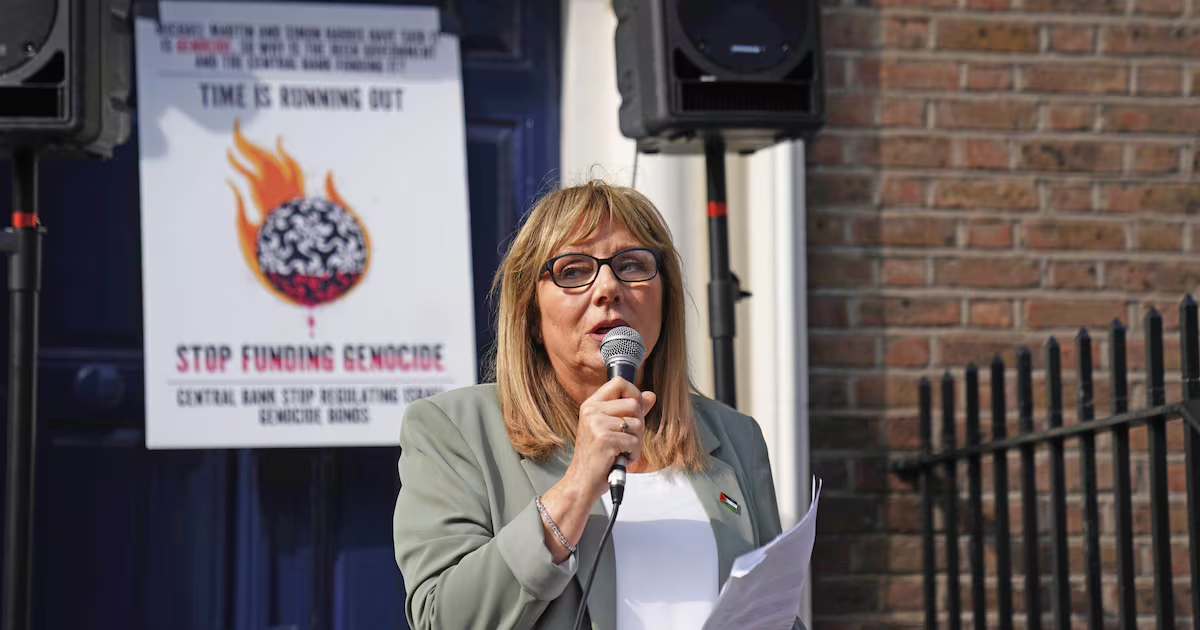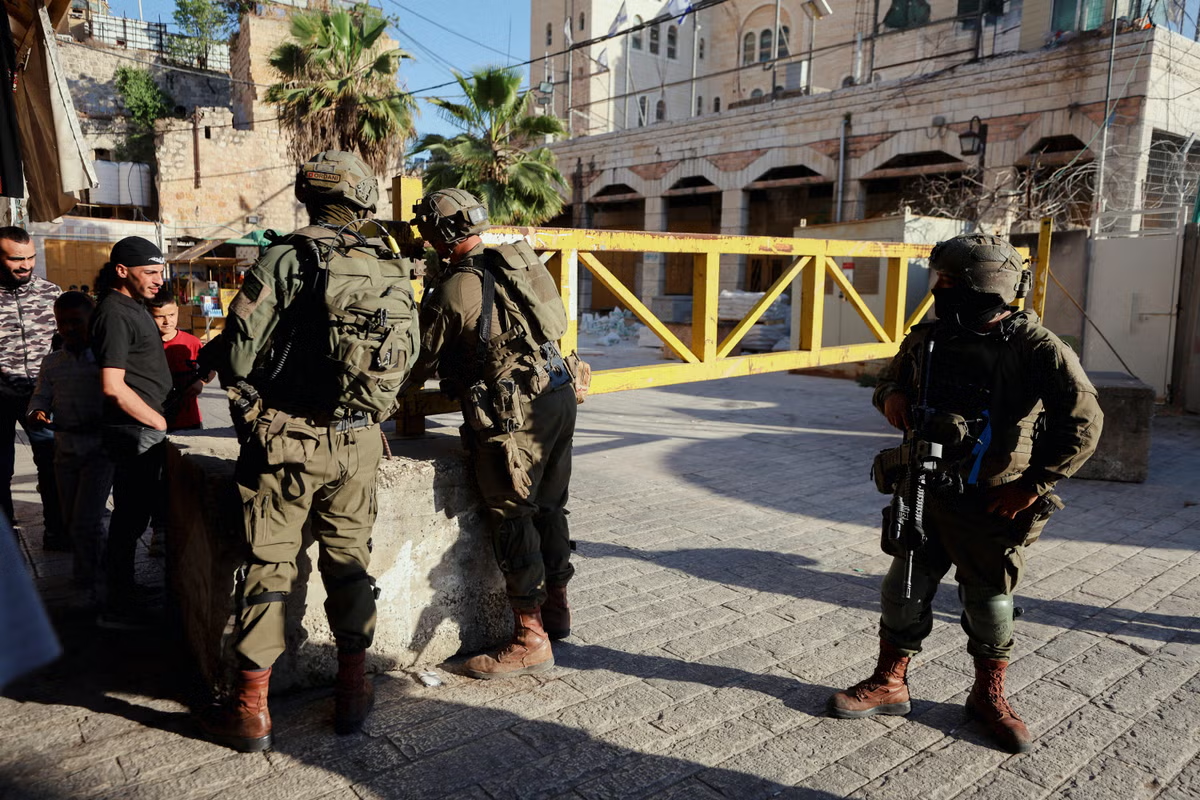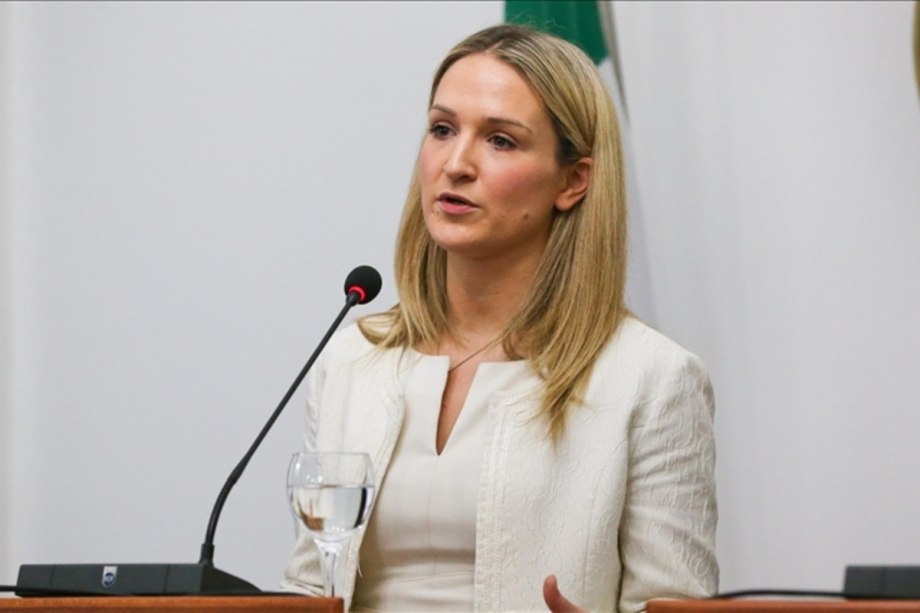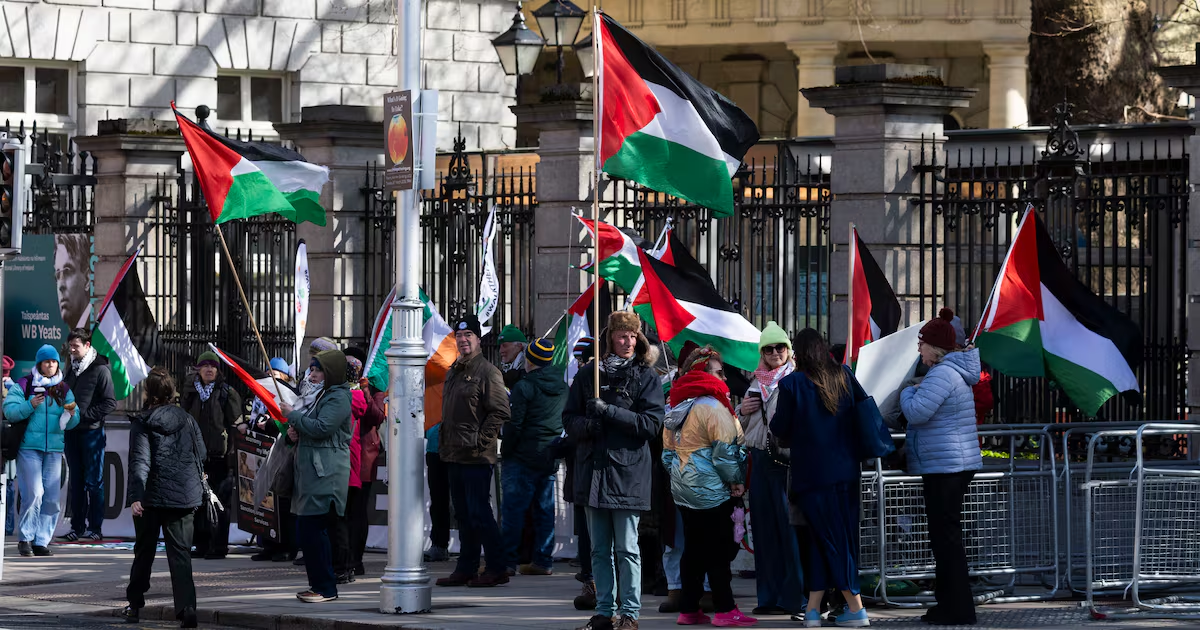
In the eight years since Independent Senator Frances Black first tabled what became known as the Occupied Territories Bill, the proposed legislation to ban trade between Ireland and the illegally occupied Palestinian territories has gone through a political evolution.What began as what most regard as a noble effort to ban trade with Israeli settlements that ignore international law has now become a major political symbol. Since 2023, when Israel’s aggressive bombardment of Palestine led to accusations that genocide was being perpetrated on the people of Gaza, the Irish public have started to treat the Bill as a metric of whether or not the Government is doing enough to either oppose Israel or support the people of Palestine. The Bill that Minister for Foreign Affairs Helen McEntee finally brought to Cabinet on Tuesday – after an extremely long delay – is one that arguably now carries more emblematic relevance than practical power. Particularly given that the Bill, as expected, does not include a ban on trade of services. Pat Leahy is writing in our lead story today about how the majority of the Opposition united on Tuesday to vow that they will try to amend the legislation to make it stronger as it makes its way through the Oireachtas, with the Government planning to have it enacted before the summer. At the moment, the proposed legislation would only ban the trade of physical goods between Ireland and the illegally occupied Israeli settlements. Most estimations are that this is an almost negligible amount, which would result in a very weak economic sanction of Israel. The trade of services, which is harder to quantify, is believed to be a much higher figure. But, as the Oireachtas Foreign Affairs Committee heard last year, this also makes a ban on the trade of services harder to impose. Business groups such as Ibec had tried to warn the committee that it would be “incredibly difficult” for Irish businesses to impose such a ban. But support for the Bill remained, with even Government TDs on the committee believing at the time that the political harm of being perceived to water down the Bill would be greater. Ministers argue the Bill, in its current form, is a legally sound one that they would be able to actually implement. Taoiseach Micheál Martin explained on Tuesday that, according to the Government, the inclusion of services was not legally possible but also that doing so would potentially “damage Ireland more than anybody else”. Ireland has already found itself in the crosshairs of some US politicians, who have issued stark warnings about the economic harm the country could face if it proceeds with what some pro-Israeli American politicians effectively see as a boycott against Israel. Such warnings exist if the bill passes in any form, with or without services. Pat is writing this morning that it is understood the Irish Embassy in Washington, headed by Geraldine Byrne Nason, has warned about possible negative consequences if the Bill passes. The Industrial Development Authority has also warned about it. This is what the Opposition is likely to focus on in the coming weeks. They believe the Government is not including services not just for legal reasons, but political ones. Such is the public support for the Bill that Opposition politicians have decided that it is worth pursuing, even if Ireland faces economic consequences. They will argue that cowing to US forces to dilute the Bill is morally wrong. All of this distracts from the fact the Irish Government is actively trying to do something which would have a far greater punitive effect on Israel, which is persuading the European Union to impose economic sanctions as a bloc. As the Tánaiste argued on Tuesday, if the EU took the same effort at a continental level that Ireland is at a national level, the impact on Israel would be far greater. Transfer toxicAs the delighted new TD Daniel Ennis ambled in and out of Leinster House on Tuesday with his fiancee Chloe, taking in the grand sunshine-drenched facade of his new office, there were storm clouds gathering on the plinth. Various parties are crying foul of where transfers did and did not go in the Dublin Central and Galway West byelections – laying the blame for their parties’ various electoral misfortunes squarely with you, the now not-so-supreme electorate. The first allegation was that Fine Gael benefitting from Fianna Fáil transfers was a dire sign that Micheál Martin’s party had been cannibalised by its Coalition partner. A delighted Simon Harris sought to reassure reporters going into Cabinet that this was a perfectly normal trend to expect from voters who support the Government, with both him and the Taoiseach playing down the prospect of any formal transfer pact between the Coalition partners in a future general election. The more eyebrow-raising claim came from Independent Ireland’s Michael Collins, whose party had lost out to Kyne when its supposed front-runner, Noel Thomas, was beaten. It had been transfers from Labour’s Helen Ogbu that eventually elected Kyne, but Ivana Bacik was keen to point out that this was only after all other left-wing candidates had been excluded and a significant proportion of Ogbu’s votes had been deemed non-transferable. Not so, according to Collins. As Miriam Lord is writing in her colour piece today, Collins gravely warned us journalists on Tuesday that “there was pacts done”. The piece details quite a protracted over and back between Collins and journalists on Tuesday. Despite some effort from the media, Collins declined to say when or how Labour had signalled to its voters to transfer to Fine Gael. Collins was also asked if it was possible that voters who were backing Ogbu, the first black woman elected to Galway council and a refugee from Nigeria, would not be keen to transfer to Thomas, who came to national political attention for his anti-immigration stance? No, Collins didn’t think immigration “had anything to do with it”. Independent Ireland, or Indignation Ireland as Miriam has christened them today, were so het up denying that they were “transfer toxic” that at one point their press adviser got involved in some verbal sparring with reporters. If you’re still looking for byelection content, or lonely for a count, Jack Horgan-Jones has a piece seeking to explain to us why it takes so long to count votes in this country. He is also reporting on how the Department of Justice has claimed the “large majority” of people leaving direct provision do not become homeless despite reports it is the biggest driver of homelessness among single adults in the Dublin region. Elsewhere in the paper, Arthur Beesley has an unusual story about how Fine Gael has handed down a reprimand to a councillor after remarks he made on a party WhatsApp group about the feet of Minister for Health Jennifer Carroll MacNeill.Best Reads Michael McDowell is parsing the fallout from the byelections today, and what it means for both the left-wing infighting and the identities of Fianna Fáil and Fine Gael.Kathy Sheridan is arguing the Dublin Central and Galway West byelections were the anti-immigration movement’s “big moment”.And Paul Colgan is examining how and why so many people are still objecting to wind farms.Playbook Dáil:9am: Topical Issues10am: Private Members’ Business (Independent Technical Group): Motion re Fiscal Planning Framework for Economic Certainty12pm: Leaders’ Questions (Sinn Féin, Labour Party, Independent and Parties Technical Group, Independent Technical Group)12.34pm: Other Members’ Questions12.42pm: Questions on Policy or Legislation1.12pm: SOS2.12pm: Government Business: Statements on Ensuring our Skills, Training and Innovation systems keep pace in a changing world4.37pm: Government Business: Motion re Extension of Civil Law (Miscellaneous Provisions) Act 2021 5.37pm: Government Business: Gas Safety (Amendment) Bill 2026 — Motion to Instruct the Committee6.37pm: Gas Safety (Amendment) Bill 2026 — Committee and remaining Stages8.37pm Údarás na Gaeltachta (Amendment) Bill 2024 — Report and Final Stages10.37pm: Motion(s) without debate: Motion re Leave to Introduce Supplementary Estimates for Public Services 2026 [Votes 30 and 31]10.38pm: Deferred Divisions:11.08pm: Dáil adjourns Seanad: 10.30am: Commencement Matters11.30am: Order of Business12.15pm: Motion(s) without debate: Motion regarding the appointment of Ordinary Members of An Coimisiún Toghcháin12.20pm: SOS2.00pm: Special Address: Address to Seanad Éireann by MEPs representing the European Parliament Midlands-North-West Constituency4.30pm: SOS5.00pm: Garda Síochána (Recording Devices) (Amendment) Bill 2025 — Second Stage6.30pm: Private Members’ Business: Motion regarding Rents8.30pm: Seanad adjourns
Occupied Territories Bill becomes political test
Opposition parties plan to seek stronger measures as Coalition excludes services from proposed trade ban
1,381 words~6 min read