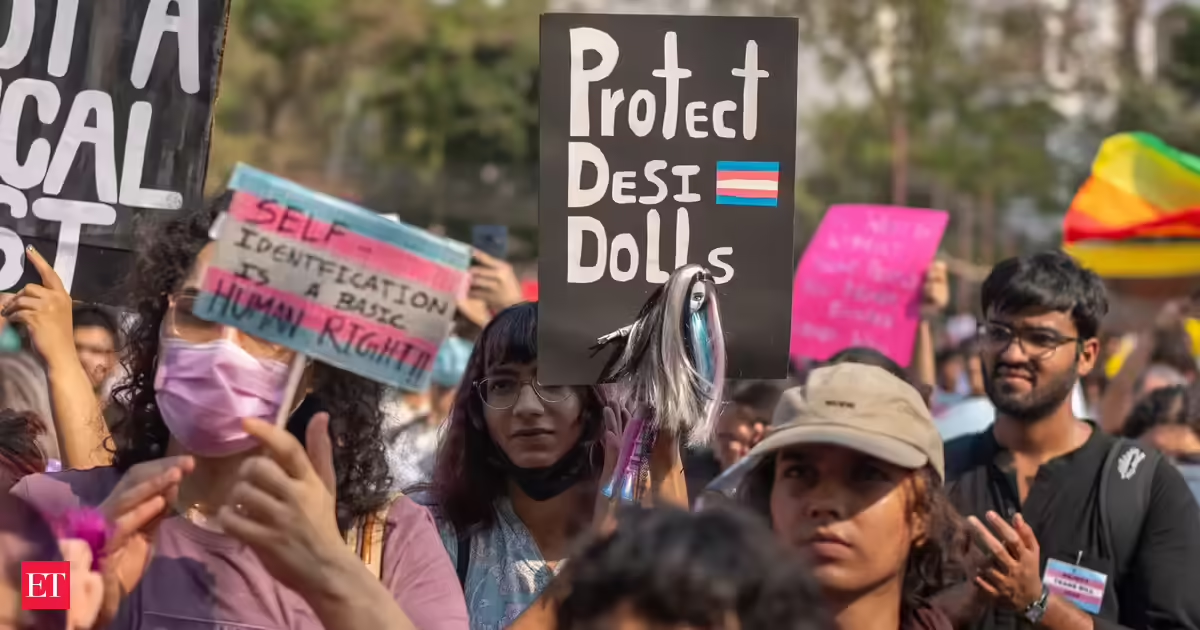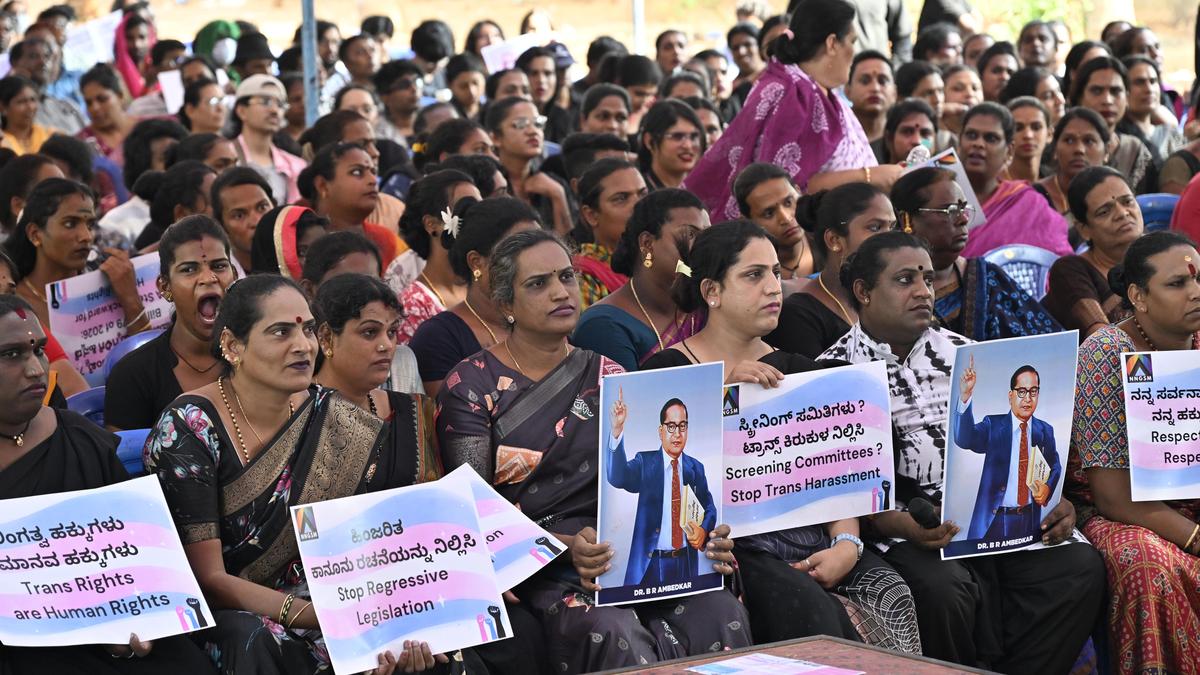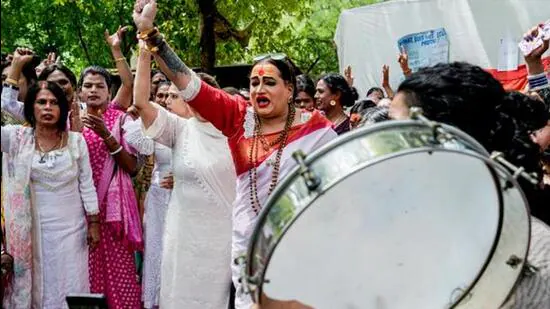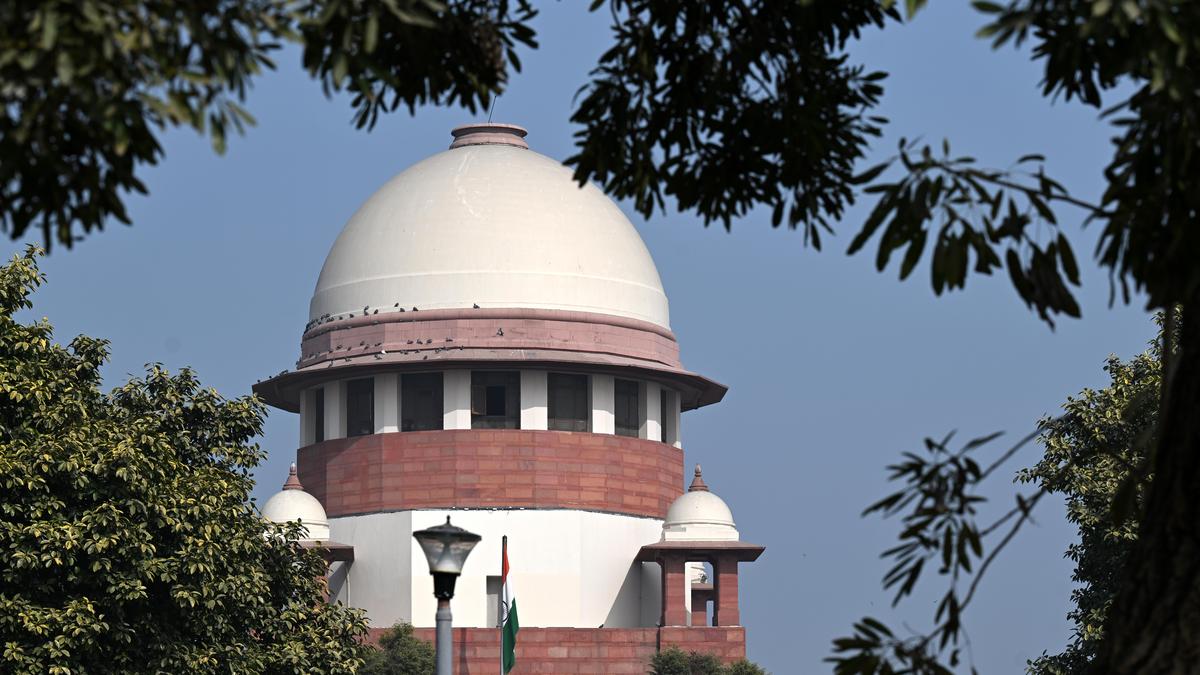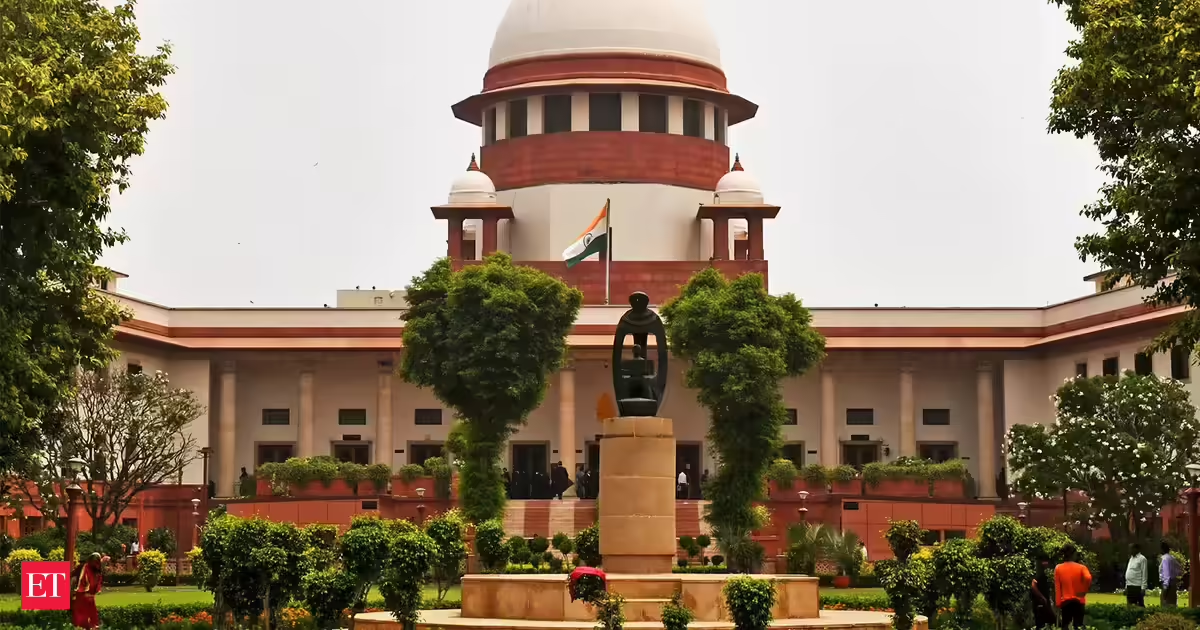
The Union government on Wednesday urged the Supreme Court to take up all pending challenges to the constitutional validity of the Transgender Persons (Protection of Rights) Amendment Act, 2026, stating that simultaneous proceedings in high courts could result in conflicting judicial pronouncements on the same legislation.The government told the court that it has filed transfer petitions seeking to bring all high court cases before it. (HT PHOTO)At least four high courts, including the Delhi and Rajasthan, are seized of petitions assailing the 2026 amendment, which has also been challenged before the Supreme Court for allegedly dismantling the principle of self-identification of gender recognised in the landmark judgment of National Legal Services Authority (NLSA) Vs Union of India (2014).Mentioning the matter before Chief Justice of India (CJI) Surya Kant on Wednesday, solicitor general Tushar Mehta informed the court that the Centre has filed transfer petitions seeking to bring all high court cases before the Supreme Court.“We have filed transfer petitions to transfer the challenge to the Transgender Amendment Act here in this Court. Can the transfer petition be listed on Friday? If notice also goes, we can ask the high court to wait,” Mehta said.The Centre emphasised that identical constitutional questions were arising across several forums and that some of the cases pending before high courts were likely to be taken up in the first week of June after the summer recess.“There are four high courts, and they can take divergent views. The same Act is under challenge. And some of those matters are likely to come up in the first week of June when high courts reopen,” Mehta told the bench, reiterating the government’s concern over potentially inconsistent rulings.The CJI observed that constitutional adjudication by high courts could also assist the Supreme Court. “It is not one of those matters that can be decided in a day or two. And if that happens, we will have the advantage of the high court,” CJI Kant said.Earlier, the CJI indicated that allowing high courts to examine the issue may have institutional value. “Sometimes we can have the advantage of high court view also,” he said.Responding to the concern over conflicting decisions, the CJI said: “We will see.”The development comes weeks after the Supreme Court issued notice to the Union government, states and Union territories on a batch of petitions challenging the constitutional validity of the 2026 amendment.On May 4, a bench comprising CJI Kant and Justice Joymalya Bagchi sought responses within six weeks and indicated that the matter would eventually be placed before a three-judge bench.Opening the challenge then, senior advocate Abhishek Manu Singhvi argued that the amendment effectively overturns the core holding of the NALSA judgment, which had recognised self-identification of gender as intrinsic to dignity, autonomy, and equality under Articles 14, 19, and 21 of the Constitution.The petitions contend that the amendment replaces the earlier self-identification framework with a regime dependent on medical evaluation and state certification, thereby reintroducing “medical gatekeeping” expressly rejected in NALSA.A principal challenge concerns the amended definition of “transgender person” under Section 2(k), which petitioners argue narrows the category by tethering recognition to specific socio-cultural identities and medically verifiable conditions. According to the challengers, the change risks excluding persons who identify as transgender but do not fall within enumerated categories such as Hijra, Kinnar, or Aravani.Another contested provision requires a certificate of identity to be issued by a district magistrate on the recommendation of a medical board. Petitioners argue that the requirement violates privacy, decisional autonomy, and dignity by subjecting gender identity to official and medical scrutiny.The amendment has also drawn criticism for mandating revised gender certificates following gender-affirming surgery and for provisions that activists claim conflate transgender identity with biological or intersex conditions.During the May 4 hearing, the Supreme Court indicated that the constitutional issues would require a nuanced examination. CJI Kant expressed concern over the possibility of misuse of an unrestricted self-identification regime by individuals seeking benefits earmarked for transgender persons.“In a country of over 1.4 billion, there will be people desperate to get this orientation to grab opportunities otherwise available to persons entitled in this category,” the CJI had observed, adding that some people could “masquerade” as transgender persons to secure reservations or other benefits.Justice Bagchi had observed that Parliament remained competent to alter the legal substratum underlying a judicial decision, suggesting that the amendment would have to be independently tested against constitutional guarantees under Article 21.The Union government, represented by Mehta, defended the amendment by asserting that the law does not prohibit voluntary gender-affirming treatment and only criminalises coercive or forced gender transition procedures.The batch of petitions before the Supreme Court has been filed by activists and organisations, including Laxmi Narayan Tripathi, Akkai Padmashali, and Kinner Maa Ek Samajik Sanstha Trust. The amendment received presidential assent on March 30 but has not yet been brought into force.
Govt urges SC to take up challenges to amended transgender law pending in HCs
At least four high courts are seized of petitions assailing the 2026 amendment, which has also been challenged before the Supreme Court | India News
805 words~4 min read