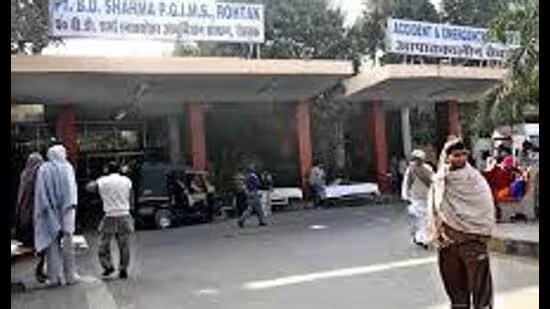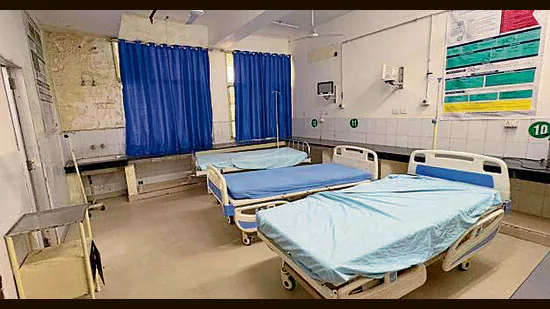
At 4:40 a.m. on May 4, 2026, a 40-year-old man came to Khanna Sub-divisional Hospital’s emergency department with sweating and chest pain. Within minutes, the staff nurse and Emergency Medical Officer (EMO) had checked his heart rate, blood pressure, blood sugar and more importantly, conducted an electrocardiogram (ECG).The ECG result was sent on WhatsApp to the hospital’s medicine consultant, Shiney Aggarwal, who diagnosed it as an ST-elevated myocardial infarction (STEMI) case and asked the EMO to administer the injection tenecteplase.
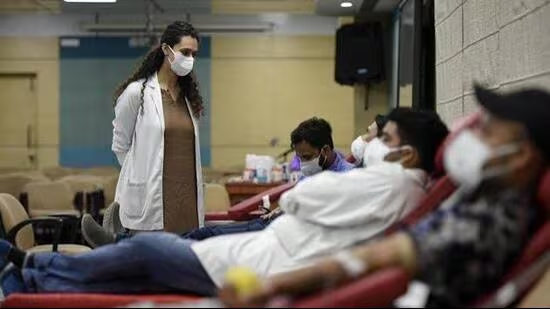
Dr Shiney Aggarwal with the emergency staff at SDH Khanna.
| Photo Credit:
Swagata Yadavar
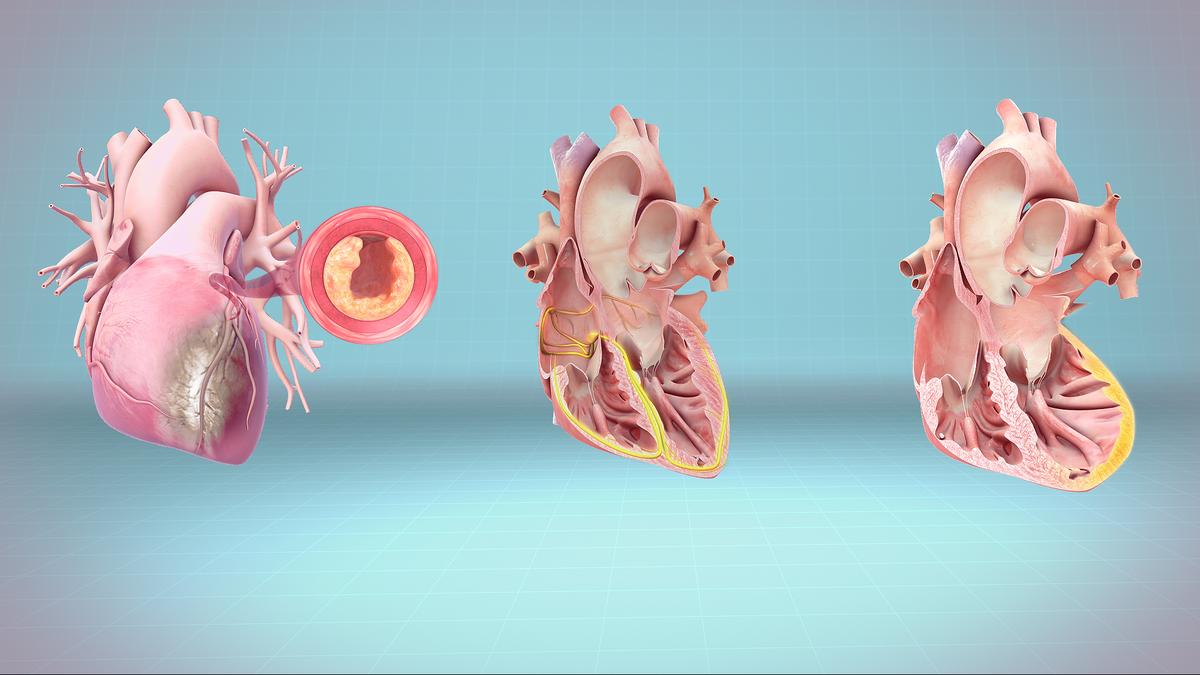
STEMI is a severe, life-threatening heart attack with significant coronary artery blockage. The injection tenecteplase is used for thrombolysis or dissolving the clot, by acting on the protein holding it together, restoring blood supply to the heart.The patient received the injection within half an hour of his ECG results and soon felt relief. Out of danger, he was referred to Government Medical College Patiala (54 km) for further investigations and treatment.This case marked the 100th thrombolysis case of the hospital and the highest recorded by any centre in Punjab. A few years ago, any chest pain patient in secondary health centres such as sub-divisional and district hospitals would have been immediately referred to medical colleges for further treatment.Had that happened in this case, the 40-70 minutes that the patient lost in transportation and further diagnosis would have meant irreversible damage to his heart muscles and their ability to work in the future.ICMR project to a state-wide missionSince July 2025, the Punjab government has implemented Mission AMRIT (Acute Myocardial Reperfusion in Time) across the State where staff members of sub-divisional hospitals and district hospitals (spokes) are equipped with drugs, equipment and training to conduct thrombolysis under the guidance of a cardiologist or a specialist in the medical colleges (hubs).Till date, about 34,000 people with chest pain have been registered in the spokes out of which 1900 were identified as STEMI cases, 900 have received thrombolysis and many of them received angiography and angioplasty in the hubs. The initiative has expanded the work done by the Indian Council of Medical Research (ICMR)’s STEMI ACT project implemented in one district of 7 states and one union territory between 2020-2024.“In our study, at least around 8000 patients have been thrombolised and we are able to almost triple the thrombolysis rate where nothing was happening before,” said S. Ramakrishnan, consultant cardiologist, AIIMS and National Principal Investigator, ICMR ACT project, that concluded in December 2024. He said the current focus of the study is on increasing access to thrombolysis and not increasing the rate of angioplasties due to paucity of cath labs and the high cost of the procedure.According to Hitinder Kaur, Director, Health Services of Department of Health and Family Welfare, Punjab, STEMI patients are receiving Rs 35,000 worth of treatment free of cost within minutes, providing timely treatment. This work continued even during the 2025 floods and in challenging (Pakistan bordering) districts including Tarn Taran and Ferozepur during Operation Sindoor.The model operates simply - the spokes are equipped with ECG machines, defibrillators, heart monitors and refrigerators to store tenecteplase. The staff is trained to conduct ECGs and administer the injection. These staff are then added to WhatsApp groups with senior cardiologists who are able to provide oversight around the clock.When a person with STEMI reaches the spoke within the time frame (up to 12 hours of a heart attack) with no complications, they get thrombolysed and are referred to the hubs for further angiography and angioplasty. This strategy is known as the pharmaco-invasive strategy and is ideal for low-resource settings such as India where the patient demand far outweighs the number of catheterisation labs.