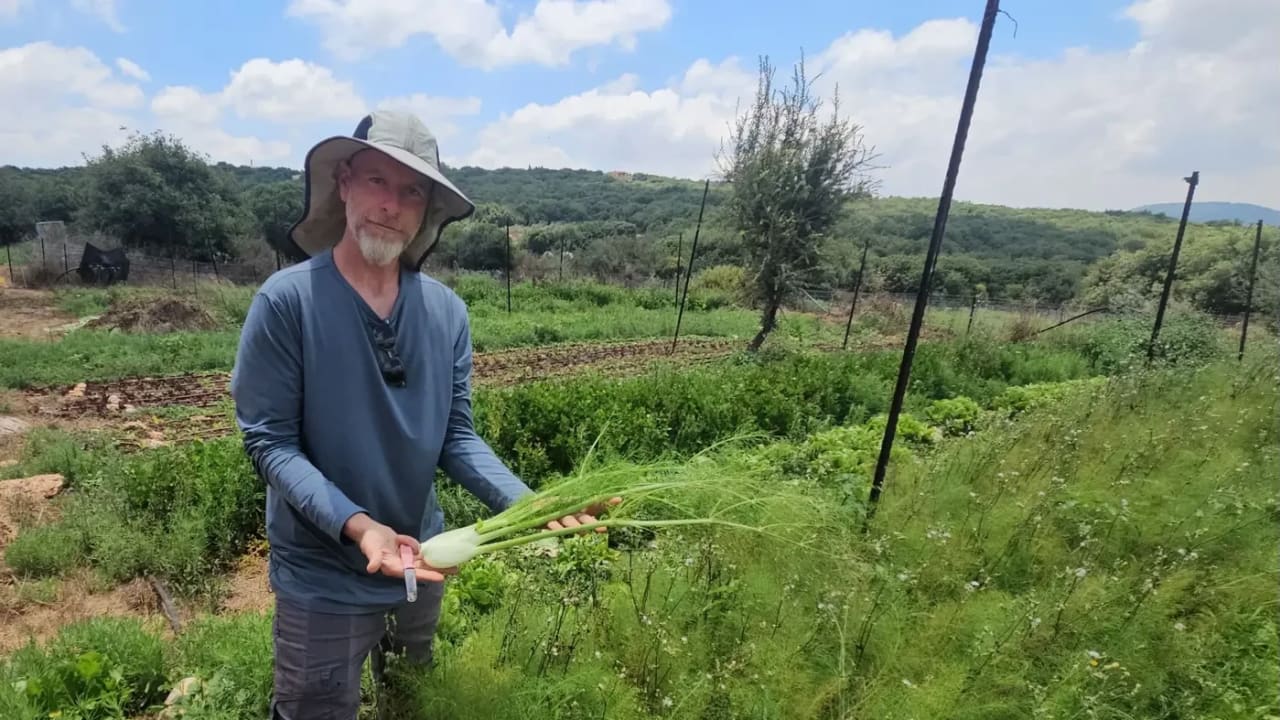
Agriculture, culinary arts, and heritage preservation: In the Gaza border communities, life is slowly returning to normal, and the tourism industry is waiting for you to come and experience this beautiful region of the country up close; here are 5 places worth visitingEarly summer is an excellent time to take a breath and set out on a tour of farms, ranches, coffee carts, farmers and culinary entrepreneurs in the Gaza border communities. Come smell and taste up close the victory of life and hope, also thanks to Tkuma Directorate’s 13 million shekel (about $4.6 million) investment in local businesses, aimed at reviving tourism in agriculture, culinary arts, culture and heritage in the Gaza border area. These are the stories of five of them.After Ofer Baider, a farmer and continuing son on his parents’ farm, died in 2021, his youngest daughter, Mor Baider, decided to continue his business. She brought in her uncle Eran, and together they decided to invest in growing berries and sunflowers.5 View gallery Farm-to-table meals. Ofer's Raspberry (Photo: Ron Rahamim )“My father and grandfather established the farm. Like most farmers in Netiv HaAsara, they grew pepper and tomato seeds for export,” Mor says. “It is a very meticulous and demanding crop. My father, in order to do something different and experimental, decided in 2018 to plant the first rows of berries, mainly raspberries, even though this is not a natural growing area for this fruit, which needs cold.”When the heat takes over and the raspberries ripen too much on the farm, they are used to make various products such as jams, sauces, chocolate liqueur or soap with raspberry seeds — all in cooperation with small local producers and in support of sustainability. The products are sold at the visitors center.The site also offers raspberry, strawberry, Pakistani mulberry and other fruit-picking experiences for groups and organizations, including a lecture on the farm’s history and a local meal. There are also farm-to-table meals based on vegetables grown in the adjacent field and the family orchards, including seasonal picking.“People simply come and take nature home with them,” says a Baider family member.• Waze: Cafe Flora BaPetel.• Opening hours: Monday to Friday, 9 a.m. to 3 p.m., kosher.Shonit Getz manages the visitors center established six years ago at Kibbutz Nahal Oz, dedicated to preserving the settlement and agricultural heritage of the people of the western Negev. From the center, visitors can observe the area toward the border fence and hear the story of Nahal Oz’s founding, settlement and life alongside Gaza through 2017.These days, the center is updating its video and adding documentation of life before, during and after October 7. The site also offers “Tzofen (Code) Oz,” a family escape game, as well as a store selling Gaza border products and a cafeteria.“The dream was for Omri Miran to say the closing sentence in the new video, but as long as the last hostage had not returned, we were still on October 7 too. I believe the filming with Omri will take place soon,” Getz says.5 View gallery A first-hand story. Oz BaNegev (Photo: Ron Rahamim )Asked how Omri is doing, she answers warmly that the former hostage is in the process of returning to life, and notes his father, Dani, who never stopped fighting, “and also Lishai, Omri’s wife, who fought for him.”Visitors also meet kibbutz members who lived through the horrific experience of October 7 and give firsthand accounts of the terror and inferno.“That is what people mainly want to hear, again and again — what happened here on October 7, accompanied by personal testimony. They want to connect and understand what really happened and be in contact with the people who experienced it. There are displays of empathy, a desire to embrace those who went through this terrible event that seems so unreal. Visitors simply want to understand that what happened really happened,” she says, echoing the words of poet T. Carmi.“After all, if we had seen all of October 7 in one film, we would say there is no way this happened. You would ask what delusional mind invented this unreal thing. But contact with the people who went through the event helps visitors understand that it is real, and as part of the healing process, it also helps those telling the story.”The site also offers a unique lookout over Gaza from the closest civilian point that can be reached.“You can really see the buildings in the heart of Gaza and the ruins of Shijaiyah. In the plot closest to Gaza, our field crops manager planted sunflowers to show the other side, which mostly sanctifies death, how life should be sanctified. On October 7, Nahal Oz was supposed to celebrate its 70th anniversary at a major event, and it is important to me that people who come to the Gaza border area remember that there were decades of life here before what truly happened to us happened.”• Waze: Oz BaNegev.• Opening hours: Sunday to Friday, by advance arrangement at 054-9228715.In Moshav Yated in the Hevel Shalom region, Tzemachmad Nursery has been growing and selling bonsai trees of all kinds for a decade.“It’s like a pet, only with plants,” says Ronit Orlev, who runs the nursery together with her sister, Michal Katz. Until October 7, the nursery operated alongside a breeding center for therapy dogs.“Since October 7, the entire nature of the activity here has changed. Because these are soft and gentle dogs, they experienced the explosions, the evacuation and the uprooting, and some suffered heart attacks. Pregnant dogs began miscarrying. At that stage, we gave up. Each dog went to a home that knows how to care for this breed, and the breeding center was left empty,” Orlev says.5 View gallery Bonsai trees and tranquility at Tzemachmad Nursery(Photo: Ron Rahamim )In the area where the breeding center had been, the two expanded the nursery, which until then had worked mainly online. Today it covers half a dunam and has opened its gates to the public.“That was after we started getting WhatsApp messages: ‘Hi, is the nursery open? Can we come?’ Dark tourism began,” she says, unafraid to use the chilling term. “People who came to the area wanted to come to us too, and I had nowhere to receive them except the production nursery, where we grow the bonsai trees. So I had to allocate a hospitality area. The people of Israel, who insisted on coming here, are the ones who pulled us out of the crisis,” Orlev says, her voice cracking. “We now also operate a small cafe here.”Visitors can take tours of the nursery and participate in a workshop on pruning and caring for bonsai trees. They can sit beside the small stream created here, surrounded by coffee corners.“The place is full of oxygen, the eyes are washed in green, the ears fill with birdsong instead of gunfire, and now a hive of friendly bees is buzzing here too,” according to Orlev.And the longing for the dogs?
From farms to coffee carts: Visit these 5 Gaza border businesses rebuilding through tourism
Agriculture, culinary arts, and heritage preservation: In the Gaza border communities, life is slowly returning to normal, and the tourism industry is waiting for you to come and experience this beautiful region of the country up close; here are 5 places worth visiting
2,227 words~10 min read